Tutima
A Glashütte watchmaker whose name began as a quality mark of the town’s UROFA and UFAG factories, best known for a wartime pilot’s chronograph. It spent the post-war decades in Ganderkesee, Lower Saxony, and returned to Glashütte in the 2000s.
Founded 1927, as UROFA and UFAG, Glashütte, Saxony, Germany
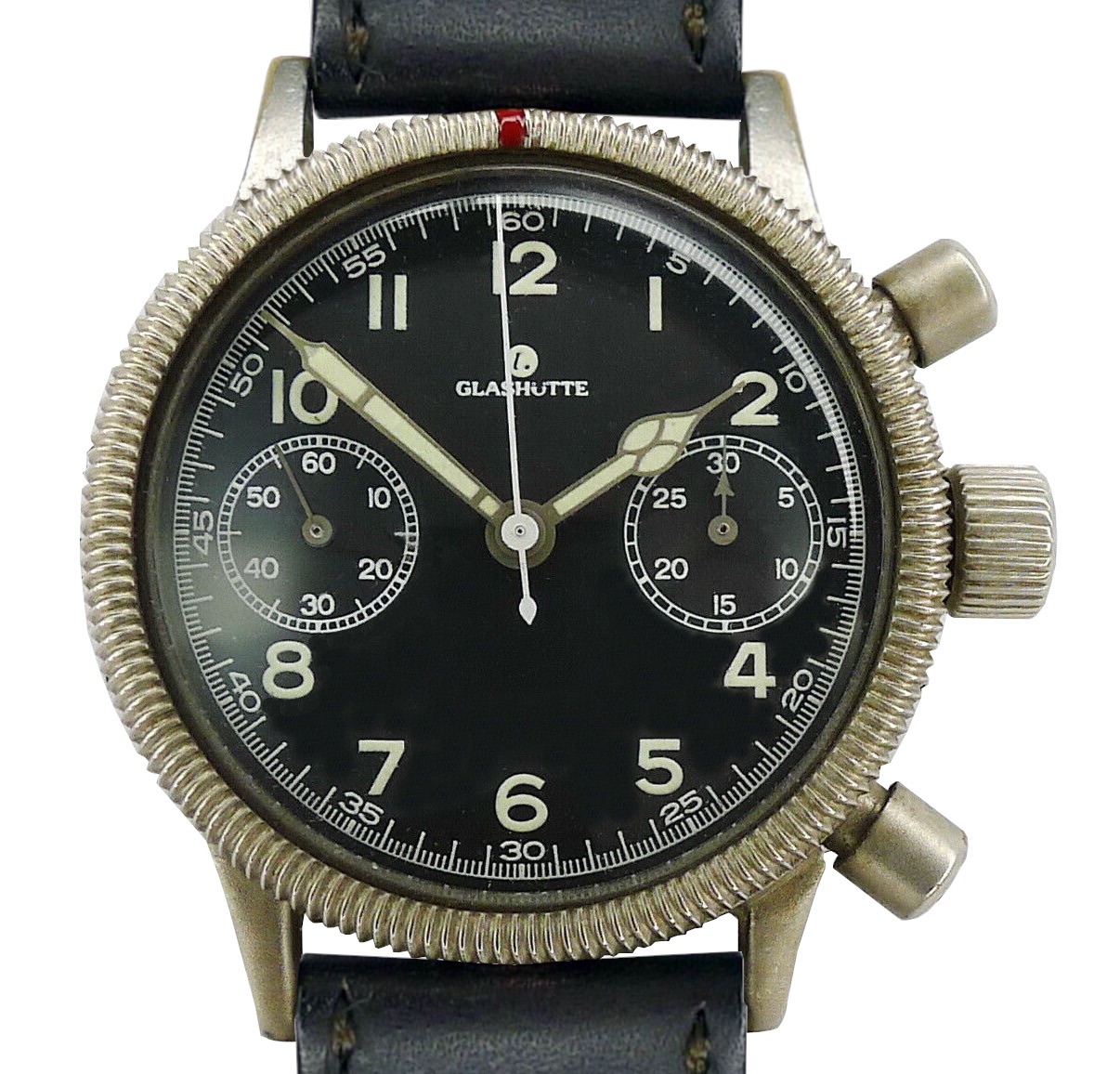
Wristwatches for a pocket-watch town
The two firms rose from the bankruptcy of a large Glashütte watch cooperative in 1926: UROFA made movements and UFAG finished watches. Their managing director, the lawyer Ernst Kurtz, bet on the wristwatch at a time when Glashütte still saw it as a passing fashion, and modernised production to compete with the Swiss.1, 2, 5
UFAG put the name Tutima, from the Latin tutus, safe or protected, on its watches of higher quality. The best known is the flyback chronograph with UROFA’s Calibre 59, built for pilots in the Second World War; dates for it differ, 1941 for the watch in one account, 1939 to 1940 for the movement in another. It belongs to the story of Pilot’s watches.1, 2, 5, 7

West, and back again
An air raid on the last day of the war destroyed the factory, and UROFA and UFAG were taken into state ownership and merged in 1951 into VEB Glashütter Uhrenbetriebe. Kurtz went west. Accounts differ on when: shortly before the war ended by one, after it by another, with a stop in Memmelsdorf in Bavaria before production settled in Ganderkesee in 1951.2, 3, 5, 7
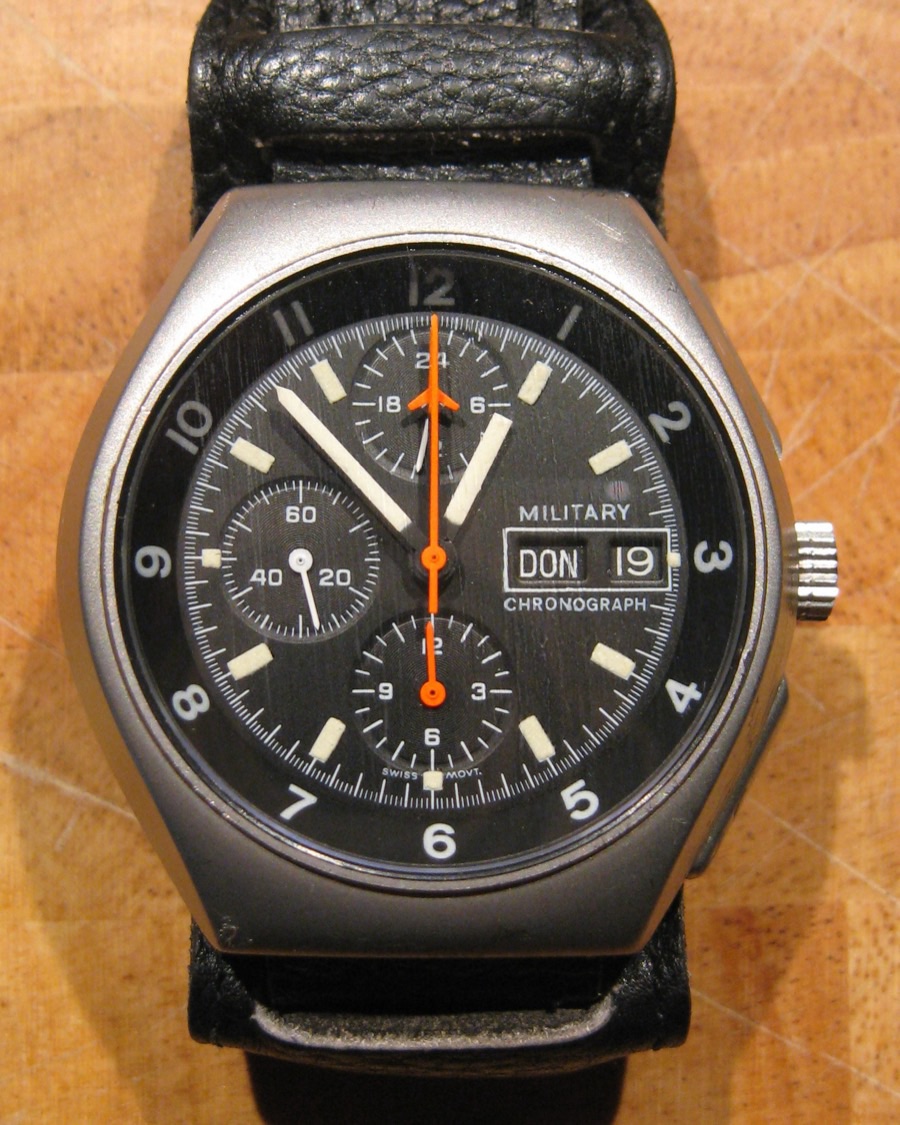
From around 1960 Dieter Delecate carried the business on in Ganderkesee and made chronographs for armed forces. Tutima says its military chronograph became NATO’s official pilot’s watch in 1984.3, 5
After reunification Delecate planned a return to Glashütte while keeping Ganderkesee. A new factory in a former railway depot near the old one began work on May 14, 2008; the move was celebrated in 2011 with a minute repeater made entirely in Germany. Tutima now designs its own movements, and its legal address is in Glashütte.4, 5, 9, 10, 11
Key dates
- 1927
Ernst Kurtz takes charge of the new UROFA and UFAG in Glashütte.1, 2, 5
- 1941
The pilot’s chronograph, as Tutima dates it; its movement is dated 1939 to 1940 elsewhere.5, 7
- 1945
The factory is destroyed in an air raid on the last day of the war.2, 7
- 1951
Production settles in Ganderkesee; in Glashütte, UROFA and UFAG are merged into GUB.2, 5
- 1984
Tutima says its military chronograph becomes NATO’s official pilot’s watch.3
- 2008
A new Tutima factory in Glashütte begins work on May 14.4
- 2011
A minute repeater marks the return to Glashütte.5, 9
Where Tutima leads
- Based in, PlaceGlashütte
Tutima began in Glashütte in 1927 and, after decades in Lower Saxony, came back to build a new factory there.1, 4, 5
- Part of, TraditionOrigin labels
Quill & Pad says Tutima’s own movements go well past the half of a watch’s value the Glashütte rule requires.5, 12
- Part of, TraditionPilot’s watches
Tutima says its 1941 pilot’s chronograph and its NATO chronograph of 1984 are the core of its history.3, 5, 7
- See also, GroupVEB Glashütter Uhrenbetriebe (GUB)
UROFA and UFAG, the firms behind the Tutima name, were merged into the state company GUB in 1951.2, 13
Elsewhere in Watch Vault
- Current coverage
Stories that name Tutima, newest first (opens in a new tab), in Watch Vault Media.
Facts and sources
- Founded
- 1927, as UROFA and UFAG1, 2, 5
- Founder
- Ernst Kurtz1, 2, 5
- Founded in
- Glashütte, Saxony, Germany1, 2
- Based in
- Glashütte, with a site in Ganderkesee4, 5, 11
- Official site
- tutima.com (opens in a new tab)11
Sources
- 1
- 2
- 3
- 4
- 5
You are there: visiting Tutima Glashütte in Germany (opens in a new tab)
- 6
A Tutima Glashütte pilot's chronograph from the Second World War. (opens in a new tab)
- 7
- 8
A Tutima pilot's chronograph of the German air force (Bundeswehr Luftwaffe). (opens in a new tab)
- 9
How The Wall Came Tumbling Down: Watches Made In Germany (Reprise) (opens in a new tab)
- 10
- 11
- 12
- 13
Sources read November 11, 2026.