Lancashire Watch Company
The Prescot company led by T. P. Hewitt that tried, from 1889, to answer American and Swiss factory watches by making complete watches under one roof; it never made a profit and failed in 1910 or early 1911.
Founded 1889 (registered on 5 December 1888, by Grace’s Guide), Prescot, Lancashire
In the history Britain’s watch industry
An answer to the factories
Prescot’s trade of making watch parts in cottage workshops was failing by the 1880s, undercut by cheaper machine-made watches from America and Switzerland.1, 2
The company was set up as a rival to the large American and Swiss firms, led by T. P. Hewitt, to make complete watches under one roof.1, 3, 4
Its founding is dated two ways: Grace’s Guide records registration on 5 December 1888 and Davies says it was formed in 1888; Prescot Museum, Knowsley’s archive and Wikipedia give 1889.1, 2, 3, 4, 5
Davies writes that Hewitt modelled the company on the Elgin National Watch Company of Illinois, bought up independent businesses and moved their workers and tools into the factory, and that delays in installing new machine tools kept early work on older Lancashire models.3
The factory
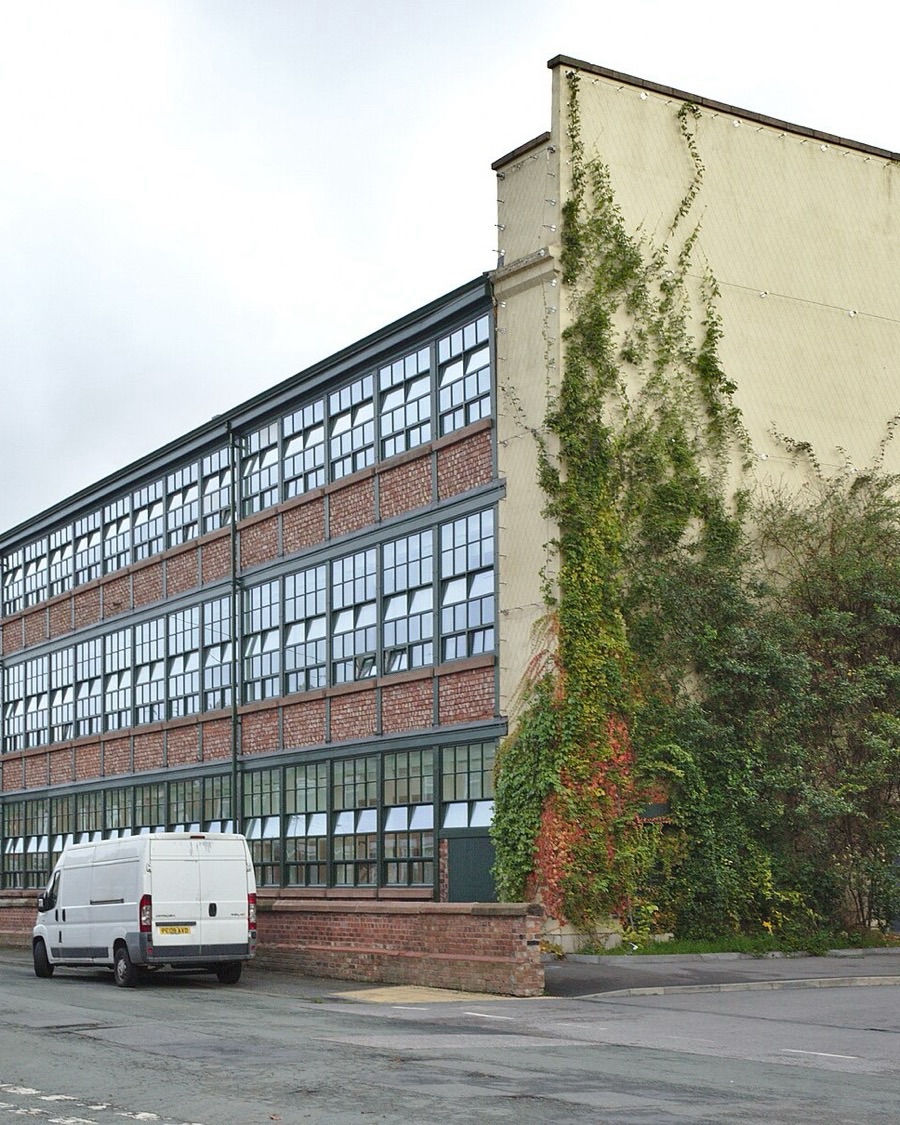
Prescot Museum places the main factory on Albany Road, with a warehouse in the Flat Iron building on Eccleston Street; Grace’s Guide records that the first phase opened in 1890.2, 4
Prescot Museum says the new machine tools were accurate and robust enough to turn out identical parts without adjustment, so semi-skilled or unskilled workers could run them, with steam power.2
Grace’s Guide records that in 1894 the works manager, Charles J. Hewitt, gave the Institution of Mechanical Engineers a paper on standard screws for watches.4
Its size is told differently: Davies counts 1,000 workers before 1893 making about 60,000 watches a year, and about 50,000 a year from 1893 to 1900; Grace’s Guide reports 500 watches a day during an 1894 visit; Prescot Museum estimates 400,000 watches in its twenty-one years.2, 3, 4
Prescot Museum says the company employed only unmarried women; a woman who married had to leave.2
Watches and clocks
It made a wide range, from gold-cased pocket watches to cheap metal-cased ones and fusee dial clocks; Davies counts eleven standard calibres in well over fifty models.2, 3
Its watches had more in common with American designs than with the English fusee watch, Wikipedia says.1
Davies writes that its cheapest watch, the “John Bull”, retailed at five shillings, and that about 5,000 were sold between November 1909 and March 1911.3
The Science Museum Group holds a full-plate keyless Lancashire Watch Co. watch, number 328964, marked for the London & North Western Railway.7
Failure
It never made money. Grace’s Guide records a reconstruction registered on 13 March 1897 and shareholders complaining of inaccurate accounts in 1899.4
The reasons are given variously: Prescot Museum says it did not innovate enough and made too wide a range of movements, Wikipedia that it lacked the scale of the American and Swiss factories, and Davies that its strategy was unfocused.1, 2, 3
Its end is dated two ways: bankrupt in 1910 by Davies’s and Wikipedia’s account, and closed in January 1911 by Prescot Museum’s, after which the factory contents were auctioned.1, 2, 3, 5
Prescot Museum says A. J. Huckle bought some of the machinery and made watches as the Prescot Watch Company in the Flat Iron building until 1912, and that the factory building served as barracks for the Pals in the First World War.2
Key dates
- 1889
The Lancashire Watch Company is founded at Prescot (registered in December 1888, by Grace’s Guide).1, 2, 4, 5
- 1910
The company fails (its contents were sold early in 1911).1, 2, 3, 5
Where Lancashire Watch Company leads
- Based in, PlacePrescot
The company’s factory stood on Albany Road, Prescot.1, 2
- Part of, HistoryBritain’s watch industry
Prescot’s attempt, from 1889, to make complete watches in a factory.1, 2, 3
- See also, HistoryAmerica industrializes the watch
Davies writes that Hewitt modelled the company on the Elgin National Watch Company of Illinois.3
Facts and sources
- Founded
- 1889 (registered on 5 December 1888, by Grace’s Guide)1, 2, 4, 5
- Founded in
- Prescot, Lancashire1, 2, 4
- Led by
- T. P. Hewitt (Thomas P. Hewitt)1, 3, 4
- Closed
- 1910 (January 1911 by Prescot Museum’s account)1, 2, 3, 5
Sources
- 1
- 2
Lancashire Watch Company (information sheet) (opens in a new tab)
- 3
- 4
- 5
- 6
- 7
Full plate keyless watch by Lancashire Watch Co. of Prescot no. 328964 LNWR (opens in a new tab)
Sources read November 12, 2026.