Prescot
A small Lancashire town near Liverpool that made most of England’s rough watch movements and many of its watchmaking tools in the 18th and 19th centuries, finished in London and Coventry; its trade collapsed after the 1870s, and the Lancashire Watch Company’s factory of 1889 could not save it.
England, South-west Lancashire, near Liverpool; since 1974 in the Metropolitan Borough of Knowsley, Merseyside
Companies here Lancashire Watch Company
In the history Britain’s watch industry
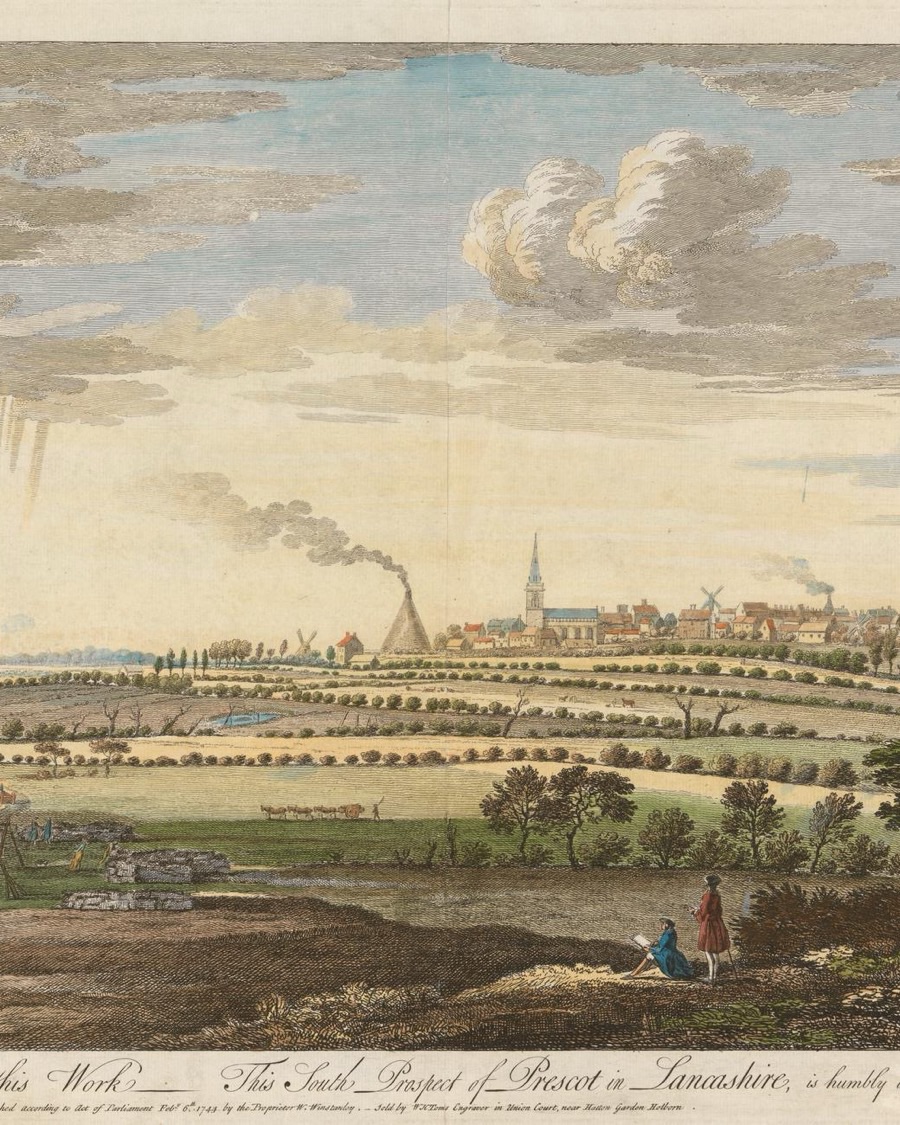
Why Prescot?
Prescot is an old market town near Liverpool, with a market charter from the fourteenth century; it was in Lancashire until 1974 and is now in the borough of Knowsley, Merseyside.7, 9
It was a town of small metal trades. Thomas Pennant found it in 1773 full of hardware manufactures and famous for files as well as movements, the Victoria County History records, and Knowsley’s archive says the town’s blacksmiths picked up watchmaking easily and worked in their houses.1, 7
Tradition gives the trade a refugee founder: the Victoria County History reports that it is said to have been brought by a Huguenot named Woolrich, who settled at Coptholt, and Knowsley’s archive repeats it.1, 7
Its starting date is disputed. Prescot Museum dates watchmaking in the town from the early 1700s; Grace’s Guide says it seems to have arrived soon after watchmaking came to England, which it places about 1650.2, 10
What grew here: movements and tools
Prescot made the movements. Pennant wrote in 1773 that it supplied the best and almost all the watch movements used in England; John Aikin wrote in 1795 that the town produced the best in the world.1, 7
Prescot Museum describes workshops attached to the workers’ houses, each craftsman making one kind of part, and others making the precision hand tools the trade needed; it says that in 1860 over a third of the town’s people worked in the trade, and Prescot was called a “town of little workshops”.2
The Victoria County History records that around 1840 the town was known for watch tools and motion work, for pinion wire drawn in fifty sizes, and for small files exported in large quantities.1
The toolmaker John Wyke made watches, hand tools, lathes and wheel-cutting engines; Grace’s Guide says Prescot’s conservative watchmakers disliked his innovations, that he moved to Liverpool, and that he was buried at Prescot after his death in 1787. Grace’s Guide gives his birth as 1729, the Science Museum Group as 1720.11, 12
The Science Museum Group’s Lancashire-pattern wheel-cutting engine, made in the nineteenth century to Wyke’s design and inscribed “J&T Jones, Prescot”, is of the kind used in Prescot to cut the teeth of clock and watch wheels faster and more accurately.12
The trade employed women too; Prescot Museum says the Lancashire Watch Company took only unmarried women, and a woman who married had to leave.2
Who and what moved through
Movements went out rough to be finished elsewhere: by the late eighteenth century Lancashire movements from around Prescot were finished in Clerkenwell in London.3, 4
The Warwickshire Industrial Archaeology Society says many of the components finished in Coventry came from Lancashire, Prescot above all.5
Nearby Liverpool took the trade further: Peter Litherland patented a rack lever escapement there in 1791, and Liverpool watches of about 1800 carry Edward Massey’s lever.13, 14
The answer to American competition was modelled on America: Davies writes that T. P. Hewitt based the Lancashire Watch Company on the Elgin National Watch Company of Illinois, and Wikipedia says its watches had more in common with American designs than with the English fusee watch.4, 6
Prescot Museum says the company bought up many of the old workshops with their tools and workers and made complete watches and clocks under one roof, in a factory on Albany Road with a warehouse in the Flat Iron building on Eccleston Street.2, 4
Prescot’s skills are still studied: the LSE’s summary of a 2022 paper by Neil Cummins and Cormac Ó Gráda says it uses Prescot’s artisan watchmakers to ask how skills were learned in the Industrial Revolution.15
What changed because of it
Cheaper machine-made watches from America and Switzerland hit Prescot from the 1870s; Prescot Museum says most of the town’s workshops had closed by 1885.2, 6
The Lancashire Watch Company failed: Knowsley’s archive and Wikipedia date its closure to 1910, Prescot Museum to January 1911, when its contents were sold at auction.2, 6, 7
Prescot Museum says A. J. Huckle’s Prescot Watch Company used some of the machinery until 1912, and Joseph Preston & Sons, keeping to traditional methods, made watch parts in the town until 1952.2
Cables replaced watches: British Insulated Callender’s Cables was the town’s main employer for much of the twentieth century, until its Prescot factory closed in the early 1990s.7, 9
Prescot Museum opened on 29 April 1982 as the Prescot Museum of Clock and Watch Making, launched by the historian A. J. P. Taylor in a Georgian house on Church Street; it later widened to the history of Knowsley.7, 16
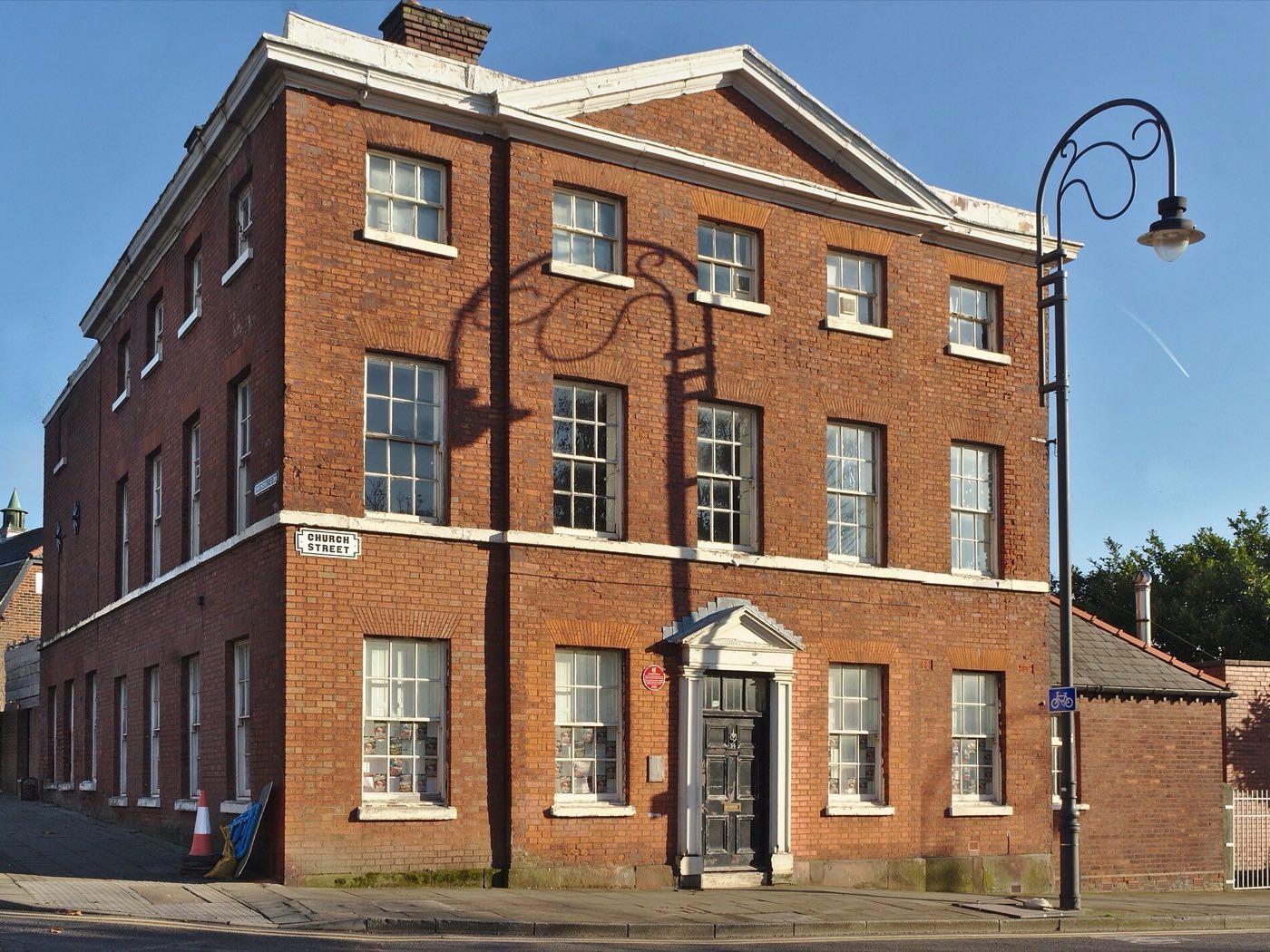
The museum is now in the Prescot Centre, in Prescot Shopping Centre; Knowsley Council counts 14,500 items in its collection, all connected to the borough.16, 18
Key dates
- 1787
The toolmaker John Wyke dies at Liverpool and is buried at Prescot.11, 12
- 1795
John Aikin praises Prescot’s watch trade.1, 7
- 1889
The Lancashire Watch Company is founded (registered in December 1888, by Grace’s Guide).2, 6, 7, 10
- 1910
The Lancashire Watch Company fails (its contents were sold early in 1911).2, 4, 6, 7
- 1982
Prescot Museum of Clock and Watch Making opens (29 April).7, 16
Where Prescot leads
- Based here, CompanyLancashire Watch Company
The company’s factory stood on Albany Road, Prescot.2, 6
- Part of, HistoryBritain’s watch industry
The Lancashire town that made England’s rough movements and watch tools.1, 2
- See also, PlaceClerkenwell
Rough movements from around Prescot were finished in Clerkenwell by the late eighteenth century.3, 4
- See also, PlaceCoventry
The Warwickshire Industrial Archaeology Society says many components finished in Coventry came from Prescot.5
Facts and sources
- Country
- England1, 9
- Where
- South-west Lancashire, near Liverpool; since 1974 in the Metropolitan Borough of Knowsley, Merseyside9
- Watch trade
- From the early 18th century (by one account the later 17th); at its height in the 18th and 19th centuries; the last firm closed in 19522, 9, 10
Sources
- 1
- 2
Lancashire Watch Company (information sheet) (opens in a new tab)
- 3
- 4
- 5
- 6
- 7
- 8
- 9
- 10
- 11
- 12
John Wyke's Lancashire pattern Wheel cutting engine (opens in a new tab)
- 13
- 14
Massey patent lever escapement pocket watch mechanism (1920-557) (opens in a new tab)
- 15
- 16
- 17
- 18
Sources read November 12, 2026.