Clerkenwell
The district just north of the City of London where, from the eighteenth century, London’s watches were made by specialist outworkers in small houses and back workshops, until Swiss and American factory watches overtook them after 1870.
England, North of the City of London, in today’s London Borough of Islington
Within London
In the history Britain’s watch industry
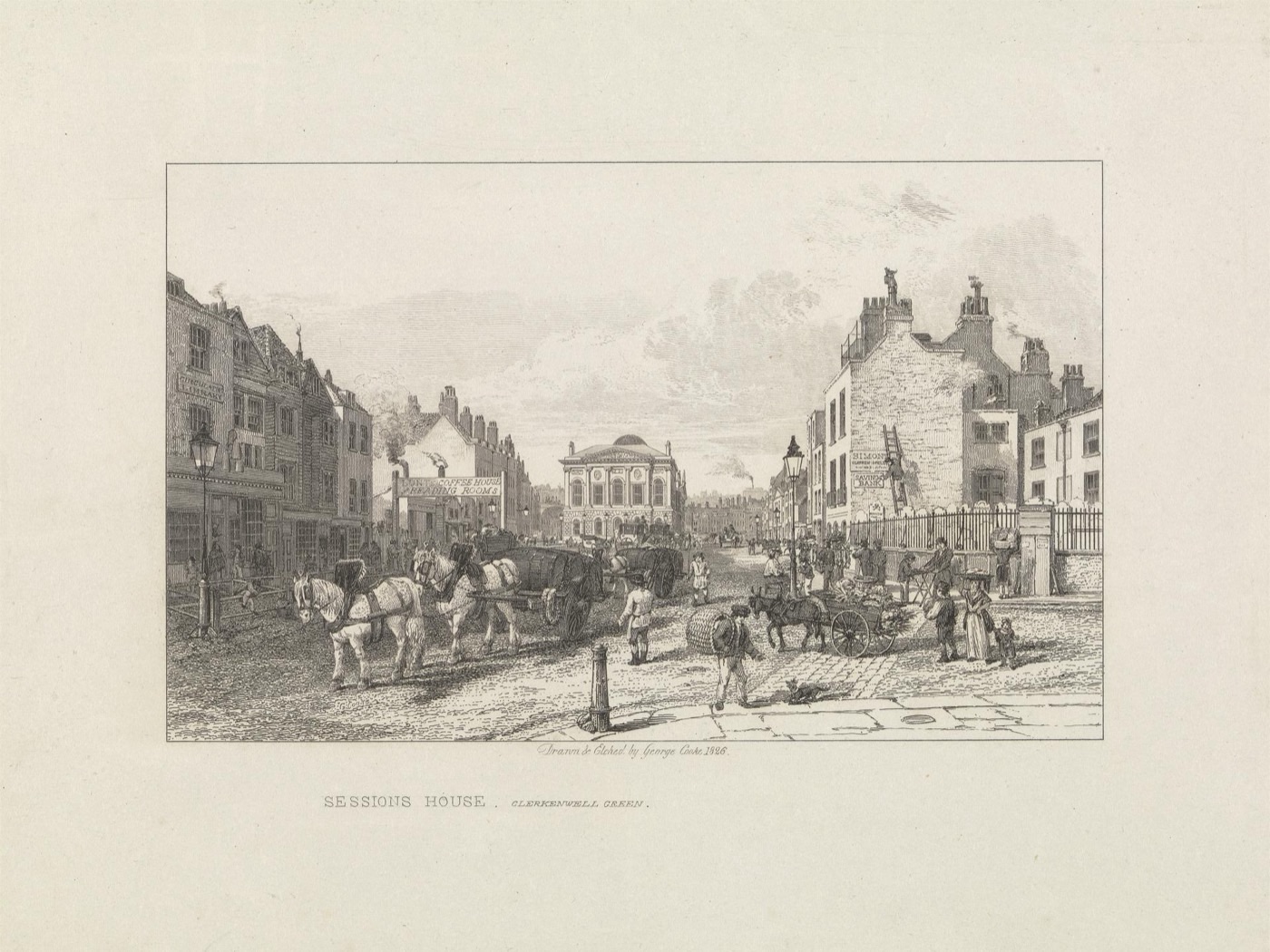
Why Clerkenwell?
The Survey of London notes that Clerkenwell’s trades grew from the City’s northern edges, where fine metal-working in gold and brass, furniture- and instrument-making had long thrived.1
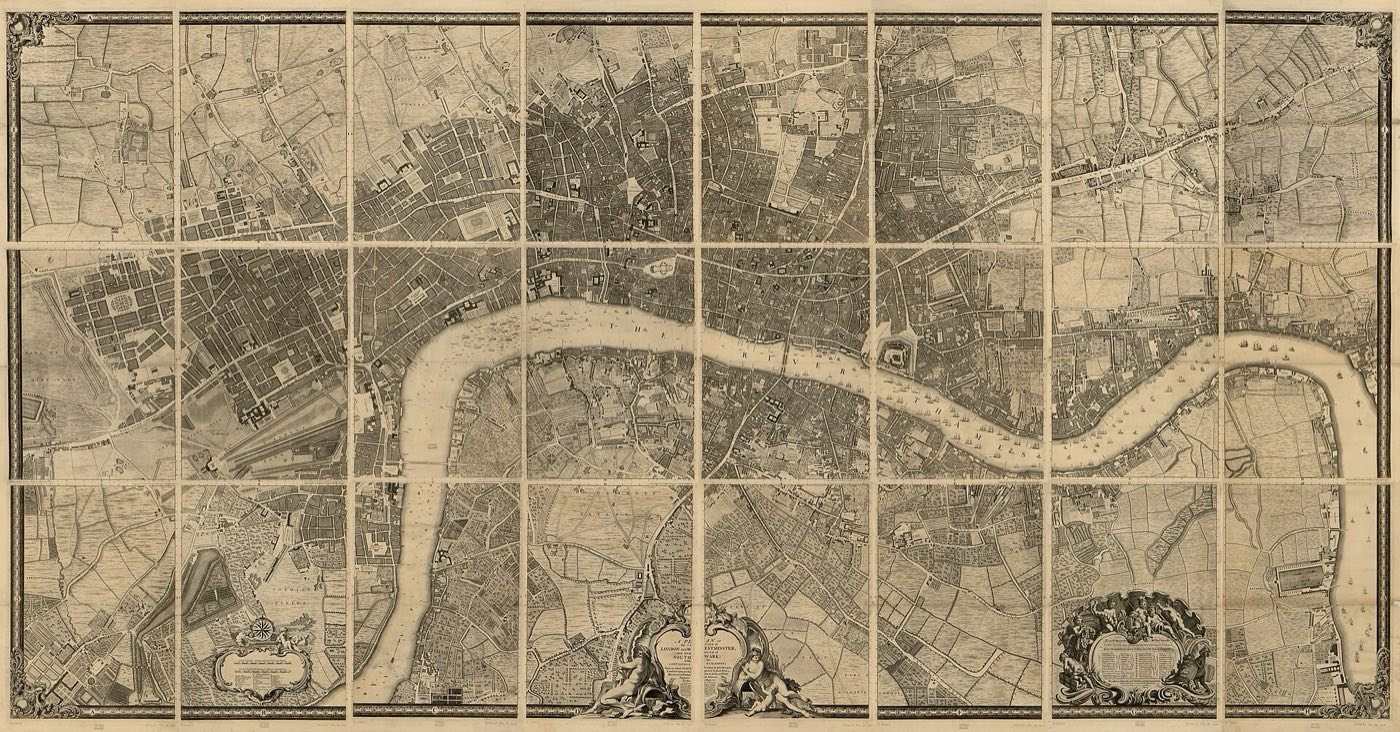
The trade’s guild stayed in the City. The Clockmakers’ Company, chartered on 22 August 1631, governed clockmakers in the City of London and for ten miles around; it has never had a hall of its own, and in its early years met in taverns or rented rooms.6, 7
Nor were the seventeenth-century masters Clerkenwell men: Tompion and Graham worked in Fleet Street, and the Huguenot watchmakers who fled France after 1685 settled mainly in Soho, by the Victoria County History’s account.2, 8
The Survey of London finds Clerkenwell makers from about 1720: a clockmaker, John Maberly, among the early residents of Red Lion Street, and Christopher Pinchbeck, watchmaker and deviser of the alloy that bears his name, working close by until 1721.1
Watchmaking suited small houses. The Survey says it broke down into separate crafts that could be done in a room or behind a house, and that the outwork system, with each craftsman self-employed, dominated from early days, leaving the typical artisan independent but poor.1
What grew here: a trade of specialists
From the early eighteenth century Clerkenwell was the great centre of the working trade, the Victoria County History says, with streets almost wholly given to escapement makers, engine turners, fusee cutters, springers, secret-springers, finishers and joint finishers.2, 9
The London Tradesman of 1747 describes how it worked: the movement-maker had his wheels cut by a cutter, springs and chains came from tradesmen who made nothing else, a gilder gilded the brass and a finisher completed the movement, yet the name on the plate was the watchmaker’s, though he had made none of its parts.1, 9
The Survey of London records an estimate of 1797: almost 7,000 of Clerkenwell’s 21,000 or so people worked in or depended on the watch and clock trades, making 70,000 timepieces a year for export and 50,000 for home, and three makers each claimed over 3,000 a year.1
Counts of output differ. Against that estimate of 120,000, the historian Alun Davies puts Clerkenwell at almost 200,000 watches a year in the 1790s, and the Victoria County History cites 191,678 watch cases assayed at Goldsmiths’ Hall in 1796, many perhaps cheap watches with forged names.1, 2, 3
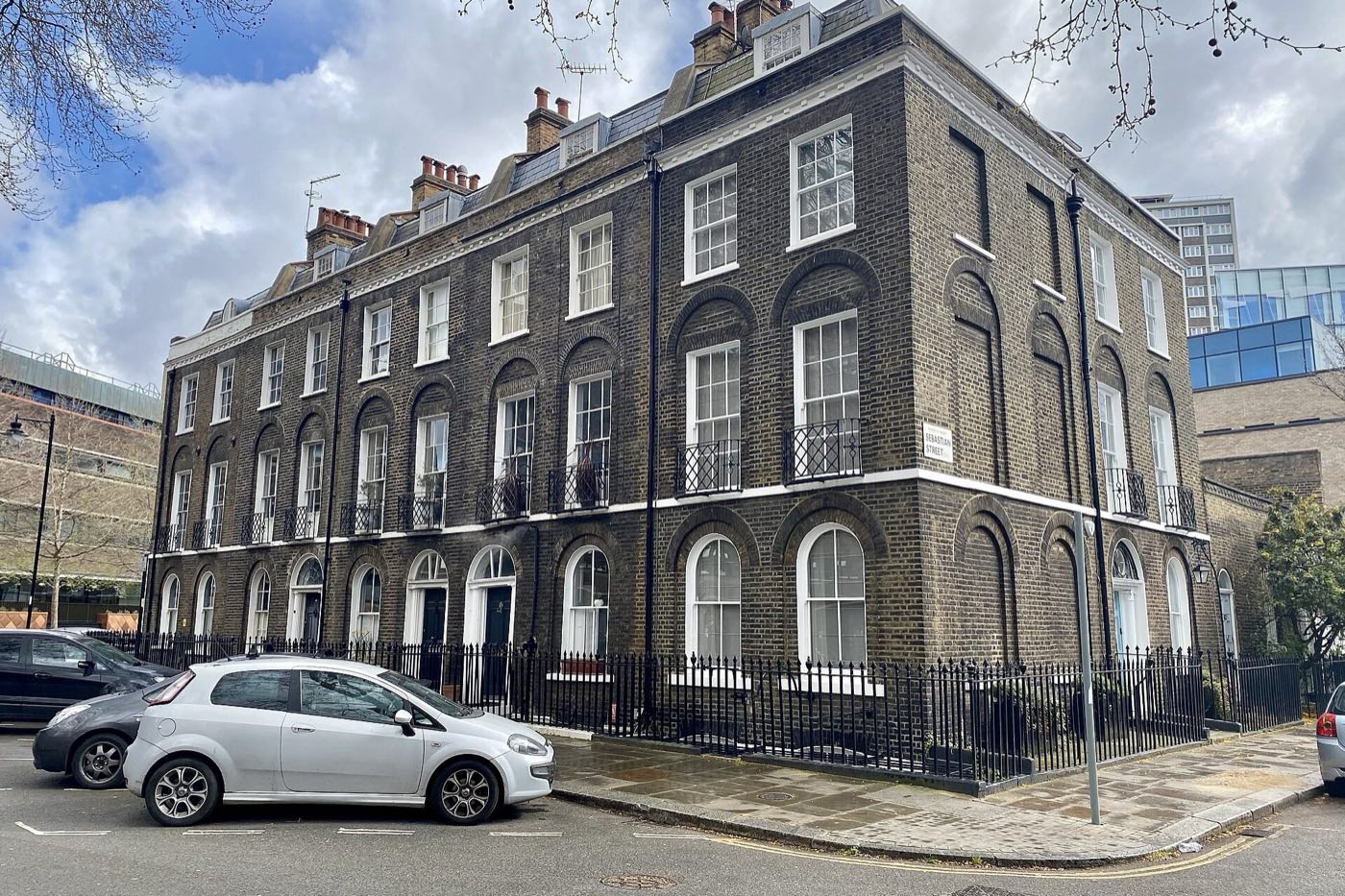
The trade left marks on houses: in Britton Street several old houses keep attic ‘watchmaker’ windows, and Northampton Square, laid out in 1802, had watch-case makers from its early years and watchmakers at three of its houses around 1840.10, 11, 12
Who and what moved through
Movements came in from the north: by the late eighteenth century rough movements from Lancashire, around Prescot, were finished in London.3, 9
Clerkenwell also made marine chronometers for the Greenwich trials. Royal Museums Greenwich counts Thomas Mercer, who set up there in 1858 and moved to St Albans in 1874, among the most prolific makers of the later nineteenth century.14
In the early 1840s the Swiss watchmaker Pierre-Frédéric Ingold, born in Biel and once with Breguet in Paris, tried to found a company in London to make watches by machine. Alun Davies writes that Clerkenwell’s outworkers united against it, that some broke the windows of the planned works, and that the bill to establish it was defeated in Parliament.3, 15
Accounts of Ingold differ. Davies dates the episode 1842–43, says Ingold died in the early 1870s and had no connection with later American factories; the Historical Dictionary of Switzerland dates the London attempt 1839–42, his death to 1878 in La Chaux-de-Fonds, and says factories with his machines opened in the United States, where he worked from 1845 to 1852.3, 15
Cheap Swiss watches, with a going barrel in place of the fusee, came in first by smuggling and, after tariffs fell from 1850, by the million; American factory watches followed after 1858. Davies writes that Clerkenwell’s craftsmen at first dismissed the Waltham imports with contempt, but that by 1880 an American worker with a punch could blank about 10,000 wheels a day while Clerkenwell still cut them by hand.3
The trade answered with the British Horological Institute, proposed on 15 June 1858 at the Belvedere Tavern in Clerkenwell to raise the craft against foreign competition; it settled in Northampton Square in 1860 and rebuilt its premises there in 1879.11, 16, 17
What changed because of it
The Survey of London dates the fall after 1870, before lower Swiss wages and American mechanization; by 1895 there were headlines about ‘a dead industry’, and Clerkenwell watchmaking survived increasingly as repair work.1
Davies writes that by 1914 British makers supplied less than a tenth of the home market for watches, while imports rose from 2.5 to 4.5 million a year between 1907 and 1914.3
The Survey of London records that the Northampton Institute in St John Street, built in 1894–98 partly to serve the local clock and watch trades, is now the headquarters of City University, with a tower clock by E. Dent & Co.1, 11
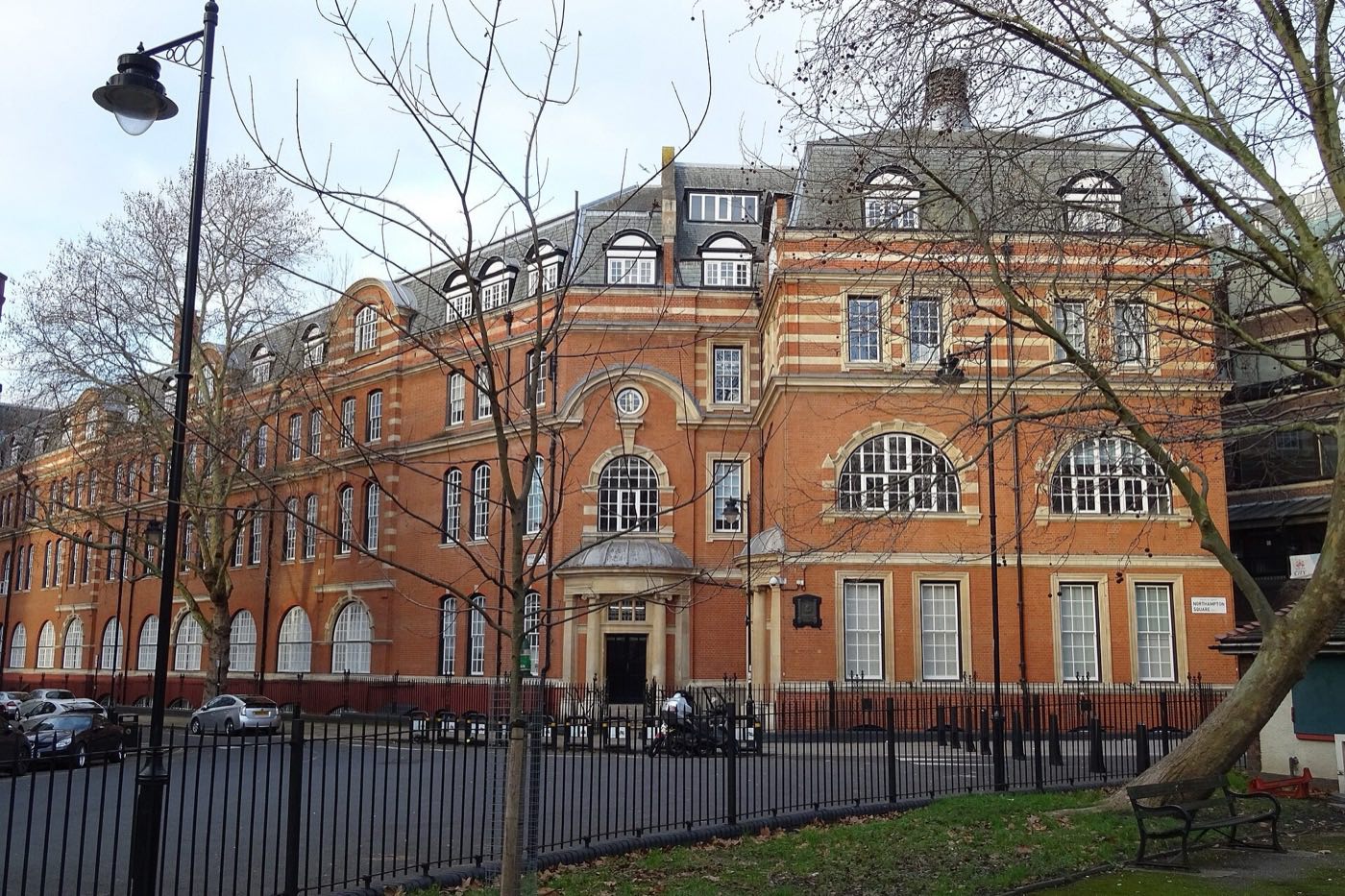
In 1972 the British Horological Institute left its bomb-damaged Clerkenwell premises for Upton Hall in Nottinghamshire.16
What remains is protected as townscape: the surviving Northampton Square houses were listed in 1972 and the square became a conservation area in 1990, and Islington’s guidelines for the Clerkenwell Green conservation areas call specialist craft and light industrial workshops traditional to Clerkenwell.11, 12, 19
The Clockmakers’ Company kept its collection in the City: Wikipedia records that the museum begun in 1813 was at Guildhall from 1874 to 2014 and is now shown at the Science Museum.7
Key dates
- 1631
Clockmakers’ Company chartered for the City and ten miles around.6, 7
- 1704
Debaufre and Facio patent jewelled pivot holes.2, 20
- 1747
The London Tradesman describes the divided trade.1, 9
- 1797
A short-lived tax on clocks and watches; the trade petitions Parliament.1, 9
- 1802
Northampton Square laid out.12
- 1842
Ingold’s London watch factory scheme fails (1839–42 by the Swiss dictionary’s account).3, 15
- 1858
British Horological Institute founded in Clerkenwell.16, 17
- 1972
The Institute leaves Clerkenwell for Upton Hall.16
Where Clerkenwell leads
- Part of, HistoryBritain’s watch industry
Where London’s specialists finished Lancashire movements into watches.3, 9
- Part of, HistoryLongitude and the marine chronometer
Clerkenwell makers built marine chronometers for the Greenwich trials, Thomas Mercer among them from 1858.14
- Part of, HistoryThe balance spring and the age of precision
Where London’s eighteenth-century watch trade was divided among specialist outworkers, making close to 200,000 watches a year by the 1790s by one estimate.1, 2, 3
- See also, HistoryAmerica industrializes the watch
Davies writes that Clerkenwell’s craftsmen dismissed the first Waltham watches, then were overwhelmed by American machine production.3
- See also, PersonGeorge Daniels
Charles Scarr in Clerkenwell engraved Daniels’s wristwatches of 1999, the Science Museum Group record says.21
- See also, PersonThomas Tompion
Tompion worked in Fleet Street, but Tompion Street beside Northampton Square was named after him in 1935.8, 11
- See also, PlaceBiel/Bienne
The Biel-born Pierre-Frédéric Ingold tried and failed to found a machine watch factory in London against Clerkenwell’s opposition.3, 15
- See also, PlaceGreenwich
Clerkenwell chronometer makers such as Thomas Mercer sent their work to the Greenwich trials.14
- See also, PlaceLa Chaux-de-Fonds and Le Locle
The Historical Dictionary of Switzerland says Ingold, defeated in London, worked at La Chaux-de-Fonds from 1858 and died there.15
- See also, PlaceLondon
The district north of the City where London’s working watch trade gathered from the early eighteenth century.1, 2
- See also, PlacePrescot
Rough movements from around Prescot were finished in Clerkenwell by the late eighteenth century.3, 9
- See also, TechnologyThe marine chronometer
Thomas Mercer made chronometers in Clerkenwell from 1858 to 1874.14
Facts and sources
- Country
- England1, 2
- Where
- North of the City of London, in today’s London Borough of Islington1, 19
- Watch trade
- From about 1720; at its height around 1800; in decline after 18701, 3
Sources
- 1
Introduction, in Survey of London: Volume 46, South and East Clerkenwell (2008) (opens in a new tab)
- 2
- 3
- 4
Sessions House, Clerkenwell Green: etching and engraving by George Cooke, 1826. (opens in a new tab)
- 5
- 6
- 7
- 8
- 9
- 10
- 11
- 12
Northampton Square (CA29) Conservation Area Design Guidelines (January 2002) (opens in a new tab)
- 13
Nos 18 to 21a Northampton Square, Clerkenwell, in March 2022. (opens in a new tab)
- 14
Marine chronometer 16285 by Thomas Mercer (ZBA7843) (opens in a new tab)
- 15
- 16
- 17
- 18
The College Building on Northampton Square, Clerkenwell, photographed in 2019. (opens in a new tab)
- 19
- 20
- 21
‘Millenium’ co-axial wristwatch by George Daniels (opens in a new tab)
Sources read November 12, 2026.