George Daniels
A British watchmaker (1926 to 2011) who made complete watches by hand in London and on the Isle of Man, restored and wrote on Breguet, and devised the co-axial escapement, patented in 1980 and put into production by Omega in 1999.
Born 19 August 1926; in Sunderland (Wikipedia), Edgware (Science Museum Group) or London (AHCI), Died 21 October 2011, at his home on the Isle of Man, aged 85
Companies Patek Philippe
In the history The mechanical revival and the independents
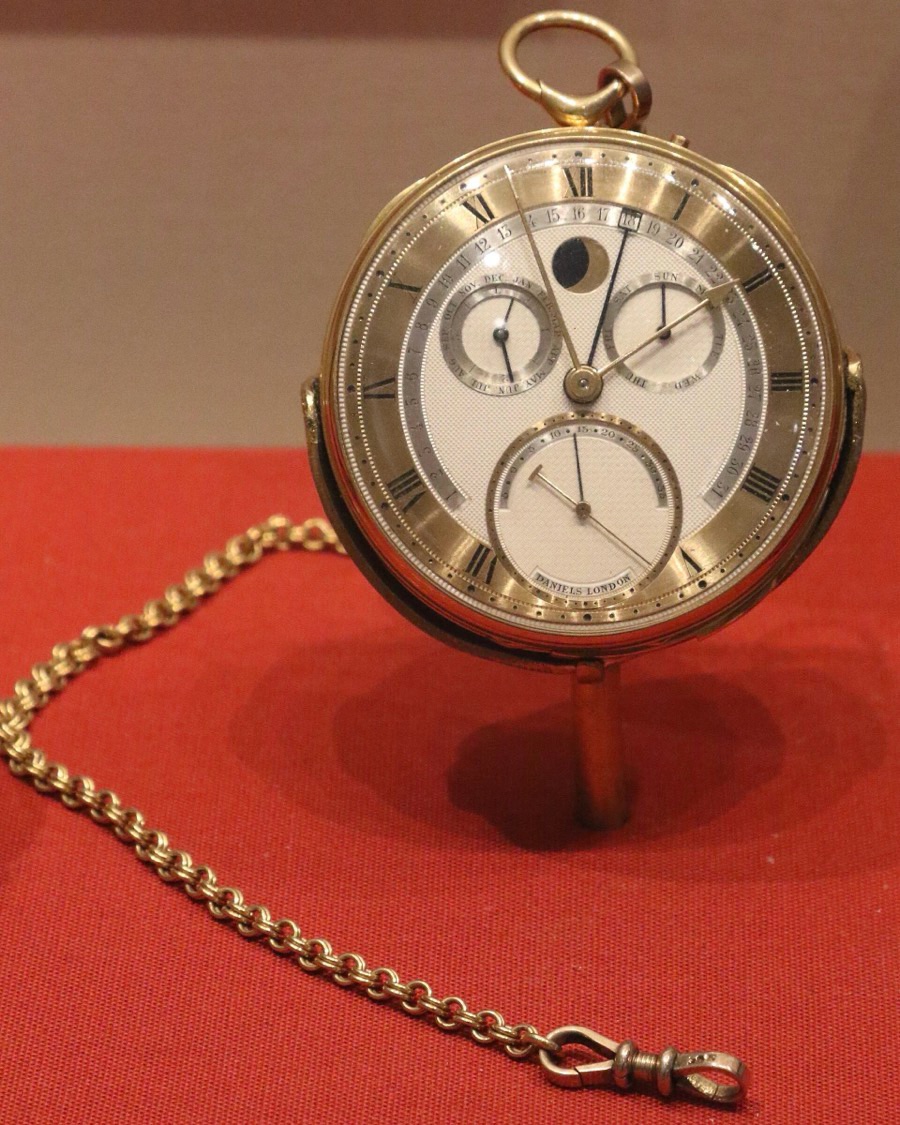

London and Breguet
George Daniels was born on 19 August 1926. Where is told three ways: Wikipedia says Sunderland, the Science Museum Group’s record gives Edgware in north London, and the AHCI says London.1, 2, 3
The AHCI says he left school at fourteen, worked in a mattress factory and mended clocks door to door, then trained with a watchmaker in Edgware and took evening classes in horology at Northampton Polytechnic.2
Wikipedia records army service from 1944 in the East Yorkshire Regiment, work as a watchmaker from 1947 and his own repair shop in London from 1960.1
Breguet was his model. He restored many of Breguet’s watches and wrote The Art of Breguet, dated 1974 by Wikipedia and 1975 by the AHCI; the AHCI adds that he declined an invitation in 1967 to take over the Breguet company.1, 2
Watches made by hand
He completed a pocket watch of his own design in 1969, for Sam Clutton, Wikipedia says; the AHCI says each of his watches took about 2,500 hours over a year or more.1, 2
How many he made is counted differently: Wikipedia says 23 pocket watches and two wristwatches, while an interview of 2011 republished by SwissWatches gives 37, prototypes included.1, 8
His manual Watchmaking appeared in 1981. Wikipedia lists his other books: Watches, with Cecil Clutton, in 1965, the autobiography All in Good Time in 2000 and The Practical Watch Escapement in 2010.1
He was Master of the Worshipful Company of Clockmakers in 1980, and the Clockmakers’ Museum, shown at the Science Museum in London, holds his working model of the co-axial escapement, a converted Patek Philippe prototype and one of his wristwatches of 1999.4, 9, 10
He wrote to Svend Andersen in 1984 asking to join the independent makers’ group, and was a member of the AHCI from 1987 until his death; his part in that story is told under independent watchmaking.2, 11
The co-axial escapement
He wanted a mechanical watch that could answer quartz, he said in his last interview, and the result was the co-axial escapement, patented in 1980.1, 8, 12
Selling it took years. The SwissWatches interview describes some 25 years of a lonely war against inertia and stubbornness, in which he fell out with Patek Philippe and the other firms he approached in the 1970s and 1980s; the Science Museum Group records that he converted a Patek Philippe Nautilus to the escapement at the firm’s request in 1981.8, 10
By the SwissWatches account, Nicolas Hayek of the Swatch Group acquired the rights for Omega in the 1990s, and Omega introduced the escapement on 12 April 1999.5, 8
The Isle of Man and after
He moved to the Isle of Man: the SwissWatches interview of September 2011 puts the move 29 years earlier and calls the island a tax haven, and the Science Museum Group dates a model he made there to about 1985.8, 9
Roger W. Smith’s company says Smith worked with him from 1998 on his wristwatches with Omega movements and from 2009 on the Daniels Anniversary watch, marking 35 years of the escapement, and Daniels left his workshop collection to Smith.13
Daniels died at his home on the Isle of Man on 21 October 2011, aged 85.1, 6
His bequest set up the George Daniels Educational Trust, which the AHCI says funds undergraduate scholarships, bursaries and doctoral studentships in horology; Wikipedia records that Sotheby’s sold 134 lots from his collection for the trust in 2012.1, 2
Key dates
- 1926
George Daniels is born on 19 August.1, 3
- 1969
Daniels completes a watch of his own design.1, 2
- 1980
Daniels is Master of the Worshipful Company of Clockmakers.4
- 1981
He converts a Patek Philippe Nautilus to the co-axial escapement at Patek Philippe’s request.10
- 1985
He builds a working model of the escapement on the Isle of Man, about this year.9
- 1987
He becomes a member of the AHCI.2, 11
- 1999
Omega introduces his escapement on 12 April.4, 5
- 2011
He dies on the Isle of Man on 21 October.1, 6
Where George Daniels leads
- Developed, TechnologyThe co-axial escapement
Daniels devised the escapement and patented it in 1980; Omega credits him as its inventor.2, 5, 12
- Part of, HistoryThe mechanical revival and the independents
The London watchmaker who made watches by hand and devised a new escapement.1, 2
- Part of, TraditionIndependent watchmaking
Daniels was a member of the AHCI from 1987 until his death in 2011.2, 11
- See also, HistoryBritain’s watch industry
A British watchmaker who made complete watches by hand, in London and later on the Isle of Man.2, 3, 9
- See also, CompanyPatek Philippe
Daniels converted a Patek Philippe Nautilus to his escapement at the firm’s request in 1981.10
- See also, PersonAbraham-Louis Breguet
Daniels restored many of Breguet’s watches and wrote The Art of Breguet, the AHCI says.1, 2
- See also, PlaceClerkenwell
Charles Scarr in Clerkenwell engraved Daniels’s wristwatches of 1999, the Science Museum Group record says.4
Facts and sources
- Born
- 19 August 1926; in Sunderland (Wikipedia), Edgware (Science Museum Group) or London (AHCI)1, 2, 3
- Died
- 21 October 2011, at his home on the Isle of Man, aged 851, 6
- Known for
- Watches made by hand under the name Daniels London; the co-axial escapement1, 2, 4
Sources
- 1
- 2
- 3
- 4
‘Millenium’ co-axial wristwatch by George Daniels (opens in a new tab)
- 5
- 6
- 7
- 8
The final interview with George Daniels (opens in a new tab)
- 9
Working model of the co-axial escapement built by George Daniels (opens in a new tab)
- 10
- 11
- 12
- 13
Sources read November 12, 2026.