Histories, Era V, The electronic age and after
The mechanical revival and the independents
1980 to today
How the mechanical watch came back after quartz as craft, heritage and luxury: Blancpain’s relaunch in the early 1980s, the return of complications and of movements made in-house, A. Lange & Söhne refounded in 1990, George Daniels and the co-axial escapement Omega put into production in 1999, the independent makers’ academy of 1985, and the auctions and collectors that followed.

In short
When cheap quartz watches took over in the 1970s, the old mechanical watch looked finished. Instead some Swiss firms, Blancpain from the early 1980s, sold it as craft and heritage, things a quartz watch could not offer, and complicated watches and movements made in a firm’s own works came back. In England George Daniels made watches by hand and devised a new escapement that Omega put into production in 1999, and independent watchmakers formed an academy of their own in 1985. Collectors, auction houses and charity sales followed, and the work of the best-known makers came to be sought around the world.1, 2, 3, 4, 5, 6, 7, 8, 9, 11, 12, 18, 19, 23, 24, 25
Part 1
After quartz: craft as luxury
By the early 1980s quartz had taken the everyday watch, a story told under the quartz crisis. Works in Progress gives Swiss production as 96 million watches in 1974 and 45 million in 1983.11, 12
What survived was repositioned. The business historian Pierre-Yves Donzé argues that the Swiss comeback owed less to new products than to rationalised production and a new marketing strategy, and that firms moved their brands towards luxury.1
Donzé places this in a wider change of the 1980s, when the luxury trades turned from discreet handwork for an elite into global brands held by large groups, and he dates Richemont’s entry into watches to 1988 and LVMH’s to 1999; how the groups formed is told in Crisis, consolidation and the groups.1
The mechanical watch was sold on what quartz could not offer. Works in Progress writes that Jean-Claude Biver saw that, in a world where machines were taking over, the work of human hands could command a premium, and that he doubled down on craftsmanship, heritage and emotion.12
Switzerland came to sell fewer watches of higher value: Donzé records that its watch exports averaged 34.9 million pieces a year in the 1990s and 25.5 million in 2001 to 2007, while their value kept rising.1
Part 2
Blancpain: never a quartz watch
Who bought Blancpain from the SSIH group, and when, is told three ways. Blancpain’s own history says Jacques Piguet, heir to the Frédéric Piguet movement business of the Vallée de Joux, bought it in 1982 and hired Jean-Claude Biver in 1983; Worldtempus dates the sale of the name to Piguet, with Biver, to 9 January 1983; Donzé has Biver and Piguet acquiring it together in 1983 for CHF 18,000.1, 2, 26
Biver’s line, as Works in Progress quotes it, was that since 1735 there had never been a quartz Blancpain watch, and there never would be. Donzé notes that on the strength of that date the firm called itself the world’s oldest watch brand; Wikipedia says parts of its early history are disputed.1, 12, 27
Donzé describes a strategy that went against the whole industry: no quartz movements, and watches with complications such as moon phases and tourbillons sold as craft products, that is, as luxury goods.1
Sales rose from about CHF 9 million in 1985 to CHF 56 million in 1991.1, 12
In 1992 Piguet sold Blancpain and Frédéric Piguet to SMH, the future Swatch Group. Donzé argues that Nicolas Hayek was buying marketing know-how as much as a brand: Biver joined the group’s management and took charge of rebranding Omega.1, 2
Part 3
Complications and movements made at home
Other firms turned back to mechanical complications. At IWC, under Günter Blümlein, the head watchmaker Kurt Klaus built a mechanical perpetual calendar that was shown in Basel in 1985.3, 28
Wikipedia credits Audemars Piguet’s automatic tourbillon wristwatch of 1986 with starting the modern revival of the tourbillon.17
In Glashütte, Walter Lange and Blümlein founded Lange Uhren GmbH on 7 December 1990, and its four watches of 24 October 1994 brought the name back; that story is told under A. Lange & Söhne.4, 14, 16
A movement made in the firm’s own works became a mark of standing. Donzé records that in 2002 the Swatch Group announced it would stop selling movement blanks and parts outside the group after 2006, when it was estimated to make 80 per cent of Swiss movement blanks; the federal Competition Commission opened an inquiry, and an agreement kept deliveries going until 2010, which Donzé dates to 2006 and the commission’s own account to 2004; the case is told under The ETA supply dispute.1, 29
Donzé argues that the decision followed the industry’s turn towards luxury: the group’s main rivals were now other Swiss firms, and the movements it supplied them were sold worldwide in luxury watches.1
Part 4
George Daniels and the co-axial escapement
In London George Daniels, who repaired watches and restored many of Breguet’s, completed a watch of his own design in 1969; the AHCI says each of his watches took about 2,500 hours over a year or more.18, 19
Quartz drove his next idea. In an interview given weeks before his death he said it was clear to him that mechanical watches would not survive unless the industry did something about it, and he set out to make a mechanical watch that kept better time.30
The result was the co-axial escapement, patented in 1980. When he devised it is given differently: Wikipedia’s article on the escapement says 1974 in one place and 1976 in another, and the AHCI says it was unveiled in 1976.19, 31
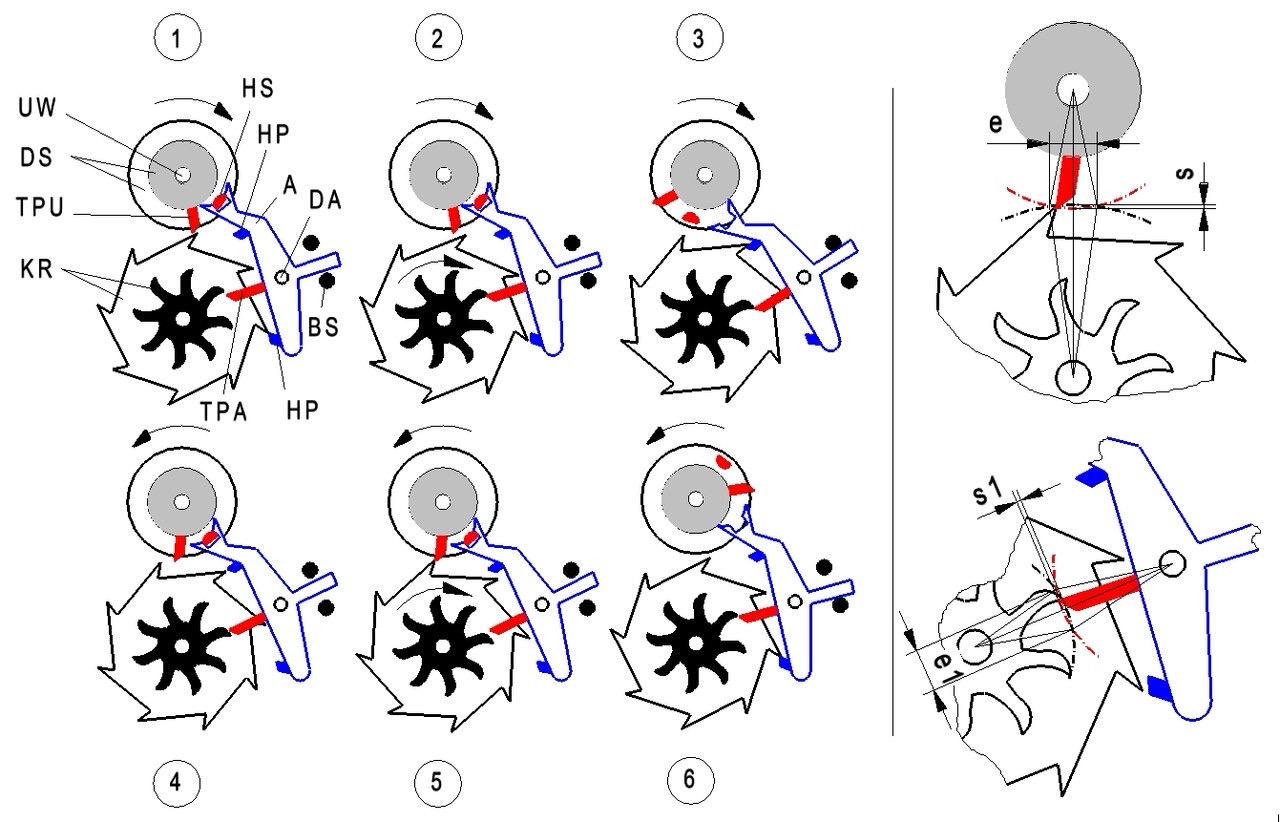
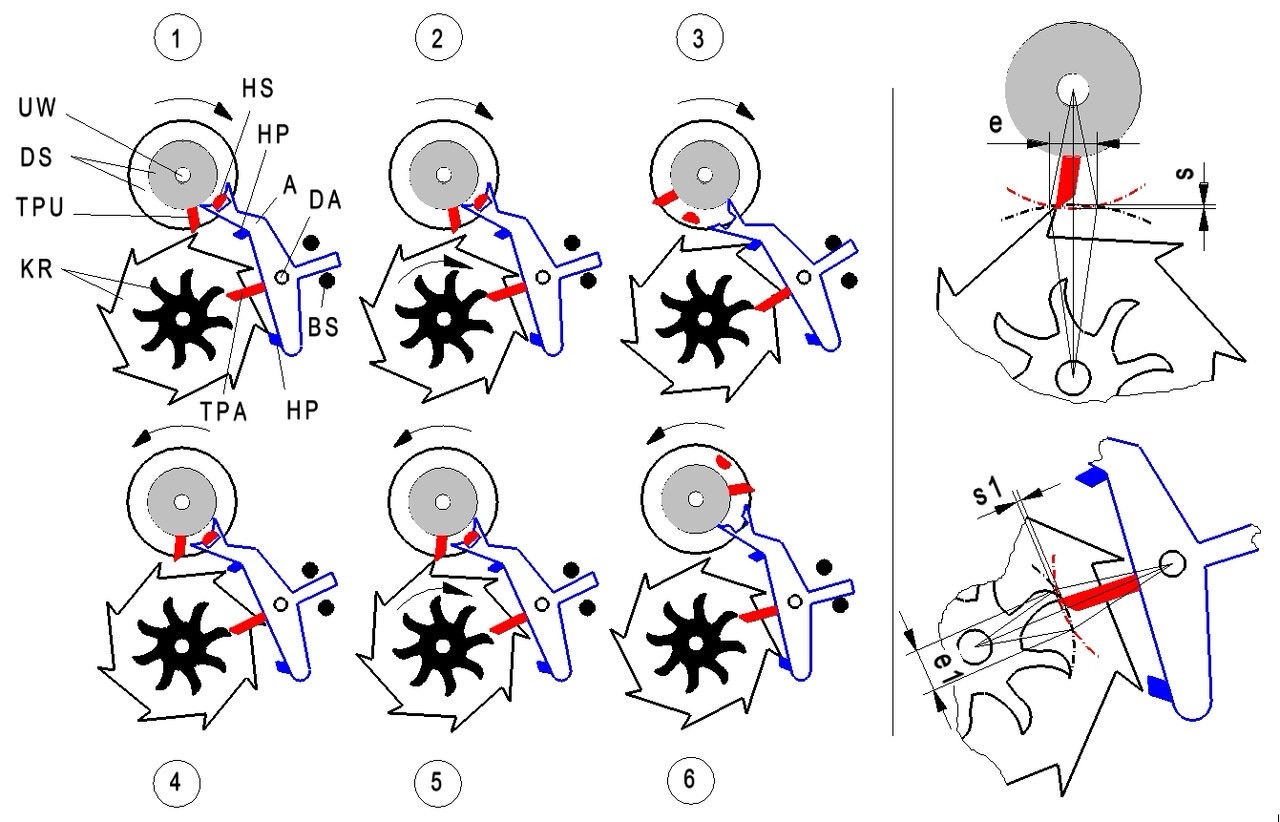
Swiss firms were slow to take it up. The Science Museum Group records that Daniels converted a Patek Philippe Nautilus to his escapement at Patek Philippe’s request in 1981, and that he built a working model on the Isle of Man around 1985 to capture the attention of the Swiss industry.34, 35
Omega took it up. It introduced the Co-Axial escapement on 12 April 1999 and calls it the first practical new watch escapement in some 250 years; it says it introduced its own Co-Axial calibre in 2007 and that, with very few exceptions, all its mechanical watches now use one.5, 20
Daniels finished Omega movements under his own name: the Clockmakers’ Museum holds one of these wristwatches of 1999, with case and dial made in his workshop and engraving by Charles Scarr in Clerkenwell.6
How many there were is told differently. The Science Museum Group record says Daniels bought fifty Omega movements for the edition; Roger W. Smith’s company says the run, planned at 12, grew to 48 in yellow gold and 8 in white.6, 36
Part 5
The independents
In 1984 two watchmakers, Svend Andersen of Geneva and Vincent Calabrese of Lausanne, appealed in the trade journals for independent makers to join them, fearing, the academy says, that the guardians of the craft would disappear into big brands and corporations.7
Their group exhibited in summer 1985 at the watch museum in Le Locle, and at the Basel fair of 1987 it took the name Académie Horlogère des Créateurs Indépendants (AHCI), with twelve watchmakers of six nationalities, Daniels among them. The story of the academy is told under independent watchmaking.7, 19, 23
Philippe Dufour, born at Le Sentier in 1948 and trained at the Vallée de Joux watchmaking school, bought a fully equipped workshop in 1978; the AHCI, which he joined in 1987, lists among his work a grande sonnerie movement for a pocket watch and the wristwatches Duality, with two escapements, and Simplicity.37
François-Paul Journe, born in Marseille in 1957 and a member since 1988, began designing his own wristwatches in 1994 and presented a collection signed F.P.Journe in 1999, the AHCI says.38
Daniels had a successor on the Isle of Man. By his own company’s account, Roger W. Smith, trained at the Manchester School of Horology, showed Daniels in 1997 a second hand-made pocket watch that Daniels approved, worked with him on the Millennium watches and founded his own firm at Ballaugh in 2001.36
Part 6
Saxony, Japan and elsewhere
In Saxony, besides Lange, small makers grew up. The AHCI says Marco Lang, born in Gera in 1971 into a family of watchmakers, founded Lang & Heyne in Dresden in 2001 and led it until 2018; in Glashütte the watchmaker Christine Hutter founded Moritz Grossmann in 2008 under the name of the nineteenth-century maker.39, 40, 41
In Japan, where mechanical Grand Seiko watches returned in 1998, the AHCI lists Hajime Asaoka of Tokyo, a designer who taught himself watchmaking, and Masahiro Kikuno of Hokkaido among its members; their place in Japan’s story is under Japan builds a watch industry.42, 43, 44
The academy says it now counts 36 members, 6 candidates and 18 former members from 16 countries.7
Part 7
Auctions and collectors
Collectors followed the revival into the salerooms. Antiquorum, established in Geneva in 1974, says it pioneered the sale of wristwatches at auction in the early 1980s, and dates its themed sales from The Art of Patek Philippe in 1989, that firm’s 150th anniversary year.8, 9
Wikipedia says the 1989 sale helped establish Patek Philippe as a luxury brand and an investment, and suggested that watches could be more than timepieces.9
Daniels’s own collection went to auction after his death: Wikipedia records that Sotheby’s sold 134 lots in 2012 for the George Daniels Educational Trust, which the AHCI says funds scholarships, bursaries and doctoral studies in horology.18, 19
Charity sales joined them. Only Watch, created in 2005 by Luc Pettavino for the Monaco charity Association Monégasque contre les Myopathies, auctions one-off pieces given by watchmakers to fund research into Duchenne muscular dystrophy; it says it has raised more than CHF 128 million since 2005.24, 25
Its tenth sale, set for Geneva in November 2023, was put off amid a dispute. The NonProfit Times reports that enthusiasts and the specialist press questioned how the proceeds were allocated and how the association was governed, and that the association answered by publishing its accounts for 2018 to 2022; Only Watch says the sale was held at Geneva’s Palexpo on 10 May 2024.24, 25
Through this history
The companies, people, technologies, objects and events this chapter is made of, in the order the story meets them.
Person
Günter BlümleinThe manager who steered IWC back to mechanical complications and refounded Lange.3, 13
Event
Glashütte after reunificationA. Lange & Söhne was refounded in 1990 and showed its new mechanical watches in 1994.13, 14, 15
Technology
The tourbillonBreguet’s regulator, revived in the wristwatch from the 1980s, Wikipedia says.17
Person
George DanielsThe London watchmaker who made watches by hand and devised a new escapement.18, 19
Technology
The co-axial escapementDaniels’s escapement of 1980, in production at Omega since 1999.5, 6
Event
The luxury-group consolidationLVMH’s report of 1999 and the Historical Dictionary of Switzerland describe groups buying the movement works that mattered as the mechanical watch returned as a luxury.21, 22
Key dates
- 1974
Antiquorum is established in Geneva.8, 9
- 1982
Jacques Piguet buys Blancpain, by Blancpain’s account; others date the sale to 1983.1, 2, 26
- 1985
IWC shows a mechanical perpetual calendar in Basel; the independents’ group exhibits at Le Locle.3, 7
- 1987
The independents take the name Académie Horlogère des Créateurs Indépendants at the Basel fair.7
- 1989
Antiquorum holds The Art of Patek Philippe auction in Geneva.8, 9
- 1990
Lange Uhren GmbH is founded in Glashütte on 7 December.4, 16
- 1992
Piguet sells Blancpain and Frédéric Piguet to SMH.1, 2
- 1999
Omega introduces the Co-Axial escapement on 12 April.5, 6
- 2005
The Monaco charity watch auction of the Association Monégasque contre les Myopathies is created.24, 25
- 2011
George Daniels dies on the Isle of Man on 21 October.18, 45
- 2024
The tenth sale of the Monaco charity watch auction is held in Geneva on 10 May, after its postponement.24, 25
Where this leads
- Before, Era VCrisis, consolidation and the groups
1970 to 2005
- After, Era VMaking watches today
1990 to today
Where the mechanical revival and the independents lead
- In this story, PersonWalter Lange
Walter Lange and Günter Blümlein founded Lange Uhren GmbH in Glashütte on 7 December 1990.4, 14
- See also, HistoryCrisis, consolidation and the groups
Donzé dates the entry of the luxury groups into watches to Richemont in 1988 and LVMH in 1999.1
- See also, HistoryMaking watches today
Donzé records how the Swatch Group stopped selling movement blanks outside the group, which pushed rivals towards their own movements.1
- See also, CompanyETA
The dispute over ETA’s movements pushed brands to make their own.1, 46
- See also, EventThe ETA supply dispute
Donzé records that a movement made in a firm’s own works became a mark of standing as the Swatch Group stopped selling movement blanks outside the group.1
Facts and sources
- Period
- From the early 1980s to today1, 2, 7
- Where
- The Vallée de Joux and Geneva in Switzerland, Glashütte and Dresden in Saxony, the Isle of Man, and workshops in many other countries2, 4, 7, 35, 39
Sources
- 1
- 2
- 3
- 4
- 5
- 6
‘Millenium’ co-axial wristwatch by George Daniels (opens in a new tab)
- 7
- 8
- 9
- 10
- 11
- 12
- 13
- 14
- 15
- 16
- 17
- 18
- 19
- 20
- 21
- 22
- 23
Académie Horlogère des Créateurs Indépendants (opens in a new tab)
- 24
- 25
Charity Watch Auction Postponed Amid Financial Impropriety Allegations (opens in a new tab)
- 26
- 27
- 28
- 29
- 30
The final interview with George Daniels (opens in a new tab)
- 31
- 32
- 33
- 34
- 35
Working model of the co-axial escapement built by George Daniels (opens in a new tab)
- 36
- 37
- 38
- 39
- 40
- 41
- 42
History of Seiko and its products, stage 4 (1990s onward) (opens in a new tab)
- 43
- 44
- 45
- 46
Presserohstoff: WEKO-Entscheid zu ETA-Uhrwerken (15 July 2020) (opens in a new tab)
Sources read November 12, 2026.