Histories, Era V, The electronic age and after
Making watches today
1990 to today
How watches are made now, from the 1990s to today: the Swiss made rules and their tightening in 2017, the end of ETA’s duty to supply other firms and the rise of Sellita, a supply chain that runs through Shenzhen and Japan, silicon and other new methods, the smartwatch years in the export figures, small revivals outside Switzerland, and the schools and repairers who keep watches running.

In short
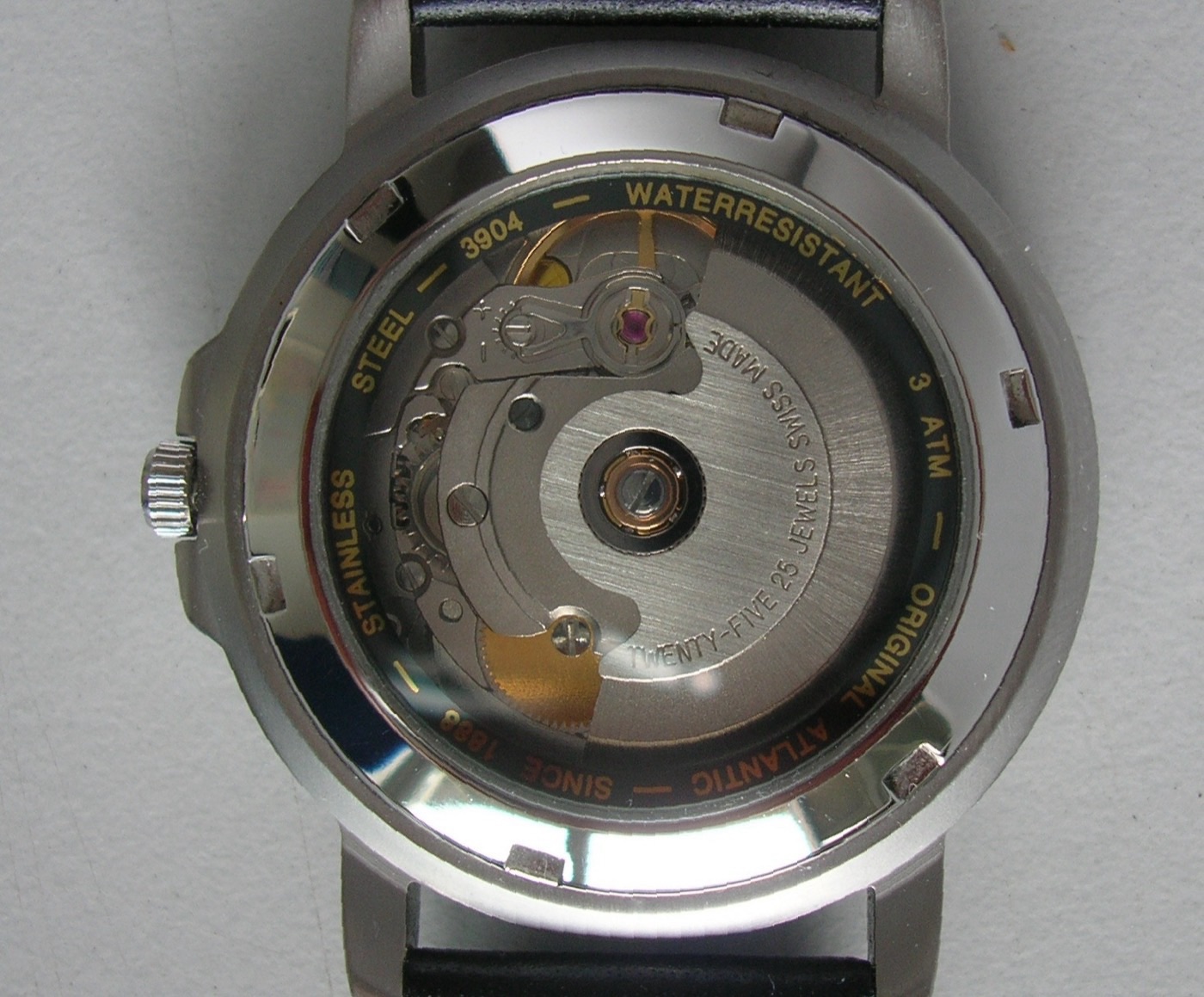
Watches are still made, but by a different industry than fifty years ago. Most of the world’s watches now come from China, while Switzerland makes far fewer, dearer ones under strict rules about what may be called Swiss made. When the Swatch Group stopped supplying movements to its rivals, other Swiss firms learned to make their own, and new materials such as silicon entered the movement. Switzerland now exports far fewer cheap electronic watches than it did before smartwatches spread, though how far one caused the other is disputed; small makers in America and Britain make movements again, and schools train the watchmakers who keep watches running.1, 2, 4, 5, 7, 9, 10, 11, 12, 13, 14, 15, 18, 30, 31, 32
Part 1
What a label promises
Two words on a dial carry a legal test. The Swiss Federal Council’s ordinance on the use of “Swiss” for watches is dated 23 December 1971; what it requires of the watch and its movement, and how the Glashütte rule compares, is set out under origin labels.1, 18
The rule has been revised more than once. The Historical Dictionary of Switzerland records a revision of 1992 that still allowed foreign parts so long as Swiss parts made up at least half the movement’s value; the FH says the revision in force from 1 January 2017 sets 60 per cent Swiss value for the whole watch and raises the movement threshold from 50 to 60 per cent.2, 18
The 2017 text also reaches electronics. From 1 January 2019, a watch that is not purely mechanical must have its printed circuits, display and software conceived in Switzerland, as well as its mechanical construction and prototype, to count as Swiss.1
Precision is certified by separate bodies, told under chronometry. The Historical Dictionary dates the Swiss official chronometer testing association, COSC, to 1972 and its accreditation by the federal metrology office to 1994; COSC says its three laboratories can inspect more than two million movements and watches a year.18, 33
The federal metrology institute, METAS, also certifies whole watches: a Master Chronometer must have a movement that passes the ISO 3159 chronometer test and must then pass tests of the cased watch, including resistance to a magnetic field of 1.5 tesla.19
Part 2
After ETA: who makes the movements
The Historical Dictionary describes the industry of the early 21st century as mostly établisseurs: brands, many under groups such as the Swatch Group, Richemont and LVMH, that buy movements, cases, dials, hands and straps, some from Asia, and concentrate on marketing and distribution, while the few full manufactures stay at the top of the market.18
For decades the main supplier of mechanical movements to other Swiss brands was the Swatch Group’s ETA. In 2002 it set out to stop supplying outside firms; the Competition Commission (COMCO) held it to a phased exit, with deliveries falling to 55 per cent of their 2009–2011 average by 2019, and on 15 July 2020 imposed no new obligation, finding ETA still dominant but its customers less dependent on it. The eighteen years are told under The ETA supply dispute.4, 20, 34, 35
Who led the market by 2019 depends on who is counting. The Swatch Group said that Sellita produced and supplied one million mechanical movements in 2019, roughly twice as many as ETA, and was the new market leader; COMCO found in 2020 that ETA, selling mostly inside its own group, was still by far the most important maker of Swiss made mechanical movements and still dominant.4, 21
Sellita, founded in La Chaux-de-Fonds in 1950, had assembled ETA movements; after 2003 it made its own versions of ETA calibres whose patents had expired, such as the SW200 matching ETA’s 2824. Monochrome reports 1.5 million movements in 2022 from 850 employees, with its own blank factory at Glashütte in Germany.4, 5, 36
Part 3
One watch, many makers
Most watches are not Swiss. The Historical Dictionary puts world production in 2010 at about 1.2 billion watches, 1.1 billion of them from China and Hong Kong, against 26.2 million finished Swiss watches; the FH counts 589.5 million watches exported from China in 2025 at an average export price of 4 dollars, and 14.6 million from Switzerland at 2,018 dollars.12, 18
Much of that volume comes from Shenzhen and the Pearl River Delta, where Hong Kong firms moved their assembly from the late 1980s while keeping headquarters, design and marketing in Hong Kong, as the business historian Pierre-Yves Donzé describes.6, 7
A case study published by APEC in 2015 follows one Hong Kong maker, whose cases, bracelets, hands and buckles came from the Pearl River Delta, movements from Japan and dials from China or Thailand; it gives assembly costs of about 3 dollars a watch in China against up to 9 in Hong Kong.37
Japan sells movements to the world. Miyota, Citizen’s movement business, began as a factory founded at Miyota in Nagano in 1959; it says its Caliber 20 quartz series of 1981 and Caliber 82 mechanical series of 1986 became de facto industry standards, and that it makes all its movements in Japan.8, 27
In China, Sea-Gull of Tianjin, descended from the Tianjin Watch Factory of 1955, says it can make three million movements a year, enough by its account to supply a quarter of the world.26
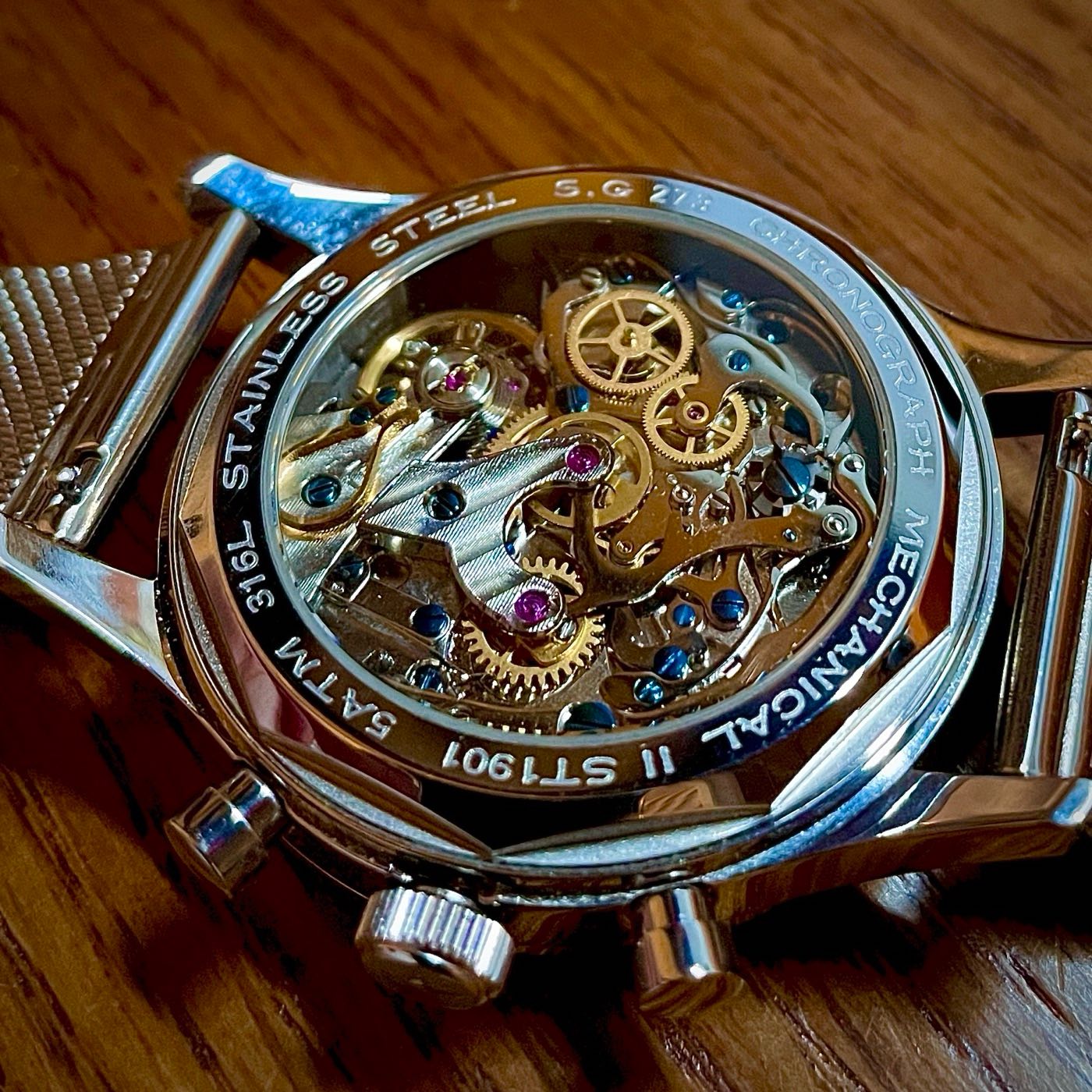
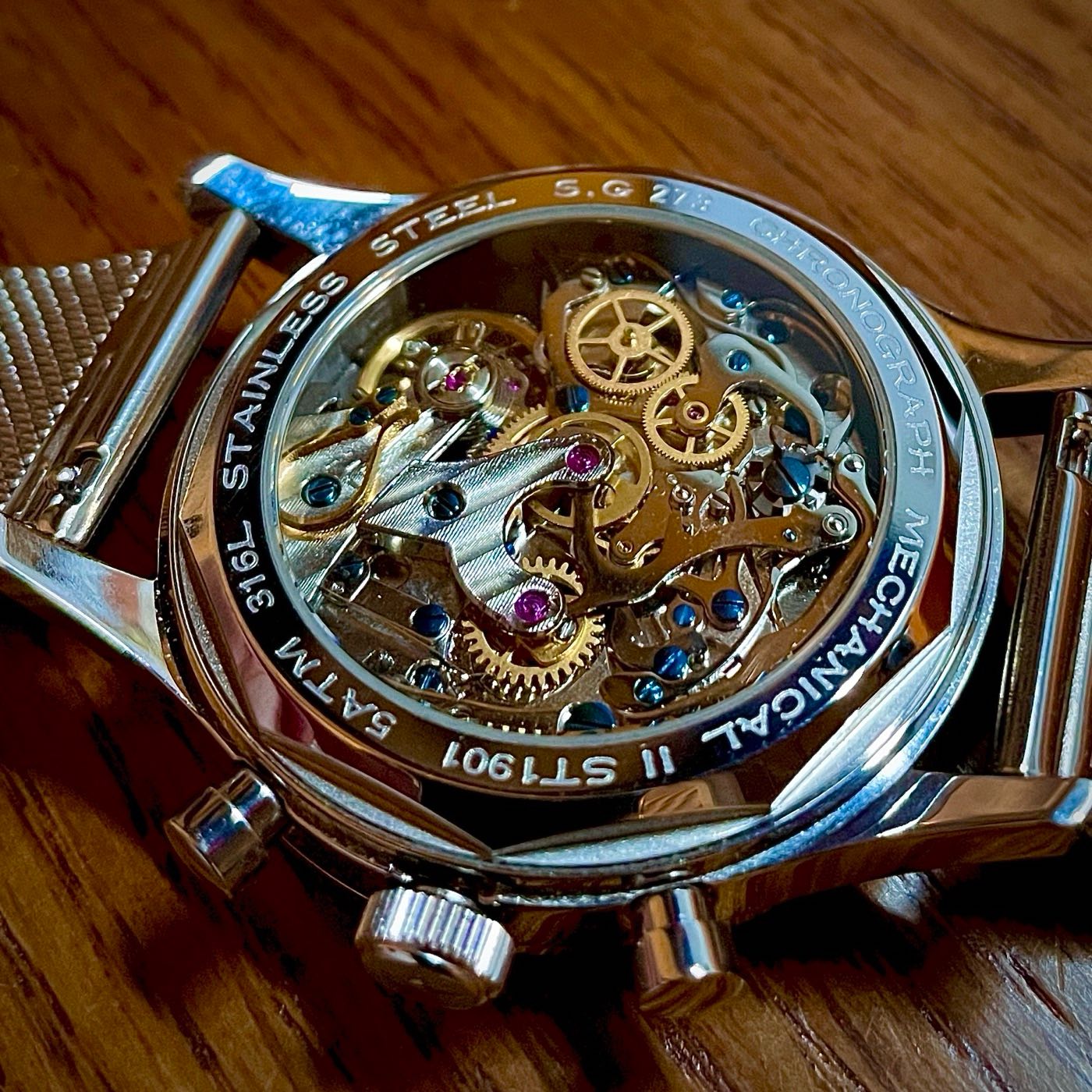
Behind the movement makers stand the component makers. The Swatch Group says it makes much of what goes into its watches, from ETA movements to hands, dials and cases; the Acrotec group calls itself the leading independent supplier of movement parts in Switzerland, with firms for shock absorbers, springs, jewels and LIGA parts.40, 41, 42
Part 4
Silicon, LIGA and the machine shop
The biggest change in the materials of the movement is silicon. Monochrome describes Ulysse Nardin’s Freak of 2001 as the watch that brought silicon into the movement: its escape wheels were first tried in aluminium, which wore too fast, and were then etched from silicon.22, 43
In Neuchâtel, the research centre CSEM, heir of the industry’s quartz laboratory, filed a European patent on 25 November 2002 for a balance spring cut from monocrystalline silicon and coated with a layer of opposite thermal behaviour, so that its stiffness changes little with temperature.9, 25
Patek Philippe, Rolex and the Swatch Group formed a consortium at CSEM that took up the patent and brought silicon balance springs into industrial production, as Europa Star and WorldTempus report.10, 43
The members moved at different speeds: Patek Philippe dates its silicon escape wheel to 2005 and its Spiromax balance spring to 2006, and Europa Star dates Rolex’s silicon Syloxi spring to 2014. The core patent expired in November 2022, and Europa Star reports that a silicon balance spring that cost about 100 francs at first cost about 20 by then.9, 10, 44
Silicon parts are cut by deep reactive ion etching, a process borrowed from microelectronics; LIGA, which grows metal parts in moulds made by lithography, is the other new method. Monochrome reports that Ulysse Nardin set up Sigatec with Mimotec in 2006 to make parts by both methods.22, 42, 43, 44
Conventional parts are now machined on computer-controlled machines to fine tolerances. Bremont says it mills the plates and bridges of its ENG300 movement on a five-axis machine at Henley-on-Thames to within 3 microns, and RGM in Pennsylvania has its nickel-silver plates cut by water jet nearby before machining and finishing them itself.31, 45, 46
Part 5
The smartwatch years, in figures
The FH’s export statistics show Swiss watch exports falling from 28.1 million watches in 2015 to 13.8 million in 2020 and 14.6 million in 2025. Most of the fall was in electronic watches, down from 20.3 million to 9.4 million, while the value of mechanical watches exported rose from 16.3 to 20.9 billion francs.11, 12
The FH warns that these are exports at export prices, not sales to consumers, and its world comparisons leave out connected watches altogether.12, 47
The market researcher Strategy Analytics estimated that Apple shipped 30.7 million watches in 2019 against 21.1 million for all Swiss brands together, and said younger buyers were turning to smartwatches; MacRumors noted that Apple does not publish Apple Watch sales, so such figures are estimates.30, 48, 49
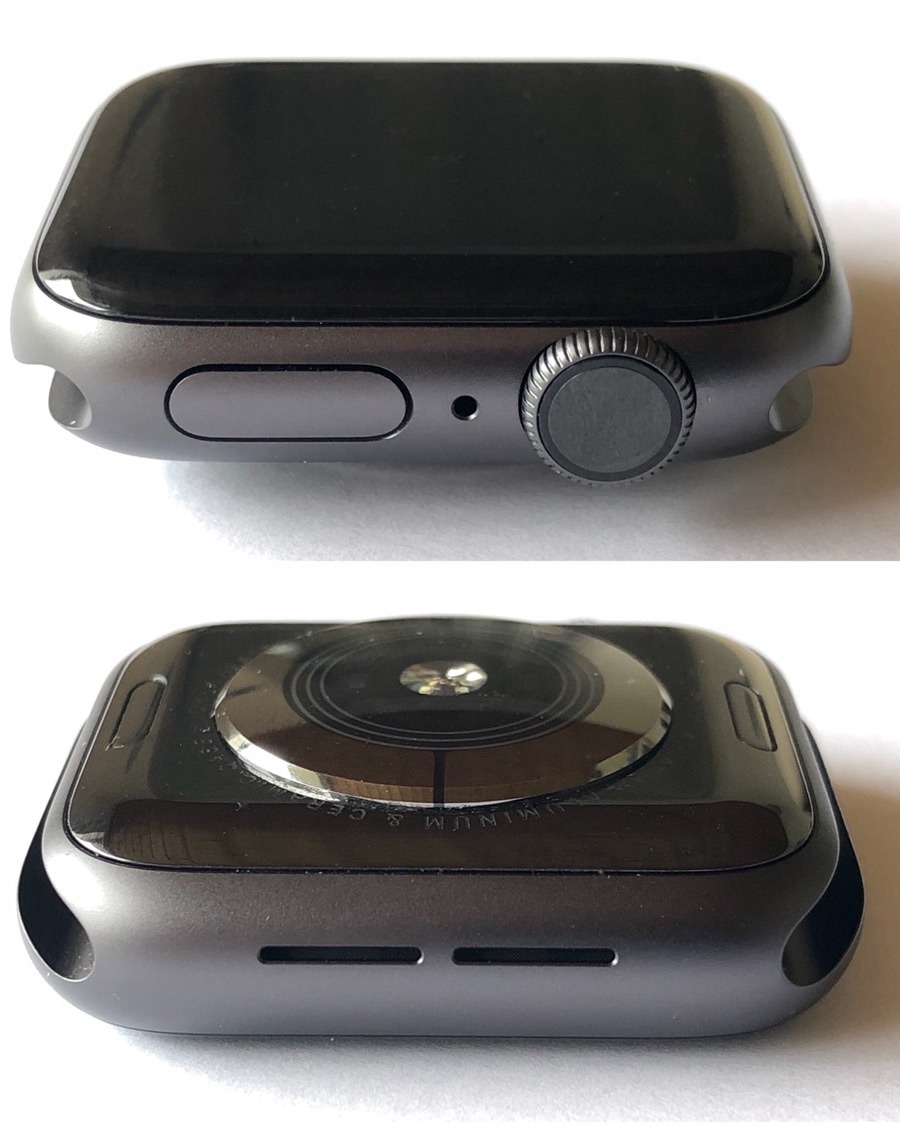
How much of the Swiss decline the smartwatch explains is not settled. Strategy Analytics put it down to younger buyers choosing smartwatches; the FH, explaining its 2025 results, named American trade policy, the fall of the Chinese market, a record gold price and a strong franc, and noted that watches under 500 francs fell more sharply than those from 500 to 3,000 francs.12, 30
Some Swiss makers answered with electronics of their own. CSEM says it developed the photovoltaic dial and a low-power operating system for Tissot’s T-Touch Connect Solar, and that it helped design a Bluetooth chip with the Swatch Group’s EM Microelectronic.25
Part 6
Watchmaking outside Switzerland
In the United States, RGM was founded in 1992 by the watchmaker Roland G. Murphy at Mount Joy, Pennsylvania; Quill & Pad reports that he began making his own movements in 2007, and RGM says its Caliber 801 is the first serial mechanical movement made in the country since Hamilton stopped its 992B in 1969.13, 46, 51
Weiss Watch Company, founded in Los Angeles in 2013 by the WOSTEP-trained watchmaker Cameron Weiss, first cased Swiss movements and from 2016 made its own Calibre 1003; Monochrome reports that over 95 per cent is made by the firm, with jewels and mainsprings bought in.14
In Britain, Bremont opened a 35,000-square-foot manufacturing centre at Henley-on-Thames in 2021. Its ENG300 movement is developed from the K1 calibre of the Swiss firm THE+, with plates and bridges made in England, as Europa Star reports.31, 45
When Britain last made movements at scale is told differently. Bremont says it was Smiths in 1971, and Europa Star says Smiths closed in the 1970s; the Antiquarian Horological Society’s James Nye dates the end of Smiths’ Cheltenham production to March 1971, but Smiths’ cheap-watch factory in Wales, run with Ingersoll, closed in 1980.31, 45, 52, 53, 54
In Japan, Grand Seiko says its Shinshu Watch Studio, in a Seiko Epson facility at Shiojiri, descends from Suwa Seikosha, which made the original Grand Seiko of 1960, and that Spring Drive was conceived there.55
In China, Shenzhen firms that began as assembly plants for foreign orders set up their own brands. China Daily wrote in 2012 that more than 150 Shenzhen watch companies had brands of their own and named Tian Wang, Fiyta, Ebohr and Rossini as the four biggest domestic brands.7, 56
Part 7
Repair, service and the workforce
WOSTEP, a training centre supported by the Swiss industry, opened in Neuchâtel in 1966 with a one-year course for North American watchmakers. Its Worldwide Partnership, presented in 1994, carries its 3,000-hour watchmaker programme to schools abroad, and WOSTEP says Swiss federal authorities recognised that programme in 2009.15
Rolex opened a free school, the Lititz Watch Technicum, in Pennsylvania in 2001, after the closure of the Bulova School in New York, as JCK reported; Wikipedia says it closed in July 2025, its training moved to Dallas.32, 57
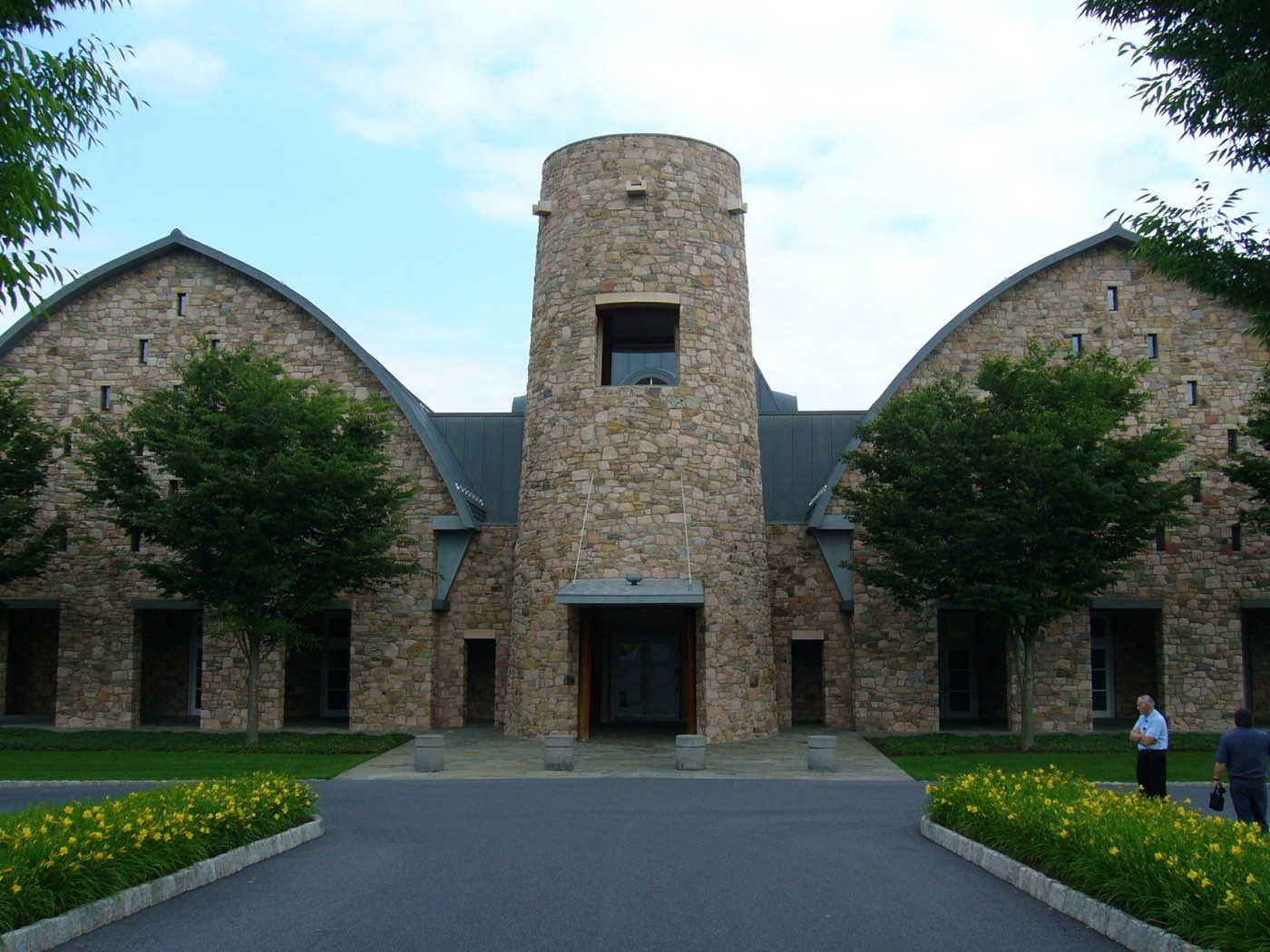
Accounts differ on what Lititz taught. JCK reported at its opening that it would use WOSTEP’s two-year curriculum; Wikipedia describes a curriculum of the Swiss American Watchmaker’s Training Alliance, SAWTA, of more than 3,000 hours.32, 57
Who may repair a watch became a legal question. In 2004 the European confederation of watch repairers’ associations complained to the European Commission that the Swatch Group, Richemont, LVMH, Rolex, Audemars Piguet and Patek Philippe refused to supply spare parts to independent repairers; on 23 October 2017 the EU General Court dismissed its challenge to the Commission’s rejection.16, 59
Osborne Clarke’s summary says the court accepted the makers’ selective repair systems, which supply parts only to authorised repairers, as justified by the complexity of the watches, the quality of service and the fight against counterfeiting.59
The Swiss industry employed 65,237 people in 2023, 4,414 more than a year earlier, by the count of the employers’ Convention patronale; Neuchâtel, Bern and Geneva were the largest watch cantons, and the number of new apprentices rose by 14.5 per cent.60, 61
In 2024 the workforce stayed above 65,000, with 46,493 people in production, as swissinfo reports the Convention patronale’s figures.61
Through this history
The companies, people, technologies, objects and events this chapter is made of, in the order the story meets them.
Tradition
Chronometry and certificationThe chronometer test of COSC and the federal Master Chronometer test of METAS.18, 19
Event
The ETA supply disputeThe case that ended ETA’s duty to supply other firms, from 2002 to 2020.4, 20
Group
The Swatch GroupThe group whose decision to keep ETA’s movements for itself reshaped the supply of movements.4, 5, 21
Company
Sea-Gull (Tianjin)Tianjin’s movement maker, which says it can make three million movements a year.26
Event
The pandemic watch boom and correctionThe years that left Swiss watchmaking selling fewer watches at a far higher value, and its trade meeting in Geneva.28, 29
Key dates
- 1966
WOSTEP opens in Neuchâtel with a course for North American watchmakers.15
- 1971
The Swiss Federal Council issues the ordinance on the use of “Swiss” for watches, dated 23 December.1
- 2001
Ulysse Nardin’s Freak brings silicon escape wheels; Rolex opens the Lititz Watch Technicum.22, 32, 43, 57
- 2002
CSEM files its patent for a temperature-compensated silicon balance spring.9, 25
- 2015
Switzerland exports 28.1 million watches.11
- 2017
The revised Swiss made ordinance takes effect; the EU General Court rules on watch spare parts.1, 2, 16
- 2020
COMCO lifts its interim measures and imposes no new supply obligation on ETA.4, 62
- 2022
The core European patent on silicon balance springs expires.9, 10
- 2023
The Swiss watch industry employs 65,237 people.60
- 2025
Switzerland exports 14.6 million watches; China exports 589.5 million.11, 12
Where this leads
- Before, Era VThe mechanical revival and the independents
1980 to today
Where Making watches today leads
- In this story, PlaceBiel/Bienne
The Swatch Group's head office, Omega and Rolex's movement manufacture are in Biel.63, 64, 65
- In this story, PlaceLa Chaux-de-Fonds and Le Locle
ICOMOS describes the towns' watchmaking as a living tradition, still practised at an internationally recognised level.66
- In this story, GroupThe Hans Wilsdorf Foundation
A controlling foundation whose group took its own movement, case and dial makers in between 1998 and 2025.67, 68, 69, 70
- See also, HistoryChina builds a watch industry
People’s Daily reports that Shenzhen, where Hong Kong’s makers moved their factories, makes 42 per cent of the world’s watches.71, 72
- See also, HistoryCrisis, consolidation and the groups
Monochrome reports that the Swatch Group announced in 2002 that ETA would stop supplying movement kits to other firms; COMCO’s settlement phased the supply out by 2020.3, 4, 5
- See also, HistoryIndia builds a watch industry
Titan calls itself the fifth largest integrated watch manufacturer in the world.73
- See also, HistoryThe mechanical revival and the independents
Donzé records how the Swatch Group stopped selling movement blanks outside the group, which pushed rivals towards their own movements.74
- See also, CompanyGrand Seiko
Grand Seiko says its Shinshu Watch Studio at Shiojiri descends from Suwa Seikosha, maker of the original Grand Seiko of 1960.55
- See also, TechnologyThe quartz watch
Swiss exports of electronic watches fell from 20.3 million in 2015 to 9.4 million in 2025, by the FH’s figures.11
- See also, TraditionIndependent watchmaking
Small makers such as RGM in Pennsylvania and Weiss in Los Angeles make their own movements outside Switzerland.13, 14, 51
Facts and sources
- Period
- 1990s to today12, 18
- Where
- Switzerland (the Jura Arc, Neuchâtel, Geneva), Shenzhen and the Pearl River Delta, Hong Kong, Japan, the United States and Britain6, 12, 18
Sources
- 1
- 2
Stricter Swiss made criteria for watches (opens in a new tab)
- 3
WEKO stellt Verfahren gegen ETA ein (press release, 31 July 2014) (opens in a new tab)
- 4
Presserohstoff: WEKO-Entscheid zu ETA-Uhrwerken (15 July 2020) (opens in a new tab)
- 5
Inside Sellita, the giant supplier of mechanical movements (opens in a new tab)
- 6
- 7
- 8
- 9
EP 1422436 B1: Spiral watch spring and its method of production (opens in a new tab)
- 10
Silicon: the gateway to the future of mechanical watches? (November 2022) (opens in a new tab)
- 11
Exports of Swiss watches, electronic and mechanical (historical table) (opens in a new tab)
- 12
- 13
RGM Watch Company: an American house manufacturing case study (2017) (opens in a new tab)
- 14
Weiss 42mm Limited American Issue Field Watch, with a made-in-USA movement (opens in a new tab)
- 15
- 16
- 17
- 18
- 19
- 20
- 21
- 22
In-depth: Ulysse Nardin Freak, 20 years of watchmaking innovation (opens in a new tab)
- 23
- 24
- 25
- 26
Seagull’s annual movement production capacity exceeds 3 million (opens in a new tab)
- 27
- 28
Swiss watch exports, January–September 2026 (with annual rows 2020–2025) (opens in a new tab)
- 29
- 30
- 31
- 32
Watchmaking school opens at new Rolex site in Pennsylvania (2001) (opens in a new tab)
- 33
- 34
Watch firm agrees to supply competitors (19 November 2004) (opens in a new tab)
- 35
- 36
- 37
- 38
- 39
- 40
- 41
- 42
Groupe Acrotec (page served at mimotec.ch) (opens in a new tab)
- 43
Silicon in the watch industry: the great all-rounder (opens in a new tab)
- 44
Patek Philippe Advanced Research: Oscillomax (press release, 2011) (opens in a new tab)
- 45
- 46
Home grown: testing the RGM 801 Aircraft (opens in a new tab)
- 47
- 48
Apple Watch outsells entire Swiss watch industry in 2019, report says (opens in a new tab)
- 49
Apple shipped an estimated 30.7 million Apple Watches in 2019 (opens in a new tab)
- 50
An Apple Watch, 40 mm, aluminium, photographed in 2018. (opens in a new tab)
- 51
- 52
High-frequency quartz watch fails to resonate (opens in a new tab)
- 53
The Ystradgynlais Tic Toc Factory (Occasional Paper 16) (opens in a new tab)
- 54
- 55
- 56
Right on time for local watchmaker (13 January 2012) (opens in a new tab)
- 57
- 58
The Watch Technicum in Lititz, Pennsylvania. (opens in a new tab)
- 59
- 60
L’horlogerie a rarement autant recruté (7 February 2024) (opens in a new tab)
- 61
Swiss watchmaking workforce remains stable in tough market (2024) (opens in a new tab)
- 62
- 63
- 64
- 65
- 66
La Chaux-de-Fonds / Le Locle (Switzerland), No 1302: ICOMOS evaluation (opens in a new tab)
- 67
- 68
Beyeler & Cie SA, Geneva, CHE-100.845.216: register excerpt (opens in a new tab)
- 69
- 70
- 71
Shenzhen's output of watches accounts for 42 percent of world's total (opens in a new tab)
- 72
- 73
- 74
Sources read November 12, 2026.