Neuchâtel
The lakeside capital of a watchmaking canton, where the state founded an observatory in 1858 to give the watch towns exact time and rate their chronometers, and where the industry's shared laboratories built the Swiss quartz wristwatch.
Switzerland, Capital of the canton of Neuchâtel, on Lake Neuchâtel below the Jura
Within The Jura Arc
In the history Making watches today
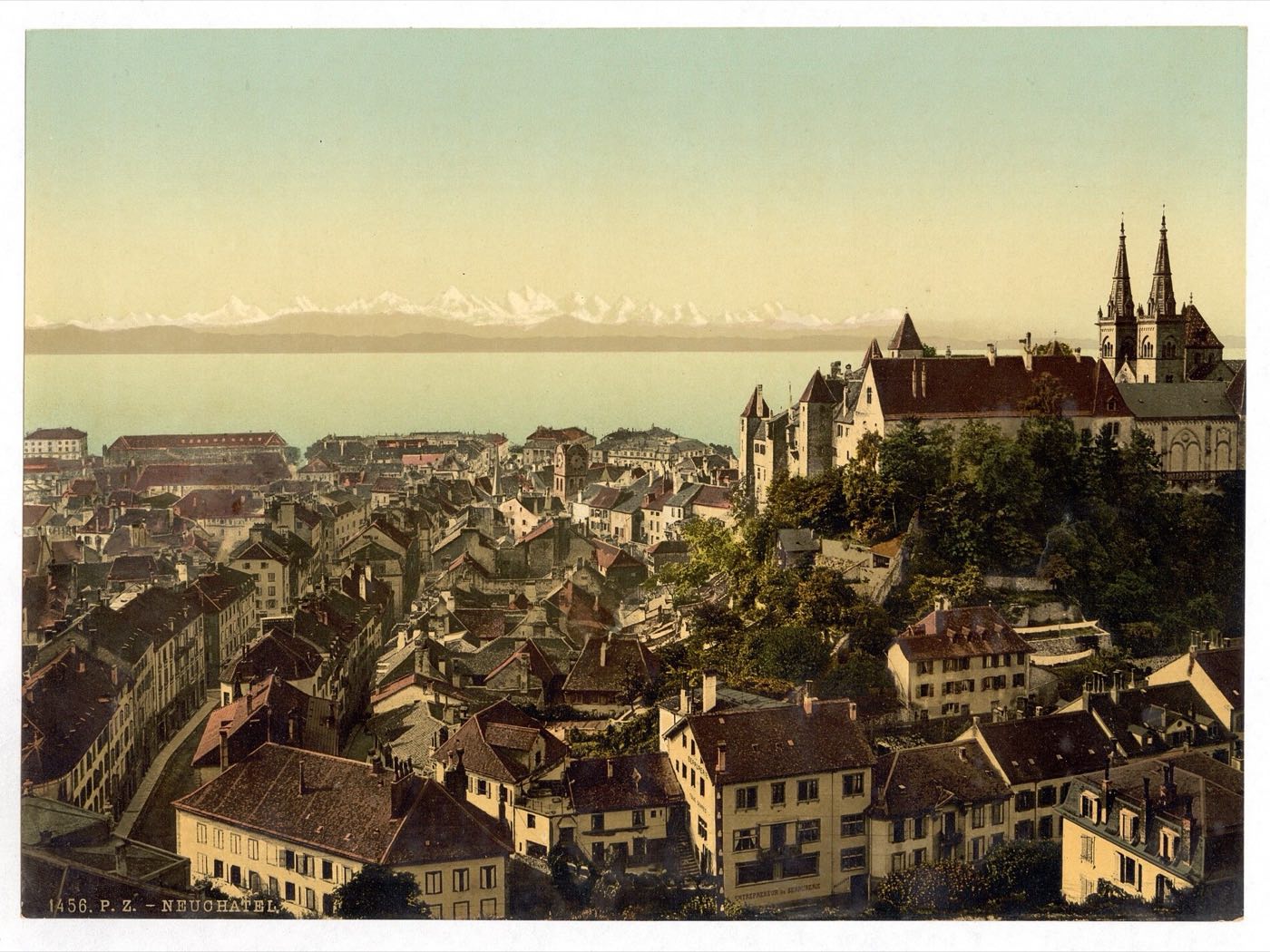
Why here? Precision as a public service
By the mid-19th century watchmaking had become the main industry of the canton of Neuchâtel. French Wikipedia's history of the observatory says that after the republican revolution of 1848 the canton sent delegates to the Paris exhibition of 1855, and that their report asked for a government observatory to issue rating certificates for chronometers made in the region, as a commercial advantage over French and English makers.7
The state founded the observatory in 1858. The Historical Dictionary of Switzerland says it was created to organise the distribution of exact time to the canton's workshops; Julien Gressot and Romain Jeanneret of the University of Neuchâtel describe it as meant above all for the watch industry, while it helped to standardise Swiss time.1, 3
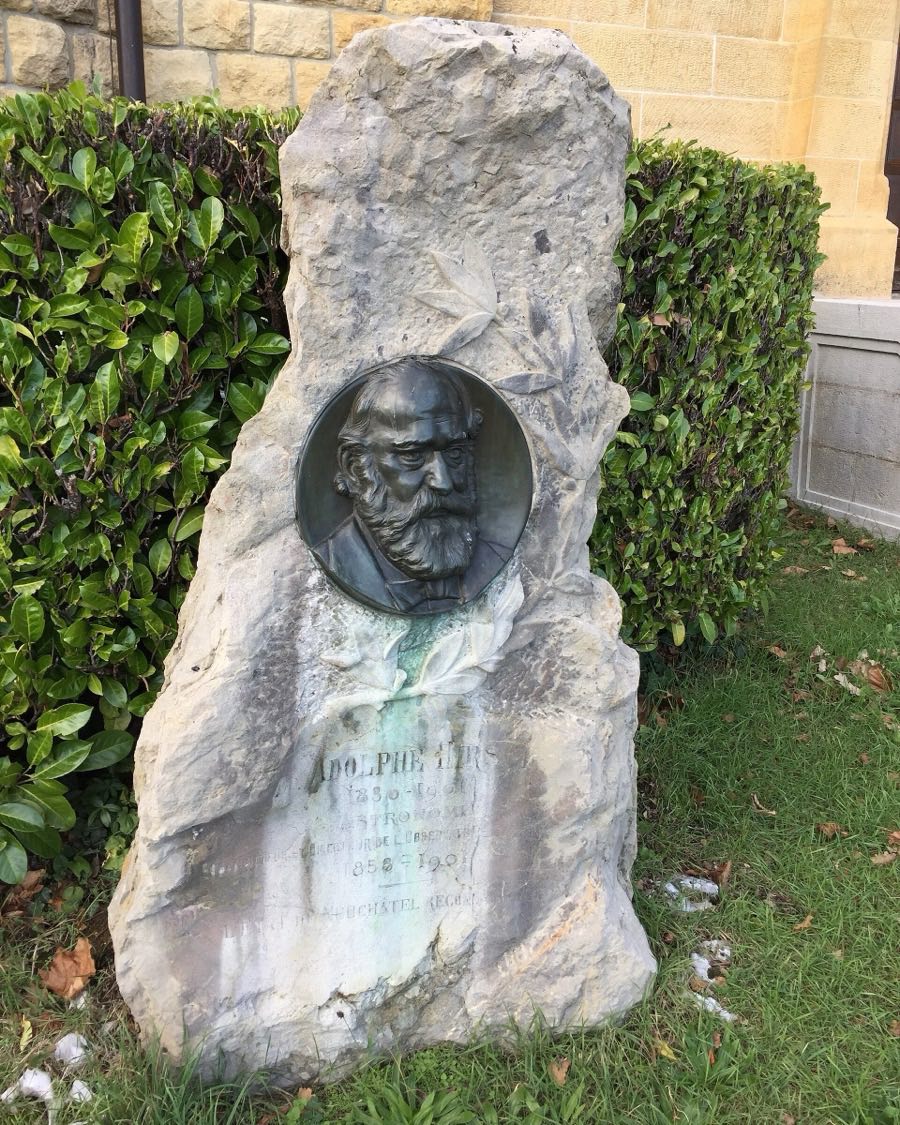
Its director from the start was Adolphe Hirsch (1830-1901), born at Halberstadt in Saxony and trained in astronomy at Heidelberg, Berlin and Vienna. He ran it until his death; the Historical Dictionary says he made it an institution recognised internationally, and he served as secretary of the International Geodetic Association and of the International Bureau of Weights and Measures.2, 3
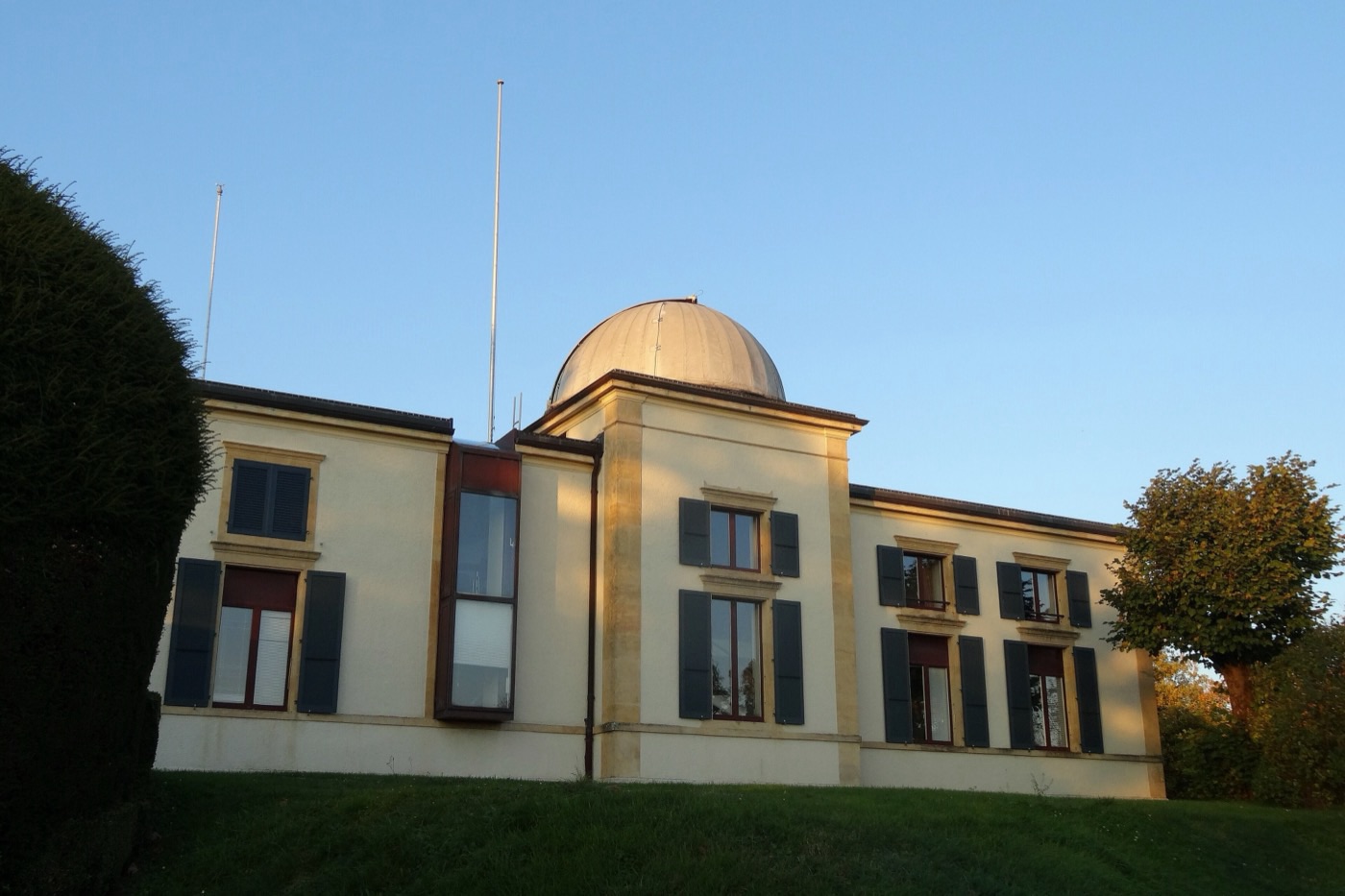
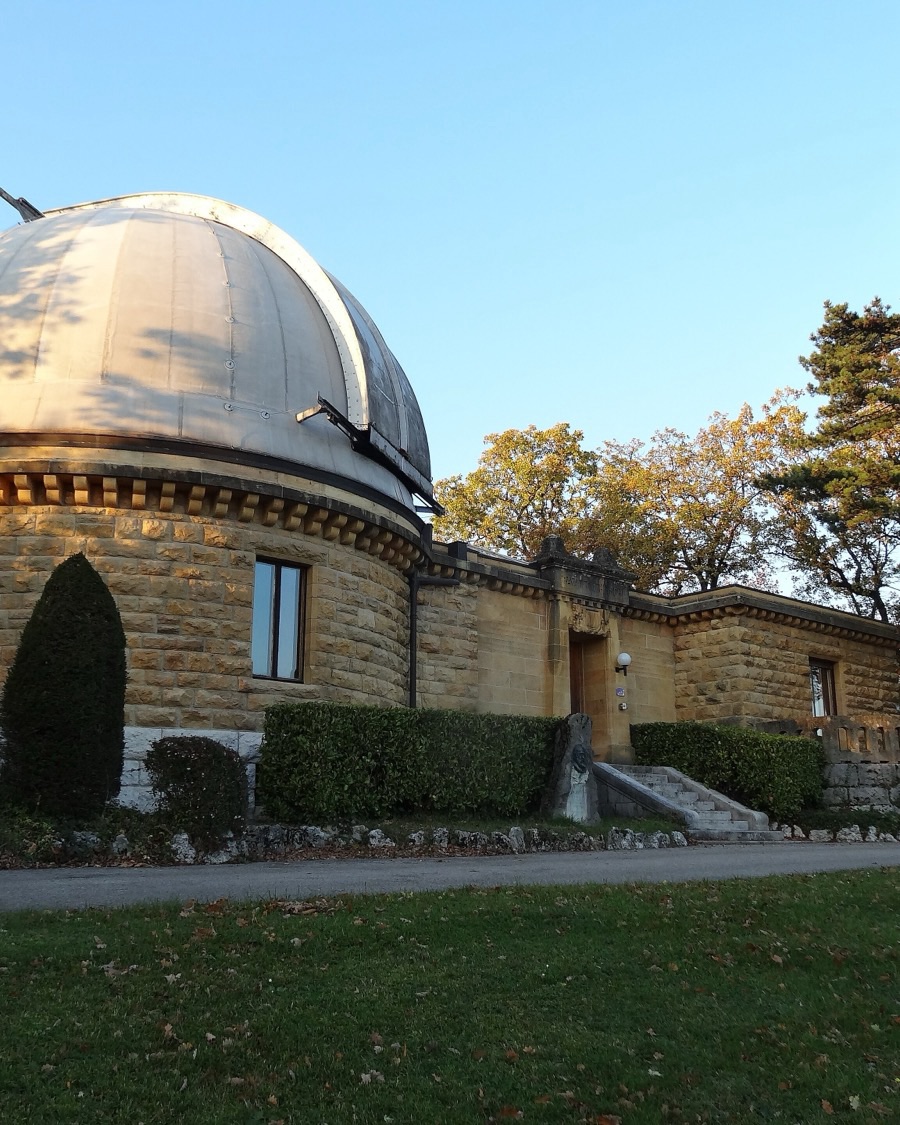
The building, by the cantonal architect Hans Rychner, stands on bedrock on the Mail hill above the town and was kept low, to escape vibration. Hirsch spent three years setting up and calibrating its time service, built around the printing chronograph, then a new method.3, 7
Science and teaching grew alongside. Hirsch taught geophysics and astronomy at the town's academy from 1866 to 1901; the academy, founded in 1838 and refounded in 1866, became the University of Neuchâtel in 1909.2, 10
What grew here: time, trials and laboratories
French Wikipedia says the observatory sent the time by telegraph to La Chaux-de-Fonds, Le Locle and Bern from 25 June 1860 and then daily at one o'clock, and that makers deposited their chronometers for rating from 1861.7
Prizes followed, but the start date differs. French Wikipedia dates an annual chronometry competition to 1865; the Historical Dictionary dates annual rating competitions from 1866, later opened to entrants from abroad. A movement that passed received a bulletin de marche signed by the director, after tests in several positions and temperatures lasting many days.1, 7, 11
Research became a shared enterprise. The Historical Dictionary says that in 1921, at the urging of the university, the industry set up a private, communal testing and research laboratory, the Laboratoire de recherches horlogères, which soon served the whole Swiss industry. CSEM dates the Swiss Laboratory for Horological Research (LSRH) to 1939, created by the canton's watch associations under an agreement with the university; French Wikipedia reconciles the two, saying the laboratory of 1921 took its Swiss name in 1939.1, 5, 12
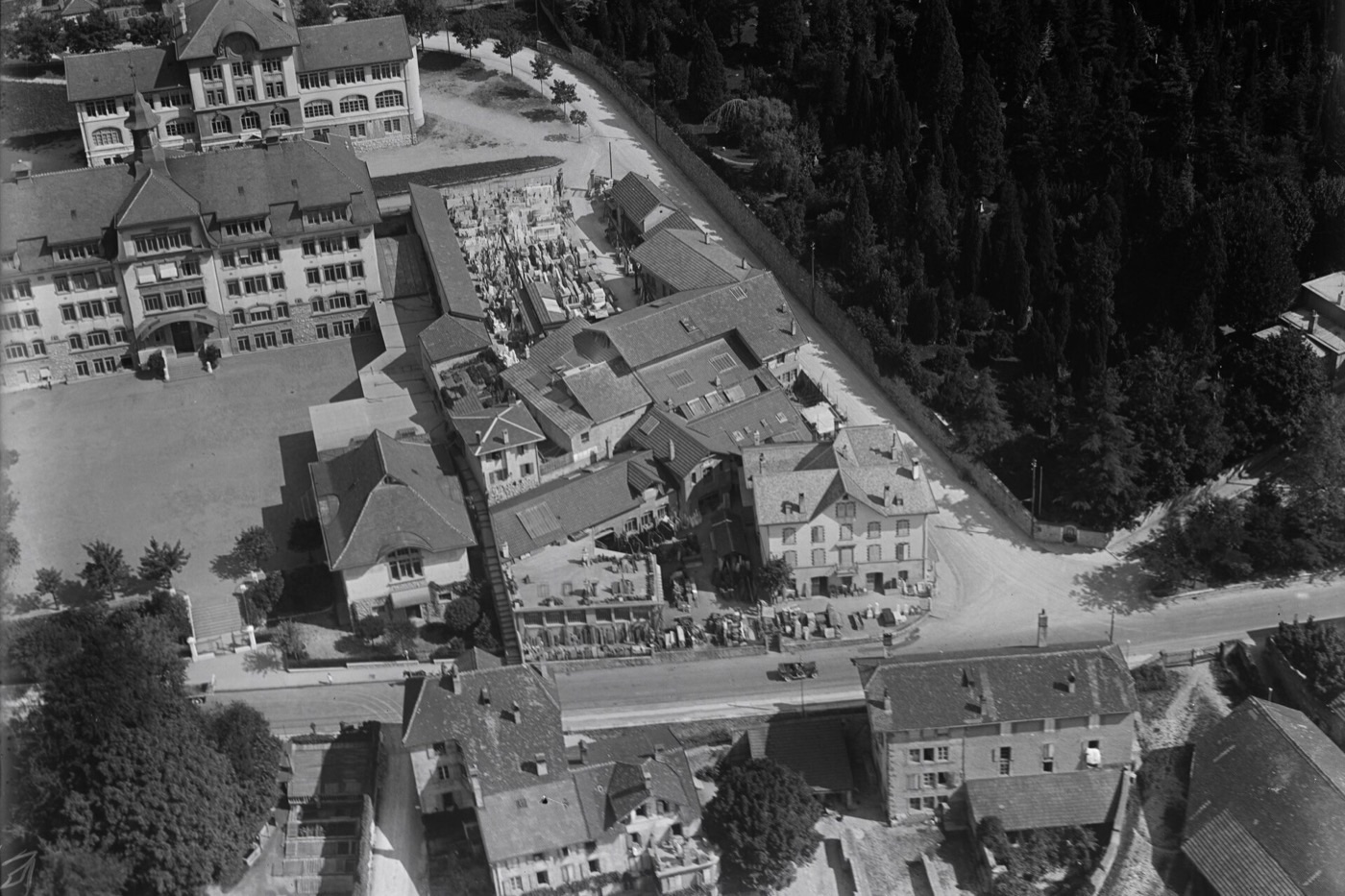
Neuchâtel also became a seat of the industry's organisations. Ebauches SA, the holding company of the movement-blank makers, was founded there in 1926 by A. Schild and A. Michel of Grenchen and the Fontainemelon works; by 1974 it held a quarter of the world market for mechanical movements.14, 15
In 1962 a consortium of about twenty Swiss watch firms founded the Centre Electronique Horloger (CEH) at Neuchâtel to design a new generation of electronic wristwatches for mass production. French Wikipedia names Ebauches SA and the watch federation among the founders, and its director as Roger Wellinger, a Swiss-born scientist hired from General Electric in the United States.4, 5, 12
Who and what moved through
The competitions drew rivals from abroad. The IEEE records that Suwa Seikosha of Japan entered a quartz marine chronometer at Neuchâtel in 1963 and a quartz wristwatch prototype in 1967, two years before its Quartz Astron went on sale.16
At the observatory's competition of 1967 the CEH's quartz wristwatch prototypes set new timekeeping records, off by a few tenths of a second a day. An IEEE Milestone plaque at the observatory has marked the work since 2002.4, 5
The brands put money in. The Historical Dictionary records that Rolex co-financed the CEH's quartz work from 1962 to 1970 and that Omega took part from 1962 while running its own research with the American Battelle institute; production of the resulting Beta 21 was shared among several firms, and 1,000 of them went on sale on 10 April 1970 under sixteen brand names, by the IEEE's count.4, 17, 18
French Wikipedia ties the CEH to the tuning-fork watch: it says Bulova moved production of the Accutron movement from Biel to the United States, and that its Swiss inventor, Max Hetzel, later advised the CEH's own tuning-fork project.12
Hirsch left his fortune to the state to develop the observatory. It paid for the Hirsch pavilion of 1908 to 1912, with a dome made by Zeiss in Jena and a hall decorated by Charles L'Eplattenier's students from the art school of La Chaux-de-Fonds.2, 7
What changed because of it
Quartz ended the contests it had won. French Wikipedia says the observatory installed its own quartz clocks from 1948; English Wikipedia says observatory chronometer certificates ceased in the late 1960s and early 1970s, and that its online database lists the mechanical wristwatches certified at Neuchâtel from 1945 to 1967. The last year of the contests is not settled in the sources read for this page.7, 11
In 1984 the CEH, the LSRH and the Swiss Foundation for Research in Microtechnology (FSRM, founded in 1978) merged into the Centre Suisse d'Electronique et de Microtechnique (CSEM), still based in Neuchâtel. Max Forrer, who had led the CEH's circuits section, became its chief executive.1, 5
The Historical Dictionary says the crisis of the 1970s pushed the University of Neuchâtel to open an institute of microtechnology in 1975, attached to the federal institute of technology in Lausanne in 2009.10
The Swatch Group, formed from the 1983 merger of ASUAG and SSIH, has its registered office in Neuchâtel and its administrative head office in Biel/Bienne.20, 21
French Wikipedia says the observatory's services closed in 2007 and passed to other institutions, and that the buildings have been protected as a historic monument since 2006.7
Key dates
- 1858
The canton founds the observatory, with Adolphe Hirsch as director.1, 2, 3
- 1921
The watch research laboratory is founded with the university's support.1, 12
- 1926
Ebauches SA is founded at Neuchâtel.14, 15
- 1962
Swiss watch firms found the Centre Electronique Horloger.4, 5
- 1967
CEH quartz wristwatch prototypes set records at the observatory's competition.4, 5
- 1970
The Beta 21 quartz watch goes on sale under Swiss brand names.4, 12
- 1984
The CEH, the LSRH and the FSRM merge into CSEM.1, 5
Where Neuchâtel leads
- Based here, GroupEbauches SA
Ebauches SA was founded at Neuchâtel in 1926.14, 15
- Part of, HistoryMaking watches today
Home of CSEM, which patented the silicon balance spring in 2002.5, 22
- Part of, HistorySwitzerland’s network of specialists
The canton's observatory, founded in 1858, gave the watch towns exact time and rated their chronometers.1, 3
- Part of, HistoryThe electric and quartz revolution
The CEH, founded at Neuchâtel in 1962, built the quartz wristwatch prototypes that set records at the observatory in 1967.4, 5
- Part of, TraditionChronometry and certification
The observatory ran timing competitions and issued bulletins de marche from the 1860s.1, 11
- See also, CompanyOmega
The Historical Dictionary records that Omega took part in the CEH's quartz work from 1962.18
- See also, CompanyRolex
The Historical Dictionary records that Rolex co-financed the CEH's quartz work from 1962 to 1970.17
- See also, PlaceLa Chaux-de-Fonds and Le Locle
French Wikipedia says the Neuchâtel observatory sent the time by telegraph to La Chaux-de-Fonds and Le Locle from 1860.7
- See also, PlaceSuwa
Neuchâtel's laboratory and Suwa both had quartz wristwatch prototypes in 1967.4, 16
- See also, TechnologySilicon in the movement
The silicon balance spring was patented by CSEM in Neuchâtel in 2002.5, 22
- See also, TechnologyThe quartz watch
The Beta 21, developed from CEH prototypes, went on sale under Swiss brand names in 1970.4, 12
- See also, ObjectThe Seiko Astron
The IEEE records that Suwa Seikosha entered a quartz wristwatch prototype at Neuchâtel in 1967.16
- See also, GroupThe Swatch Group
The Swatch Group's registered office is in Neuchâtel.20, 21
- See also, EventThe Philadelphia Centennial Exhibition
David read his report to the Société at Neuchâtel on 22 January 1877, and Favre-Perret notes that the observatory director Hirsch had warned of America in 1867.23, 24
- See also, EventThe quartz crisis
The CEH in Neuchâtel built the Swiss quartz prototypes of 1967 and the Beta 21 of 1970.4, 25
Facts and sources
- Country
- Switzerland2, 10
- Region
- Capital of the canton of Neuchâtel, on Lake Neuchâtel below the Jura7, 10
- Watchmaking institutions
- Observatory from 1858; shared research laboratories from 1921; CEH 1962 to 1984; CSEM since 19841, 5
Sources
- 1
- 2
- 3
- 4
Milestones: Pioneering Work on the Quartz Electronic Wristwatch, 1962-1967 (opens in a new tab)
- 5
- 6
- 7
- 8
Memorial to Adolphe Hirsch at the Neuchâtel observatory, photographed in 2019. (opens in a new tab)
- 9
- 10
- 11
- 12
- 13
- 14
- 15
- 16
Milestones: Electronic Quartz Wristwatch, 1969 (opens in a new tab)
- 17
- 18
- 19
- 20
- 21
- 22
EP 1422436 B1: Spiral watch spring and its method of production (opens in a new tab)
- 23
- 24
- 25
First-Hand: The First Quartz Wrist Watch (opens in a new tab)
Sources read November 12, 2026.