The quartz crisis
The economic shock of the 1970s and early 1980s, when quartz watches went on sale, became cheap within a few years and were made in volume in Japan and Hong Kong, while Swiss watch exports and jobs collapsed. It runs from the quartz wristwatches of 1969 and 1970 to the Swiss merger of 1983; the technology itself is told in The electric and quartz revolution.
From the quartz wristwatches put on sale in 1969 and 1970 to the merger of SSIH and ASUAG in 1983; historians date the Swiss crisis itself 1975 to 1985
Companies Casio, Citizen, Hamilton, Lip, Longines, Omega, Seiko, Smiths, Swatch
In the histories Japan builds a watch industry, The electric and quartz revolution, Crisis, consolidation and the groups, The mechanical revival and the independents

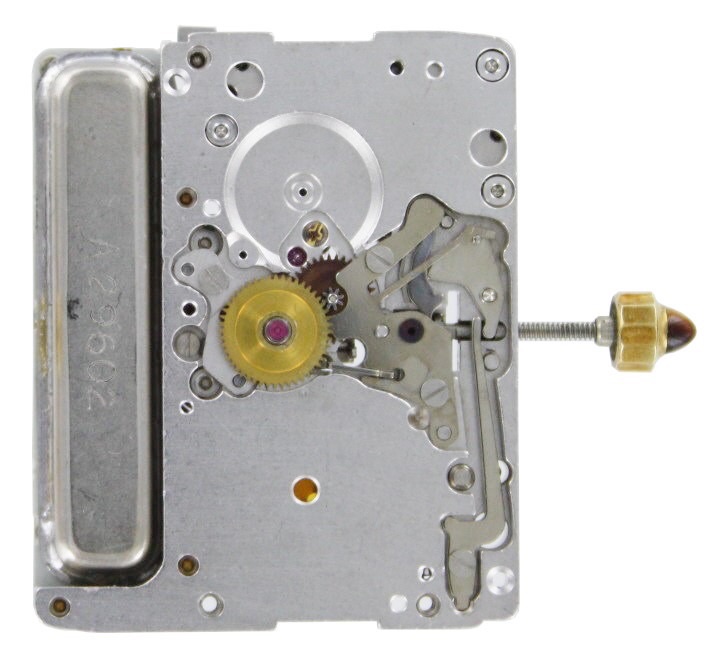
Before: a mechanical industry and a research race
Around 1970 the Swiss industry was large and almost wholly mechanical. Pierre-Yves Donzé counts its exports of watches and movements rising from 24.2 million pieces in 1950 to a peak of 84.4 million in 1974, and cites the employers’ census for about 89,000 watch jobs in 1970.5, 6
Quartz itself came out of a research race described in The electric and quartz revolution: the Swiss industry founded a shared laboratory, the Centre Electronique Horloger (CEH), in Neuchâtel in 1962, and Seiko’s Suwa Seikosha began its quartz project in 1959. Both brought quartz wristwatch prototypes to the Neuchâtel Observatory competition of 1967.1, 2, 7, 10
The observatory trials registered the change. A CEH researcher records his laboratory’s prototypes in 1967 far ahead of every mechanical entry; Grand Seiko says Swiss quartz watches took the top three wristwatch places at Geneva in 1968, above Seiko’s mechanical movements in fourth to tenth, and SJX writes that Neuchâtel did not run its contest again after 1967.10, 11, 12
The old rules were ending at the same moment. The federal watch statute, which had controlled firms, prices and exports of parts, expired at the end of 1971, and the Historical Dictionary of Switzerland notes that the cartel’s ébauche trust had neglected electronic watches.13, 14
What happened: quartz on sale, then cheap
Quartz reached the shops as a luxury. Seiko put the gold Quartz Astron on sale in Tokyo in December 1969 at 450,000 yen; the CEH’s Beta 21 went on sale at the Basel fair on 10 April 1970 under the names of Swiss brands. The Astron has its own page.1, 2, 10, 15
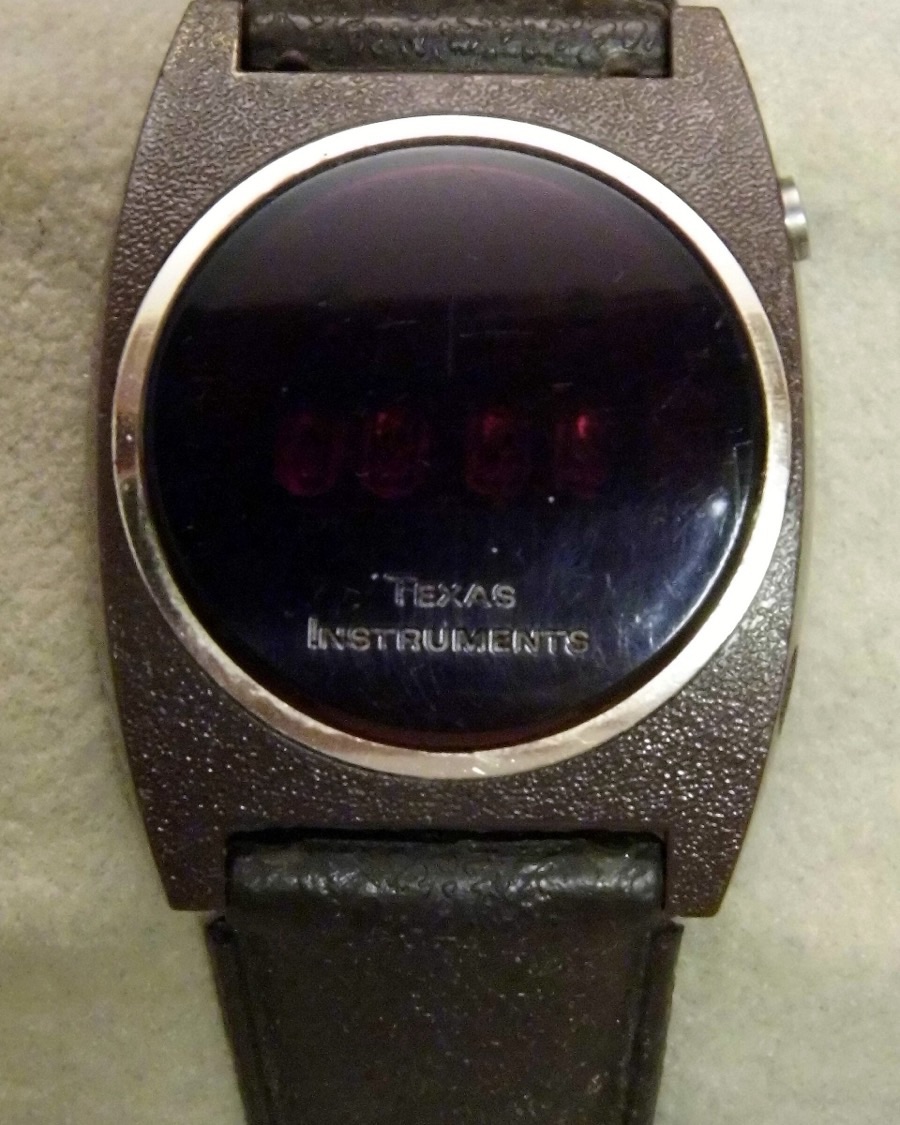
Electronics companies then entered the trade. Hamilton’s Pulsar, with a red light-emitting-diode display, went on sale in 1972 at $2,100; liquid-crystal displays followed from 1972 and 1973; and chip makers such as Texas Instruments, Fairchild, National Semiconductor and Intel, through Microma, began making watches.3, 17, 18, 19
Prices fell steeply. Texas Instruments sold a digital watch for about $20 and then about $10, in 1975 and 1976 by Wikipedia’s dates or 1976 by the Computer History Museum’s; a study Donzé cites puts the average cost of making a quartz watch in Japan at about 52,000 yen in 1973 and under 6,000 yen in 1980.3, 4, 19
Japanese makers took up quartz at scale: Seiko’s LCD watch of 1973, Citizen’s quartz watch of the same year and Casio’s Casiotron of 1974, built on its calculator chips. Seiko says it opened much of its quartz patent portfolio to other makers.15, 20, 21, 22
Hong Kong became the assembly floor. Its factories began putting electronic watches together in 1974 and 1975 from imported chips and displays; by 1976 it made 4 million quartz watches, second to Japan, its registered watch factories rose from 237 in 1975 to 1,187 in 1980, and by 1978 it exported more electronic watches than anywhere else.4, 23, 24
The Swiss industry went into recession in 1975 after decades of growth. Donzé counts its exports falling from 84.4 million pieces in 1974 to an average of 31.3 million a year in 1982 to 1984, and swissinfo reports the Swiss share of American watch imports falling from 83 per cent in 1970 to under 59 per cent in 1975.5, 25
What changed
Swiss watch employment fell by about two-thirds, though the counts differ: about 89,000 in 1970 and 33,000 in 1985 in the employers’ census Donzé cites; about 90,000 and 1,500 firms at the end of the 1960s and 30,000 and 500 to 600 firms in 1985 by swissinfo; fewer than 47,000 already by 1980 in Donzé’s book; 70,000 in the mid-1960s and 30,000 to 35,000 in the 1980s by the Historical Dictionary.5, 6, 7, 25
The Swiss product changed. Federation of the Swiss Watch Industry figures Donzé gives show 79 per cent of the 47.1 million watches and movements exported in 1980 still mechanical, and 81 per cent of the 37.4 million exported in 1985 quartz.6
Switzerland lost its place at the head of the trade. SRF’s school service puts its share of the world’s watch output at 44 per cent at the end of the 1960s and 13 per cent fifteen years later, and Donzé counts Japanese production ahead of Swiss exports by value from 1981 to 1985.6, 26, 27
The watch regions were hit hardest. The Historical Dictionary calls the watchmaking arc of the Jura a stricken region and records federal aid, the Bonny decree, drawn up in 1978 for regions hit by the crisis of 1975; Grenchen, a town of ébauche factories, fell from 20,051 inhabitants in 1970 to 16,800 in 1980.7, 28, 29
The two big Swiss groups, SSIH and ASUAG, came near insolvency; the Historical Dictionary records that Swiss banks put more than 900 million francs into them between 1981 and 1983.8, 30
Why it went so far is argued over. The Swatch Group names recession and cheap Asian quartz watches; Stephen Foskett argues the crisis was mainly economic, driven by the rising franc, with quartz an accelerant; Donzé, and the historian writing in swissinfo, argue that quartz was not the root cause and that Swiss production methods were already losing to Japanese ones.8, 25, 27, 31, 32
What came next
The crisis ends in a rescue. In 1983 SSIH and ASUAG merged on a plan the banks had commissioned from Hayek Engineering, and the plastic quartz Swatch went into production; that story, SMH and the Swatch Group, is told in Crisis, consolidation and the groups.8, 30, 33
Hong Kong overproduced. Electronic watches were 68 per cent of its watch exports by value in 1980 and 95 per cent in 1990, and overproduction brought price cuts and factory closures in the mid-1980s.4, 23
The Swiss mechanical watch survived by moving up. Donzé argues that the Swiss industry answered quartz by moving its brands towards luxury, and records Swiss watch exports worth 4.9 billion dollars in 1990 and 11.5 billion in 2009 while Japanese production fell; that turn is The mechanical revival and the independents.6, 34
Research was regrouped too. The Historical Dictionary records that in 1984 Neuchâtel’s research bodies, the CEH among them, merged into the Swiss Centre for Electronics and Microtechnology (CSEM).7
Key dates
- 1967
Swiss and Japanese quartz wristwatch prototypes at the Neuchâtel Observatory competition.1, 2
- 1969
Seiko puts the Quartz Astron on sale in Tokyo, in December.1, 15
- 1969
Longines The Ultra-Quartz, a quartz wristwatch with a Longines movement.35, 36
- 1969
Seiko The Quartz Astron goes on sale in Tokyo on December 25.1, 15
- 1970
The CEH’s Beta 21 goes on sale at the Basel fair under Swiss brands.2, 10
- 1972
Hamilton’s Pulsar LED watch goes on sale at $2,100.3, 17
- 1974
Swiss exports of watches and movements peak at 84.4 million pieces, Donzé counts.5
- 1974
Casio The Casiotron, a digital quartz watch with an automatic calendar.21
- 1975
The Swiss watch industry goes into recession; Hong Kong begins assembling electronic watches.4, 5, 7
- 1976
Citizen The Crystron Solar Cell, a light-powered analogue quartz watch.37, 38
- 1978
Hong Kong exports more electronic watches than anywhere else; federal aid is drawn up for the Swiss watch regions.4, 7, 24
- 1978
IWC Schaffhausen VDO Adolf Schindling buys IWC.39, 40
- 1983
SSIH and ASUAG merge; the story continues in Crisis, consolidation and the groups.8, 30
- 1983
- 1985
The employers’ census Donzé cites records about 33,000 Swiss watch jobs; quartz is 81 per cent of the pieces exported.6
Where the quartz crisis leads
- In this story, CompanyCasio
The switch to quartz that gave a calculator maker its way into watches.21
- In this story, CompanyCitizen
The industry shift behind Citizen’s 1976 light-powered quartz watch.37, 38
- In this story, CompanyLongines
Longines belonged to ASUAG, one of the two Swiss groups the crisis drove into the 1983 merger.8, 33
- In this story, CompanyOmega
Omega was a founding brand of SSIH, one of the two Swiss groups the crisis nearly ruined.8, 33
- In this story, CompanySeiko
What the Quartz Astron of 1969 set off, in Switzerland and beyond.1, 15
- In this story, PersonGünter Blümlein
IWC says Blümlein saw the worth of fine mechanical movements while quartz watches pressed the Swiss industry.39
- Part of, HistoryCrisis, consolidation and the groups
The shock that opened the chapter: Swiss watch exports and jobs collapsed after 1975 as cheap quartz watches spread.7, 24
- Part of, HistoryJapan builds a watch industry
The years in which Japanese makers turned quartz into a mass product and overtook Swiss output by value.6, 15, 27
- Part of, HistoryThe electric and quartz revolution
The economic crisis the quartz watch set off once it became cheap, in Switzerland above all.7, 24
- See also, HistorySwitzerland’s network of specialists
The cartel ended in 1971 as the quartz watch arrived; Ebauches SA had neglected electronic watches.13, 14
- See also, HistoryThe mechanical revival and the independents
Donzé argues that the Swiss industry answered quartz by moving its brands towards luxury.34
- See also, CompanyHamilton
Hamilton’s Pulsar of 1972 brought the light-emitting-diode watch to market at $2,100.3, 17
- See also, CompanyLip
By the regional heritage inventory’s account, Lip’s collapse in 1973 came as quartz and Asian competition hit the French industry.43, 44
- See also, CompanySmiths
Nye says Smiths dropped its Quasar quartz watch in 1973 after its directors saw Seiko’s factories.45
- See also, CompanySwatch
The crisis the Swatch was designed to answer in 1983.8, 24
- See also, PersonNicolas G. Hayek
The crisis Hayek was brought in to solve, with a merger and the Swatch.8, 33
- See also, PlaceBiel/Bienne
The Historical Dictionary says Japanese electronic watches brought a sales crisis to Biel's watch industry in the 1970s.46
- See also, PlaceGrenchen
The Historical Dictionary records Grenchen falling from 20,051 inhabitants in 1970 to 16,800 in 1980.28, 29
- See also, PlaceHong Kong
Hong Kong assembled electronic watches from 1974 and 1975 and by 1978 exported more of them than anywhere else.4, 23, 24
- See also, PlaceNeuchâtel
The CEH in Neuchâtel built the Swiss quartz prototypes of 1967 and the Beta 21 of 1970.2, 10
- See also, PlaceSuwa
The Seiko Museum says Japanese makers came to lead the movement market as quartz prices fell.15
- See also, PlaceThe Jura Arc
The Swiss watchmaking region the Historical Dictionary of Switzerland describes as stricken by the quartz years.7
- See also, TechnologyThe quartz watch
The technology whose falling price turned a research race into an industrial crisis.3, 4
- See also, ObjectThe Seiko Astron
The Astron, on sale in Tokyo in December 1969, is where the crisis begins: quartz in the shops.1, 15
- See also, GroupASUAG
ASUAG, the cartel-era holding of the parts makers, was the other group the crisis brought near insolvency.8, 30
- See also, GroupSSIH
The Historical Dictionary records that banks put more than 900 million francs into SSIH and ASUAG in 1981 to 1983.8, 30
- See also, GroupThe Swatch Group
The crisis that forced the 1983 merger from which the Swatch Group grew.8, 33
- See also, TraditionJapanese watchmaking
The Japanese side of the quartz years, which Seiko says left Japan leading the market for movements.15, 24
- See also, EventThe Swiss watch cartel and statute
The statute expired at the end of 1971 as the quartz watch arrived; the Historical Dictionary of Switzerland says the cartel had neglected electronic watches.13, 14
Facts and sources
- Period
- From the quartz wristwatches put on sale in 1969 and 1970 to the merger of SSIH and ASUAG in 1983; historians date the Swiss crisis itself 1975 to 19851, 2, 5, 8, 25
- Where
- Switzerland, above all the Jura arc; Japan; the United States; Hong Kong3, 4, 7, 23
- Turning point
- Before it, Switzerland led world watchmaking with mechanical watches; after it, cheap electronic watches from Japan and Hong Kong led the market and the Swiss industry had about a third of its 1970 workforce.4, 6, 25, 26, 27
Sources
- 1
Milestones: Electronic Quartz Wristwatch, 1969 (opens in a new tab)
- 2
Milestones: Pioneering Work on the Quartz Electronic Wristwatch, 1962-1967 (opens in a new tab)
- 3
1974: Digital Watch is First System-On-Chip Integrated Circuit (opens in a new tab)
- 4
- 5
- 6
- 7
- 8
- 9
- 10
First-Hand: The First Quartz Wrist Watch (opens in a new tab)
- 11
- 12
- 13
- 14
- 15
History of Seiko and its products, stage 3 (1960s to 1980s) (opens in a new tab)
- 16
- 17
- 18
It's About Time: The Computer on Your Wrist (Chris Garcia, 12 Nov 2014) (opens in a new tab)
- 19
- 20
- 21
- 22
- 23
Post-war Industries: Clocks and Watches, industry focus (opens in a new tab)
- 24
- 25
- 26
Die Krise der Uhrenindustrie (26 April 2018) (opens in a new tab)
- 27
- 28
- 29
- 30
- 31
Debunking the quartz crisis (July 2022) (opens in a new tab)
- 32
Did Quartz Really Kill the Swiss Watch Industry in the 70s? (Cedric Chin) (opens in a new tab)
- 33
- 34
- 35
- 36
- 37
- 38
- 39
- 40
- 41
- 42
- 43
L'horlogerie à Besançon (dossier IA25001993) (opens in a new tab)
- 44
- 45
High-frequency quartz watch fails to resonate (opens in a new tab)
- 46
Sources read November 12, 2026.