Histories, Era V, The electronic age and after
The electric and quartz revolution
1952 to 1990
How the watch stopped being purely mechanical: battery watches in the 1950s, Bulova’s tuning fork, the race between Switzerland and Japan to a quartz wristwatch, digital displays from American chip makers, mass production in Japan and Hong Kong, and what it did to the Swiss and American industries.

In short
In the 1950s watches began to run on batteries, and in December 1969 Seiko sold a wristwatch that kept time with a quartz crystal. Within a decade chip makers in America, factories in Japan and assemblers in Hong Kong had made quartz watches cheap enough for anyone. The Swiss industry, which had built its own quartz watch, lost much of its market, and its response reshaped the business that followed.1, 3, 5, 6, 7, 14, 20
Part 1
A battery in the watch
The early battery watches still kept time like mechanical ones, with a balance wheel and hairspring; the battery took the place of the mainspring. Seiko describes Hamilton’s watch of 1957 in exactly those terms.1, 14
Elgin in the United States and Lip in France both showed electric wristwatches in public on 19 March 1952; the Swiss historical dictionary dates Swiss electric models to the same year.1, 7, 9, 22
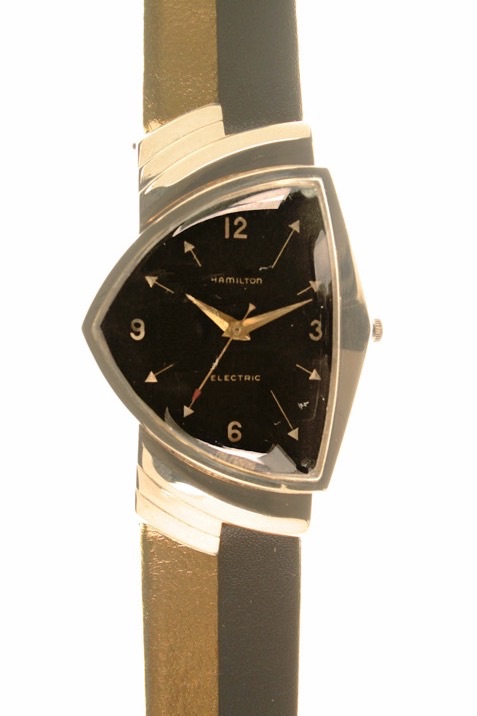
Wikipedia and the NAWCC Bulletin say Hamilton of Lancaster, Pennsylvania, was the first to put one on sale, the Electric 500, in 1957.1, 9, 10, 23
Hamilton gave its electric watches unusual asymmetric cases. The best known is the triangular Ventura, designed by Richard Arbib.10, 24, 25
Part 2
The tuning fork
Bulova’s Accutron, on sale from the autumn of 1960, did away with the balance wheel. A small tuning fork vibrating 360 times a second, kept going by a transistor circuit, drove the hands.2, 11, 18, 23
It was the work of Max Hetzel, a Swiss engineer working for Bulova from the early 1950s; the Science Museum in London records him as its designer.2, 11, 18
Bulova guaranteed the Accutron to within a minute a month, and says it was the first tuning-fork electronic watch.2, 27
Seiko says the Accutron shocked the watch industry and set off a race for electronic accuracy, and a researcher at the Swiss laboratory founded in 1962 writes that the Accutron was one of the threats behind it.14, 28
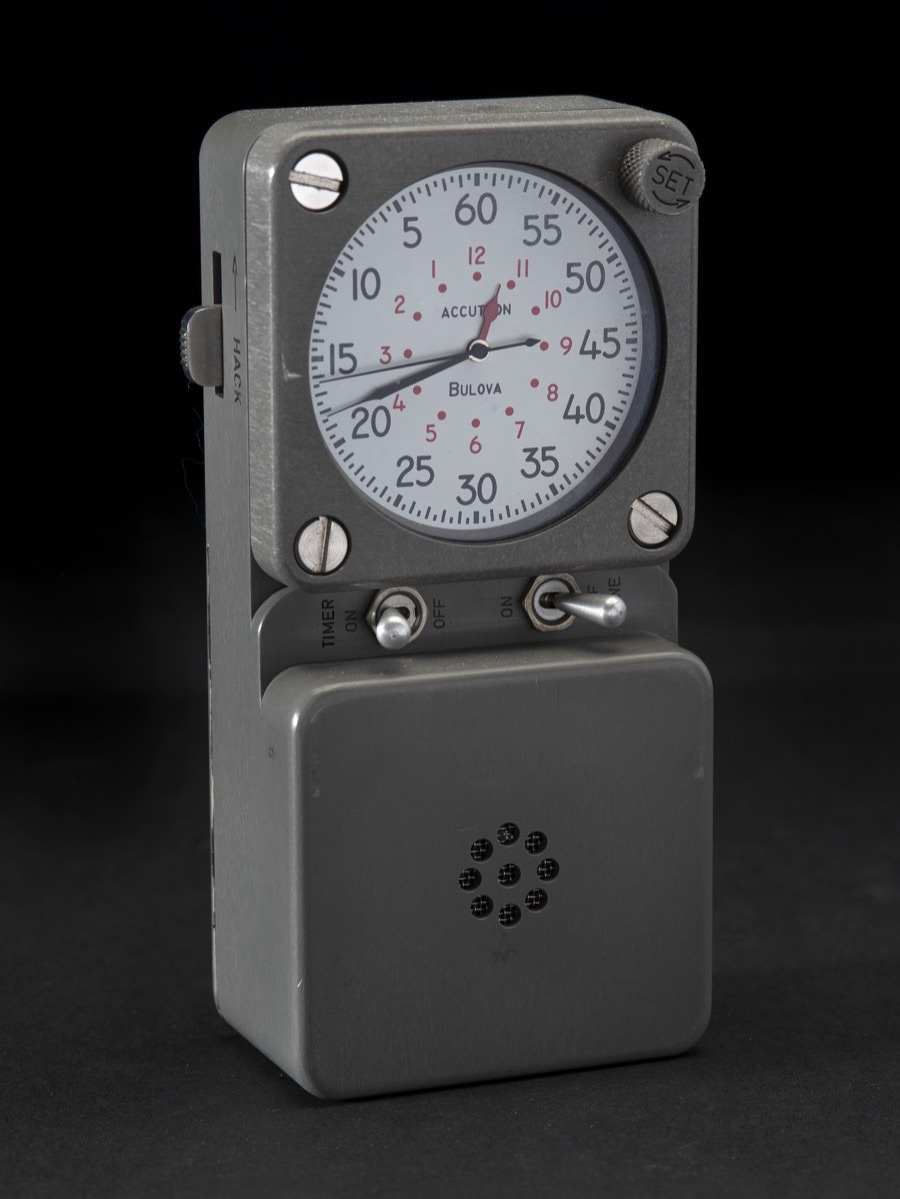
Accutron movements went into space hardware too: the National Air and Space Museum holds a Bulova timer with an Accutron movement of the kind used on Skylab in 1973 and 1974.29
Part 3
The race to a quartz wristwatch
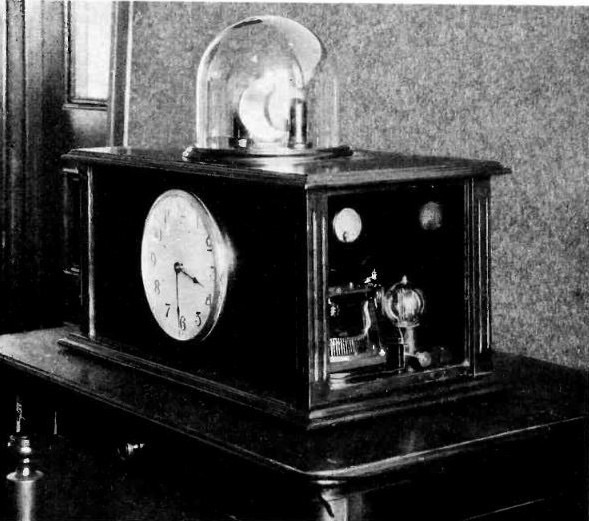
Quartz timekeeping was not new. Warren Marrison built a quartz clock at Bell Telephone Laboratories in 1927, and by the 1940s the time laboratories had moved to quartz. The problem was making one small enough to wear.31, 32, 33
In Switzerland the industry founded a shared laboratory, the Centre Electronique Horloger, or CEH, in Neuchâtel in 1962, to design a new generation of electronic wristwatches.4, 7, 18, 19
In Japan, Seiko’s Suwa Seikosha began its 59A project in 1959, compared balance, tuning-fork and quartz designs, and chose quartz. It built a quartz clock for a Nagoya broadcaster in 1958 and quartz timers for the 1964 Tokyo Olympics; Seiko and Longines both showed quartz pocket-watch prototypes in 1966.3, 14, 19, 23
Both took quartz wristwatches to the Neuchâtel Observatory competition in 1967, and the CEH prototypes set new records there, with errors of a few tenths of a second a day.3, 4, 28
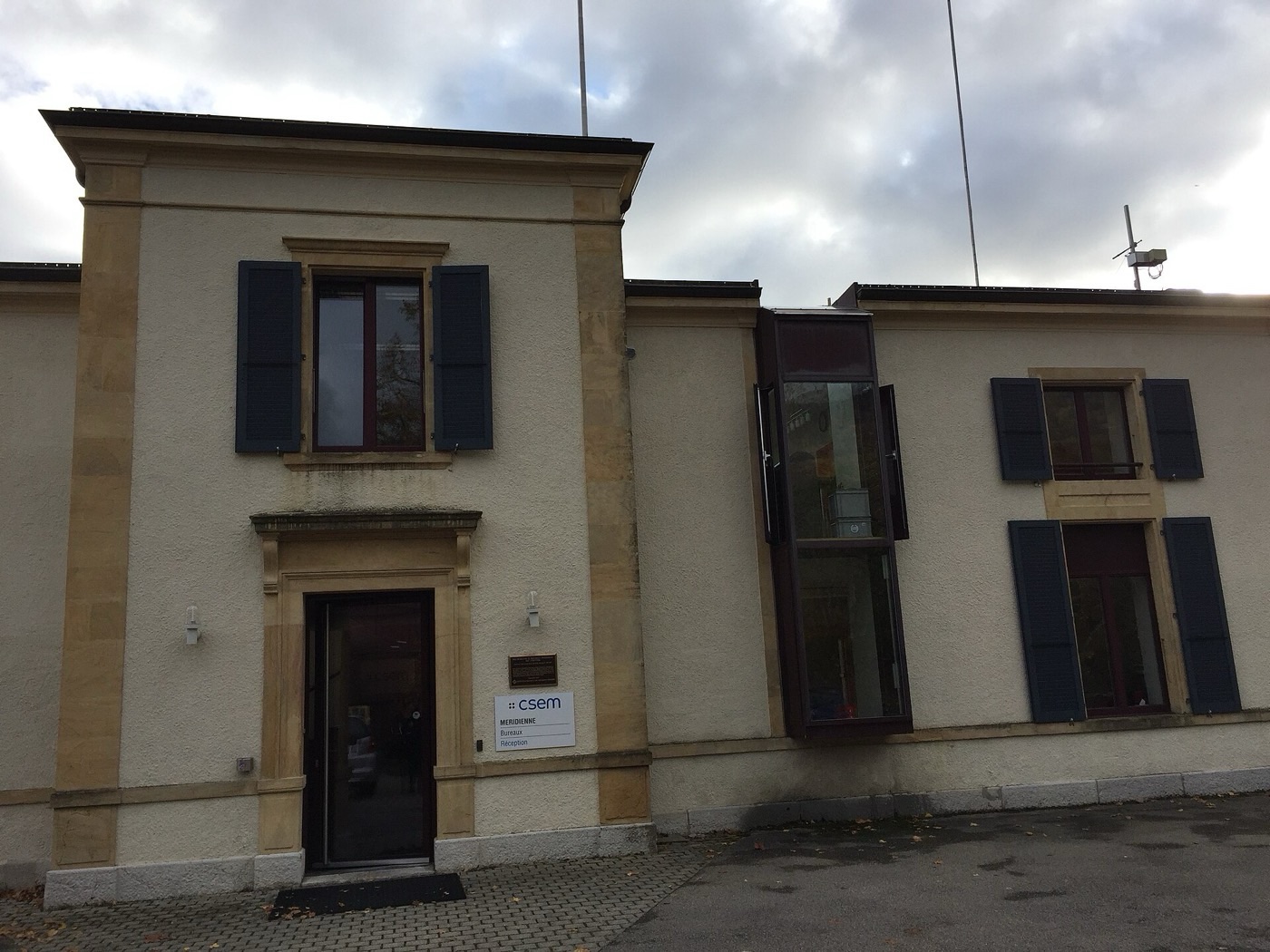
A CEH researcher’s account puts the best Swiss entries well ahead of Seiko’s four quartz watches that year. Wikipedia’s account says the observatory competitions came to an end with quartz; the last year is not settled in the sources.28, 36
Part 4
1969 and 1970
Seiko put the Quartz Astron 35SQ on sale in Tokyo on 25 December 1969. Seiko and the IEEE describe it as the first quartz wristwatch; the Swiss prototypes were earlier but were not sold.3, 7, 14
It was a luxury object: 450,000 yen, in an 18-carat gold case, and about a hundred sold in its opening week.3, 14, 18, 37
Seiko says Bulova’s habit of keeping its tuning-fork patents to itself held back the Accutron, so Seiko disclosed much of its own quartz patent portfolio, and other makers adopted its method.14
The Swiss answer was the Beta 21, the industrial version of a CEH prototype. An initial thousand went on sale on 10 April 1970 at the Basel fair, under the names of Swiss brands including Omega, Patek Philippe, Rolex and Piaget.4, 23, 28
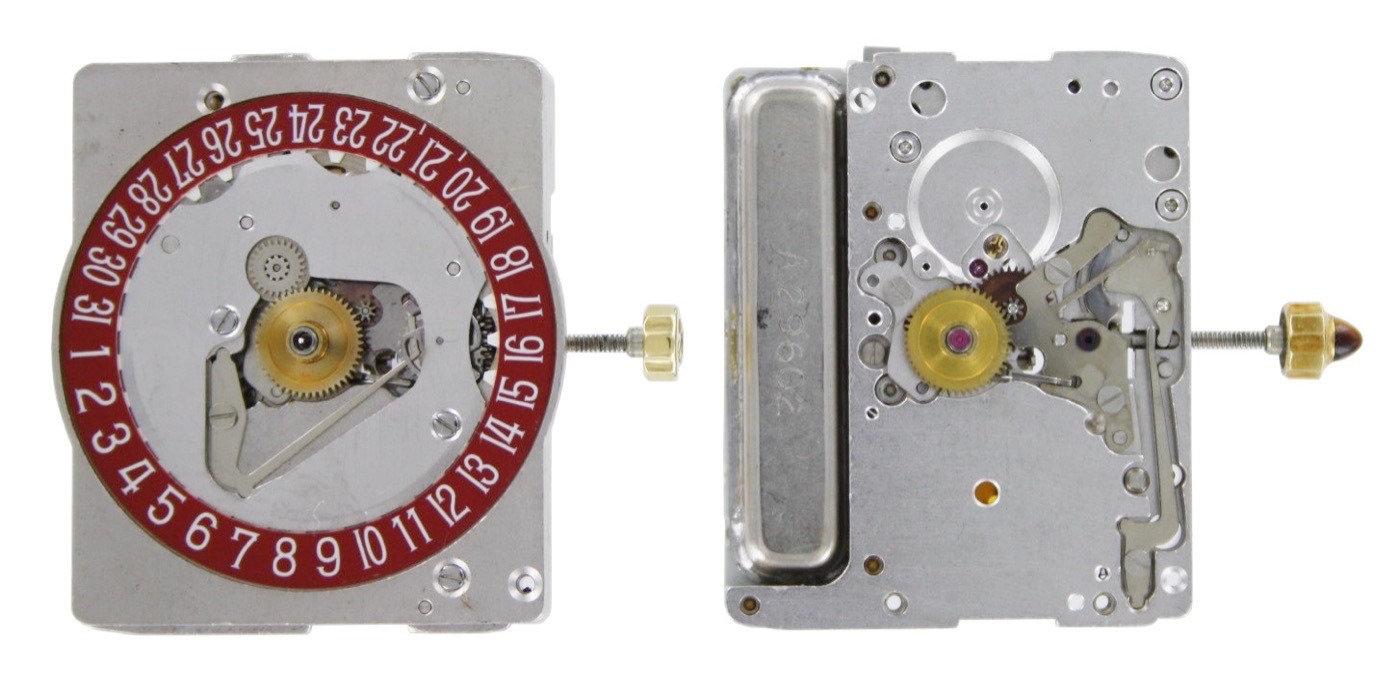
Accounts differ on how many brands carried it: sixteen by the IEEE’s count, eighteen exhibitors by Wikipedia’s, about twenty by a CEH researcher’s, who puts the total made at about 6,000 before the joint movement was dropped.4, 23, 28
Part 5
Light and liquid crystal
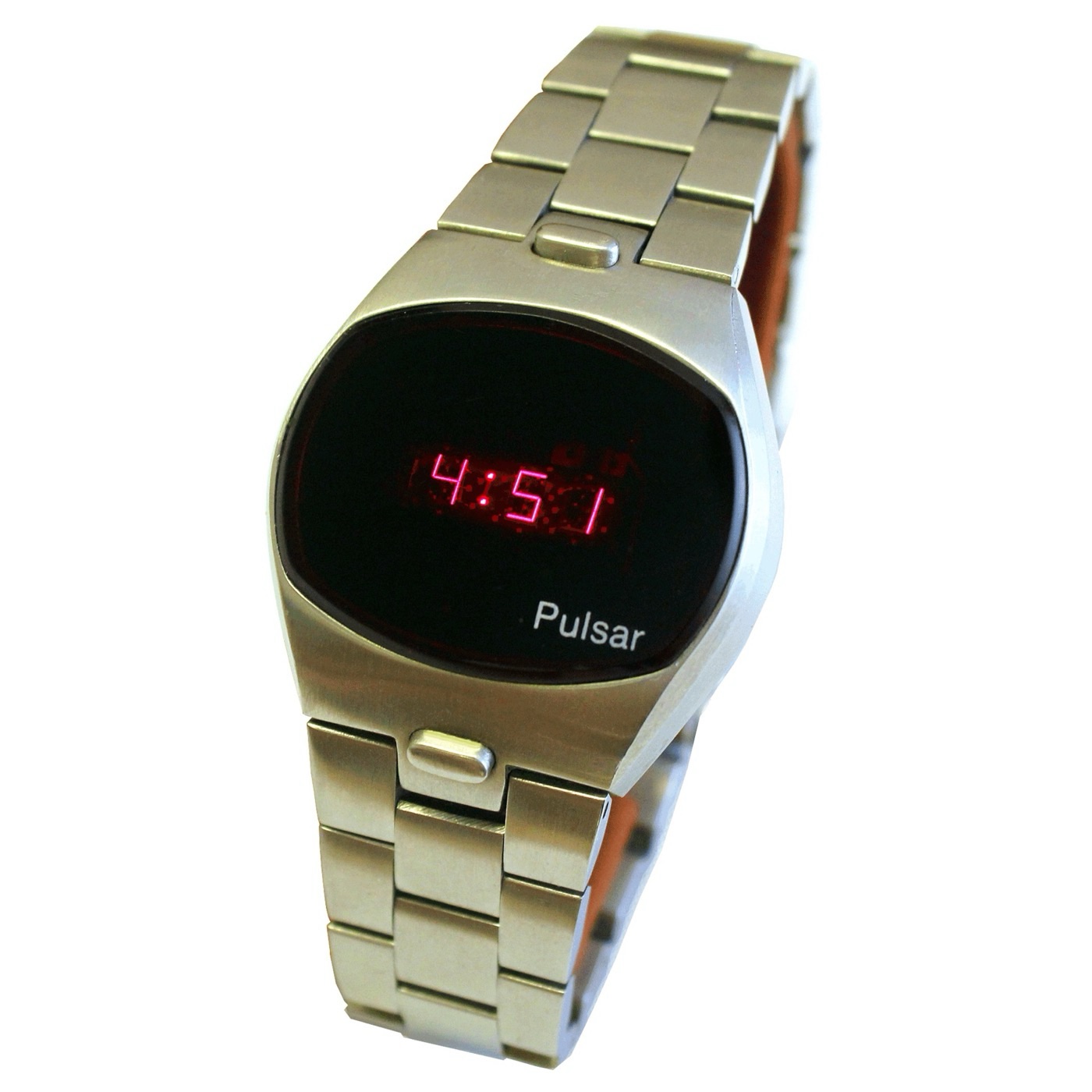
Hamilton announced the Pulsar in 1970: a watch with no moving parts that showed the time in red light-emitting diodes at the press of a button. It went on sale in 1972, in an 18-carat gold case at $2,100; the NAWCC Bulletin dates its release to 1971.5, 13, 18, 25, 39
Its electronics came from Electro-Data of Garland, Texas. The Computer History Museum says the early version, with 44 chips, was notoriously unreliable until RCA engineers reduced its timekeeping circuit to one chip.5, 13
Liquid-crystal displays followed in 1972 and 1973, from Microma and Seiko among others. They used far less power, showed the time all the time, and replaced the LED.5, 13, 14, 18, 40
Chip makers moved into watches: Fairchild, National Semiconductor, Mostek, Litronix and Texas Instruments, while Intel bought Microma, whose 1974 watch put the whole circuit on a single chip.5, 18, 19, 40
Prices collapsed. Texas Instruments sold a digital watch for about $20 and then about $10, in 1975 and 1976 by Wikipedia’s dates or in 1976 by the Computer History Museum’s, in what the museum calls a battle of attrition.5, 23
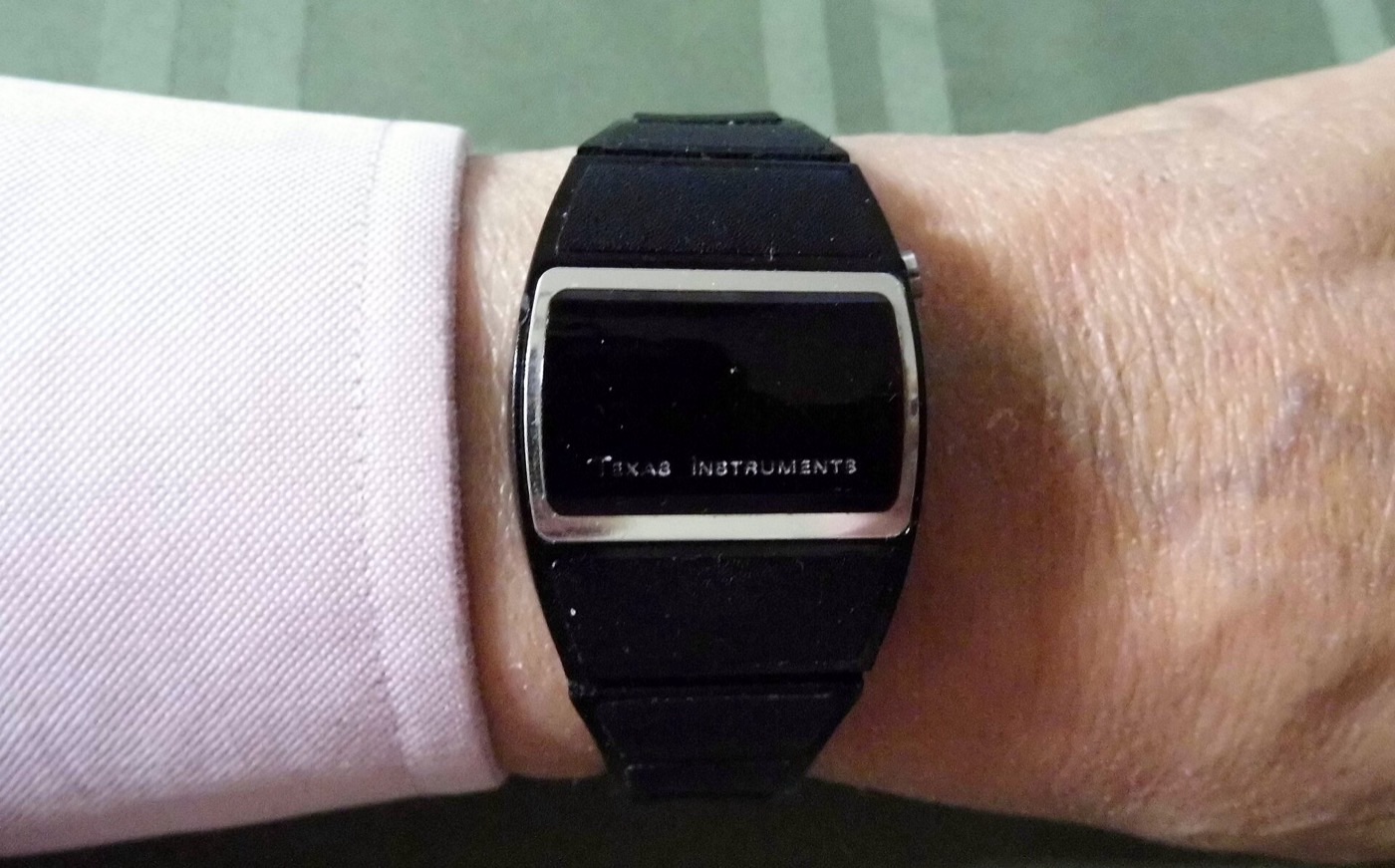
The American chip makers did not stay. TIME reported in 1981 that Texas Instruments had abandoned the field, unable to match the Japanese marketing push, and Intel’s Gordon Moore later called Microma a 15-million-dollar failure.18, 40, 42
Part 6
Japan and Hong Kong
Japanese makers took up quartz in force: Seiko’s six-digit LCD watch in 1973, Citizen’s quartz wristwatch of 1973 and its light-powered Crystron Solar Cell of 1976, and Casio’s Casiotron, built on its calculator chips, in November 1974.14, 15, 16, 17, 18, 43, 44
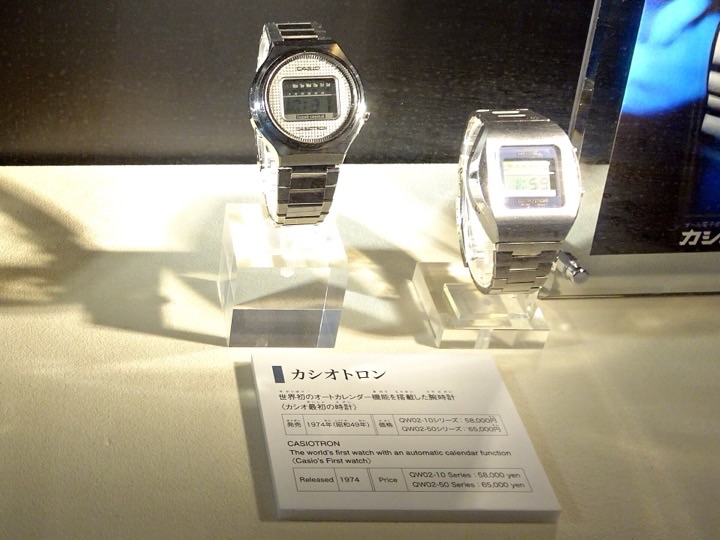
Citizen began selling movements to other makers under the Miyota name in 1980, and from 1979 exported electronic movements in bulk to a Hong Kong assembler.6, 15
Costs fell fast. According to a study cited by the business historian Pierre-Yves Donzé, the average cost of making a quartz watch in Japan was about 52,000 yen in 1973 and under 6,000 yen in 1980.6
Hong Kong factories began assembling electronic watches in 1974 and 1975. By 1976 Hong Kong made 4 million quartz watches, second to Japan, and its registered watch factories rose from 237 in 1975 to 1,187 in 1980.6, 46
Donzé records that Hong Kong firms did not make the chips: by the end of the 1970s the circuits came from Oki, NEC, Intersil and Litronix, and the displays from Siemens, Beckman, Fairchild, Motorola, Hitachi and others.6
By 1978 Hong Kong exported more electronic watches than anywhere else. Electronic watches were 68 per cent of its watch exports by value in 1980 and 95 per cent in 1990, and overproduction brought price cuts and closures in the mid-1980s.6, 19, 46
Part 7
What it did to Switzerland and America
The Swiss historical dictionary says the Swiss had mastered quartz but did not believe in it, and were overtaken by Japanese producers. Quartz and mechanical watches drew level around 1978 to 1980.7, 19
Swiss watch employment fell by more than half, though the counts differ: from about 70,000 in the mid-1960s to 30,000 to 35,000 in the 1980s by the Swiss historical dictionary, from 90,000 in 1970 to 34,000 by 1984 by swissinfo, and to 28,000 in 1988 by Wikipedia’s account.7, 19, 47
Why the Swiss industry fell so far is debated. The Swatch Group blames recession and cheap Asian quartz; the historian Pierre-Yves Donzé argues that the usual story of quartz and cheap labour is too simple, and that Swiss production methods were already losing to Japanese ones.6, 20, 48
The Swiss historical dictionary records that federal aid for the watch regions followed the crisis in 1978, and that in 1984 Neuchâtel’s research bodies, the CEH among them, merged into the Swiss Centre for Electronics and Microtechnology.7
The two largest Swiss groups, SSIH and ASUAG, came near insolvency and merged in 1983, the year the plastic quartz Swatch went on sale. That story is told under the quartz crisis and the Swatch Group.7, 19, 20
American watchmaking shrank. Hamilton closed its Lancaster factory in 1969 and moved production to Switzerland, its watch brand passed to the Swiss SSIH, and the Pulsar name went to Seiko in 1978.39, 49
Through this history
The companies, people, technologies, objects and events this chapter is made of, in the order the story meets them.
Technology
The electric watchBatteries and then a tuning fork: the 1950s steps from the mainspring towards electronics.1, 2
Object
The Hamilton Electric 500Hamilton’s battery-driven watch of 1957, which the NAWCC Bulletin and Wikipedia say was the first electric wristwatch sold.1, 9, 10
Object
The Bulova AccutronBulova’s tuning-fork watch of 1960, designed by Max Hetzel, which replaced the balance wheel with a transistor-driven fork.11, 12
Technology
The quartz watchThe quartz crystal, divided down by a chip: the technology at the centre of this history.3, 4
Object
The original SwatchThe plastic quartz watch of 51 parts shown in Zurich on 1 March 1983 and assembled by machine.20, 21
Key dates
- 1952
Elgin and Lip show electric wristwatches in public.1, 7
- 1957
Hamilton puts the Electric 500 on sale.1, 14
- 1960
Bulova’s tuning-fork Accutron goes on sale.2, 14
- 1962
The Centre Electronique Horloger is founded in Neuchâtel.4, 7
- 1967
Swiss and Japanese quartz wristwatch prototypes at the Neuchâtel Observatory competition.3, 4
- 1969
Seiko’s Quartz Astron goes on sale in Tokyo, 25 December.3, 14
- 1970
The Beta 21 reaches the Basel fair; Hamilton announces the Pulsar.4, 13
- 1972
The Pulsar goes on sale at $2,100.25, 39
- 1973
Seiko’s six-digit LCD watch; Citizen’s quartz wristwatch.14, 15, 16
- 1974
Casio’s Casiotron; Intel’s Microma single-chip watch.5, 17
- 1976
Hong Kong is second to Japan in quartz watches made.5, 6
- 1978
Federal aid for the Swiss watch regions; Seiko acquires the Pulsar name.7, 39
- 1983
SSIH and ASUAG merge; the Swatch goes on sale.19, 20
- 1984
The CEH is merged into the CSEM.7, 46
Where this leads
- Before, Era IVIndia builds a watch industry
1961 to today
- After, Era VCrisis, consolidation and the groups
1970 to 2005
Where the electric and quartz revolution lead
- In this story, PlaceNeuchâtel
The CEH, founded at Neuchâtel in 1962, built the quartz wristwatch prototypes that set records at the observatory in 1967.4, 51
- In this story, PlaceSuwa
Where Suwa Seikosha developed the Quartz Astron from 1959.3, 14
- In this story, GroupSeiko Group
The group whose Suwa and Daini factories developed the quartz watch and mass-produced it on automated lines.3, 14, 52
- See also, HistoryAmerica industrializes the watch
Hamilton’s electric watch of 1957 leads from the American industry into the electric and quartz era.53, 54, 55, 56
- See also, HistoryChina builds a watch industry
Hong Kong’s assemblers took up electronic watches in the mid-1970s and became a leading maker of them.6, 46
- See also, HistoryGerman watchmaking
Quartz ended most of the Black Forest clock industry, while Junghans brought out radio-controlled clocks from 1985.57, 58
- See also, HistoryIndia builds a watch industry
Titan won India’s market with quartz watches from 1987 while HMT kept to mechanical ones.59, 60, 61
- See also, HistoryJapan builds a watch industry
Japan’s quartz watches of the 1970s and the assembly industry they fed.6, 52, 62
- See also, HistoryThe Soviet watch industry
The Great Soviet Encyclopedia records that Soviet factories had begun making quartz wristwatches by the mid-1970s; Garratt writes that Lip and the USSR worked on a quartz watch together.63, 64
- See also, PlaceHong Kong
Hong Kong’s assemblers took up electronic watches in the mid-1970s.6, 46
- See also, GroupVEB Uhrenkombinat Ruhla
Ruhla’s chronicle records quartz wristwatches in series from 1976 and watch circuits at Seebach from 1989.65
- See also, TraditionChronometry and certification
Quartz prototypes set records at the 1967 Neuchâtel observatory trials.3, 4
Facts and sources
- Period
- 1952 to about 19901, 6, 7
Sources
- 1
- 2
- 3
Milestones: Electronic Quartz Wristwatch, 1969 (opens in a new tab)
- 4
Milestones: Pioneering Work on the Quartz Electronic Wristwatch, 1962-1967 (opens in a new tab)
- 5
1974: Digital Watch is First System-On-Chip Integrated Circuit (opens in a new tab)
- 6
- 7
- 8
- 9
- 10
Hamilton Electric Wrist-Watch, 1957 (object 1958-248) (opens in a new tab)
- 11
Bulova 'Accutron' electronic wristwatch, c. 1963 (object 1963-306) (opens in a new tab)
- 12
US 2,971,323: Electronically-controlled timepiece (opens in a new tab)
- 13
- 14
History of Seiko and its products, stage 3 (1960s to 1980s) (opens in a new tab)
- 15
- 16
- 17
- 18
- 19
- 20
- 21
- 22
US 2,865,163: Electrically-powered time device (opens in a new tab)
- 23
- 24
- 25
- 26
- 27
- 28
First-Hand: The First Quartz Wrist Watch (opens in a new tab)
- 29
Timer, Skylab (National Air and Space Museum, via DPLA) (opens in a new tab)
- 30
- 31
- 32
- 33
- 34
- 35
The main building of the State Observatory at Neuchâtel, photographed in 2019. (opens in a new tab)
- 36
- 37
- 38
Two versions of the Omega Electroquartz movement, with and without date. (opens in a new tab)
- 39
- 40
It's About Time: The Computer on Your Wrist (Chris Garcia, 12 Nov 2014) (opens in a new tab)
- 41
A Texas Instruments Series 500 LED watch. (opens in a new tab)
- 42
A Computer Whiz Short-Circuits (7 Dec 1981) (opens in a new tab)
- 43
- 44
- 45
The first Casiotron, Casio's first wristwatch, on display. (opens in a new tab)
- 46
Post-war Industries: Clocks and Watches, industry focus (opens in a new tab)
- 47
Business booms but tricky times lie ahead (Marzio Pescia, 11 July 2006) (opens in a new tab)
- 48
Did Quartz Really Kill the Swiss Watch Industry in the 70s? (Cedric Chin) (opens in a new tab)
- 49
- 50
- 51
- 52
- 53
Hamilton Electric Wrist-Watch, 1957 (object 1958-248) (opens in a new tab)
- 54
- 55
- 56
The Hamilton Watch Co.: Mass-Producing Excellence (opens in a new tab)
- 57
- 58
Junghans Tischfunkuhr, 1985 (Inv. 7107) (opens in a new tab)
- 59
The saga of the Indian Titan (Pierre Maillard, November 2025) (opens in a new tab)
- 60
- 61
- 62
History of the Japanese Horological Industry (opens in a new tab)
- 63
Часовая промышленность (Watch industry) (opens in a new tab)
- 64
The Birth of Soviet Watchmaking: continuing the Hampden story (updated edition) (opens in a new tab)
- 65
Sources read November 12, 2026.