Histories, Era IV, War and new industries
Japan builds a watch industry
1873 to today
How Japan built a watch industry after it gave up its temporal hours in 1873: the Edo-period wadokei, imported clocks and the Tokyo dealers who became makers, Seikosha and the Laurel, Citizen and Orient, the postwar quality drive, the race to the Swiss standard, and the quartz watches that carried Japan past Switzerland around 1980.

In short
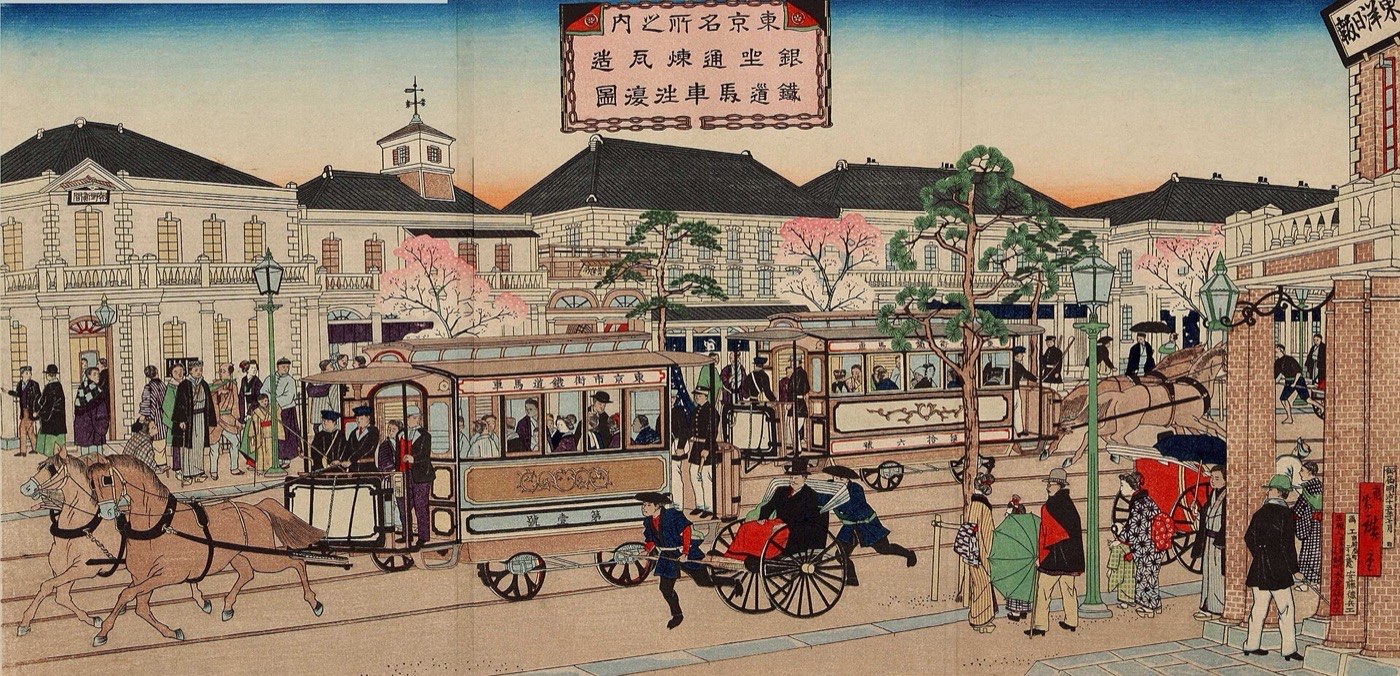
Until 1873 Japan told the time in hours that stretched and shrank with the seasons, and its clockmakers built ingenious clocks to follow them. When the country adopted Western equal hours, those clocks became useless and Japan bought its watches from abroad. Dealers in Tokyo turned into makers, bought or copied American and Swiss machines, and by the 1960s Seiko and Citizen were mass-producing mechanical watches good enough to compete with the Swiss. In December 1969 Seiko put a quartz wristwatch on sale, and by the end of the 1970s Japan was making more than 100 million timepieces a year; today a handful of Japanese groups, and a few independent watchmakers, carry the industry on.1, 2, 3, 4, 5, 6, 8, 27, 28, 34
Part 1
Before 1873: hours that changed with the seasons
Mechanical clocks reached Japan with European missionaries. The Japan Clock & Watch Association records that Francis Xavier gave a striking clock to the daimyo Ouchi Yoshitaka in 1551, and that the oldest clock surviving in Japan is a spring-driven table clock given to Tokugawa Ieyasu in 1612 by an envoy from New Spain, now kept at the Kunozan Toshogu shrine.2, 35
The same association, citing a chronicle of the Owari domain compiled in 1832, says that Tsuda Sukezaemon of Nagoya repaired a clock belonging to Ieyasu, made a copy of it, and was taken into Ieyasu’s service in 1598.2, 36
Japan kept temporal hours. Day and night were each divided into six equal parts, so an hour of daylight was long in summer and short in winter, and the reverse at night; the hours were named after the signs of the zodiac and numbered from nine down to four.2, 8, 35, 37
Accounts differ on where day and night began. The Japan Clock & Watch Association and the Seiko Museum put the boundaries at sunrise and sunset; the Japan Society of Mechanical Engineers, describing Tanaka Hisashige’s clock of 1851, and Japanese Wikipedia put them at dawn and dusk, when the sky is light before sunrise and after sunset.2, 8, 36, 37
Japanese clockmakers adapted the European weight-driven clock with a verge and foliot to these hours. Moving the small weights on the foliot changed its rate; a clock with one foliot had to be reset at sunrise and sunset every day, while the double-foliot clocks that followed switched automatically between a day and a night foliot, so that the weights needed moving just 24 times a year. These are the wadokei.2, 35, 38
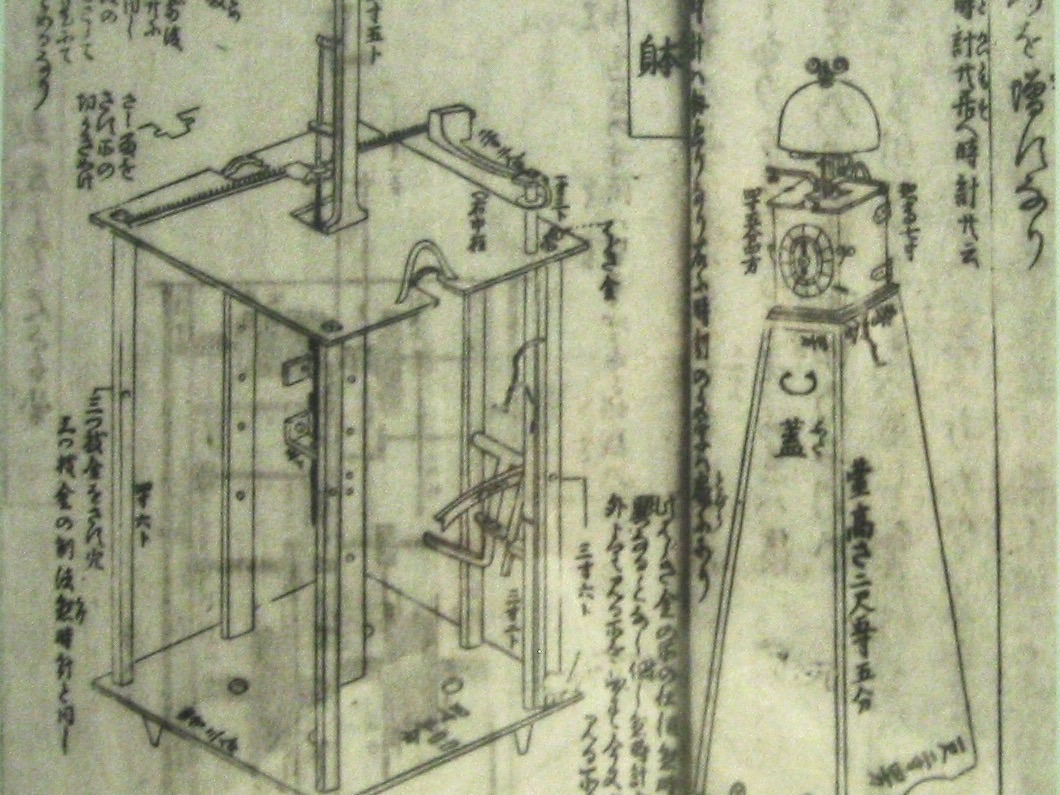
With the country closed to most foreign contact, the Japan Clock & Watch Association says, clockmakers worked for the shogunate and the great lords, in Nagasaki, Kyoto, Osaka, Edo, Nagoya and a dozen other towns, and put their ingenuity into following the temporal hours rather than into precision.2, 35
The craft reached its peak in the Man-nen Jimeisho, the perpetual clock completed in 1851 by Tanaka Hisashige, founder of the business that became Toshiba: it shows temporal hours, the 24 seasons, the days of the week, the moon’s age and a Western clock, and runs for a year on one winding. The Japan Society of Mechanical Engineers lists it as Mechanical Engineering Heritage No. 22; it is shown at the National Museum of Nature and Science in Tokyo.37, 40
Part 2
Western hours and imported watches
The Meiji government replaced the lunisolar calendar with the Gregorian one by a decision of November 1872: the 3rd day of the 12th month of Meiji 5 became 1 January 1873. The temporal hours went at the same time, replaced by twenty-four equal hours.1, 3, 10, 40
The Seiko Museum says the clocks made for the old hours over nearly three hundred years became useless, and that Japan had to rely on imports to meet the demand for Western timepieces; Fukuzawa Yukichi wrote a handbook to explain the new calendar and time.1, 3, 10
The Japan Clock & Watch Association records that pendulum wall clocks, the octagon and four-circle models called bonbon clocks in Japan, were imported from 1873; Japanese Wikipedia adds that they came from America without duty, and that clockmakers who had lost their domain stipends found the Western clocks simpler than their own and turned to making them.36, 40
Imported clocks and watches came through the foreign trading houses of the open ports, Yokohama and Kobe among them. In Tokyo the dealers built clock towers over their shops; the Seiko Museum counts more than thirty towers in Meiji Tokyo and names the tower of the Kobayashi Clock Shop, finished in 1876, as the one that made the young Kintaro Hattori want to be a clock merchant. The setting is on the Tokyo page.11, 41
Japanese manufacture began on a small scale in the later 1870s, in Tokyo, Nagoya and Osaka, by copying Western wall clocks and pocket watches. The Japan Clock & Watch Association dates wall clocks from Kingen-sha in Azabu, Tokyo, to 1875, and says wall-clock making then gathered in Nagoya, a timber market on the Kiso River full of carpenters and small smiths.3, 5
The first watch factories leaned on foreign machines. The Japan Clock & Watch Association says the Osaka Tokei Manufacturing Company brought factory machinery from an American firm in 1894 and began making lever pocket watches under an American engineer; the historian Pierre-Yves Donzé writes that Osaka Watch Manufacturing used American machines and Japan Pocket Watch Manufacturing Swiss ones, and that both had stopped making watches by 1905 and 1901.4, 5
The home market was protected. Donzé records that customs duties on nickel and silver watches rose from 5 per cent of their value before 1899 to 50 per cent from 1906; by the end of the Meiji era, the Japan Clock & Watch Association says, more than twenty factories were making about 3.8 million timepieces a year, mostly clocks.4, 5
Part 3
Hattori, Seikosha and the Laurel
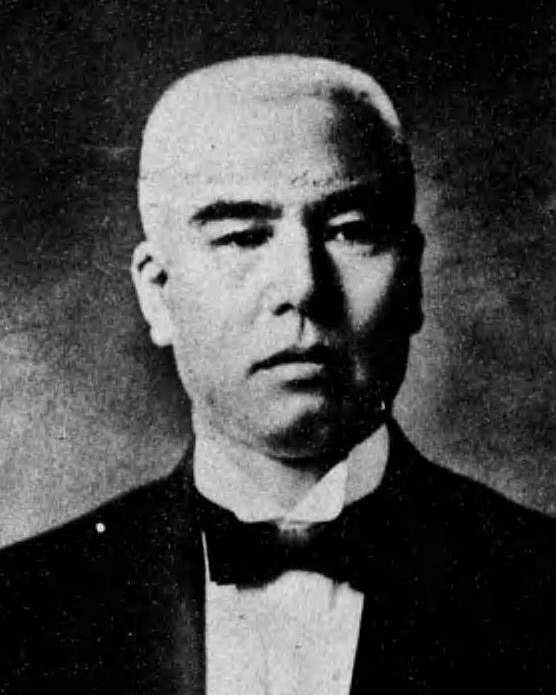
The dealer who became the largest maker was Kintaro Hattori, who opened his shop in 1881 and in 1892 set up the Seikosha factory in Honjo, Tokyo, with the engineer Tsuruhiko Yoshikawa. The Seiko Museum says it began with wall clocks because they were easier to make and a rival had shown them cheaper than imports, and that it made nearly everything in house, dials, hands and cases included; pocket watches followed in 1895 and alarm clocks in 1899.3, 12, 13
Machines had to come from abroad. Donzé writes that on his first tour, in 1899, Hattori was refused machines by Waltham and Elgin, bought an automatic screw machine and a grinder from Brown & Sharpe in 1902, and was welcomed by Waltham on a second journey in 1906, by then as one of the largest importers of American watches into Japan; in 1901 he bought the Swiss machines of the bankrupt Japan Pocket Watch Manufacturing Company.4
What could not be bought was copied. Donzé describes Yoshikawa running a machine workshop at Seikosha until 1932 that reverse-engineered Swiss and American machines and trained the factory’s technicians; the Seiko Museum dates Seikosha’s automatic pinion lathe to 1908 on one page and to 1909 in its founder’s chronology, and Donzé dates Yoshikawa’s first machine, a pinion cutter, to 1909.3, 4, 13
The Seiko Museum says the pinion lathe made possible the Empire pocket watch of 1909, made until about 1934 and exported to China, and that by 1911 Seikosha made 60 per cent of Japan’s timepieces; Hattori had agents in Shanghai and Hong Kong by 1905.3, 13, 43
In 1913 Seikosha put on sale the Laurel, a 12-ligne wristwatch, which the Japan Society of Mechanical Engineers and the Seiko Museum describe as Japan’s first wristwatch; the museum thinks its movement was based on a Swiss design. It came a year before the war that, as told in From the pocket to the wrist, made the wristwatch a man’s watch.3, 16, 17, 44
Seikosha hired its first engineers with university or technical-college training from 1914. Donzé names Kawada Genzo, Hattori’s son-in-law and a Tokyo Imperial University graduate, who ran the machine section and military production from 1917 to 1946, and counts the factory’s engineers and technicians rising from 21 in 1929 to 43 in 1940.4
Part 4
Rivals, the earthquake and the war
A second maker came from the jewellery trade. A study of Taisho-era jewellers by Nakashima Tomoko records that Kamekichi Yamazaki, a Ginza maker of jewellery and watch chains, inspected Swiss pocket-watch making on a journey to the Japan-British Exhibition in London in 1911, studied American mass production in 1915, founded the Shokosha Watch Research Institute in 1918 and opened a watchmaking school in 1921.18, 19
Shokosha finished its pocket watch in 1924, and Citizen says the mayor of Tokyo, Shinpei Goto, named it CITIZEN. Wikipedia’s account, drawn from Citizen’s own history, says the institute ran into financial trouble and that Ryoichi Suzuki, who had managed a watch-assembly business tied to the Swiss merchant Rodolphe Schmid, proposed taking over its equipment; Citizen Watch Co., Ltd. was formed in May 1930 with Yosaburo Nakajima as president.18, 45, 46, 47
Citizen built its machines the way Seikosha had. Donzé writes that it imported Swiss machines from Dixi, Mikron, Lambert and Pétermann, copied a Bechler automatic lathe in 1937, and spun its machine shop off as Nitto Precision in 1938 before taking it back in 1940. Citizen’s own documents date the start of its machine-tool business both to 1936 and to the merger with Nitto in 1941.4, 18, 46
The Great Kanto Earthquake of 1 September 1923 burned down the Seikosha factory and K. Hattori’s offices. The Seiko Museum says the shop reopened within a month and the factory in March 1924, that the SEIKO brand was launched in 1924 in place of the many names Seikosha had used, and that new plants went up between 1928 and 1933.3, 13, 48
Japan’s railways, which had used Western watches since the first line opened in 1872, certified a Seikosha pocket watch as their railroad watch in 1929, by the Seiko Museum’s account; the American story of such watches is under railroad time.3, 49
A third maker grew from another Tokyo shop. Orient’s official history says Shogoro Yoshida opened the Yoshida Watch Shop in Ueno in 1901 to import watches, set up Toyo Tokei Seisakusho to make table clocks in 1920, began making wristwatches in 1934 and built a factory at Hino, west of Tokyo, in 1936.22, 50, 51
War took the factories over. Seikosha had made shell fuses since the Russo-Japanese War, and from 1937 it and the new wristwatch company Daini Seikosha turned to war production, as told in Watches go to war and the Second World War; Citizen was renamed Dainippon Watch from 1938 to 1948, and Orient’s history records Toyo Tokei converting to munitions. The Japan Clock & Watch Association says the war destroyed 60 per cent of the country’s watchmaking capacity and 30 per cent of its clockmaking.3, 5, 22, 46, 51
Part 5
Occupation and the quality drive
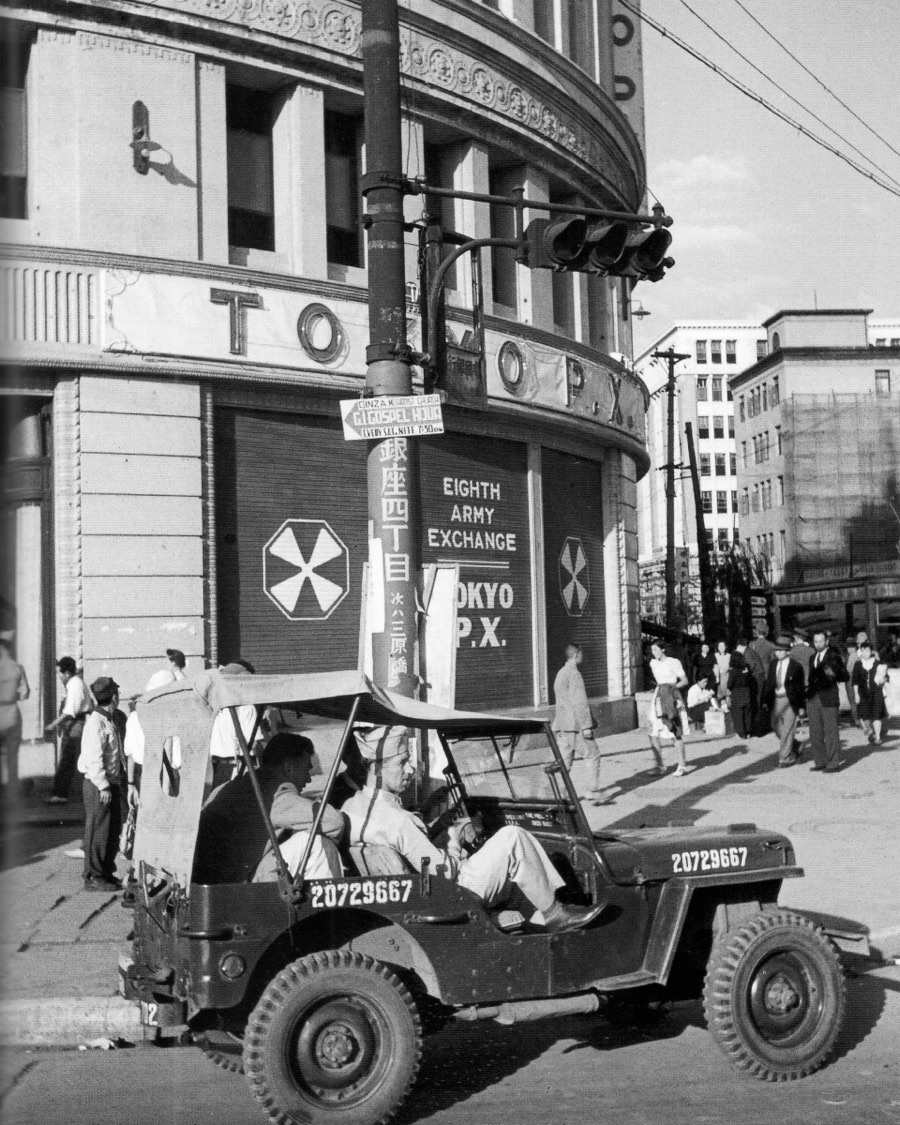
In occupied Tokyo the Hattori building on the Ginza crossing was requisitioned as a post exchange for the American forces; the Seiko Museum says the shop’s retail business passed to Wako in 1947, which moved back into the building in 1952.11
Production restarted quickly with leftover machines and materials. The Japan Clock & Watch Association counts almost 50 companies, 70 factories and about 10,000 workers soon after the war; trade reopened in August 1947, mainly to South-East Asia, while import restrictions and tariffs kept foreign watches out of the home market.5
Quality was the problem. From 1948 the government held annual quality competitions for Japanese watches and clocks; the Japan Clock & Watch Association records that 34 per cent of the watches entered in the first contest stopped, and 21.6 per cent in the second. The Seiko Museum calls the contests a strong force for quality.3, 5
The Dodge Plan’s deflation, a commodity tax on watches (60 per cent until March 1947, 30 per cent from July 1948), the single exchange rate of 360 yen in 1949 and the devaluation of the pound that year all hurt the trade, by the Japan Clock & Watch Association’s account; recovery came with the Korean War, and output reached 5.6 million pieces in 1954, the highest since before the war. It adds that watches smuggled in or brought by American soldiers flooded the market, even after imports were officially allowed from 1952.5
The state paid for new machines. Donzé describes a plan of the Ministry of International Trade and Industry for 1952 to double wristwatch capacity at Hattori, Citizen and Orient, with about 250 million yen borrowed from the new Development Bank of Japan, 155 million of it for machine tools.4
Whether the Swiss helped is disputed. Donzé writes that the Swiss watch cartel had controlled the export of watchmaking machines since 1934, that its agency Machor refused machines ordered by Hattori and Citizen in the early 1950s and kept the ban until 1965 as leverage to open the Japanese market, and that the Japanese copied the machines instead; the Japan Clock & Watch Association says Japan replaced its worn machinery around 1950 by importing precise machines from Switzerland. The cartel is described under the Swiss watch statute.4, 5
A new kind of engineer took over production. Donzé counts 49 university-trained engineers hired by Hattori in the 1950s, many from the University of Tokyo’s former department of arms production, whose professor Aoki Tamotsu had taught mass production to tolerances of thousandths of a millimetre; they rebuilt the factories on interchangeable parts, copied Swiss automatic lathes with the machine maker Tsugami, and led to Seiko Seiki, a machine-tool maker of its own, in 1964.4
A new company joined. Orient’s official history says Toyo Tokei’s Hino factory closed in 1949 after a long labour dispute, that Tama Keiki began making watches in the leased factory in 1950, became Orient Watch in 1951 and launched the Orient Star the same year, and bought the factory in 1952.22, 50, 51
Others came and went. Japanese Wikipedia says Takano Seimitsu of Nagoya made watches for the German brand Laco on Durowe movements from 1954, signed a technical agreement with Hamilton in 1957, sold its own Takano watches, among them the very thin Chateau of 1960, and passed to Ricoh in 1962 after the Ise Bay Typhoon of 1959 and heavy investment; Ricoh made watches until about 2021.53, 54
Part 6
Catching the Swiss
Through the 1950s the Swiss stayed ahead. The Japan Clock & Watch Association says Swiss watches, imported or smuggled, led in quality and fashion until about 1957, while Japanese makers added centre seconds in 1949, date displays in 1952, automatic winding in 1955 and shock protection in 1956, and moved their assembly onto belt conveyors.5
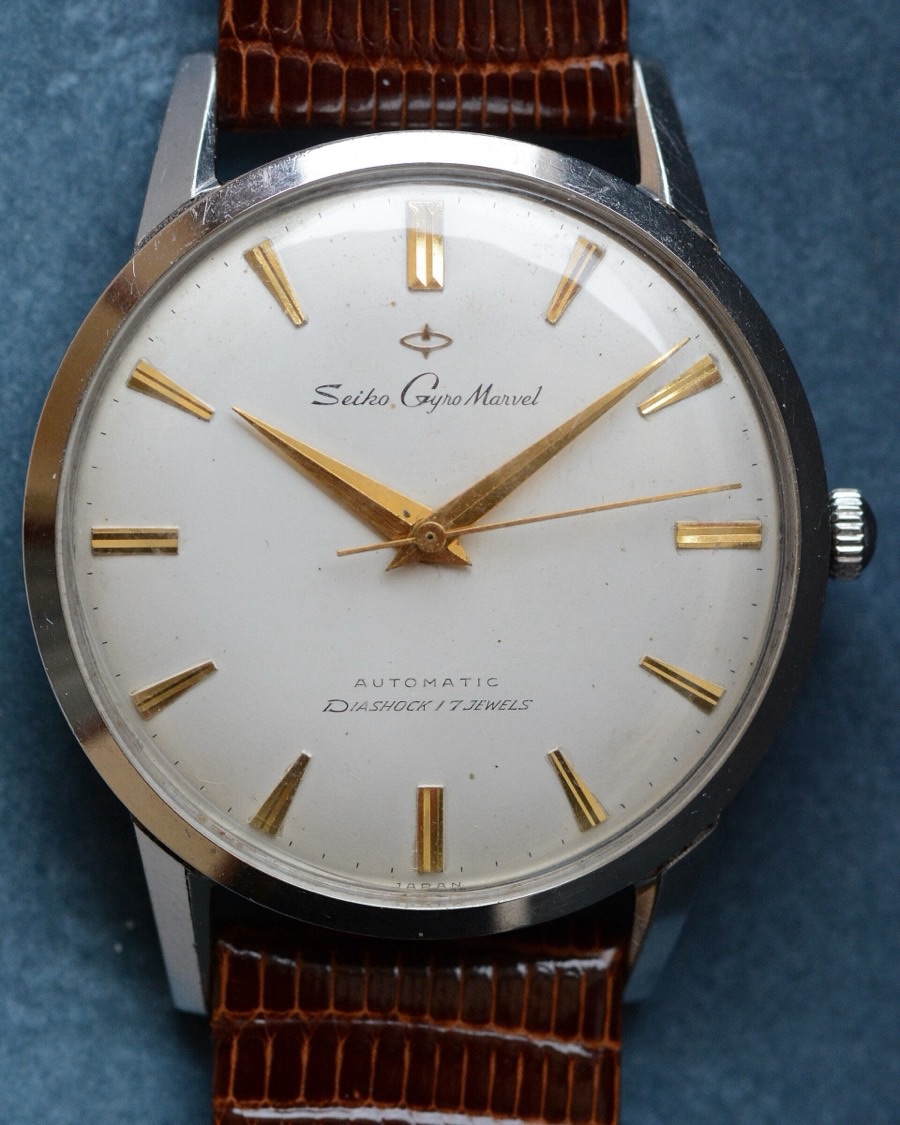
Seiko says its Marvel of 1956 was its first wristwatch of its own design, and that the line ran through the Crown of 1959 to Grand Seiko in 1960, made to beat the Swiss chronometer standard; from 1964 it entered the Swiss observatory competitions, told under chronometry.24, 25, 44
Seiko’s watches came from two rival factories, Daini Seikosha in Kameido, Tokyo, and Suwa Seikosha in Nagano, which made their own lines, both made Grand Seikos and entered the competitions under their own names; Saburo Kusama, a Suwa engineer, writes that Daini hired electrical engineers years before Suwa, which then followed. The story is on the Suwa page.14, 24, 26
The home market opened in 1961. Donzé writes that Japan kept watch imports under strict quotas until then, and the Seiko Museum says the easing of import rules that year left Grand Seiko to compete in a market crowded with foreign watches.4, 44
The Tokyo Olympics of 1964, for which Seiko says it built 1,278 timing instruments, and the results in Swiss contests lifted the name of Japanese watches abroad; the Japan Clock & Watch Association says exports grew from the mid-1960s and that watch output rose 5.9 times in the ten years from 1955.5, 25
Donzé counts the gap closing: the value of Japanese watch production was 24 per cent of the Swiss in 1960 and 47.3 per cent in 1969. In 1970 Hattori alone made 14 million watches, 58 per cent of Japan’s output, while Longines made 450,000.6
Part 7
Quartz and the world’s watch factories
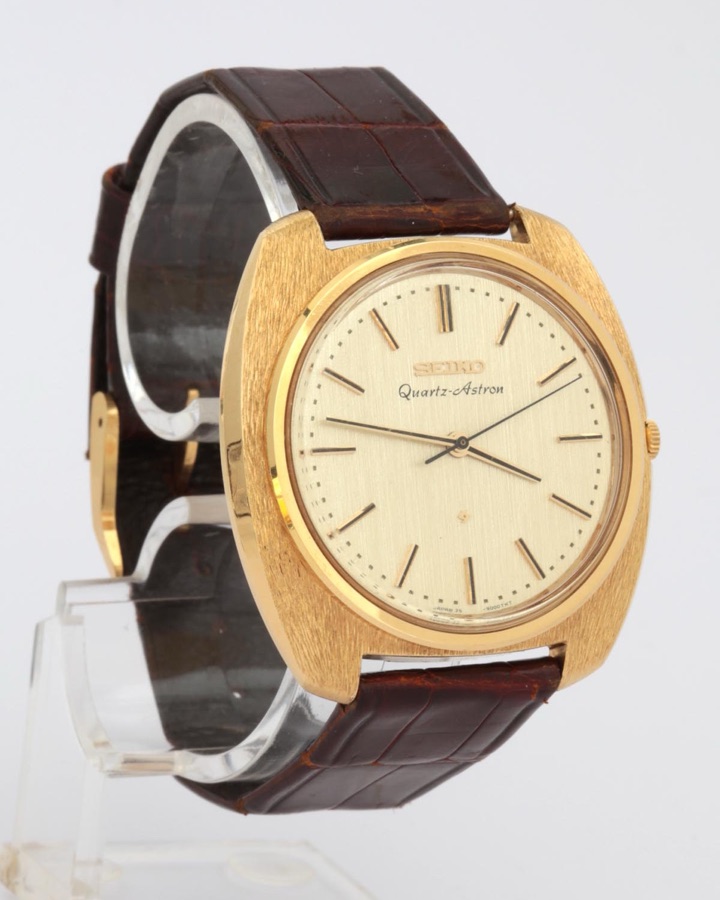
In December 1969 Suwa Seikosha’s Quartz Astron went on sale in Tokyo, the start of the story told in The electric and quartz revolution. Donzé argues that quartz strengthened and accelerated a Japanese advantage built on the mass production of good mechanical watches, but did not create it.6, 27, 28
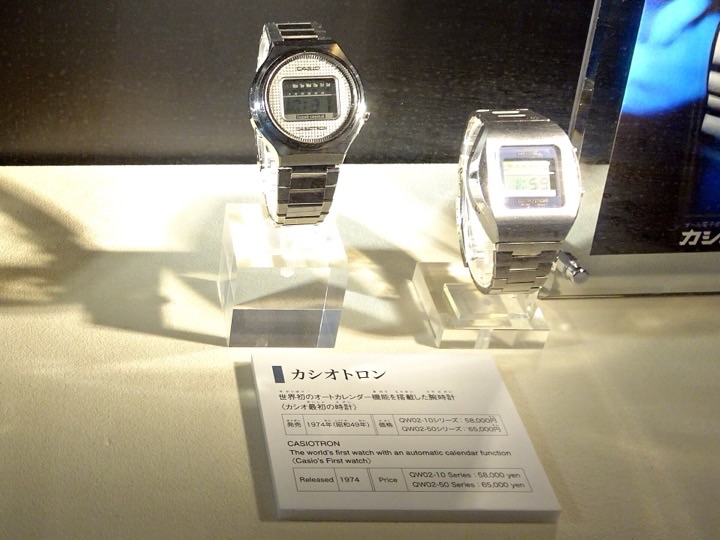
Donzé writes that Hattori and Citizen developed electronic watches in house, in cooperation with American firms, while smaller makers worked with electronics companies, Orient with Sharp and Casio with Sanyo; Hattori and Ricoh brought out digital watches in 1973, Citizen and Orient in 1974, and the calculator maker Casio, whose Casiotron came out in November 1974, was the one newcomer to succeed.6, 30
The Japan Clock & Watch Association records that Japanese production passed 100 million timepieces in 1979, 59.7 million watches and 43.5 million clocks, that quartz made up 57 per cent of the watches that year, and calls Japan then the world’s leading producer.5
Production moved abroad from about 1968, the association says, to Korea, Taiwan, Hong Kong, Singapore and the Philippines; Japanese firms sold movements and parts to assemblers, and Donzé shows Hong Kong’s quartz industry running on Japanese and American chips and displays.5, 33
When Japan overtook Switzerland depends on what is counted. The Japan Clock & Watch Association treats the 100 million pieces of 1979 as making Japan the leading producer; Donzé, measuring the value of production, puts the overtaking between 1981 and 1985, after which the Swatch, the stronger yen after the Plaza Accord of 1985 and the reorganisation of the Swiss industry let the Swiss recover.5, 6
Part 8
Spring Drive, independents and what Japan changed
Seiko says it brought out Spring Drive in 1999, a movement driven by a mainspring and regulated by a quartz crystal and an electromagnetic brake; Grand Seiko says the idea came from the engineer Yoshikazu Akahane at Shiojiri in the 1970s.58, 59
Orient became part of Seiko Epson: Epson took a majority in 2001 and full ownership in 2009, absorbed Orient’s business in 2017 and merged the company into itself on 1 February 2026, keeping the Orient brand.23, 50, 60, 61
Japanese groups came to own American and European names. Citizen records that it took control of Bulova in 2008 and of Frédérique Constant in 2016; Wikipedia’s account says Seiko acquired the American Pulsar name in 1978.18, 62, 63
A few independent makers work alone or in small workshops. The AHCI, the academy of independent watchmakers, lists Hajime Asaoka of Tokyo, a designer who taught himself watchmaking, and Masahiro Kikuno of Hokkaido among its members; Japanese Wikipedia says Asaoka’s company began making watches under the old Takano name in 2024. Their part of the story is in the mechanical revival and the independents.34, 53, 64
What Japan did to the older industries is argued over. The Historical Dictionary of Switzerland says the Swiss had mastered quartz but did not believe in it and were overtaken by Japanese producers; Donzé argues that Swiss production methods were losing to Japanese ones before quartz, and that the usual story of quartz and cheap labour is too simple. The American makers had faded earlier, as told in America industrializes the watch.6, 65, 66
The Japan Clock & Watch Association puts Japan’s home market in 2015 at 36.96 million watches worth 900.2 billion yen, with sales lifted by visitors from abroad, Chinese tourists in particular, and counted 516 million timepieces and movements shipped by Japanese makers that year.5
Through this history
The companies, people, technologies, objects and events this chapter is made of, in the order the story meets them.
Technology
Wadokei: Japanese clocksThe clocks Japan built for its seasonal hours, made useless in 1873.1, 2, 8
Event
Japan adopts equal hoursThe reform that ended the seasonal hours and made Japan a market for Western clocks, where the chapter begins.3, 9, 10
Object
The Seiko LaurelThe wristwatch of 1913 that the Japan Society of Mechanical Engineers calls Japan’s first.16, 17
Event
The Second World WarThe Seiko Museum says the wars from 1937 turned Seikosha and Daini Seikosha to full war production.3
Event
The quartz crisisThe years in which Japanese makers turned quartz into a mass product and overtook Swiss output by value.6, 28, 29
Key dates
- 1598
Tsuda Sukezaemon of Nagoya enters Tokugawa Ieyasu’s service after copying his clock, by a chronicle of 1832.2
- 1851
Tanaka Hisashige completes the Man-nen Jimeisho perpetual clock.37, 40
- 1873
Japan adopts the Gregorian calendar and equal hours on 1 January.1, 3, 40
- 1881
Kintaro Hattori opens his shop in Tokyo.3, 13
- 1892
Hattori and Tsuruhiko Yoshikawa set up the Seikosha factory.3, 12
- 1894
Osaka Tokei Manufacturing begins making pocket watches with American machinery.5
- 1913
Seikosha’s Laurel wristwatch.16, 17
- 1918
Kamekichi Yamazaki founds the Shokosha Watch Research Institute, Citizen’s forerunner.18, 19
- 1923
The Great Kanto Earthquake burns down Seikosha.3, 13
- 1930
Citizen Watch Co., Ltd. is formed.18, 45
- 1937
Daini Seikosha is set up in Kameido to make wristwatches.3, 15
- 1948
The government’s quality competitions for Japanese timepieces begin.3, 5
- 1950
Tama Keiki, from 1951 Orient Watch, begins making watches at Hino.22
- 1961
Japan eases its import controls on watches.4, 44
- 1969
The Quartz Astron goes on sale in Tokyo.27, 28
- 1974
Casio’s Casiotron.30
- 1979
Japanese output passes 100 million timepieces.5
- 1999
Seiko’s Spring Drive.58
- 2026
Orient Watch is merged into Seiko Epson on 1 February.61
Where this leads
- Before, Era IVWatches go to war
1880 to 1960
- After, Era IVThe Soviet watch industry
1930 to 1991
Where Japan builds a watch industry leads
- In this story, CompanySeiko
The brand of the Hattori factories, from 1924.3, 48
- In this story, ObjectThe Seiko Astron
Suwa Seikosha’s quartz wristwatch of 1969.27, 28
- See also, HistoryAmerica industrializes the watch
Hattori bought machines from Brown & Sharpe and Waltham, by Donzé’s account.4
- See also, HistoryIndia builds a watch industry
India’s state watch factory was set up with Citizen’s technical help.18, 21
- See also, HistoryThe electric and quartz revolution
Japan’s quartz watches of the 1970s and the assembly industry they fed.5, 6, 33
- See also, HistoryWatches go to war
Seikosha and Daini Seikosha in war production from 1937.3
- See also, CompanyHamilton
Japanese Wikipedia says Hamilton signed a technical agreement with Takano in 1957 and a joint venture with Ricoh in 1962.53, 54
- See also, CompanyLaco
Japanese Wikipedia says Takano of Nagoya made Laco-branded watches from 1954.53
- See also, CompanyLongines
Donzé writes a comparative history of Longines’ and Hattori’s quartz research.6
- See also, CompanyWaltham
Donzé says Waltham refused Hattori machines in 1899 and sold them in 1906.4
- See also, PlaceHong Kong
Donzé records Japanese makers selling through Hong Kong houses from 1962 and Hattori’s assembly plant there from 1968.33
- See also, TraditionIndependent watchmaking
The AHCI lists the Japanese makers Hajime Asaoka and Masahiro Kikuno among its members.34, 64
- See also, TraditionJapanese watchmaking
The earlier overview of the same story, told in full in the history.3, 5
- See also, EventThe Swiss watch cartel and statute
Donzé says the Swiss cartel refused watchmaking machines to Japanese makers until 1965.4
Facts and sources
- Period
- 1873 to today (with the Edo-period clocks before it)1, 3, 5
- Where
- Tokyo above all; also Nagoya, Osaka, Suwa in Nagano, Akita and Iwate3, 5, 15, 22, 26
Sources
- 1
The Japanese Calendar: history of the calendar (opens in a new tab)
- 2
The World of Japanese Traditional Clock (opens in a new tab)
- 3
History of Seiko and Its Products, Stage 1 (1881-1920s) (opens in a new tab)
- 4
- 5
History of the Japanese Horological Industry (opens in a new tab)
- 6
- 7
- 8
Information on Traditional Japanese Clocks (Wadokei) (opens in a new tab)
- 9
- 10
Kaireki-ben (handbook on the revised calendar), Fukuzawa Yukichi (opens in a new tab)
- 11
- 12
Episode 3: Establish Seikosha Factory (1892 onward) (opens in a new tab)
- 13
- 14
- 15
- 16
- 17
- 18
- 19
- 20
- 21
- 22
- 23
- 24
- 25
History of Seiko and its products, stage 2 (1950s to 1960s) (opens in a new tab)
- 26
- 27
Milestones: Electronic Quartz Wristwatch, 1969 (opens in a new tab)
- 28
History of Seiko and its products, stage 3 (1960s to 1980s) (opens in a new tab)
- 29
- 30
- 31
- 32
- 33
- 34
- 35
- 36
- 37
Mechanical Engineering Heritage No. 22: Man-nen Jimeisho (perpetual clock) (opens in a new tab)
- 38
Lantern Clock with Double Foliot Balance (opens in a new tab)
- 39
- 40
- 41
Episode 2: Establish K. Hattori & Co. (1881 to 1891) (opens in a new tab)
- 42
- 43
- 44
- 45
- 46
- 47
- 48
- 49
- 50
- 51
- 52
- 53
- 54
- 55
- 56
Quartz wristwatch Astron, Seiko, Japan, 1969 (Deutsches Uhrenmuseum) (opens in a new tab)
- 57
The first Casiotron, Casio's first wristwatch, on display. (opens in a new tab)
- 58
History of Seiko and its products, stage 4 (1990s onward) (opens in a new tab)
- 59
- 60
- 61
Notice of Absorption-Type Merger of a Wholly Owned Subsidiary (5 November 2025) (opens in a new tab)
- 62
- 63
- 64
- 65
- 66
Did Quartz Really Kill the Swiss Watch Industry in the 70s? (Cedric Chin) (opens in a new tab)
Sources read November 12, 2026.