Tokyo
The capital where Japan’s watch trade began: Ginza’s import dealers and clock towers, Hattori’s Seikosha factory across the river, Citizen’s and Orient’s early workshops, and the head offices that still run the industry.
Japan, Tokyo, Kanto
Companies here Casio, Citizen, Orient, Seiko
In the history Japan builds a watch industry
Why Tokyo?
Edo, the shogun’s city, already had clockmakers: the Japan Clock & Watch Association lists it among the centres of wadokei making, with clockmakers serving the shogunate and the lords.8
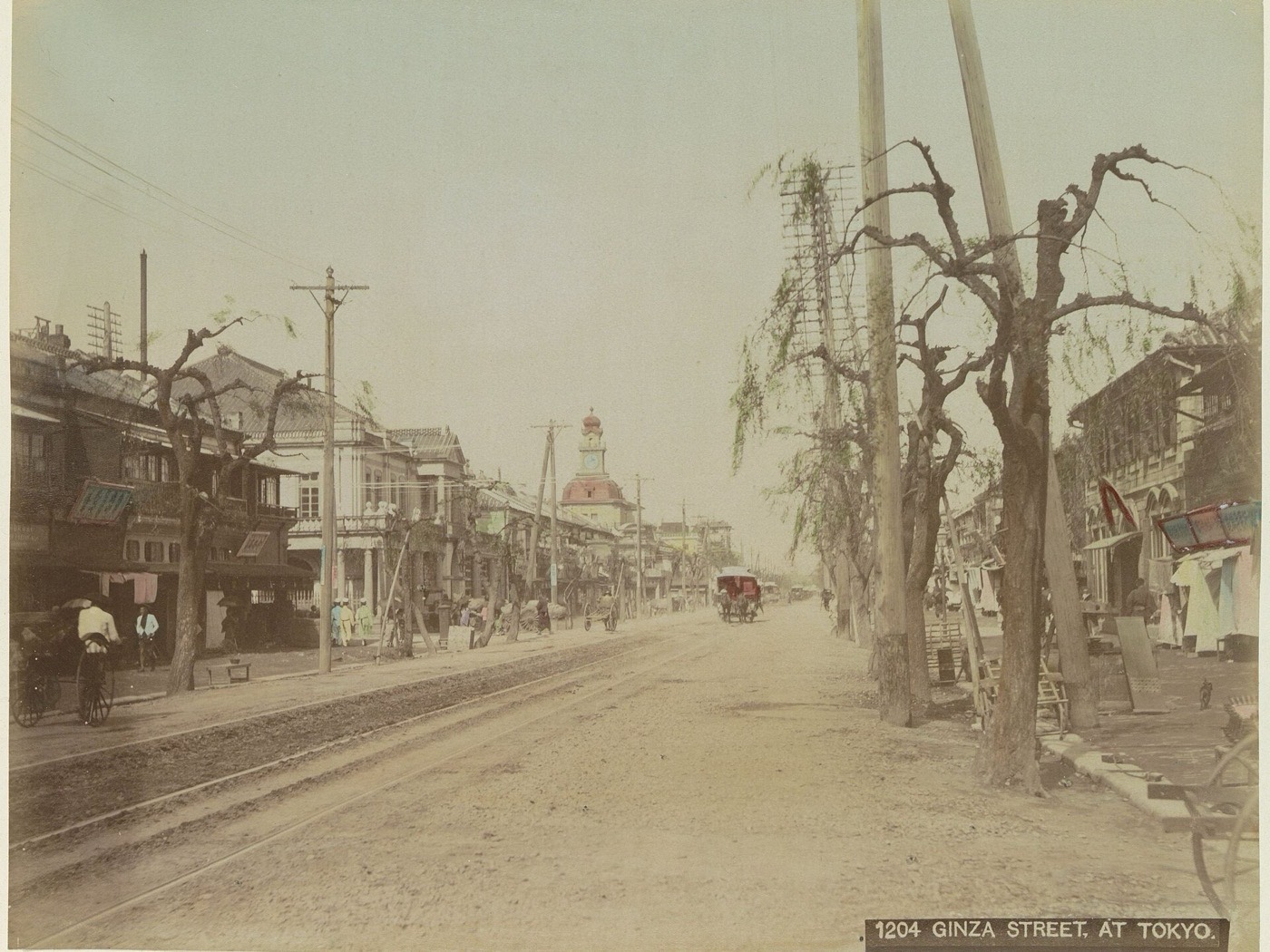
After the fire of February 1872 the Meiji government rebuilt Ginza in brick as a showpiece of Western building, to designs by Thomas Waters; Japanese Wikipedia says newspapers and shops selling imported goods gathered there, and it overtook Nihonbashi as the city’s commercial centre.9, 10
Watches reached Tokyo through the foreign trading houses of Yokohama, and Tokyo dealers sold them on; Kintaro Hattori traded with the Yokohama firms from 1885, wholesale and retail.11, 12
Clock towers were the dealers’ sign. The Seiko Museum counts more than thirty in Meiji Tokyo, mostly on clock shops, among them the Kobayashi Clock Shop tower of 1876 and the Kyoya tower in Sotokanda, with their mechanisms imported through Yokohama and Kobe.2
What grew here
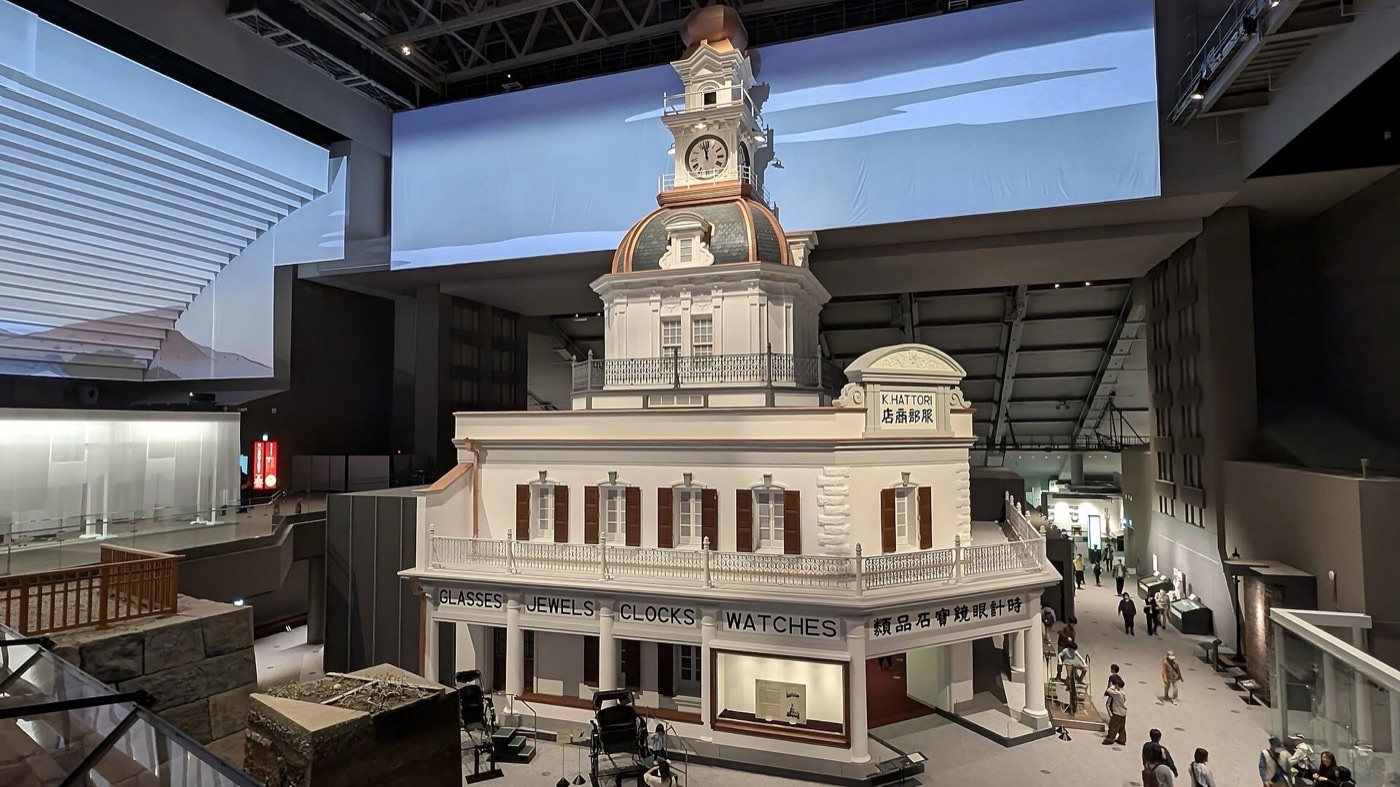
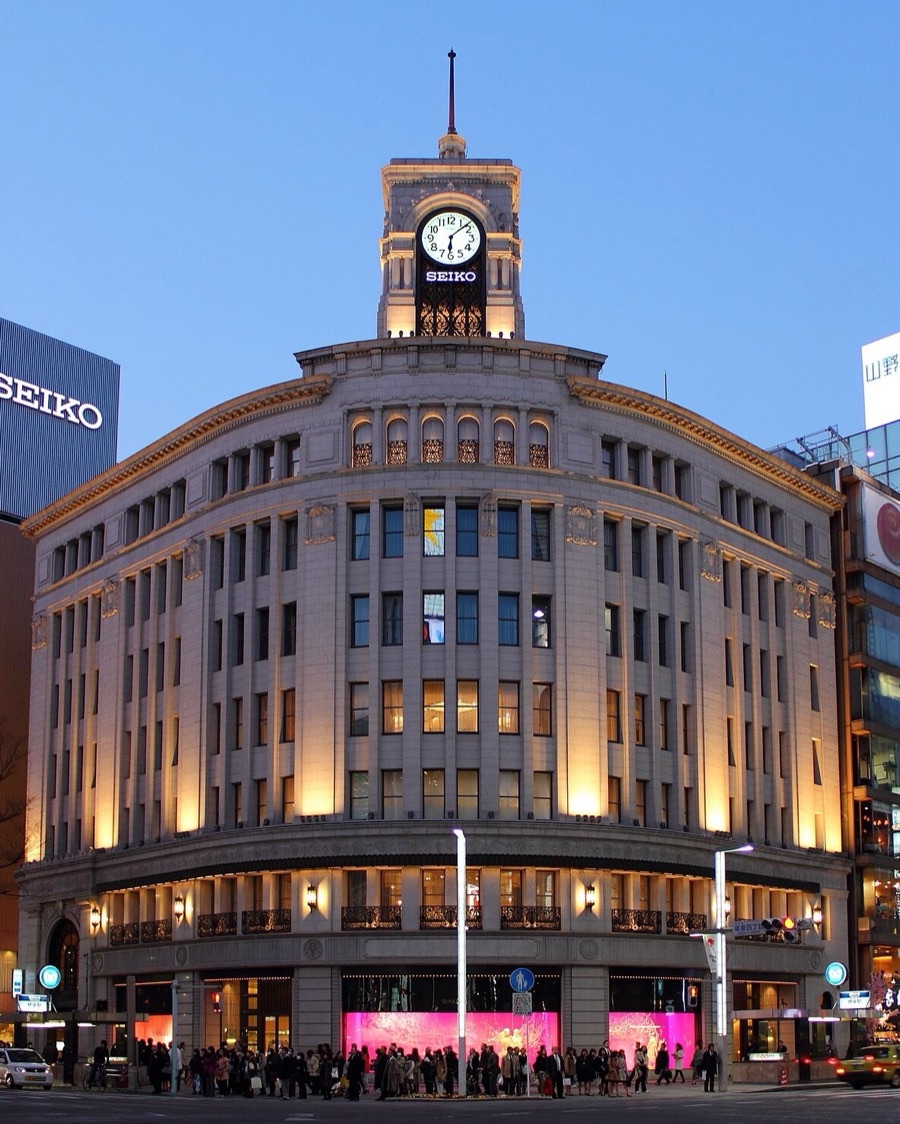
Hattori’s business moved from Kyobashi to the main street of Ginza in 1887, and in 1894 he bought the former Choya newspaper building on the corner of Ginza 4-chome and added a clock tower about 15 metres tall, with a Swiss tower clock imported by J. Colomb & Co. of Yokohama, by the Seiko Museum’s account.2, 11
Making began across the Sumida River. Seikosha opened in 1892 in a disused saltpetre works at Ishiwara-cho in Honjo, today Sumida ward, and moved to Yanagishima the next year.1, 3, 12
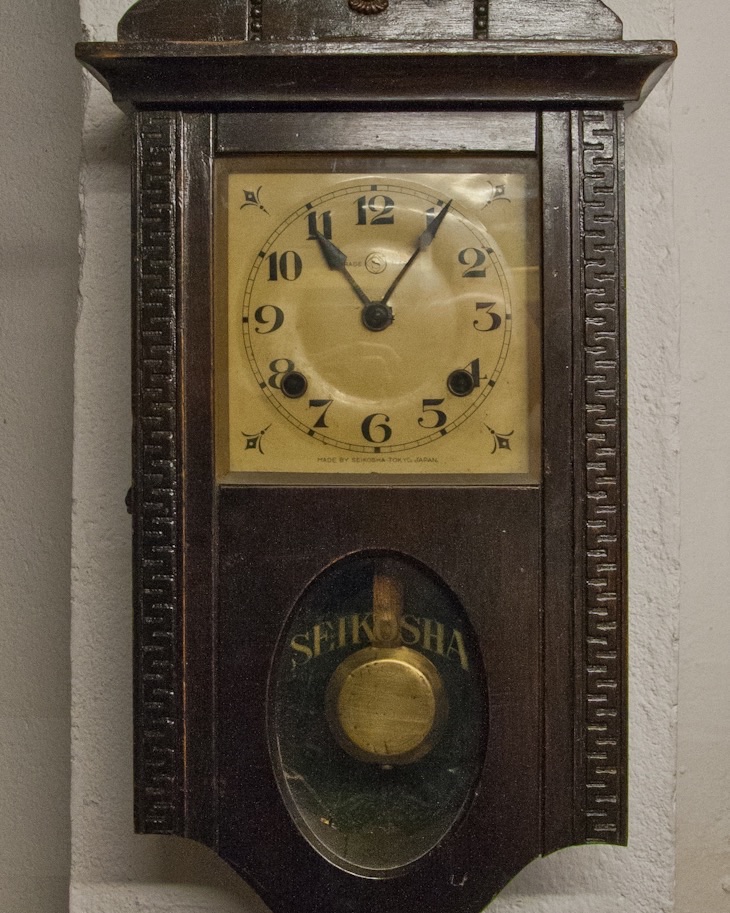
In 1937 Seikosha’s watch section became Daini Seikosha, with its head office factory at Kameido, in today’s Koto ward.1, 15
Citizen’s founder Kamekichi Yamazaki was a Ginza jeweller; Nakashima Tomoko’s study records his Shokosha works at Hongo and, from 1918, at Tsunohazu, where watch movements began. Citizen built its Tanashi factory in the western suburbs in the mid-1930s and has had its head office there since 2001.5, 16, 17
Orient grew from Shogoro Yoshida’s import shop of 1901 in Ueno and the wristwatch factory his firm built at Hino in 1936; Casio began in Mitaka in 1946.4, 6
Who and what moved through
Machines came from America and Switzerland. Donzé writes that Hattori toured Waltham and Elgin in 1899 and bought from Brown & Sharpe and Waltham, and that Tokyo’s makers later bought or copied Swiss automatic lathes.18
Seikosha’s goods went out to Asia: the Seiko Museum says its nickel alarm clocks took the Japanese and Shanghai markets from German ones, and Hattori had agents in Shanghai and Hong Kong by 1905.1, 12
In the war, work left the city. After the Kameido factory was destroyed, the Seiko Museum says, production restarted in evacuation plants at Kiryu, Toyama, Sendai and Suwa, and the Suwa plant stayed.1
Engineers came from the University of Tokyo. Donzé writes that Hattori hired 49 university-trained engineers in the 1950s, many from the university’s former department of arms production, and worked with its professor Aoki Tamotsu.18
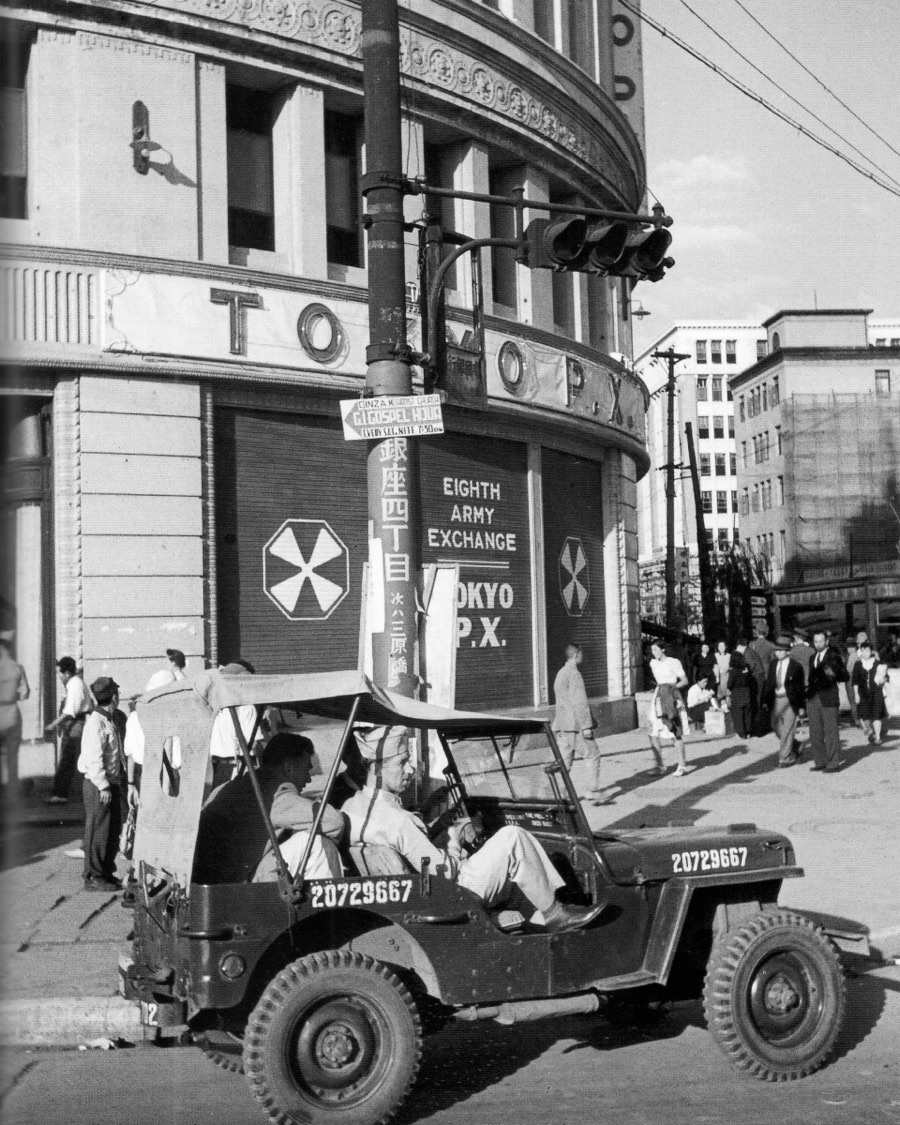
American forces requisitioned the Hattori building as a post exchange during the occupation, and the Japan Clock & Watch Association says watches brought in by American soldiers or smuggled flooded the market.2, 19
What changed because of it
Disaster shaped the city twice. The Great Kanto Earthquake of 1923 burned down Seikosha and Hattori’s offices and ruined the brick town; in the Second World War the Kameido works was destroyed, while the Ginza tower survived with three dials cracked.1, 2, 9
The second clock tower, finished in 1932 to designs from Jin Watanabe’s office, still stands on the Ginza corner as SEIKO HOUSE; the Seiko Museum says the Ministry of Economy, Trade and Industry named it Heritage of Industrial Modernization in 2009.2, 11
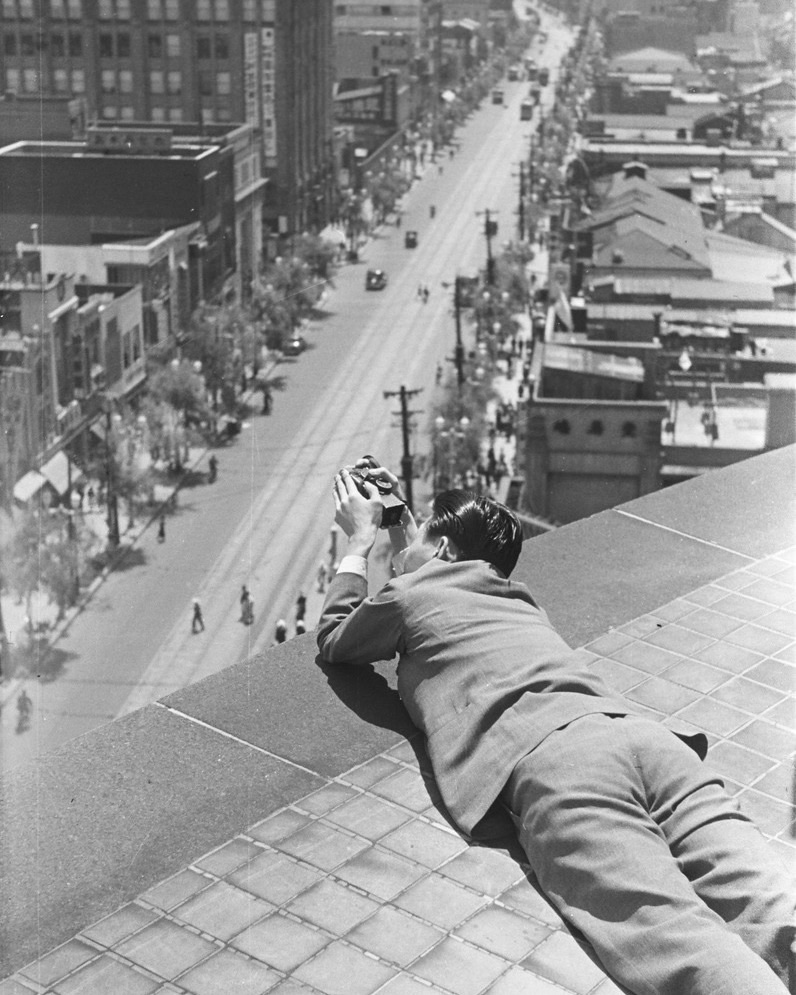
Seiko timed the 1964 Tokyo Olympics, building 1,278 timing instruments, by its museum’s account; the work led to its printer and quartz businesses.22
Factories moved out of the city: Seiko Instruments, the former Daini Seikosha, moved its head office to Makuhari in Chiba, and its mechanical watches went to Shizukuishi in Iwate.15, 23
Tokyo still holds the head offices: the Seiko Group in Ginza, Citizen in Nishi-Tokyo and Casio in Shibuya. The Seiko Museum Ginza, which moved to Ginza in 2020, keeps the industry’s history, wadokei included.5, 6, 24, 25
Key dates
- 1872
The Ginza fire; the area is rebuilt in brick.9, 10
- 1876
The Kobayashi Clock Shop tower is finished.2
- 1881
Kintaro Hattori opens his shop in Kyobashi.11, 12
- 1892
The Seikosha factory opens in Honjo.1, 3
- 1894
Hattori’s clock tower rises on Ginza 4-chome.2, 11
- 1901
Shogoro Yoshida opens his watch shop in Ueno.4
- 1918
Kamekichi Yamazaki founds the Shokosha Watch Research Institute.5, 16
- 1923
The Great Kanto Earthquake burns Seikosha and the brick town.1, 9
- 1932
The second Hattori clock tower is finished.2
- 1937
Daini Seikosha is set up at Kameido.1, 15
- 1964
Seiko times the Tokyo Olympics.22
- 2020
The Seiko Museum moves to Ginza.24
Where Tokyo leads
- Based here, CompanyCasio
Casio began in Mitaka, Tokyo, in 1946.6
- Based here, CompanyCitizen
Citizen’s head office has been at Tanashi, Nishi-Tokyo, since 2001.5, 17
- Based here, CompanyOrient
Orient began at Hino, Tokyo, in 1950, from a Ueno shop of 1901.4
- Based here, CompanySeiko
Seiko has been based in Ginza since Hattori’s shop moved there in 1887.11, 24
- Based here, GroupSeiko Group
The holding company’s head office is in Ginza, Chuo-ku.11, 24
- Part of, HistoryJapan builds a watch industry
Where Japan’s watch trade and its early factories began.1, 11
- See also, PersonKintarō Hattori
Hattori’s shop in Kyobashi and Ginza and his Seikosha factory in Honjo.3, 11
- See also, PlaceSuwa
Daini Seikosha’s Tokyo work was evacuated to Suwa in the war, and the Suwa plant stayed.1, 27
- See also, TechnologyWadokei: Japanese clocks
The Japan Clock & Watch Association says the Seiko Museum Ginza exhibits one of Japan’s richest wadokei collections.8, 25
- See also, EventJapan adopts equal hours
The Seiko Museum counts more than thirty clock towers built by Tokyo’s dealers in Western clocks in the Meiji era.2
Facts and sources
Sources
- 1
History of Seiko and Its Products, Stage 1 (1881-1920s) (opens in a new tab)
- 2
- 3
Episode 3: Establish Seikosha Factory (1892 onward) (opens in a new tab)
- 4
- 5
- 6
- 7
- 8
The World of Japanese Traditional Clock (opens in a new tab)
- 9
- 10
- 11
Episode 2: Establish K. Hattori & Co. (1881 to 1891) (opens in a new tab)
- 12
- 13
- 14
- 15
- 16
- 17
- 18
- 19
History of the Japanese Horological Industry (opens in a new tab)
- 20
- 21
- 22
History of Seiko and its products, stage 2 (1950s to 1960s) (opens in a new tab)
- 23
- 24
- 25
Information on Traditional Japanese Clocks (Wadokei) (opens in a new tab)
- 26
Ginza Wako, Chuo, Tokyo, photographed on 27 March 2012. (opens in a new tab)
- 27
Sources read November 12, 2026.