Citizen
A Tokyo watch company that grew from a watch research institute set up in 1918 and took its name from its 1924 pocket watch. It makes its own movements, sells them to other brands under the Miyota name, has built much of its range since the 1970s on titanium cases and light-powered quartz, and since 2008 has bought Bulova and Swiss watch and movement makers.
Founded 1918, as the Shokosha Watch Research Institute
In the histories Japan builds a watch industry, China builds a watch industry, India builds a watch industry, The electric and quartz revolution, Making watches today
A watch that named a company
The institute finished its pocket watch in December 1924, when most watches sold in Japan were still imported. Shinpei Goto, the mayor of Tokyo, named it CITIZEN, and in May 1930 the name passed to the new Citizen Watch Co., Ltd.1, 2, 8
A wristwatch followed in 1931 and the Tanashi factory in 1936. In 1941 the company began making machine tools, a business that still runs beside its watches.1, 8
After the war Citizen sold a calendar watch from 1952, began exporting wristwatches in 1955 and in 1960 signed an import-export agreement with the American Bulova Watch Company. Its X-8 electronic watch appeared in 1966.1

Titanium and light
Two materials came to define the brand. Citizen says the watch it introduced in 1970 was the first with a titanium case, and it later developed Super Titanium, titanium hardened at the surface by its own Duratect process.4
By the mid-1970s battery quartz watches were the norm in Japan, and Citizen set out to end battery changes, a project it ties to the 1973 oil crisis. After a prototype in 1974, it released the Crystron Solar Cell, a light-powered analogue watch, in 1976.1, 5
The solar watch improved step by step: by 1986 a model ran 200 hours on a full charge, and in 1995 a lithium battery stretched that to six months. Citizen had coined the name Eco-Drive in 1994 for watches that run on any light, indoor or out, and in 1996 Eco-Drive received Japan’s Eco Mark.1, 5
Movements for others, and a group of brands
Citizen’s movements also go to other brands. Miyota dates itself to a movement factory Citizen built at Miyota in Nagano in 1959 and its own name to 1980, calls itself an integrated movement maker, from components to final inspection, and says it makes all its movements in Japan; Citizen set up a division to sell watch components in 1982. How those movements reached Hong Kong’s assemblers from 1979 is told on the Hong Kong page.1, 3, 9
The makers were drawn closer to the parent. In 2005 five consolidated companies, Miyota among them, became wholly owned subsidiaries; the parent was a holding company, Citizen Holdings, from 2007 until 2016, when it took the Citizen Watch name again; and Citizen Watch Manufacturing was set up in 2013.1, 8
From 2008 Citizen bought other makers. Bulova, the New York company it had traded with since 1960, became a subsidiary in January 2008; Prothor Holding of La Chaux-de-Fonds, owner of the movement maker La Joux-Perret, the parts maker Prototec and the Arnold & Son brand, in April 2012; and Frederique Constant Holding of Geneva, with the Frederique Constant, Alpina and DeMonaco brands, in July 2016.1, 6, 10, 11, 12
Europa Star’s report of 2016 says that Citizen wanted La Joux-Perret mainly for its mechanical movements, and to secure movements for Bulova after ETA moved to restrict its sales to outside firms; the magazine counts seven foreign brands added in eight years.12
Citizen now calls itself one of the few companies able to do every part of watchmaking in house, from components to assembly, sales and service, with movement works in Japan (Miyota) and Switzerland (La Joux-Perret), the latter supplying brands inside and outside the group. Watches gave 177.1 billion of its 316.8 billion yen of sales in the year to March 2025, the report says.13
Key dates
- 1918
The Shokosha Watch Research Institute, Citizen’s forerunner, is set up.1, 2
- 1924
The institute completes its pocket watch, named CITIZEN.1, 2
- 1930
Citizen Watch Co., Ltd. is formed.1, 2
- 1966
The X-8 electronic watch.1
- 1970
A watch with a titanium case.4
- 1976
The Crystron Solar Cell, a light-powered analogue quartz watch.1, 5
- 1993
A multizone radio-controlled watch.1
- 1994
The Eco-Drive name is created.5
- 2008
Bulova becomes a Citizen subsidiary.1, 14
- 2012
Prothor Holding, owner of La Joux-Perret and Arnold & Son, becomes a subsidiary.1, 10
- 2016
Frederique Constant becomes a subsidiary; the company takes the Citizen Watch name again.1
Where Citizen leads
- Developed, TechnologyThe quartz watch
Citizen made a quartz wristwatch in 1973 and a light-powered one in 1976.15, 16
- Based in, PlaceTokyo
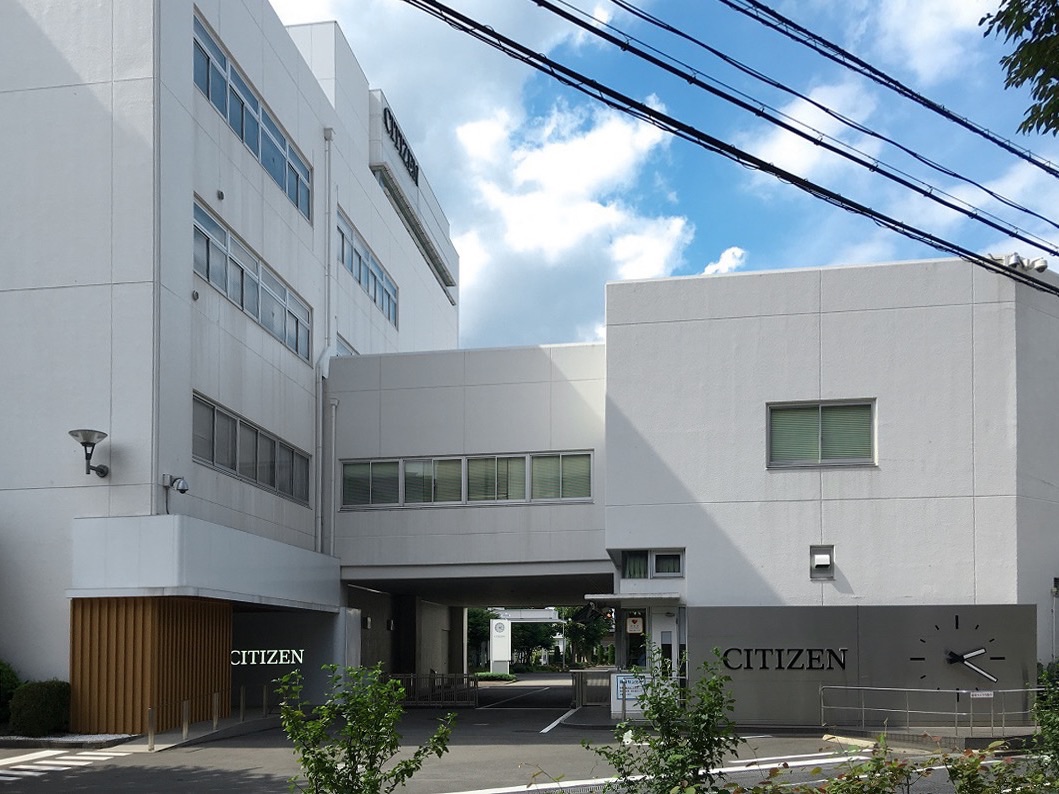
Citizen’s head office has been at Tanashi, Nishi-Tokyo, since 2001.1, 17
- Supplied, PlaceHong Kong
Citizen began exporting electronic movements in bulk to a Hong Kong maker in 1979.9, 15
- Supplied, GroupHMT
Citizen’s technical assistance agreement of March 1960 gave HMT its watch designs and training.1, 18, 19
- Part of, HistoryJapan builds a watch industry
Founded in 1918 as the Shokosha Watch Research Institute by the jeweller Kamekichi Yamazaki.1, 20
- Part of, HistoryMaking watches today
Owner of Miyota, a movement supplier to brands around the world.3, 21
- Part of, HistoryThe electric and quartz revolution
Citizen made quartz wristwatches from 1973 and sold movements to others from 1980.15, 16
- Part of, TraditionJapanese watchmaking
Citizen was set up in 1918 to make watches in a country that still imported most of them.1, 2
- Part of, TraditionTool-watch engineering
Citizen’s surface-hardened titanium, beside other makers’ answers to scratches and wear.4
- Part of, EventThe quartz crisis
The industry shift behind Citizen’s 1976 light-powered quartz watch.1, 5
- See also, CompanyETA
Citizen bought the movement maker La Joux-Perret in 2012, after ETA moved to restrict sales to outside firms, Europa Star reports.1, 12
- See also, ObjectThe Bulova Accutron
Bulova, which made the Accutron, has been a Citizen subsidiary since January 2008.1, 6
- See also, GroupHMT
Citizen’s technical assistance agreement with India of 1960 set up HMT’s watch factory at Bangalore.1, 18, 22
- See also, EventThe ETA supply dispute
Europa Star reports that Citizen bought La Joux-Perret in 2012 partly to secure movements for Bulova after ETA restricted its sales.10, 12
Elsewhere in Watch Vault
- Current coverage
Stories that name Citizen, newest first (opens in a new tab), in Watch Vault Media.
Facts and sources
- Founded
- 1918, as the Shokosha Watch Research Institute1, 2, 8
- Company formed
- 1930, as Citizen Watch Co., Ltd.1, 2
- Based in
- Nishi-Tokyo, Tokyo1, 8
- Official site
- citizenwatch-global.com (opens in a new tab)2
Sources
- 1
- 2
- 3
- 4
- 5
- 6
Citizen completes acquisition of Bulova (11 January 2008) (opens in a new tab)
- 7
Citizen Watch head office and Tanashi factory, photographed in August 2020. (opens in a new tab)
- 8
- 9
- 10
Citizen of Japan acquires La Joux-Perret and Arnold & Son (March 2012) (opens in a new tab)
- 11
- 12
Citizen’s changing times (Joe Thompson, October 2016) (opens in a new tab)
- 13
CITIZEN REPORT 2025 (Integrated Report) (opens in a new tab)
- 14
- 15
- 16
- 17
- 18
- 19
HMT Watches: Pulse of India (Bhanu Chopra, 6 August 2012) (opens in a new tab)
- 20
- 21
- 22
Sources read November 12, 2026.