Histories, Era IV, War and new industries
China builds a watch industry
1950 to today
How China, which had bought its watches and whose emperors had collected English and Swiss ones, came to make them: the hand-built trial watches of Tianjin and Shanghai in 1955, the state factories and the air force chronograph, one standard movement for the whole country, Hong Kong’s trade and assembly, the move of production to Shenzhen after reform, and Sea-Gull’s movements and complications today.
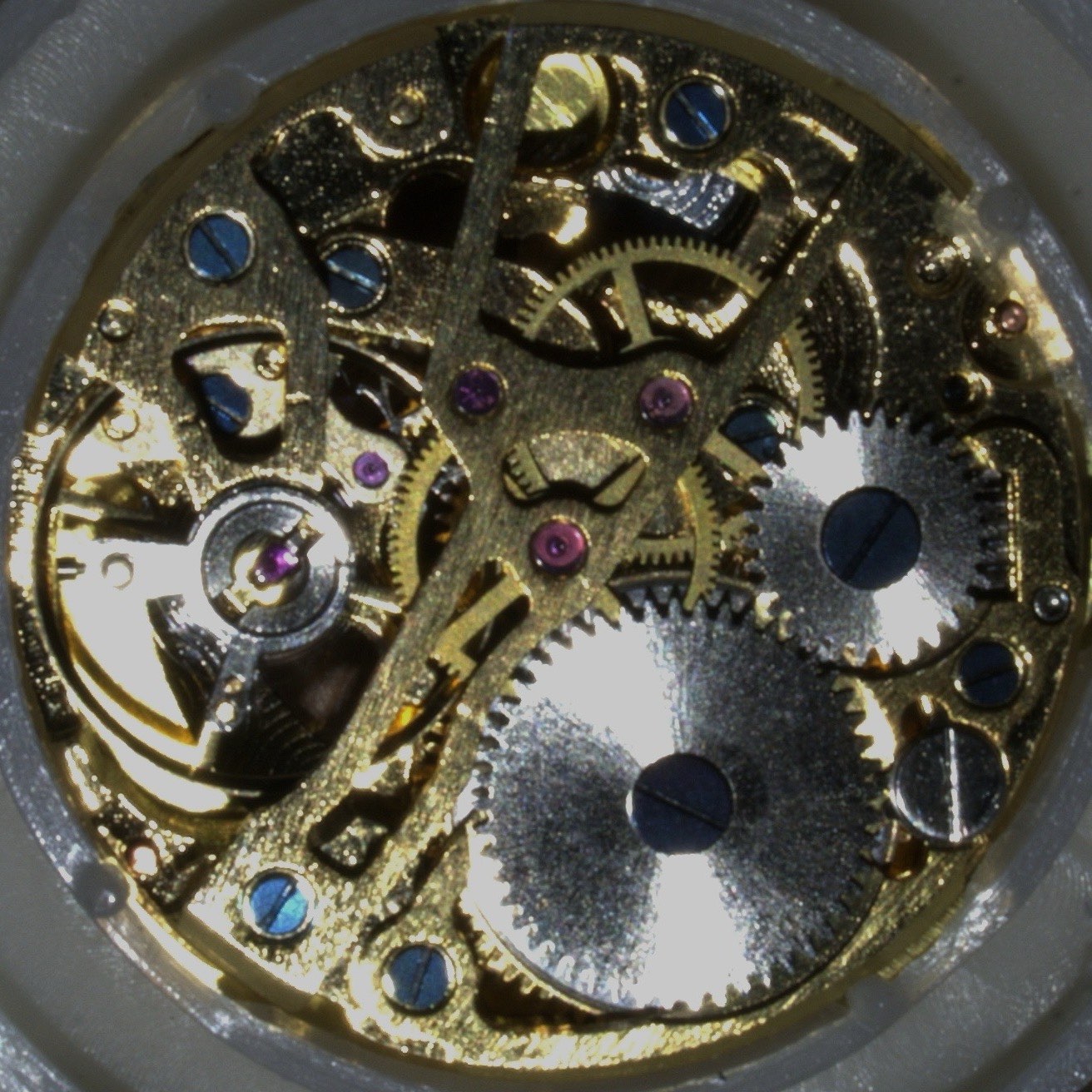

In short
Before 1949 China bought its watches: the Qing emperors collected English and Swiss pieces, and ordinary buyers depended on imports cased in Shanghai and traded through Hong Kong. In 1955 small groups of repairers in Tianjin and Shanghai built China’s own watches by hand, and within a few years state factories in Tianjin, Shanghai and Beijing made them in quantity, later all to one national design. After 1978 imports and electronic watches overwhelmed the state factories, while Hong Kong’s assemblers moved their work across the border to Shenzhen and the Pearl River Delta, which now make a large share of the world’s watches; Tianjin’s Sea-Gull survived as a maker of mechanical movements and complicated watches.1, 2, 3, 4, 5, 6, 7, 8, 10, 11, 12, 13, 17, 21, 22, 23
Part 1
Before 1949: clocks for emperors, watches from abroad
The Qing court collected Western timepieces and made its own. China’s national register of intangible heritage says the court set up its Imperial Workshops in the nineteenth year of the Kangxi reign, 1680, that a clock-making office was created within them, and that the earliest clockmaking in China was done there and in private workshops in Guangzhou.1
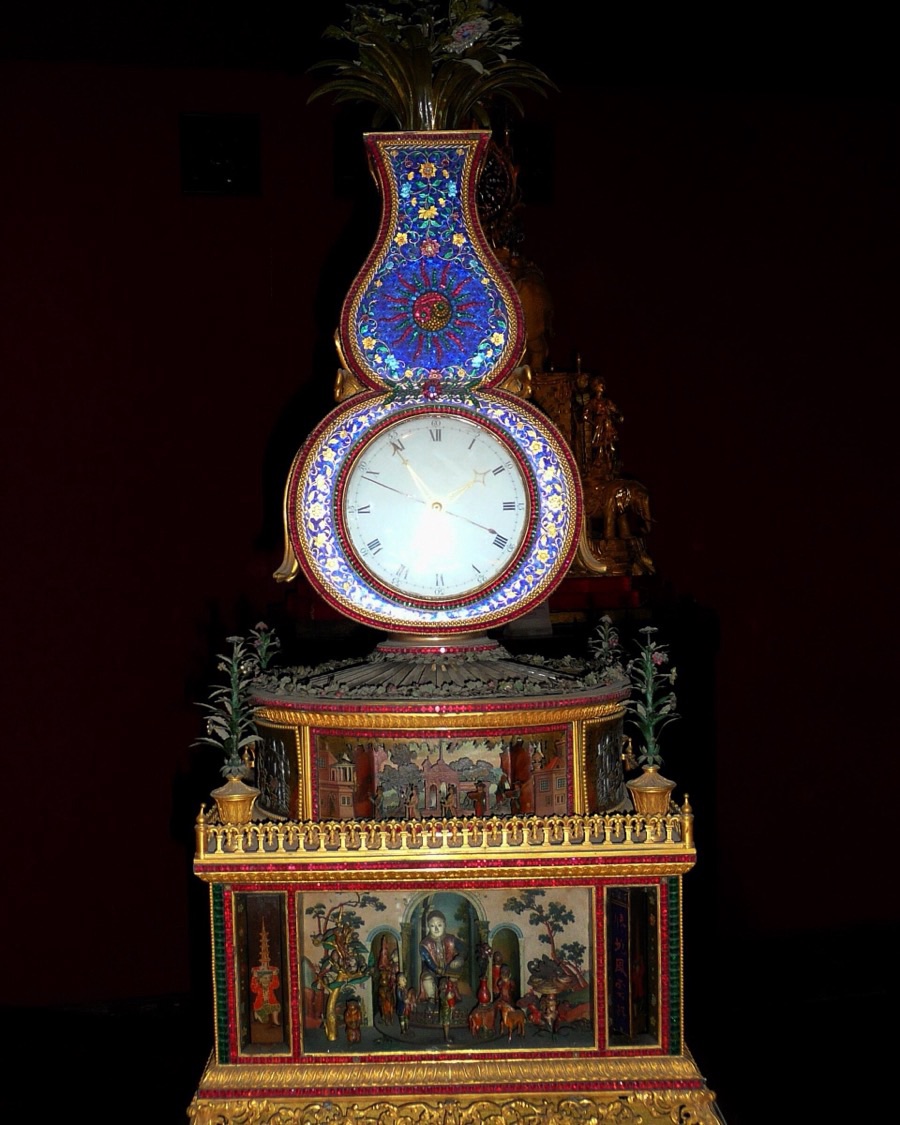
The Palace Museum’s catalogue shows where the collection came from: English watches and automaton clocks of the 18th century, Swiss enamelled pocket watches of the 18th and 19th centuries, clocks made in Guangzhou in the Qianlong reign, and clocks from the palace workshops themselves, among them a carved wooden striking clock 5.85 metres tall.2, 3, 25, 26, 27, 28
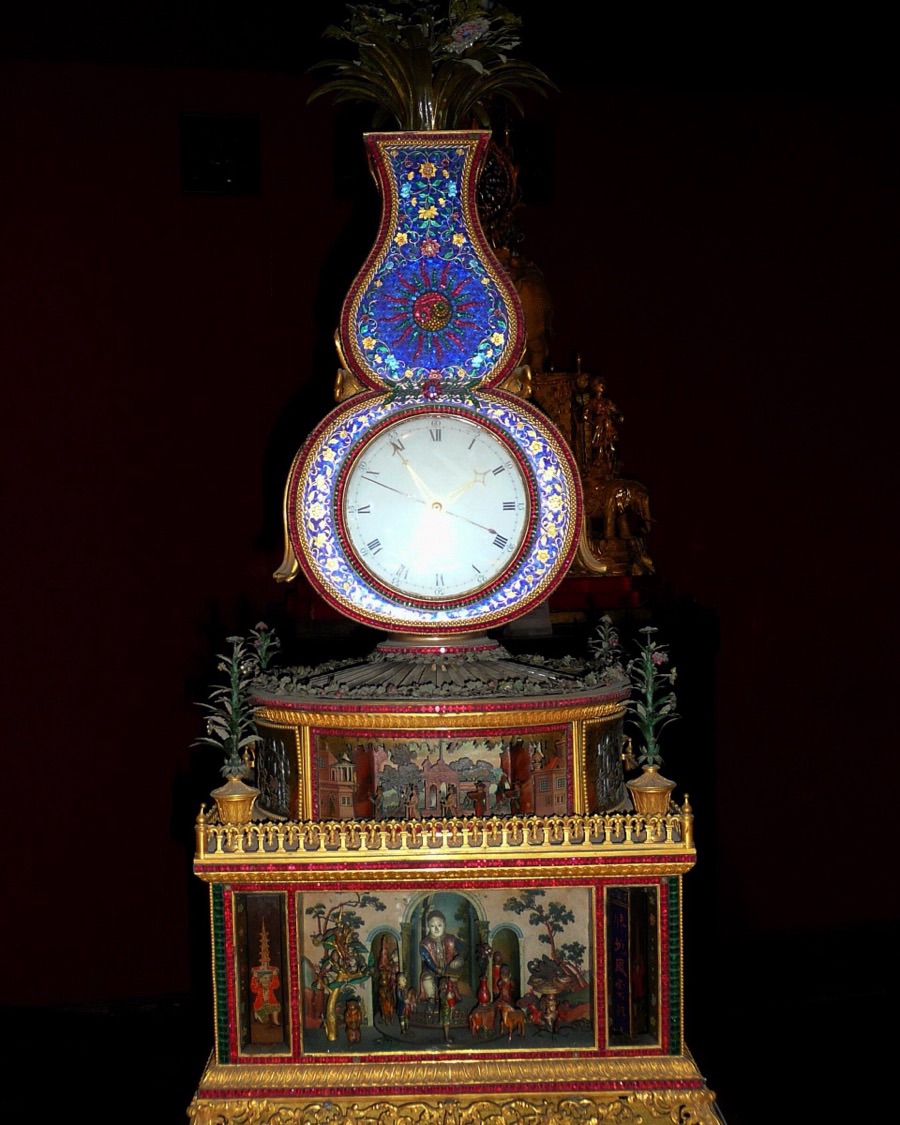
A 2019 workshop of the Science Museum Group and the Palace Museum describes the trade behind it: British clocks and automatons made for export to China, the East India Company’s records of the Anglo-Chinese clock trade, tribute from officials, and the movement of clockmaking skill between Beijing and Guangzhou.30
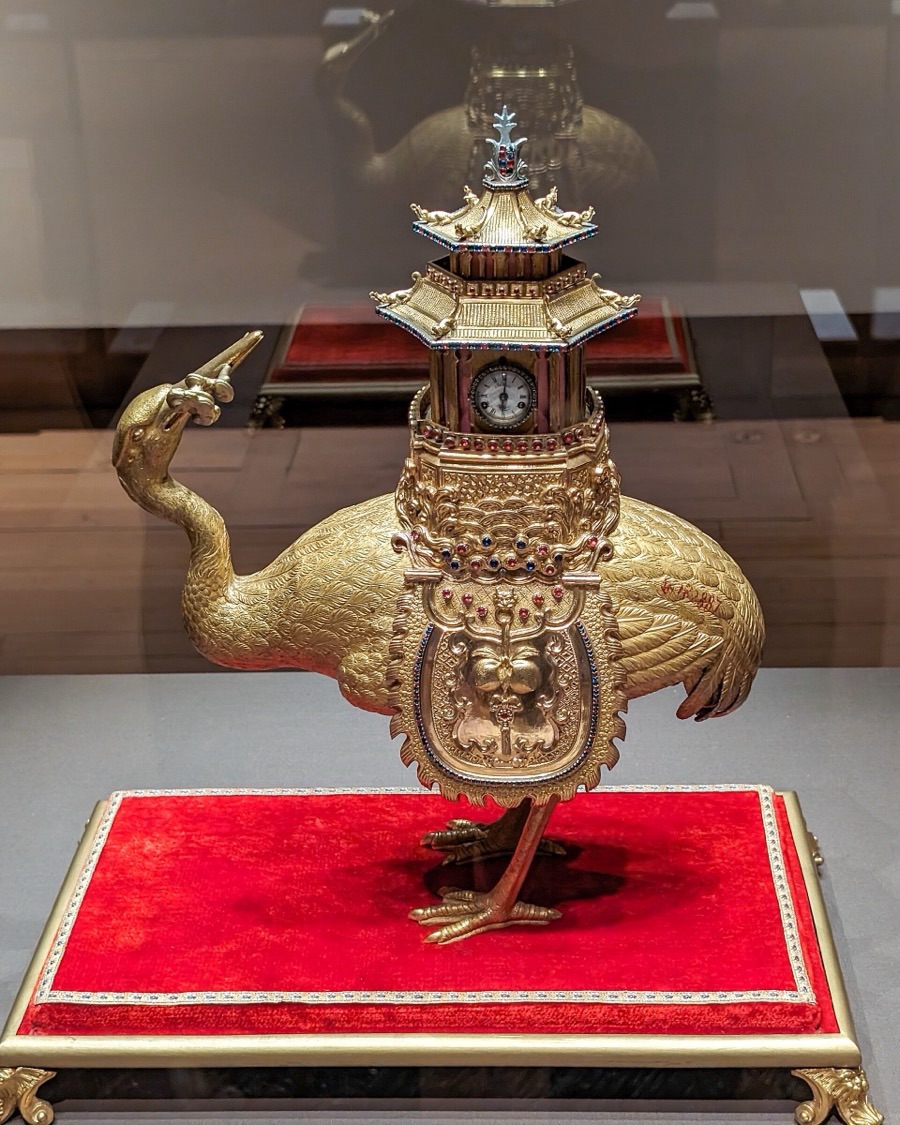
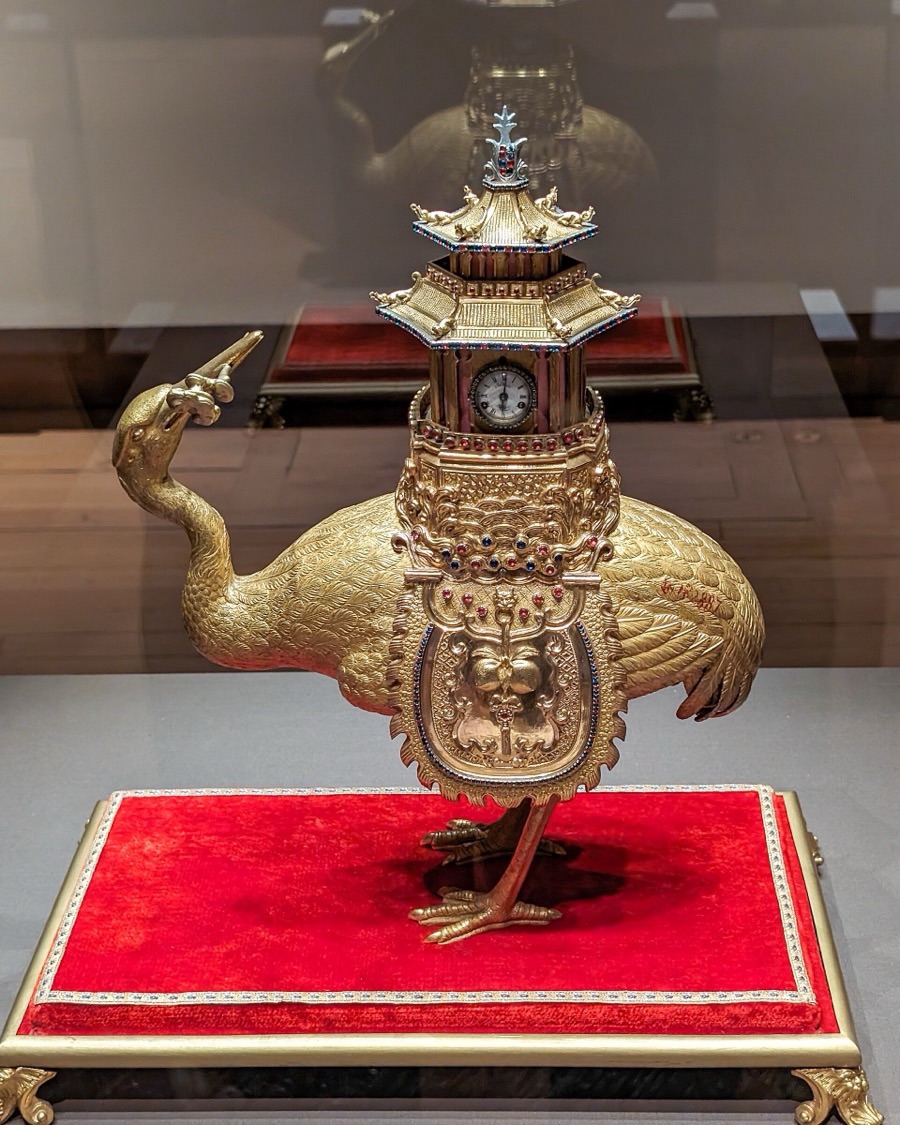
Swiss makers came later and from the Jura. Switzerland’s network of specialists follows Edouard Bovet of Fleurier to Canton in 1818; the National Palace Museum in Taipei describes a pair of enamelled “Bovet” watches of the late Qing as probably made for the Chinese market alone.15, 16
The court’s skill outlived the court. By the heritage register’s account, the clock office’s craftsmen were kept on to repair the clocks when the Palace Museum was founded in 1925, and their restoration craft was listed as national intangible heritage in 2014.1
Ordinary watches were imported. Chinese Watch Wiki says that before 1955 the country mostly bought complete movements and cased them locally, largely in Shanghai; Chinese Wikipedia says Shanghai’s clock factories could make only pin-lever works, too rough for anything but alarm clocks, stopwatches and timers.21, 23
Hong Kong was the door. Pierre-Yves Donzé writes that Swiss watch traders were there from the mid-19th century and that after the communists came to power it became the hub of the Asian watch trade, from which Swiss firms supplied the Far East, sometimes by smuggling to China, India and Japan; Swiss statistics, he notes, show almost no direct exports to China between 1945 and 1960.10
Part 2
1955: watches made by hand in Tianjin and Shanghai
The new state wanted its own watches. A Tianjin Museum researcher quoted by The Paper says the Tianjin Light Industry Bureau approved a watch trial group at the end of 1954; in Shanghai, an account published by Yangpu district cites the city’s light industry gazetteer for a visit in 1954 by the vice-premier Li Fuchun, who told the city that a market of 600 million people needed watches of its own.4, 6, 23
Tianjin’s group was four men, The Paper reports: Jiang Zhengyin, Sun Wenjun and Wang Cimin from the Huabei and Huawei clock factories, which made wooden clocks and alarm clocks, and Zhang Shuwen from a repair shop. They had no drawings and four small machine tools, and learned the watch by taking one apart.4
On 24 March 1955, in a room at the Huawei clock factory, they finished a watch whose dial bore five stars and the words Made in China. It was named Wuxing, Five Star; the Tianjin Museum keeps it, and it still runs.4, 5
What it was copied from is told two ways: The Paper says the team took apart a 15-jewel three-hand watch; Chinese Watch Wiki says the design began from a Swiss Sindaco of five jewels.4, 19
In Shanghai the Second Light Industry Bureau and the clock and watch trade association put together a trial group of 58 people from the city’s clock factories, parts dealers and repair trade.6, 7, 23
They improvised. Chinese Wikipedia says the first parts were cut from the brass of organ reeds, umbrella ribs and sewing needles; The Paper says embroidery needles became drills, and that the parts were put together at the Shenchang watch shop on Nanjing East Road.7, 23
Accounts of September 1955 differ. The Yangpu account and Chinese Wikipedia say 18 jewelled-lever watches were completed on 26 September, and Chinese Wikipedia that a second batch, in 1956, was named Dongfanghong and Heping; The Paper says the first watch of that day was itself named Dongfanghong, and that 17 more followed.6, 7, 23
So is the Swiss model: The Paper and Chinese Wikipedia name the Sercal; Chinese Watch Wiki names the AS 1187.7, 21, 23
Both cities claim a beginning. Xinhua and the Tianjin Museum call the Five Star of March 1955 new China’s first watch; Shanghai’s accounts call the September watches the country’s first jewelled-lever watches and the Shanghai Watch Factory of 1958 its first watch factory.4, 5, 6, 23
Part 3
State factories and the air force chronograph
When the Tianjin Watch Factory began is disputed. Xinhua and Sea-Gull date it to 1955; Chinese Watch Wiki says the works were finished in 1958 as the Tianjin Wuyi (May First) Watch Factory, making 17-jewel Wuyi watches, and took the name Tianjin Watch Factory in 1962.5, 13, 19
The Shanghai Watch Factory was formally established on 23 April 1958.6, 7
Its watch was the A581, a name that The Paper and Chinese Wikipedia read as the first movement of 1958. It went on sale on 1 July 1958 at Shanghai’s No. 3 Department Store and sold out the same day; the Yangpu account says 13,600 were made by the end of the year.6, 7, 23
Its price is given two ways: 60 yuan in the Yangpu account and Chinese Wikipedia, 120 yuan in The Paper, which sets it against monthly wages of 50 to 60 yuan.6, 7, 23
Beijing opened its own watch factory in 1958; Wikipedia counts it with Sea-Gull and Shanghai among the three historic large makers.22, 33
Tianjin was given a military task. Chinese Watch Wiki says that in 1961 the Ministry of Light Industry was ordered to develop an aviator’s chronograph for the air force, Project 304, and that tooling for the Swiss Venus calibre 175 was bought and installed at Tianjin; Venus, by its account, was selling the tooling to pay for its calibre 188, and the Soviet Union had not wanted it.19, 34
When it was finished is contested. Sea-Gull, and Wikipedia after it, date the chronograph to 1963, and Sea-Gull says 1,400 were delivered to serving pilots after testing and adoption; Chinese Watch Wiki says a third test batch went to the ministry and the air force in October 1965, was approved that December, and that 1,400 had reached pilots by May 1966.13, 17, 34
In 1966 Tianjin added the Dongfeng (East Wind), which Sea-Gull says its own watchmakers designed and put into mass production, and which Chinese Watch Wiki describes as the first watch designed and built in China throughout.13, 19
Part 4
One movement for the nation
The Ministry of Light Industry then standardised the trade. Wikipedia describes a design group formed in 1969 from the Shanghai Watch Factory, Shanghai No. 2, the Tianjin factory, factories in Beijing, Liaoning, Guangzhou and Xi’an, the ministry’s clock and watch research institute at Xi’an and Tianjin University; its drawings for the SZ-1 were finished in November 1971.8
The result was the Tongyi jixin, the unified movement, called Tongji for short. Wikipedia gives its specification as at least 17 jewels, 21,600 beats an hour, a 40-hour reserve and a rate within 30 seconds a day, and says it was meant to put a steel 17-jewel watch within reach of almost any worker.8
Wikipedia notes that the design most resembles the Swiss Enicar AR 1010, one of the few Swiss watches then sold in China, but finds no evidence that Enicar took part.8
How many factories made it is counted differently: Wikipedia gives more than 30, and perhaps as many as 50, enterprises making complete watches by the end of the 1970s; Chinese Wikipedia says the 38 watch factories in the national plan went over to it.8, 23
Output climbed. The National Bureau of Statistics counted 11.04 million watches made in 1977, 13.51 million in 1978 and 33.01 million in 1982.9, 37
Wikipedia gives 6.56 million for 1974 and says that 82 per cent of the watches made in 1983 had the standard movement; most factories made the whole watch in-house, which spread the skills across the country.8
A watch was a ration and a sign of standing. Chinese Wikipedia says watches, like bicycles and radios, were bought with coupons under the planned economy, and that by the late 1970s the watch, the bicycle and the sewing machine, “three that turn”, with a radio, “one that sounds”, were the expected wedding gifts and a measure of a household; the watch was usually a Shanghai or a Sea-Gull.23, 38
Shanghai alone made 2.28 million watches in 1970, Chinese Wikipedia says, and its hundred-millionth on 29 October 1990.23
Part 5
Hong Kong: trader, case maker and assembler
Hong Kong’s own watch trade began in the 1930s with repairs and small workshops making cases and straps for imported watches.11, 39
After the war the colony became a market and a channel for Swiss watches. Donzé gives Swiss watch exports to Hong Kong as 40.7 million francs in 1950 and 123 million in 1957, and puts its share of all Swiss watch exports in 1950 to 1965 at 6.2 per cent, second only to the United States.10
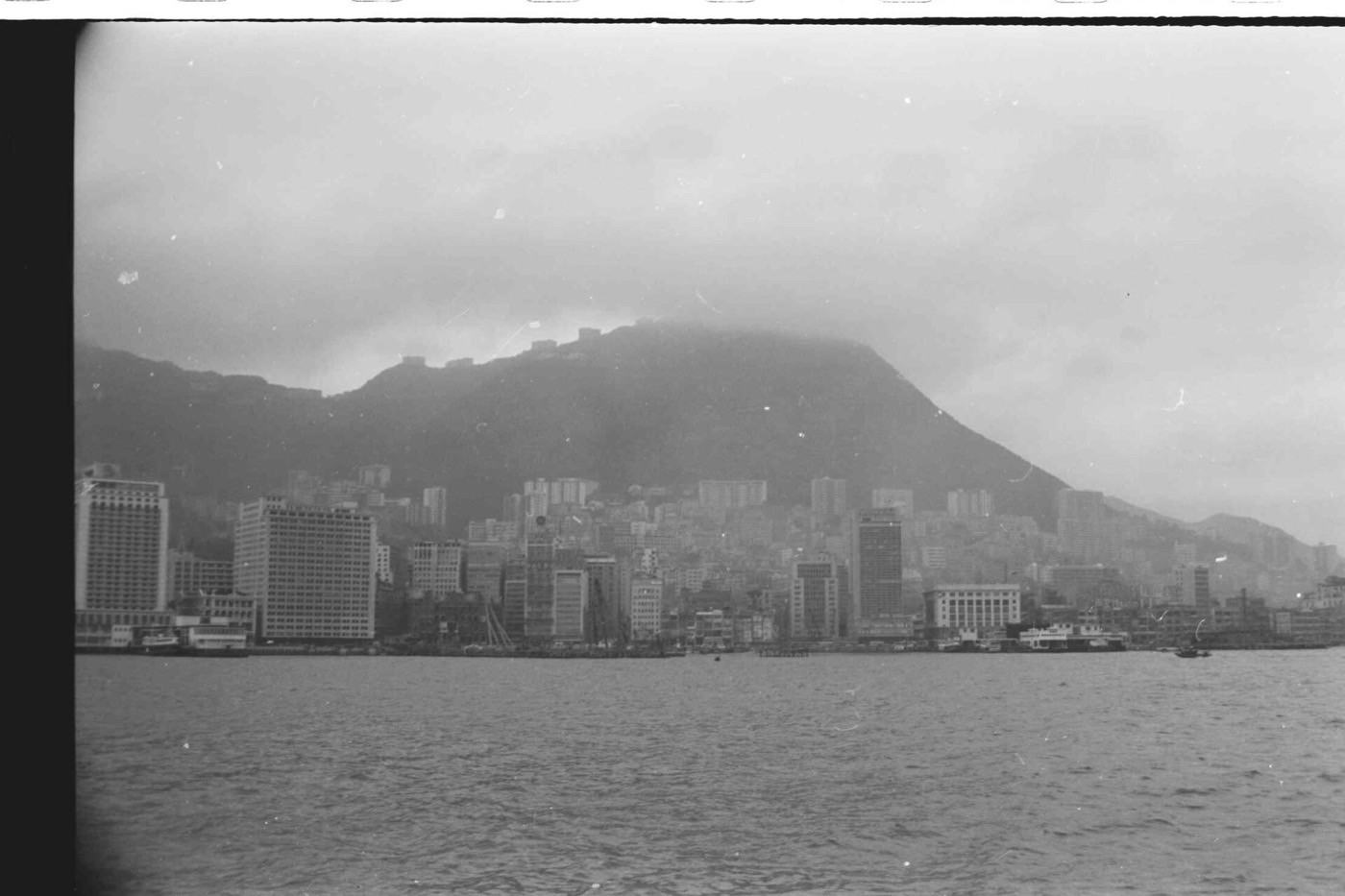
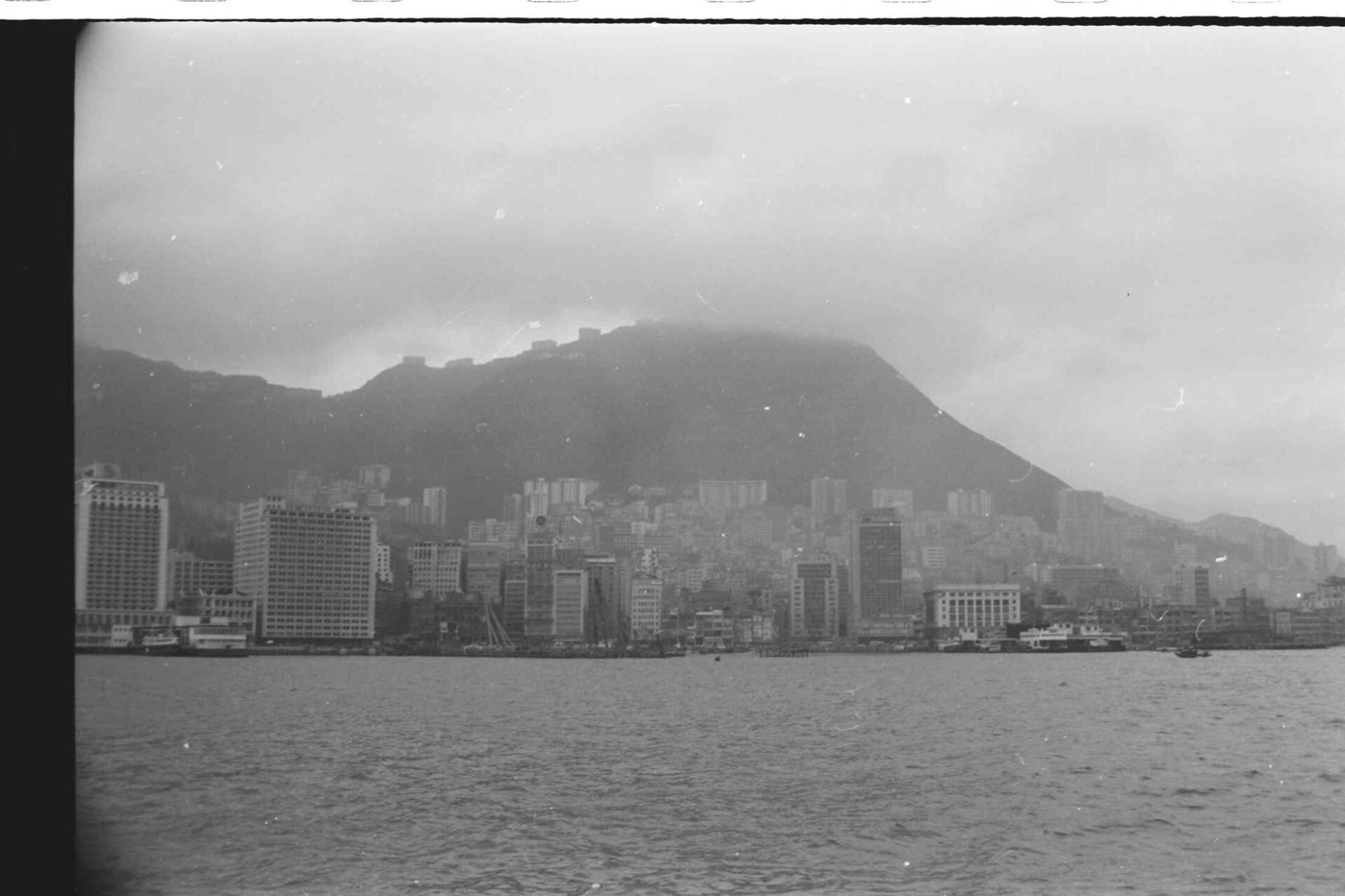
Swiss rules kept movements in Switzerland, and traders went round them. Donzé writes that the American firm Shriro set up Shriro (China) Ltd. in Hong Kong in 1948, bought Swiss movements in the United States, where their export was allowed, and cased them locally; Chinese Wikipedia likewise says the Swiss had barred movement exports except to the United States and that Hong Kong merchants bought them there.10, 39
From the late 1960s the big makers moved assembly in. Donzé lists Timex Hong Kong (1967), Hattori’s Precision Engineering (1968), and Swiss firms’ assembly plants, among them BFG Far East (1970), Ronda (1971) and Swiss Ebauches Production (1973); Hong Kong’s share of the cases Switzerland imported rose from 21.9 per cent in 1961 to 60.8 per cent in 1970.10
HK Memory, the government’s heritage site, calls 1969 the watershed, the year finished watches overtook parts in Hong Kong’s exports by value; Donzé gives its watch and clock exports as US$7 million in 1960 and US$44 million in 1970.10, 11
Electronics changed its place. Hong Kong’s assemblers took up quartz and digital watches in the mid-1970s, buying chips and displays from Japanese, American and European suppliers; that story, and the Citizen movements sold to a Hong Kong maker from 1979, belongs to The electric and quartz revolution.10, 11, 18
Donzé counts 61 watch and clock enterprises in 1960, 229 in 1970, 1,509 in 1980 and 1,805 in 1985, from the government’s industry department; HK Memory gives 1,187 registered watch factories in 1980, and Chinese Wikipedia 1,436 in 1985.10, 11, 39
Part 6
Reform, imports and the move north
Reform from 1978 opened the market. Chinese Wikipedia says that once watches were no longer rationed, in the 1980s, foreign mechanical and electronic watches flooded in, factories everywhere were left with stock, and the Shanghai Watch Factory fell into crisis; the quartz watch joined the new “four big items”.23, 38
Hong Kong’s makers moved their factories across the border from the mid-1980s and kept design, orders, shipping and accounts in Hong Kong.10, 11, 39
Donzé gives the measure of it: Hong Kong’s imports of watches from China rose from US$49.9 million in 1980 to US$885.5 million in 1990 and US$7.4 billion in 2010, and since 2000 more than nine tenths of its watch exports have been re-exports.10
Shenzhen became the centre. Europa Star says the producers of a large share of the world’s watches and components are traditionally found there, beside Hong Kong; People’s Daily reported in 2022 that the city made 42 per cent of the world’s watches and that more than 95 per cent of their parts were made locally. How the Pearl River Delta’s component industry works today is told in Making watches today.12, 20
The numbers are vast and uncertain. Europa Star, citing the Federation of the Swiss Watch Industry, says mainland China exported more than 652 million wristwatches in 2016 against Switzerland’s 25.4 million, at an average of about four dollars each, and quotes an association member warning that Chinese figures are “variable”.33
The state factories were remade. The Shanghai Watch Factory became a joint-stock company, Shanghai Watch Co. Ltd., in April 2000; Tianjin’s became the Sea-Gull group in the 1990s and was listed in 2000.6, 7, 17, 19
Part 7
Movements and complications
Sea-Gull turned to quartz and back. Wikipedia and Chinese Watch Wiki say the new Tianjin Sea-Gull company decided in 1992 to stop making mechanical watches and reversed the decision five years later; it has made only mechanical movements since 1997.17, 19, 42
It became a supplier to others. Chinese Watch Wiki says Sea-Gull sold cheap automatic movements to foreign assemblers, above all in Hong Kong, and copies of the Swiss ETA 2824 and 2892, and that in the 1970s its movements went to Romania’s Mechanica Fina for Orex watches.19
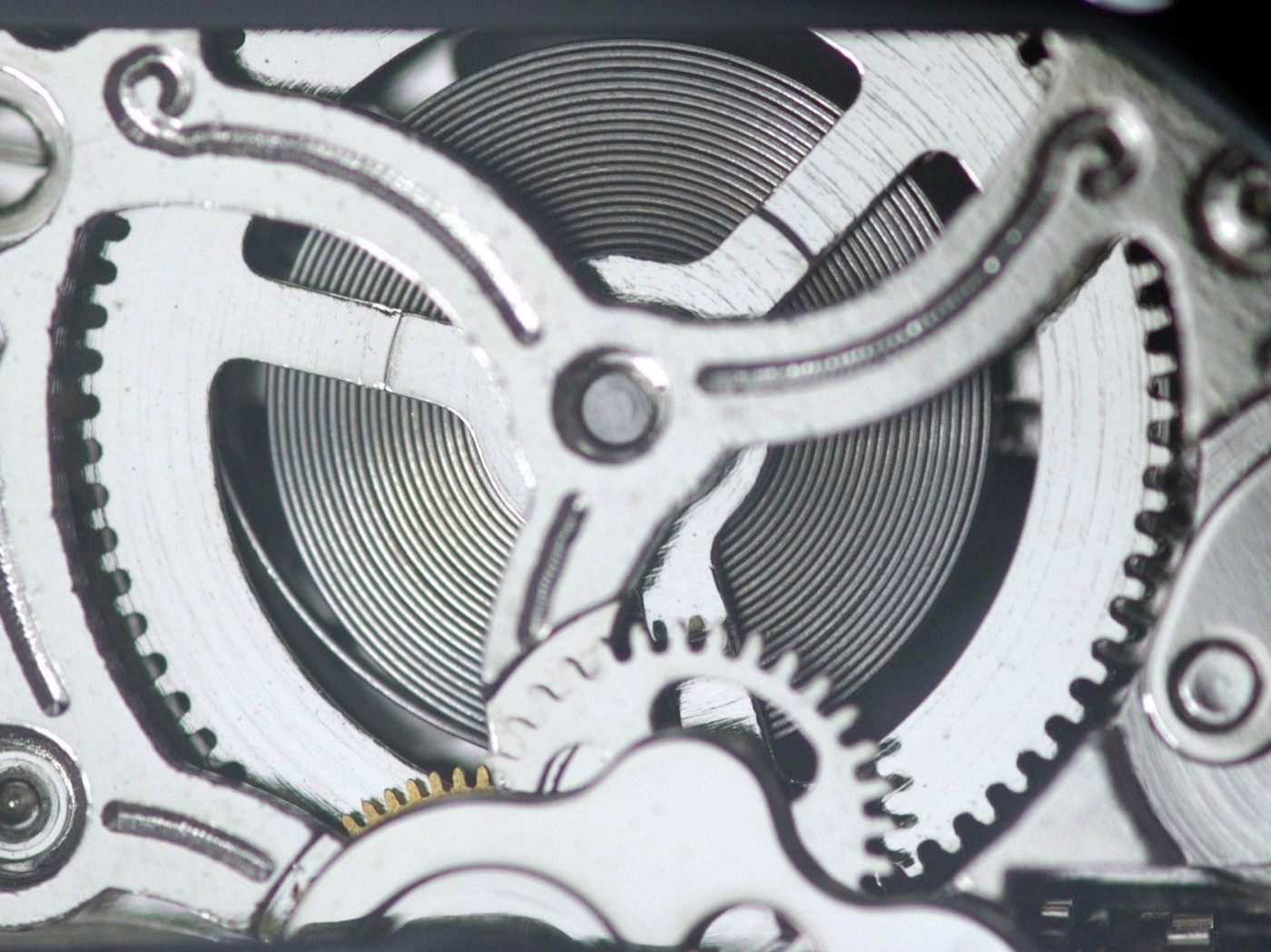
How much it makes is told in the company’s terms: Sea-Gull calls itself China’s largest maker of mechanical movements, at over two million a year; Chinese Wikipedia gives a capacity of six million movements in 2012, and Chinese Watch Wiki says that by 2005 it made more than a quarter of the world’s mechanical movements.13, 19, 42
High complications followed. Sea-Gull dates its tourbillon to 2005, a minute repeater to 2006 and a double tourbillon to 2007, and its ST9250 of 2009 combines a tourbillon, minute repeater and perpetual calendar; Xinhua reported in 2025 that it had mastered the tourbillon, perpetual calendar and minute repeater.5, 13, 17
Shanghai’s tourbillon is dated two ways: 2005, shown at Basel, in the Yangpu account; 2006 in Chinese Wikipedia.6, 23
Ownership moved on. The Beijing Watch Factory, private since 2004, joined Shenzhen’s Fiyta in October 2016, as an ownership change by Wikipedia’s account and a partnership agreement by Europa Star’s; in 2019 Fosun’s Yuyuan took part in acquiring the Sea-Gull and Shanghai brands, Chinese Wikipedia says.20, 21, 22, 42
Europa Star reports that by 2019 an ecosystem of independent watchmakers had grown up around Shenzhen, several of them members of the Académie Horlogère des Créateurs Indépendants.44
Through this history
The companies, people, technologies, objects and events this chapter is made of, in the order the story meets them.
History
Switzerland’s network of specialistsSwiss watches for China: Bovet of Fleurier traded at Canton from 1818.15, 16
Company
Sea-Gull (Tianjin)Tianjin’s watch factory, now a maker of mechanical movements and complications.5, 17
Key dates
- 1680
The Qing court sets up its Imperial Workshops, where a clock-making office will work.1
- 1925
The Palace Museum is founded and keeps the court clock office’s craftsmen to repair its clocks.1
- 1955
Tianjin’s trial group finishes the Five Star watch on 24 March; Shanghai’s group completes its trial watches in September.4, 5, 6, 7
- 1958
The Shanghai Watch Factory is established on 23 April and the Beijing Watch Factory opens.6, 7, 22, 33
- 1978
China makes 13.51 million watches.37
- 1982
Output reaches 33.01 million watches.9
- 2000
The Shanghai Watch Factory becomes Shanghai Watch Co. Ltd.; the Sea-Gull group is listed.6, 7, 17, 19
- 2014
The Palace Museum’s clock restoration craft is listed as national intangible heritage.1
Where this leads
- Before, Era IVThe Soviet watch industry
1930 to 1991
- After, Era IVIndia builds a watch industry
1961 to today
Where China builds a watch industry leads
- In this story, PlaceShenzhen
China Daily calls Shenzhen the base of some of China’s largest domestic watch brands, among them Fiyta and Ebohr.45, 46
- See also, HistoryIndia builds a watch industry
Both countries bought Swiss watches, then built state factories on foreign designs in the 1950s and 1960s; Donzé records Swiss smuggling from Hong Kong to both.10, 47
- See also, HistoryMaking watches today
People’s Daily reports that Shenzhen, where Hong Kong’s makers moved their factories, makes 42 per cent of the world’s watches.12, 20
- See also, EventThe pandemic watch boom and correction
China became Swiss watchmaking’s largest market in 2020 while exporting 589.5 million watches of its own in 2025, at about $4 each.48, 49
Facts and sources
- Period
- From the 1950s to today, with a prologue from about 16801, 4, 5, 10
- Where
- Tianjin, Shanghai and Beijing; later some thirty or more cities; Hong Kong, Shenzhen and the Pearl River Delta4, 6, 8, 10, 12, 22
Sources
- 1
- 2
铜镀金人指时刻分钟 (gilt-bronze clock with figure pointing to the hours), 故00182665 (opens in a new tab)
- 3
- 4
新中国第一只国产手表是怎样诞生的? (How new China's first domestic watch was born) (opens in a new tab)
- 5
- 6
"考古"上海手表厂,走进属于杨浦的"记忆" (An "archaeology" of the Shanghai Watch Factory) (opens in a new tab)
- 7
65年后,上海牌手表上新了 (Sixty-five years on, the Shanghai watch has new models) (opens in a new tab)
- 8
- 9
关于一九八二年国民经济和社会发展计划执行结果的公报 (Communiqué on the 1982 plan) (opens in a new tab)
- 10
- 11
Post-war Industries: Clocks and Watches, industry focus (opens in a new tab)
- 12
Shenzhen's output of watches accounts for 42 percent of world's total (opens in a new tab)
- 13
- 14
- 15
- 16
Pair of "Bovet" pocket watches with pearls and painted enamel (opens in a new tab)
- 17
- 18
- 19
- 20
- 21
- 22
- 23
- 24
- 25
- 26
- 27
铜镀金珐琅双鹿驮钟 (gilt-bronze enamel clock carried by two deer), 故00182705 (opens in a new tab)
- 28
硬木雕花楼式自鸣钟 (carved hardwood tower striking clock), 故00199159 (opens in a new tab)
- 29
- 30
- 31
- 32
- 33
The real giants of the Chinese watchmaking industry (opens in a new tab)
- 34
- 35
- 36
- 37
关于一九七八年国民经济计划执行结果的公报 (Communiqué on the 1978 national economic plan) (opens in a new tab)
- 38
- 39
香港製造業 (Manufacturing in Hong Kong), section 钟表业 (opens in a new tab)
- 40
- 41
- 42
- 43
- 44
- 45
- 46
Right on time for local watchmaker (13 January 2012) (opens in a new tab)
- 47
- 48
- 49
Sources read November 12, 2026.