Histories, Era IV, War and new industries
India builds a watch industry
1961 to today
How India, which had bought Swiss watches for a century, came to make its own: HMT’s factories at Bangalore with Citizen’s help from the early 1960s, a closed market fed by smuggled imports, Titan’s quartz watches from Hosur, the opening of the 1990s and the closure of HMT’s watch company, and Titan’s own movements today.
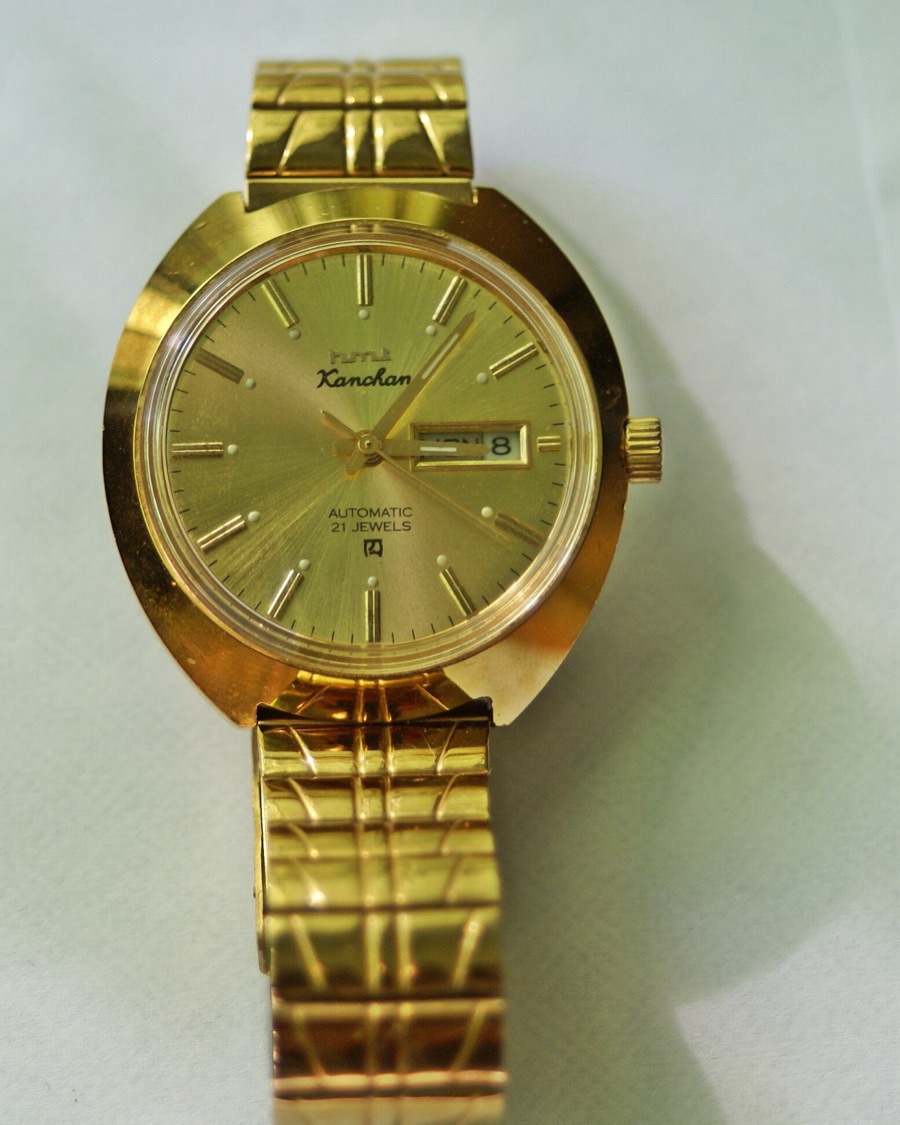

In short
Before 1960 India bought its watches from abroad, mostly from Switzerland, through import houses in Bombay and the other port cities. In 1960 the government chose to make them at home: the state engineering company HMT opened a watch factory at Bangalore with the help of Japan’s Citizen, and its cheap hand-wound watches, with imports shut out, became the country’s watch for three decades. In the 1980s the Tata group and the state of Tamil Nadu set up Titan, which made quartz watches at Hosur, near Bangalore, and won the market as India opened its economy after 1991; HMT lost money for years and its watch company was closed in 2016. Titan is now one of the world’s largest watchmakers by volume, makes some mechanical movements of its own, and sells into a market that a 2025 trade agreement is opening to Swiss watches.1, 2, 3, 4, 5, 6, 7, 9, 11, 12, 13, 14
Part 1
Before the factories: watches from abroad
For a century India’s watches came from Switzerland. Europa Star tells how Fritz Favre of the Favre Leuba family made a long selling trip to the subcontinent in 1865, and how the firm’s Bombay house, with offices in Calcutta, Madras and Delhi, became from the 1920s to the 1960s one of the largest distributors of Swiss watches in India and Ceylon, with its own repair workshops.1, 12
Other Swiss houses were built for the Indian market. Wikipedia records that the West End Watch Company was created in 1886 by the Droz family firm of Saint-Imier to sell in India through its Bombay representative, supplied watches to British and Indian soldiers sent from Bombay to Mesopotamia in the First World War, and registered its Sowar line, named for the Indian cavalryman, in 1917.15
The largest Swiss brands were there too: Longines’s chief executive tells Europa Star that it has sold watches in India since 1878. Monochrome writes that the trade began in the 19th century for the rich and for princely families.12, 16
After independence the door narrowed and the trade went round it. Pierre-Yves Donzé writes that Swiss firms supplied the Far East from Hong Kong after 1949, sometimes by smuggling to China, India and Japan.10
Part 2
The decision to make watches, 1959–1962
The watch factory belonged to a wider plan to make machines at home. ThePrint quotes Jawaharlal Nehru, who said that “there can be no real progress or real industrialisation in this country until the machine itself is made in this country.” Hindustan Machine Tools, the state’s machine-tool company, had been incorporated at Bangalore on 7 February 1953.9, 17
Other partners were offered. ThePrint reports a letter of October 1959 in which Nehru warned his industry minister, Manubhai Shah, about a proposed European watch deal pursued by a Swiss national, Gilbert Etienne, with the backing of the French embassy.9
Japan won it. Citizen’s corporate history records a technical assistance agreement with India in March 1960; ThePrint, citing the parliamentary record, says Shah told the Lok Sabha on 9 February 1960 that the factory would make “full lever watches, both for ladies and gents”. The terms and the approach to Citizen are told under HMT.2, 9
People went to Japan to learn. ThePrint, from the parliamentary record, says 52 trainees left for Japan in July 1961 with 50 more to follow; WorldTempus says a hundred HMT employees spent a year at Citizen’s Tokyo factory and that Citizen staff spent a year in India setting up production.9, 18
When watchmaking began is dated two ways. ThePrint says Nehru unveiled 800 watches assembled from imported parts at Bangalore on 28 July 1961, and that 11,465 had been assembled by February 1962; HMT’s own list of its units dates Watch Factory I at Bengaluru to 1962, and WorldTempus also says production began in 1962.3, 9, 18
The watches were dear at first. ThePrint reports a member of parliament, Kapur Singh, complaining in 1963 that a watch with Japanese parts that sold for 15 rupees in Japan cost 100 in India, and an industry minister telling the Lok Sabha that India bought about 1.5 million watches a year.9
Part 3
HMT’s factories and the Janata
HMT’s list of its units dates the watch works: Watch Factory I at Bengaluru in 1962, Watch Factory II there in 1972, Watch Factory III at Srinagar in 1975, Watch Factory IV at Tumkur in 1978, quartz analogue watches at Bengaluru in 1981, and Watch Factory V at Ranibagh, then in Uttar Pradesh, and a watch-case division at Bengaluru, both in 1982.3
Two of those dates are disputed. For Srinagar, ThePrint dates the Kashmir factory to 1972 against HMT’s 1975; for Ranibagh, a parliamentary answer of 2019 gives 12 November 1982, with 986 employees, while Wikipedia gives 1985.3, 9, 19, 20
The watches were built on Citizen’s design. WorldTempus says the hand-wound calibre HMT 020, used in the Janata, Sona and Pilot, was based on Citizen’s 0201, with 17 jewels and Citizen’s Parashock protection.18
The Janata, whose name means “the people”, became the best known; ThePrint ties the name to the socialist India of the time. HMT also made automatics, day-date watches and a Braille watch, says B. N. Yalamalli, who worked on them at the Bangalore factory from 1969.9, 21
A small export trade followed. ThePrint gives 1,680 watches sent to the United States, Britain and Canada in 1965 and 10,256 exported in 1975.9
How many HMT made at its peak is reported differently: SJX says nearly seven million watches in 1991, while Yalamalli puts the peak at up to six million a year.21, 22
The Bangalore works were a community. WorldTempus says HMT employed some 3,000 women and gave its workers housing, schools, a cinema and a health club.18
Part 4
A closed market: licences, imports and smuggling
Watchmaking was a reserved trade. Tata’s archive says that under the licence raj watches were treated as a luxury, that the sector was reserved for public and small-scale industry, and that the government at first refused Tata permission to make them.4
Demand ran far ahead of supply. Tata’s archive puts India’s makers at about 1.5 million watches a year against a market of at least 30 million; Europa Star gives HMT about a million in 1977 and smaller makers some 500,000 more.4, 6
Smuggling filled the gap. ThePrint calls India one of the largest destinations for smuggled foreign watches; Europa Star says Seiko and Citizen watches reached the big cities illegally because official imports were barred; a dealer quoted by Man’s World India says the import ban of the 1970s, meant to protect HMT, led to a lot of smuggling. None of these sources gives a figure.6, 9, 23
Foreign makers found other ways in. Man’s World India quotes a dealer who says that Rado and others made watches sold as “India Made” with Indian companies to get round the restrictions.23
The state had a second maker. Hyderabad Allwyn, a company of the Hyderabad state government founded in 1942, began making mechanical and quartz watches with Seiko in 1981.21, 24
Wikipedia says Allwyn’s watches were popular in the 1980s, that the company was declared sick in 1993, and that it closed in 1995.24
Part 5
Titan, Hosur and quartz
Titan came out of a Tata search for new businesses in 1977 and a partnership with the Tamil Nadu Industrial Development Corporation (TIDCO), which, Tata’s archive says, held a licence to make watches; its founding is told under Titan.4, 5
The technology came from France. Europa Star says TIDCO approached France Ebauches, the quartz movement maker of Besançon, in 1978, that Xerxes Desai of Tata visited Besançon in September 1979, and that the three parties signed a cooperation agreement in 1985. Tata’s archive adds that the Swiss would not share their know-how and that J. R. D. Tata accepted France Ebauches’ fee in return for more training.4, 6
Titan’s founding year is given two ways: Tata and Titan date the joint venture to July 1984, while Europa Star and Wikipedia’s life of Desai say Titan Watches was created in 1986.5, 6, 25, 26
Titan chose quartz and HMT’s people. Europa Star says Desai decided from the outset to make only quartz watches, that Titan sold 344,000 in its first year, and that it recruited HMT staff, among them the executive director I. K. Amitha; it quotes Desai: “we aimed to raid HMT and we did it.”6, 21
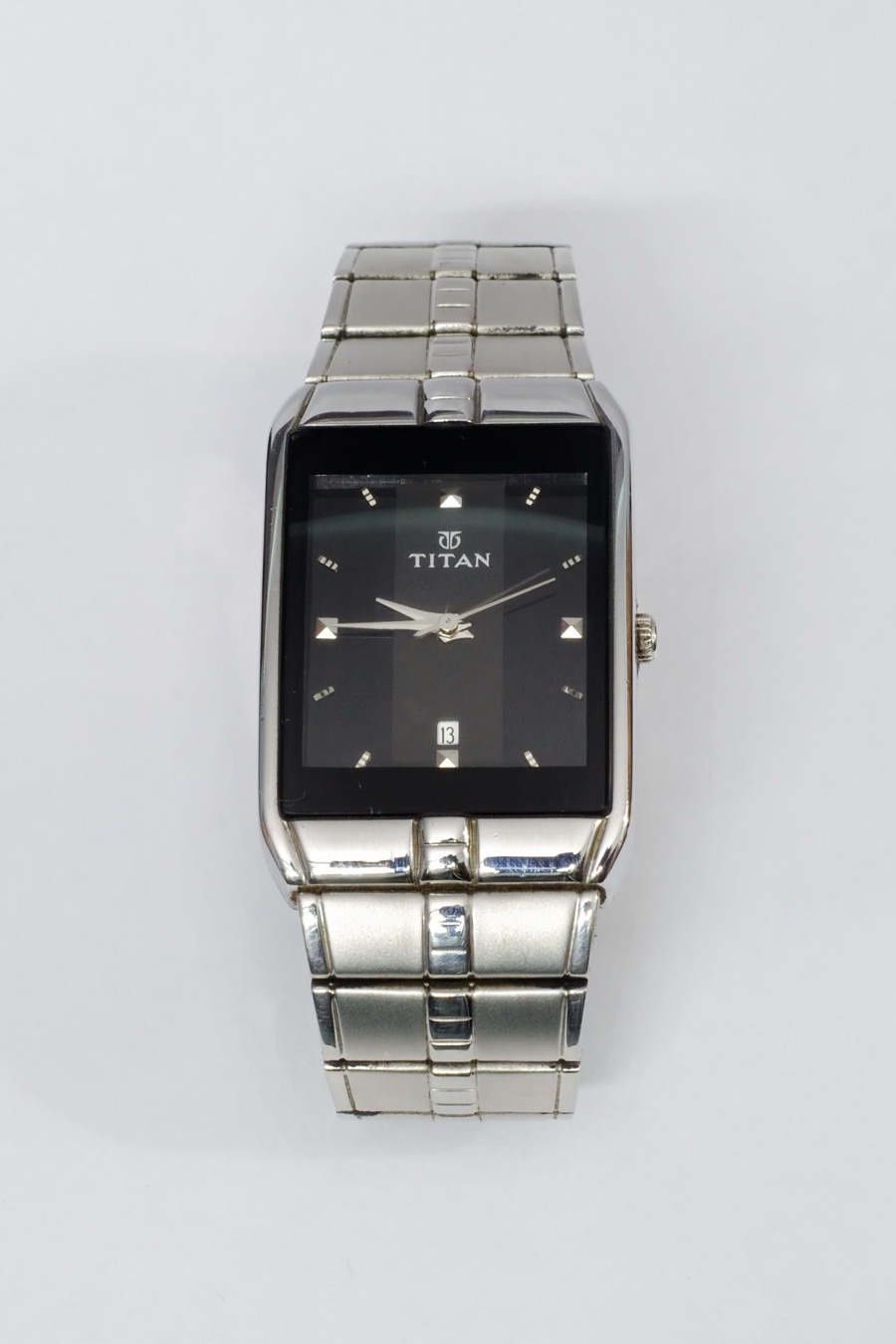
HMT’s own quartz came earlier but sold less. HMT dates its quartz analogue watches to 1981; SJX and Monochrome say it made quartz from the 1970s, and both say its quartz watches cost more than Titan’s and sold poorly.3, 12, 22
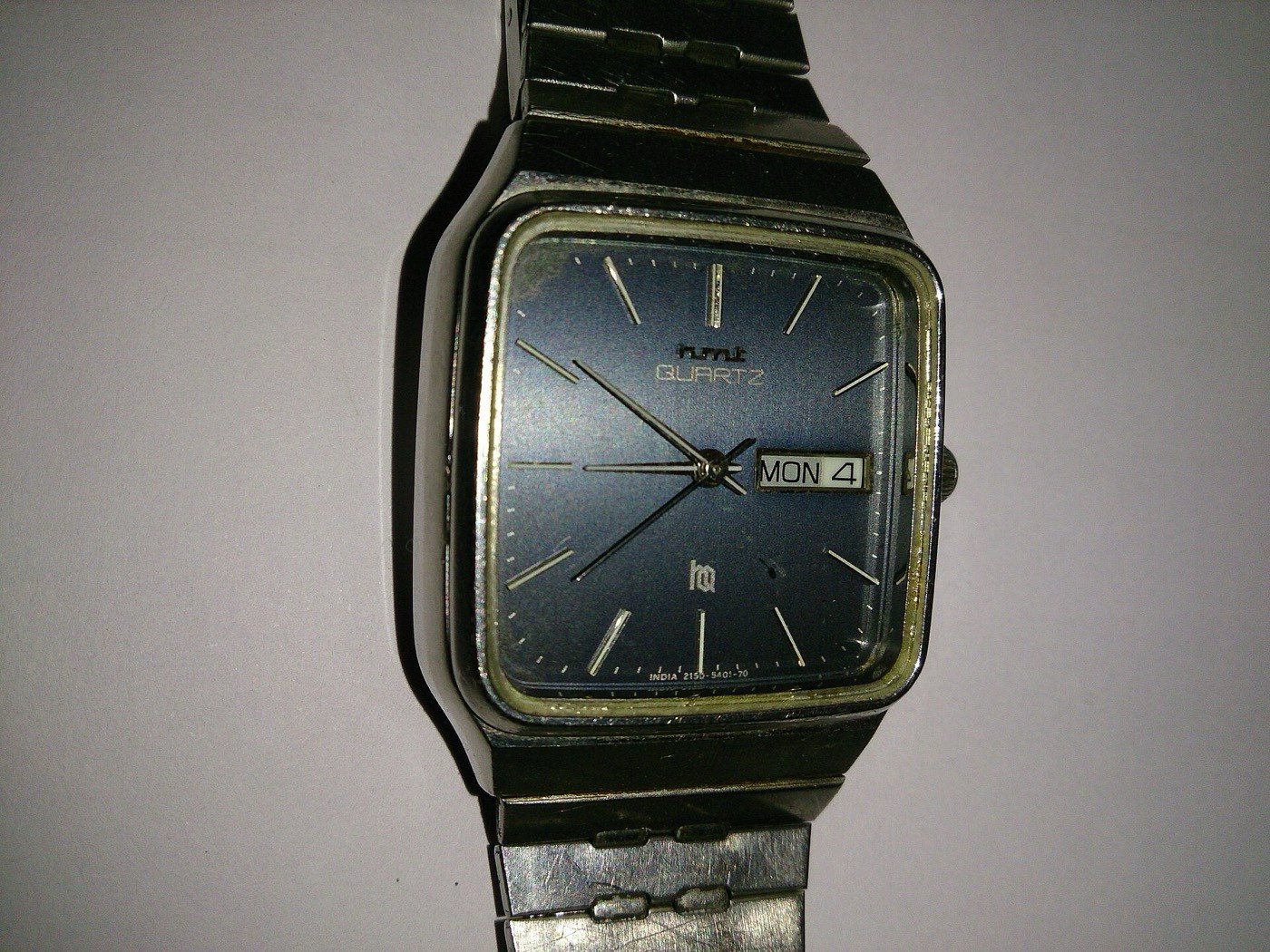
Quartz went to the mass market. Wikipedia says Titan signed with Casio in November 1986 to make two million digital and analogue-digital watches; after its partnership with Timex ended in the 1990s, Titan answered with the cheaper Sonata, as told under Titan.25, 29
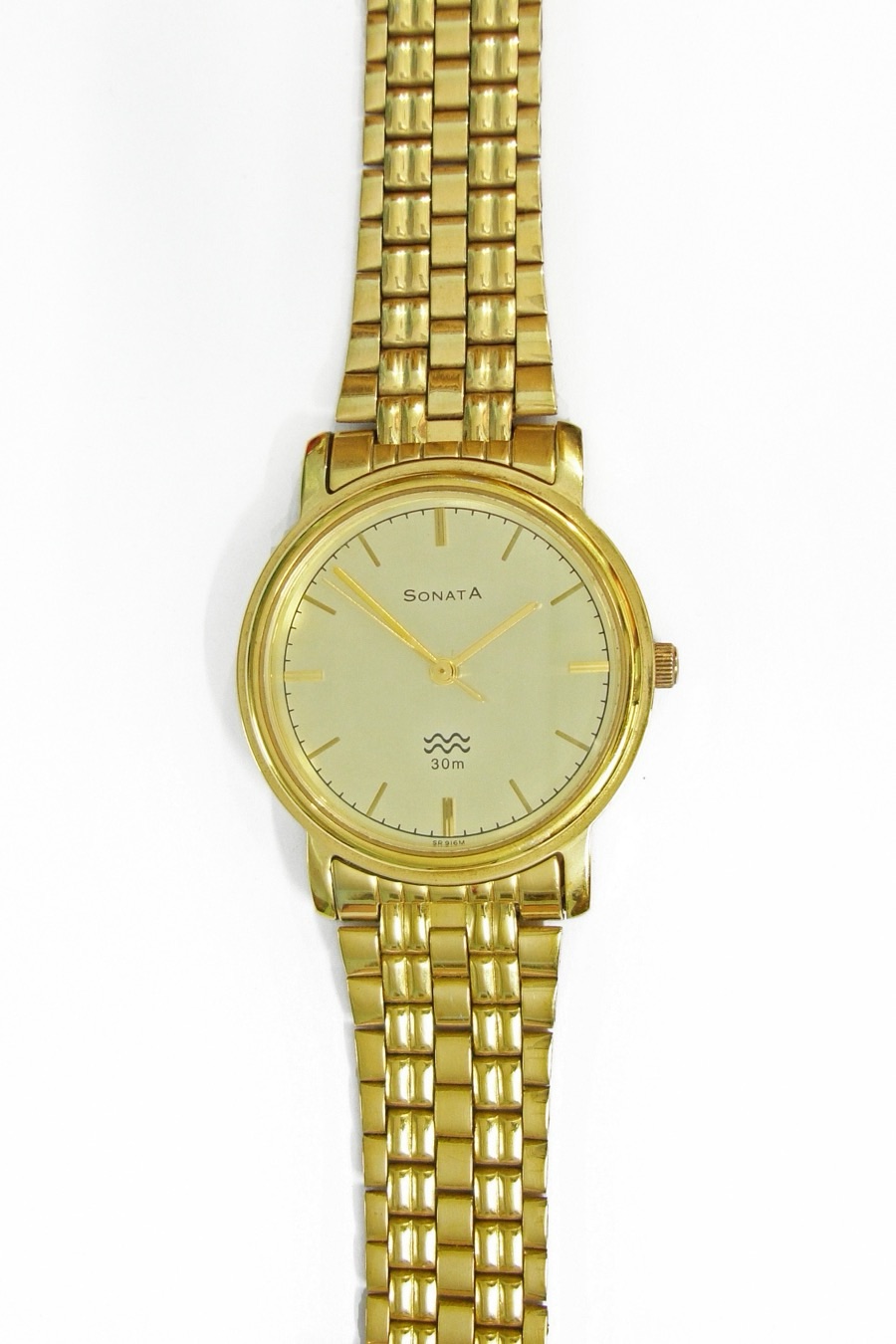
By 2018 the market had changed hands. Europa Star’s survey gives Titan about half of India’s watch sales by value, Timex 20 per cent and the Swatch Group 14 per cent.31
Part 6
Opening up and HMT’s end
Reform after 1991 ended the shelter. ThePrint says HMT’s watch business peaked in 1991–92, with more than 8,000 employees and sales of about 300 crore rupees, just as India dismantled its protected economy; Monochrome writes that the loosening of import restrictions in the 1990s turned buyers away from HMT.9, 12
The losses began soon after. A parliamentary answer of 2019 says HMT Watches had made continuous losses since 1993; ThePrint dates its first loss, of 90 crore rupees, to 1994.9, 19
Imports opened slowly. Europa Star’s 2018 survey quotes a retailer saying watches were barred from import until 2000, after which those over 1,000 dollars could come in at duties of 90 to 100 per cent; it dates the Swatch Group’s Indian business to 1998.31
Europa Star, quoting the Federation of the Swiss Watch Industry, gives Swiss watch exports to India as rising from about 14 million francs in 1990 to 22 million in 2000 and 101 million in 2010.11
In December 2014 the government still listed four HMT Watches units, two at Bangalore and one each at Tumkur and Ranibagh, and two of HMT Chinar Watches at Jammu and Srinagar; between 2004–05 and 2013–14, 675 HMT Watches employees and 586 at HMT Chinar had taken voluntary retirement.32
The Cabinet Committee on Economic Affairs approved a roadmap including the closure of HMT Watches on 29 December 2014, and on 6 January 2016 approved the closure of HMT Watches, HMT Chinar Watches and HMT Bearings, with voluntary retirement on 2007 pay scales and retrenchment for those who did not take it.7, 13, 33
By 2017 watch manufacturing had stopped at both companies; the closure at Ranibagh took effect in 2019, after a court stay, as told under HMT. In 2018 the government approved the sale or transfer of the Bangalore and Tumkur land and buildings to the space agency ISRO.13, 34, 35
Whether HMT watches will come back is told two ways. A minister told the Lok Sabha in August 2025 that there was no plan to revive the watch division and that HMT Limited only assembled and sold watches on a small scale from parts left at the closure; ThePrint reports a revival committee formed in November 2024 and a project report in its final stages in June 2026.9, 36
Part 7
Titan’s movements and India today
Titan calls itself the fifth largest integrated watch manufacturer in the world. Europa Star puts its output at about 15 million watches a year, nearly all quartz, with a movement department of nearly 400 people working on 204 calibres.6, 14
It has gone back to mechanical watches. Tata says Titan began work on mechanical movements of its own in 2011; Europa Star counts about 80,000 Titan watches a year with its own mechanical movements and some 300,000 with Japanese Miyota ones, and says Titan plans to make its own balance springs.5, 6
In 2025 Titan entered the Geneva watchmaking prize, the GPHG, with the Jalsa, which Titan describes as having an in-house flying tourbillon movement of 144 parts and 14 jewels, made in ten pieces.37
Titan also bought into Swiss watchmaking: Wikipedia records that it owned Favre-Leuba, the firm whose Bombay house had once distributed Swiss watches across India, from 2011 to 2023, as told under Titan.1, 29, 38
Swiss watches are now coming back at lower duty. India and the European Free Trade Association signed a trade agreement on 10 March 2024, in force from 1 October 2025, under which India’s duties on Swiss watches fall to zero over seven years.11, 39
India remains a small market for the Swiss. Europa Star gives Swiss watch exports to India as about 274 million francs in 2024, against more than two billion to China.11
New makers have appeared beside Titan. Monochrome and Europa Star name small Indian brands such as the Jaipur Watch Company of 2013 and the Bangalore Watch Company of 2018, and Europa Star describes Taratec, which makes dials, hands and straps in Bengaluru.11, 12
Through this history
The companies, people, technologies, objects and events this chapter is made of, in the order the story meets them.
History
The electric and quartz revolutionWhere Titan’s quartz watches belong in the world story.5, 6
History · context
China builds a watch industryThe parallel story: another state industry built on foreign designs, and Donzé records Swiss smuggling from Hong Kong to both countries.10
Key dates
- 1953
Hindustan Machine Tools is incorporated at Bangalore.17, 20
- 1960
Citizen signs a technical assistance agreement with India.2, 9
- 1962
HMT lists its Watch Factory I at Bangalore; ThePrint dates watches assembled there to July 1961.3, 9
- 1975
HMT’s Watch Factory III opens at Srinagar.3
- 1978
HMT’s Watch Factory IV opens at Tumkur.3
- 1981
HMT begins quartz analogue watches; Allwyn begins watches with Seiko.3, 21, 24
- 1982
HMT’s Ranibagh factory is established.3, 19
- 1984
Tata Industries and TIDCO form Titan Watches.5, 25
- 1987
Titan’s quartz watches go on sale.5, 6, 40
- 2016
The government approves the closure of HMT Watches.7, 13
- 2019
The closure of HMT Watches takes effect.34
- 2025
India’s trade agreement with EFTA comes into force.11, 39
Where this leads
- Before, Era IVChina builds a watch industry
1950 to today
- After, Era VThe electric and quartz revolution
1952 to 1990
Where India builds a watch industry leads
- See also, HistoryJapan builds a watch industry
India’s state watch factory was set up with Citizen’s technical help.2, 9
- See also, HistoryMaking watches today
Titan calls itself the fifth largest integrated watch manufacturer in the world.14
Facts and sources
- Period
- From 1961 to today, with a prologue of imported watches from the 1860s2, 3, 4
- Where
- Bangalore and Hosur; HMT factories also at Tumkur, Srinagar and Ranibagh3, 4, 32
Sources
- 1
Favre Leuba and India: tried and tested ties (Serge Maillard, November 2025) (opens in a new tab)
- 2
- 3
- 4
JRD, Titan and Xerxes Desai (Cynthia Rodrigues, July 2026) (opens in a new tab)
- 5
- 6
The saga of the Indian Titan (Pierre Maillard, November 2025) (opens in a new tab)
- 7
- 8
An HMT Kanchan automatic wristwatch with day and date, photographed in 2016. (opens in a new tab)
- 9
- 10
- 11
India, the new frontier for watchmaking (Benjamin Teisseire, January 2026) (opens in a new tab)
- 12
The ABCs of Time: the history of Indian watchmaking (Erik Slaven, 30 May 2026) (opens in a new tab)
- 13
- 14
- 15
- 16
"Longines and India go back a long way" (Serge Maillard, November 2025) (opens in a new tab)
- 17
- 18
HMT Watches: Pulse of India (Bhanu Chopra, 6 August 2012) (opens in a new tab)
- 19
- 20
- 21
B.N. Yalamalli, the long road to quality (Pierre Maillard, November 2025) (opens in a new tab)
- 22
- 23
Timekeepers of a Nation (Sharan Sanil, 14 August 2024) (opens in a new tab)
- 24
- 25
- 26
- 27
A Titan wristwatch, photographed in 2011. (opens in a new tab)
- 28
- 29
- 30
A Sonata wristwatch, photographed in 2011. (opens in a new tab)
- 31
India: the slow-moving giant (Antoine Guinard, February 2018) (opens in a new tab)
- 32
- 33
Lok Sabha unstarred question no. 154, answered 21 July 2015: Revival of HMT (opens in a new tab)
- 34
24th Annual Report 2022-23, HMT Watches Limited (opens in a new tab)
- 35
- 36
- 37
Nebula by Titan unveils Jalsa, majestic tourbillon (July 2025) (opens in a new tab)
- 38
Titan to acquire Swiss brand Favre Leuba (November 2011) (opens in a new tab)
- 39
- 40
How Titan made India’s watches (Gopi Karelia, 12 August 2021) (opens in a new tab)
Sources read November 12, 2026.