Hong Kong
The British colony that traded Swiss and Japanese watches into Asia, made cases and straps from the 1930s, assembled mechanical and then electronic watches for the world’s makers from the 1960s, and from the mid-1980s moved its factories across the border into the Pearl River Delta.
China (Hong Kong Special Administrative Region; a British colony until 1997), Pearl River Delta
Companies here Citizen
In the histories China builds a watch industry, Making watches today
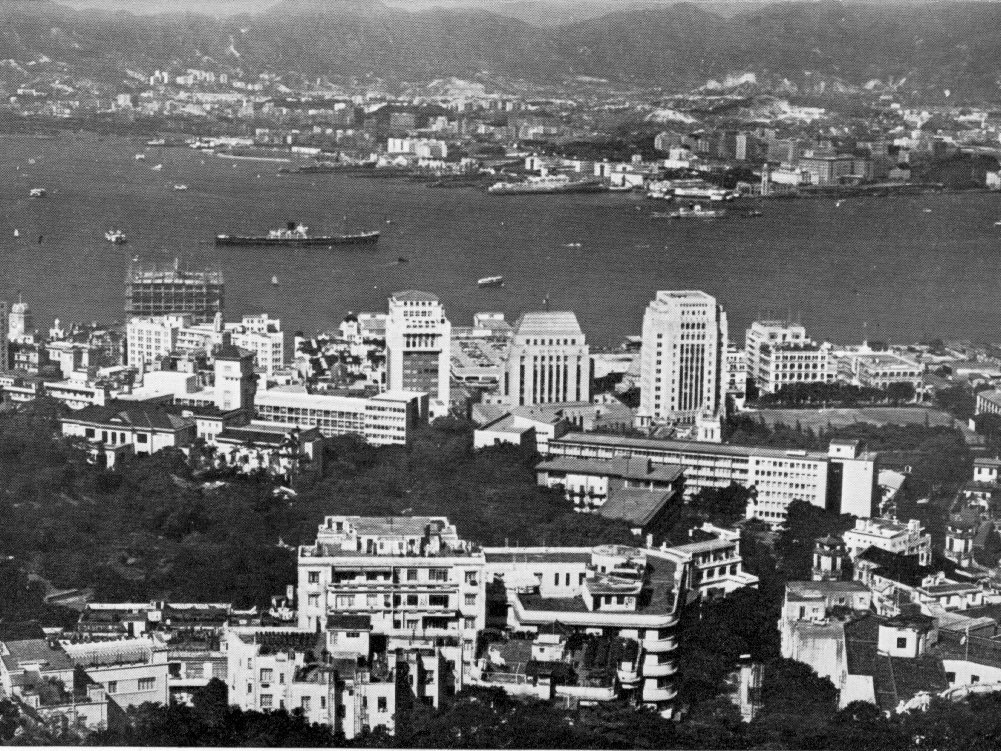
Why Hong Kong?
It was a trading port first. Donzé writes that Hong Kong became a hub of trade between Asia and Europe after the First Opium War and that Swiss watch traders were present from then on.1
It began with repair: workshops making cases and straps for imported watches appeared in the 1930s.2, 3
Revolution on the mainland made it the region’s watch market. Donzé argues that after 1949 Hong Kong became the main hub of the Asian watch trade, used by Swiss, American and Japanese firms alike.1
Labour and freedom of trade drew assembly. HK Memory points to cheap labour brought by mainland immigrants after the war; Chinese Wikipedia adds that low wages and free business made it attractive to foreign watch firms looking for assembly abroad.2, 3
What grew here
The trade organised early. The Federation of Hong Kong Watch Trades and Industries dates itself to 1947; HK Memory gives 1945, and says the federation grew from the Watch Art Society and the Hong Kong and Kowloon Watch Association.2, 5
Parts came first. Donzé records a letter of December 1958 counting 13 case makers, six glass makers and three dial makers in the Hong Kong and Kowloon Clock and Watch Trade Merchants Association, and finds Hong Kong supplying 60.8 per cent of the cases Switzerland imported by 1970.1
Assembly followed. Donzé lists Timex Hong Kong (1967), Hattori’s Precision Engineering (1968), BFG Far East (1970), Ronda (1971) and Swiss Ebauches Production (1973); HK Memory records the Hong Kong Watch Manufacturers Association, founded in 1968 as the Hong Kong Roskopf Assemblers Association, after the cheap Swiss pin-lever watch.1, 2
Local firms grew with them. Donzé tells how C. P. Wong, of a Chinese trading family in Thailand, founded Stelux Manufacturing in 1963 to make cases, dials and straps, listed it in 1972, bought Swiss parts makers in 1975 and in 1976 became the largest shareholder of Bulova.1
HK Memory calls 1969 the watershed, when finished watches first earned more in exports than components, and says export quantity grew about fivefold between 1968 and 1974.2
Who and what moved through
Swiss movements came by roundabout routes. Donzé writes that Shriro (China) Ltd., founded by an American trading firm in 1948, imported Swiss movements from the United States and cased them in Hong Kong, and that the Swiss consulate complained of its practices in 1950.1
Japanese makers sold through Hong Kong houses: Donzé names Gilman & Co. for Citizen in 1962 and Thong Sia for Hattori in 1963, before both opened their own subsidiaries.1
Swiss law followed the trade. Donzé says the Swiss Made ordinance of 1971 let Swiss movements cased abroad carry the label, which helped Hong Kong’s case industry.1
How a watch’s origin was decided is told two ways: Chinese Wikipedia says the Hong Kong government followed the Swiss in fixing it by the place of assembly rather than the movement; HK Memory states that the international rule defines origin by the movement.2, 3
Quartz movements, chips and displays came from Japan, the United States and Europe, among them Citizen’s movements from 1979; that part of the story is told in The electric and quartz revolution.1, 6
What changed because of it
The number of watch firms is counted differently: 1,509 in 1980 and 1,805 in 1985 in the government figures Donzé uses, 1,187 registered factories in 1980 in HK Memory and 1,436 in 1985 in Chinese Wikipedia.1, 2, 3
HK Memory says that by 1992 Hong Kong watches made up seventy per cent of the world’s supply.2
Factories moved north from the mid-1980s, to the mainland, keeping offices for orders, design and shipping in Hong Kong.1, 2, 3
Donzé says that by the 2000s nine tenths of Hong Kong’s watch exports were re-exports, mostly of watches made in China, and that Hong Kong firms bought Swiss names: Juvenia in 1988, Le Phare and Sultana in 1991.1
The trade still meets there: the federation says it organises the yearly Hong Kong Watch & Clock Fair.5
Key dates
- 1930
Local workshops begin making watch cases and straps in the 1930s.2, 3
- 1945
The Federation of Hong Kong Watch Trades and Industries is founded (1945 by HK Memory’s date, 1947 by the federation’s own).2, 5
- 1953
Watch imports are recorded at about HK$96 million; many movements come from Germany as well as Switzerland.2, 3
- 1974
Hong Kong factories begin assembling electronic watches.1, 2, 3
- 1979
Citizen begins exporting electronic movements in bulk to a Hong Kong maker.1, 6
- 1985
Factories begin moving across the border to the mainland.1, 2
Where Hong Kong leads
- Supplied by, CompanyCitizen
Citizen began exporting electronic movements in bulk to a Hong Kong maker in 1979.1, 6
- Part of, HistoryChina builds a watch industry
The trading port, case maker and assembler that moved its factories to the mainland from the mid-1980s.1, 2
- Part of, HistoryMaking watches today
The trading hub that kept the head offices and became a re-exporter of Chinese-made watches, as Donzé records.1
- See also, HistoryJapan builds a watch industry
Donzé records Japanese makers selling through Hong Kong houses from 1962 and Hattori’s assembly plant there from 1968.1
- See also, HistoryThe electric and quartz revolution
Hong Kong’s assemblers took up electronic watches in the mid-1970s.1, 2
- See also, PlaceShanghai
Chinese Wikipedia says Shanghai industrialists who moved to Hong Kong in the 1950s helped start its manufacturing.3
- See also, PlaceShenzhen
Donzé writes that Hong Kong watch firms moved their production to Shenzhen and Dongguan from the late 1980s and kept their head offices in Hong Kong.1
- See also, TechnologyThe quartz watch
Donzé dates Hong Kong’s assembly of analogue quartz watches to 1975 and of digital watches to the year after.1
- See also, GroupSeiko Group
Hattori set up Hattori (H.K.) Ltd. in Hong Kong in 1968, and production subsidiaries there from the same year.1, 7, 8
- See also, EventThe pandemic watch boom and correction
The industry’s largest market for twelve years, which fell to third in 2020.9
- See also, EventThe quartz crisis
Hong Kong assembled electronic watches from 1974 and 1975 and by 1978 exported more of them than anywhere else.1, 2, 10
- See also, EventThe Swiss watch cartel and statute
Donzé says the ordinance of 1971 let Swiss movements cased abroad carry the Swiss name, which helped Hong Kong’s case makers; casing in Switzerland became a requirement in 1992.1, 11
Facts and sources
- Country
- China (Hong Kong Special Administrative Region; a British colony until 1997)1, 2
- Region
- Pearl River Delta1, 2
- Watchmaking
- From the 1930s2, 3
Sources
- 1
- 2
Post-war Industries: Clocks and Watches, industry focus (opens in a new tab)
- 3
香港製造業 (Manufacturing in Hong Kong), section 钟表业 (opens in a new tab)
- 4
- 5
- 6
- 7
- 8
- 9
- 10
- 11
Sources read November 12, 2026.