Histories, Era III, The industrial watch
Switzerland’s network of specialists
1600 to 1930
How Swiss watchmaking grew as a network of specialists: Huguenot craftsmen and the Fabrique in Geneva, farming families making parts through the Jura winters, the établisseurs who assembled and sold the watches, the watch towns and their world markets, the factories built after the American challenge of 1876, and the cartel and watch statute that held the industry together from the 1920s to 1971.
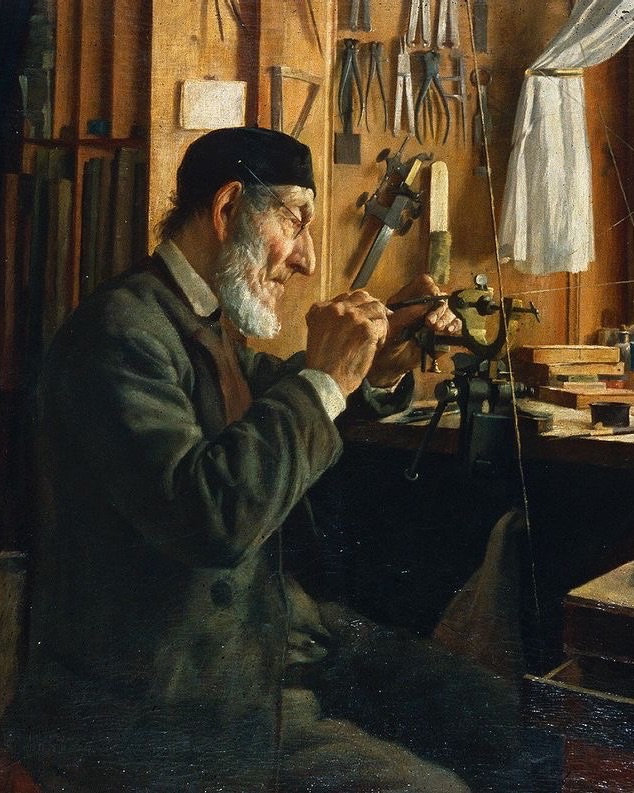

In short
Swiss watchmaking began in Geneva, where Protestant refugees with luxury trades settled from the 1550s and craftsmen soon split the work between many hands. From the late 1600s the trade climbed into the Jura mountains, where farming families made parts at home through the long winters and merchants called établisseurs gathered the parts, assembled the watches and sold them across the world. When American factories threatened the Swiss in the 1870s, the network learned to build its own factories while keeping its specialists, and by the 1930s the government and the industry had locked the whole system into a legal cartel that lasted until 1971. That mix of specialist suppliers, factories and protection is the Switzerland that met the quartz watch.1, 2, 3, 6, 7, 15
Part 1
Refugees and the Geneva Fabrique
From 1550 Huguenot refugees reached Geneva bringing the skills of an elite of craftsmen, portable watchmaking among them, and the closeness of watchmaking to the city's goldsmithing helped it grow, according to the Historical Dictionary of Switzerland.1, 9, 23
The best-known explanation for Geneva's turn to watches is that Calvin banned the wearing of jewellery and the goldsmiths moved into watchmaking. Geneva's tourist office tells it as "the story goes"; a curator interviewed by Global Geneva states it as fact; the Historical Dictionary of Switzerland's survey of Swiss watchmaking does not mention the ban at all and credits the refugees and the kinship with goldsmithing.1, 9, 24
Family histories trace Vallée de Joux dynasties to the same refugee wave: Jaeger-LeCoultre says Pierre LeCoultre reached Geneva among Huguenot refugees in 1558, and Audemars Piguet says André Audemars fled to Geneva in 1558 and his son settled in the Vallée de Joux about 1580.13, 23
The Historical Dictionary of Switzerland dates the guild (maîtrise) of Geneva's watchmakers to 1601 and a division of labour to about 1660: case makers and engravers got their own guilds in 1698 and 1716, while women, barred from these trades until 1785, made watch chains and joined the watchmakers' guild in 1690.1
By the end of the 17th century Geneva's masters kept the finishing for themselves and bought rough movements (ébauches) from the Jura valleys, the Pays de Gex and Faucigny. The whole community of watch and jewellery workers was called the Fabrique; its workshops, or cabinets, gave their workers the name cabinotiers.1, 9
Geneva watches went far. The V&A records a body of Genevan watchmakers working in Constantinople from the early 1600s, and an order in April 1671 by Sébastien Chappuis in Constantinople for ninety astronomical watches from two Genevan makers.25
The Historical Dictionary of Switzerland says the Fabrique peaked around 1770 to 1786, when its work was known as far as the Orient and the American colonies; a Geneva census of 1788 counted more than thirty trades within it. The French annexation of 1798 ended the guilds and brought crisis and unemployment.1
Part 2
Into the mountains
The Neuchâtel mountains took up watchmaking from the 17th century. They had no guilds, which gave a freedom of work and trade that attracted Geneva's établisseurs, and a population already skilled in small metalwork: locksmiths, gunsmiths, nail makers.1, 2
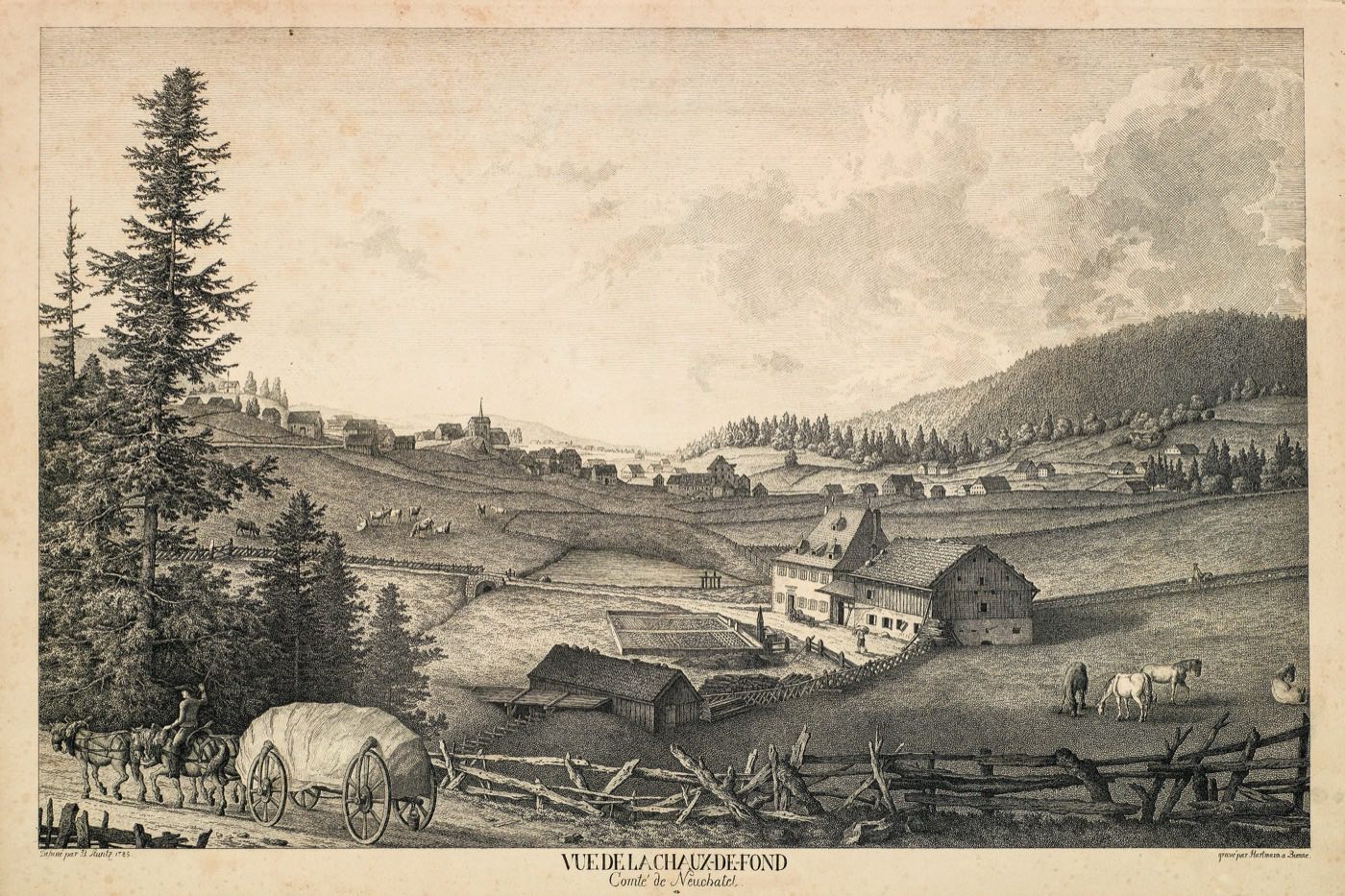
Daniel JeanRichard of Le Locle is the trade's founding hero. The Historical Dictionary of Switzerland says the legend that made him founder of Neuchâtel, even Swiss, watchmaking arose in the 1830s and 1840s; what the records support is that he organised the first real watch workshop in the Neuchâtel mountains, using Geneva's tools and know-how. The Federation of the Swiss Watch Industry still calls him the pioneer of the Neuchâtel Jura industry.27, 28, 29
The figures show the change: about eighty watchmakers in Le Locle around 1750, by an official count, and some 800 in the region by 1800. Watchmaking quickly pushed aside the older side-trades of farming families, above all lace-making, which in La Chaux-de-Fonds fell from about 500 lacemakers in the mid-18th century to 300 around 1800.2, 27, 29
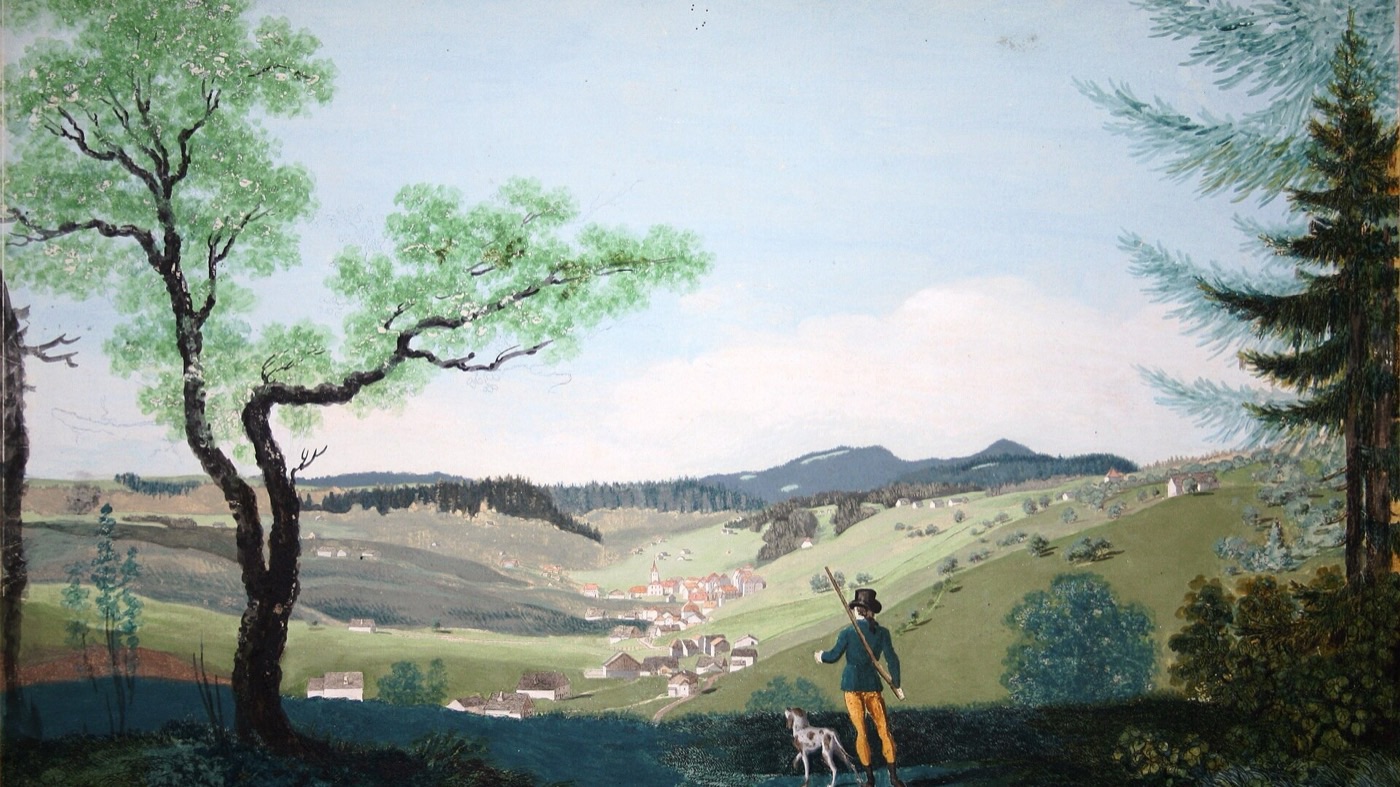
In the Vallée de Joux the trade has its own origin story. Audemars Piguet's historians say Samuel Olivier Meylan, a blacksmith's son, went to learn watchmaking in Rolle in 1740, came home after two years and trained apprentices against the Rolle guild's rules; the valley's craftsmen won an exemption from Bern in 1749, formed their own guild in 1756, and saw it abolished twenty years later.13
Farming families worked at watch parts through the winters. Audemars Piguet says farmers across the region began to give their working days to watchmaking towards the end of the 18th century, turning their farmhouses into workshops during the long, hostile winter months.31, 32, 33
The Revolution carried the trade across the border. After the repression of 1793 several hundred people left Le Locle for Besançon, drawn by the "national factory" of watchmaking created by the Convention; more than 1,800 Swiss watchmakers arrived in Besançon between September 1793 and September 1795.2, 29
In the 19th century, the Historical Dictionary of Switzerland records, the trade spread from the Neuchâtel mountains into the Saint-Imier valley, the Franches-Montagnes, Biel/Bienne and Grenchen; around 1890 almost half of Swiss watch and movement exports came from Bernese firms, and by the 20th century more than 90 per cent of the workforce was in the Jura arc.1
Part 3
How the network worked
The system was called établissage. The parts were made separately by home workers; the établisseur organised the work, handed out the materials and had the parts assembled and adjusted in his own counting-house (comptoir), and merchants sold the watches abroad. Historians count it as a "putting-out" system, the Verlagssystem.1, 3
Specialisation kept deepening: La Chaux-de-Fonds's industrial census of 1867 counted fifty-four watchmaking trades. Even in the Vallée de Joux the work was split into wheels, bridges, springs, gongs, pinions and jewel stones, each made in a different household.1, 13, 32
The rough movement, the ébauche, became an industry of its own. The Federation of the Swiss Watch Industry credits the Frenchman Frédéric Japy at Beaucourt with the first ébauches made by machine, in 1776, and the Historical Dictionary of Switzerland says the idea of interchangeable parts was known in the Jura by the 1770s, before the Americans applied it industrially.1, 34
Swiss ébauche factories followed, among them Fontainemelon in the Val-de-Ruz, founded as Benguerel & Humbert in 1793; at the end of the 18th century it employed about 120 people, half of them at home, and had counters in Bordeaux and New Orleans.1, 35
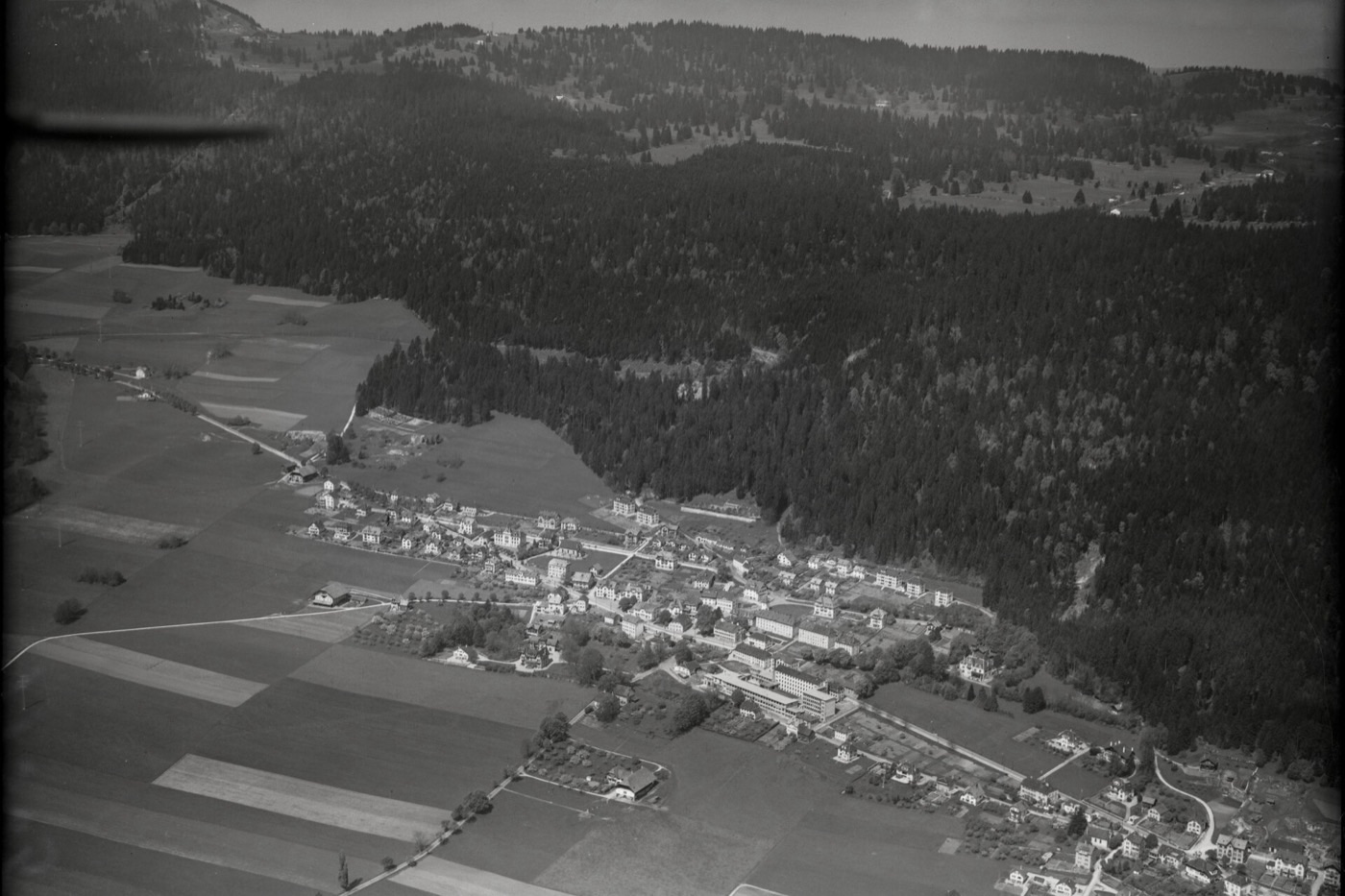
The Vallée de Joux specialised in complicated mechanisms and gem-cutting; the Historical Dictionary of Switzerland names the Audemars, Breguet, LeCoultre, Meylan and Piguet families as dynasties of complication makers.1, 10
The valley's makers often worked unseen for others. Audemars Piguet's historians say the London maker Edward John Dent bought complicated movements there from Louis Audemars & Fils and sometimes signed them "Dent à Le Brassus", and that the 1899 "Universelle" begun in Le Brassus was finished and sold by Union Glashütte in Saxony.13
Suppliers could become owners. The Stern brothers, who bought control of Patek Philippe in the 1930s crisis, ran a dial factory that supplied it, according to Wikipedia; the Historical Dictionary of Switzerland confirms the Sterns' purchase.11, 12
Part 4
Watch towns and world markets
After a fire in 1794, La Chaux-de-Fonds was rebuilt to a plan credited to the engraver Moïse Perret-Gentil, and in 1835 the engineer Charles-Henri Junod laid out its extension in a grid along the valley. Le Locle, burnt in 1683, 1765 and 1833, took its present shape in the second quarter of the 19th century.2, 29, 37
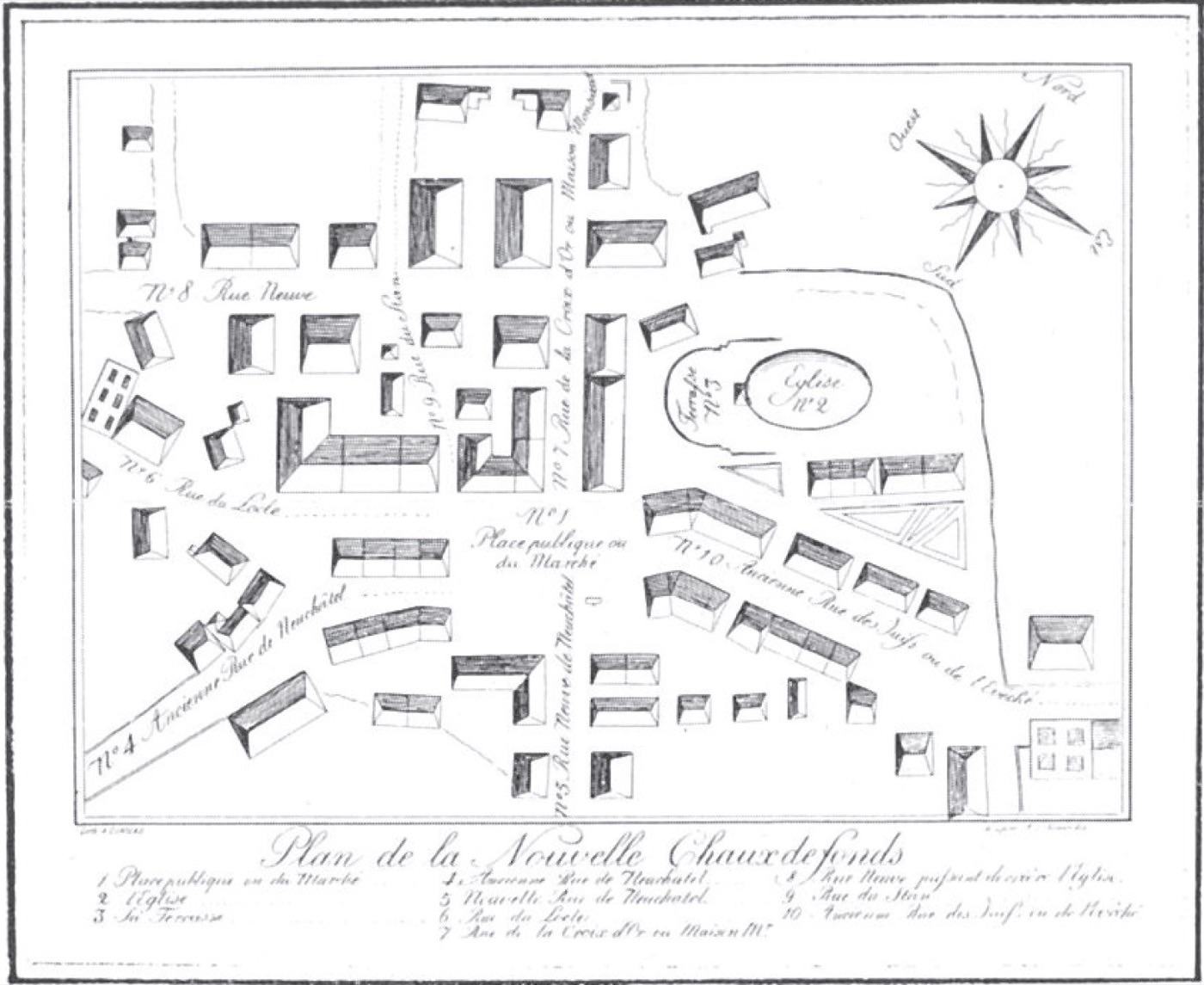
UNESCO inscribed La Chaux-de-Fonds and Le Locle on the World Heritage List in 2009 as "watchmaking town planning": two towns in poor farmland whose parallel strips mix housing and workshops, built for a single industry.4, 37
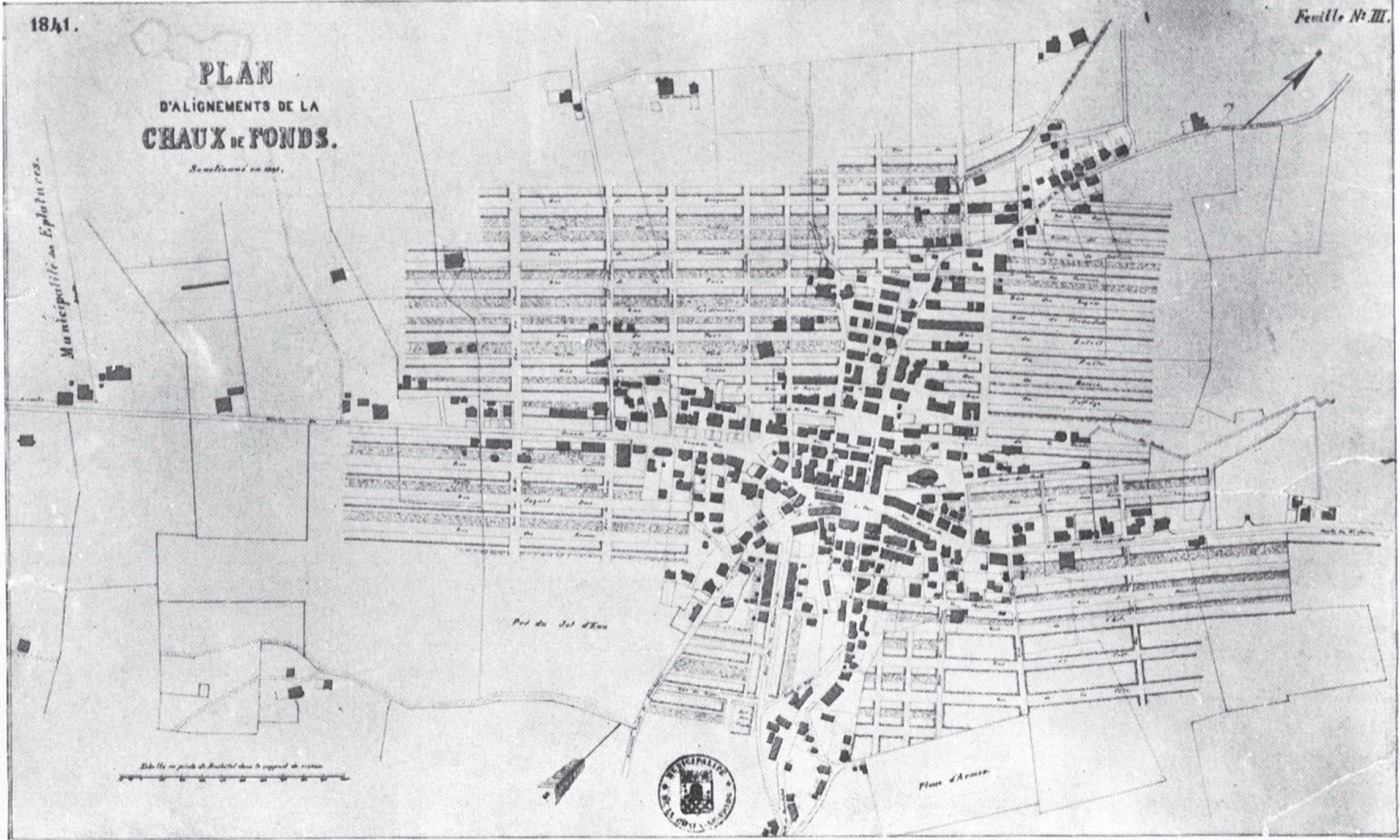
Karl Marx used La Chaux-de-Fonds in Das Kapital as his example of the division of labour, calling the town one huge watch manufactory. By 1870 watchmaking employed 4,505 of its 8,954 working people.2, 4
Fleurier in the Val-de-Travers made watches for China. Edouard Bovet went to Canton in 1818 and in 1822 set up a firm with three brothers to trade watches with China; Fleurier became the centre of the "Chinese watch", and the Musée d'horlogerie du Locle says the Bovets held a near-monopoly of Chinese sales of pocket watches with visible movements.40, 41, 42
Around 1870 Switzerland made about three-quarters of the world's watches by number and two-thirds by value, according to the Historical Dictionary of Switzerland.1
Part 5
The American challenge and the factory
American machine-made watches hit Swiss sales hard: Swiss watch exports to the United States fell from 18.3 million francs in 1872 to 3.5-4 million in 1877-78.1
The Société intercantonale des industries du Jura, created on 14 May 1876, sent the Longines engineer Jacques David to study the American factories during the Philadelphia exhibition; his confidential report warned that Swiss watchmaking would not survive unless it changed, and was circulated in about eight manuscript copies.5, 15
The Swiss had tried machine production before: the Biel-born Pierre-Frédéric Ingold, trained under Breguet in Paris, failed to found watch companies in Paris (1838) and London (1839-42), and factories using his machines opened in the United States instead; the Genevan Georges-Auguste Leschot built machines for interchangeable parts.1, 43, 44
The answer was the factory. The Historical Dictionary of Switzerland puts the decisive change in the 1870s and 1880s, chiefly in the Bernese Jura and at the foot of the Jura, where large works gathered hundreds of mostly unskilled workers from the countryside; in 1883, 46 of the 97 watch firms under the federal factory law were in the canton of Bern.1
Some firms had already started: Longines brought its trades under one roof at Saint-Imier in 1867, LeCoultre at Le Sentier in 1866, and Georges Favre-Jacot, who founded his firm in Le Locle in 1865, built up what became Zenith. Zenith calls its founder's works the first integrated manufacture in Switzerland; that "first" is the company's own claim.17, 19, 23, 45
The Historical Dictionary of Switzerland describes the industry as dual: centres attached to the old craft went on making fine and complicated watches, while integrated factories mass-produced middle and low-priced watches. The cheap Roskopf "worker's watch" appeared in 1867.1
Schools trained the workforce: Geneva's watchmaking school opened in 1824; La Chaux-de-Fonds followed in 1865, Le Locle in 1868, and the Vallée de Joux's industrial college of 1894 became the watch school of Le Sentier. The Neuchâtel observatory, founded in 1858, ran timing competitions from 1866.1, 2, 10, 29, 46, 47, 48
Factory work brought strikes and unions: the Historical Dictionary of Switzerland counts 193 strikes between 1884 and 1914, and says the watchworkers' federation founded in 1912 had 17,000 members, nearly a third of the workforce.1
Part 6
Crisis and cartel
The First World War was profitable (fuses and aircraft instruments), but the crisis of 1921-23, the world depression of the 1930s and rising tariffs hit hard. Foreign buyers could avoid duties on finished watches by importing movements in parts and assembling them abroad: this "chablonnage" fed foreign competitors with Swiss parts and drove prices down.1, 6, 49
The industry organised itself at its three levels: watch manufacturers in the FH (17 January 1924), ébauche makers in Ebauches SA (1926), and parts makers in the UBAH (1927). On 1 December 1928 the three signed conventions to hold minimum prices and stop the export of ébauches and loose movements.6, 15
Outsiders broke the agreements, so in 1931 a "super-holding", ASUAG, was formed to buy control of the key suppliers: ébauches, balances, hairsprings and escapement parts. The Confederation took 6 million francs of its capital and lent it 7.5 million.1, 6, 22
On 12 March 1934 the federal government made the export of chablons, ébauches and parts, and the opening or enlarging of any watch firm, subject to permits; in 1936 it made the industry's minimum prices binding on everyone. The Federal Council's own message calls the 1934 text an "arrêté du Conseil fédéral"; the Historical Dictionary of Switzerland calls it an "arrêté fédéral".1, 6, 15, 49
After the war the rules were put into law as the watch statute: the federal decree of 22 June 1951 (the "statut légal de l'horlogerie") kept export and manufacturing permits but dropped state price-fixing; a new statute, approved by 66.7 per cent of voters on 3 December 1961, added a technical control of exported watches from 1962, kept manufacturing permits until the end of 1965 and ran until the end of 1971.6, 7, 49, 50
Under the cartel ASUAG's Ebauches SA came to dominate a quarter of the world's mechanical movements by 1974, while the electronic watch was neglected; the cartel's collapse, the quartz watch and the 1983 merger of ASUAG and SSIH lead into the quartz crisis and the Swatch Group.20, 22
Through this history
The companies, people, technologies, objects and events this chapter is made of, in the order the story meets them.
Place
The Jura ArcThe mountains that took up watchmaking from the 17th century, free of Geneva’s guilds.1, 2
Company
Patek PhilippeA Geneva house founded in 1839 and bought in the crisis of the 1930s by the Stern brothers.11, 12
Event
The Philadelphia Centennial ExhibitionThe warning that pushed the Swiss network of specialists toward machines, standards and factories.1, 5, 16
Company
ZenithGeorges Favre-Jacot’s Le Locle works, which brought the watch trades under one roof.17, 18, 19
Event
The Swiss watch cartel and statuteThe federal rules that held the industry in place from 1934 to 1971.6, 7
Key dates
- 1671
A Constantinople merchant orders ninety astronomical watches from two Genevan makers.25
- 1740
Samuel Olivier Meylan leaves the Vallée de Joux to learn watchmaking at Rolle (company account).13
- 1776
Frédéric Japy makes ébauches by machine at Beaucourt.1, 34
- 1793
Benguerel & Humbert found the ébauche works at Fontainemelon; Swiss watchmakers leave for Besançon.29, 35
- 1794
Fire destroys much of La Chaux-de-Fonds; it is rebuilt to a plan.2, 37
- 1824
Geneva's watchmaking school opens.46, 47
- 1835
Charles-Henri Junod plans the grid extension of La Chaux-de-Fonds.2, 37
- 1876
Swiss delegates see the American factories at Philadelphia; Jacques David reports.5, 15
- 1924
The FH, the watch manufacturers' federation, is founded.6, 15
- 1926
Ebauches SA is founded in Neuchâtel.15, 20
- 1928
Industry conventions on prices and chablonnage are signed (1 December).6, 15
- 1931
ASUAG founded with federal capital.6, 22
- 1934
Export and manufacturing permits introduced (12 March).6, 49
- 1951
Federal decree of 22 June sets the watch statute in law.6
- 1961
Voters approve the revised watch statute (3 December).7, 50
- 1971
The watch statute expires on 31 December.7, 15
Where this leads
- Before, Era IIFrance and the science of horology
1750 to 1850
- After, Era IIIAmerica industrializes the watch
1850 to 1930
Where Switzerland’s network of specialists leads
- In this story, PlaceBiel/Bienne
Biel was one of the nine sections that founded the watch federation in 1924, and the seat of the holding ASUAG from 1931.15, 51
- In this story, PlaceLa Chaux-de-Fonds and Le Locle
The Jura's specialist system in stone: établissage, fifty-four watch trades and grid plans mixing homes and workshops.1, 4, 52
- In this story, PlaceNeuchâtel
The canton's observatory, founded in 1858, gave the watch towns exact time and rated their chronometers.1, 53
- In this story, PlaceSchaffhausen
A watch town outside the Jura: IWC's founder came north to the Rhine after western Swiss watchmakers distrusted his plan, by IWC's own account.54, 55
- See also, HistoryAmerica industrializes the watch
The Swiss move to factories, under way before 1876, was pressed by the American competition shown at Philadelphia.1, 5
- See also, HistoryBritain’s watch industry
Swiss watches, smuggled and then imported by the million after 1850, undercut the English trade.56, 57
- See also, HistoryChina builds a watch industry
Swiss watches for the Chinese market: Bovet of Fleurier traded at Canton from 1818.40, 58
- See also, HistoryFrom the pocket to the wrist
Donzé argues that flexible Swiss suppliers adapted quickly to small wristwatch calibres and cases.59
- See also, PersonAbraham-Louis Breguet
Pierre-Frédéric Ingold worked for Breguet in Paris; the Breguet family is named among Vallée de Joux dynasties.10, 43
- See also, EventThe First World War
The Historical Dictionary of Switzerland notes that the war was very profitable to the Swiss watch industry.1
- See also, EventThe quartz crisis
The cartel ended in 1971 as the quartz watch arrived; Ebauches SA had neglected electronic watches.7, 20
Facts and sources
- Period
- From the later 1500s (Geneva) to the cartel of the 1930s, with the statute ending in 19711, 7
- Where
- Geneva, the Vallée de Joux, the Neuchâtel mountains (Le Locle, La Chaux-de-Fonds), the Saint-Imier valley, Biel/Bienne and Grenchen1, 10
Sources
- 1
- 2
- 3
- 4
La Chaux-de-Fonds / Le Locle, Watchmaking Town Planning (opens in a new tab)
- 5
- 6
- 7
- 8
Edouard Kaiser, L'horloger (The watchmaker), 1890, oil on canvas. (opens in a new tab)
- 9
- 10
- 11
- 12
- 13
- 14
- 15
- 16
- 17
- 18
- 19
Georges Favre-Jacot - Visionary Watchmaker (opens in a new tab)
- 20
- 21
- 22
- 23
- 24
Geneva's watch heritage: a historian's perspective (opens in a new tab)
- 25
Watch, movement by Jean Pattru, probably Turkey, ca. 1670 (136-1907) (opens in a new tab)
- 26
"Première vue de La Chaux-de-Fonds, prise du côté du Midi en 1785", engraving. (opens in a new tab)
- 27
- 28
Watchmakers' and Inventors' Hall of Fame: Daniel Jeanrichard (opens in a new tab)
- 29
- 30
Le Locle seen from Le Crêt, about 1800. (opens in a new tab)
- 31
- 32
- 33
- 34
Watchmakers' and Inventors' Hall of Fame: Frédéric Japy (opens in a new tab)
- 35
- 36
- 37
- 38
- 39
Charles-Henri Junod's alignment plan of La Chaux-de-Fonds, 1841. (opens in a new tab)
- 40
- 41
- 42
- 43
- 44
Watchmakers' and Inventors' Hall of Fame: Georges-Auguste Leschot (opens in a new tab)
- 45
- 46
- 47
- 48
- 49
- 50
- 51
- 52
La Chaux-de-Fonds / Le Locle (Switzerland), No 1302: ICOMOS evaluation (opens in a new tab)
- 53
- 54
- 55
- 56
- 57
Introduction, in Survey of London: Volume 46, South and East Clerkenwell (2008) (opens in a new tab)
- 58
Pair of "Bovet" pocket watches with pearls and painted enamel (opens in a new tab)
- 59
Watchmaking in 1927: major structural changes (opens in a new tab)
Sources read November 12, 2026.