Histories, Era II, The age of precision
France and the science of horology
1750 to 1850
How Paris made watchmaking a science and then lost the industry to the east: the guild and the Académie des sciences, the sea clocks of Berthoud and Le Roy, Lépine’s thin calibre, Breguet’s workshop on the Quai de l’Horloge, the Revolution’s free trades and decimal time, the Bureau des Longitudes, and the Swiss watchmakers who made Besançon France’s watch capital.

In short
In eighteenth-century Paris the best watchmakers worked under royal patronage and treated their craft as a science: they wrote treatises, put their inventions before the Académie des sciences and built clocks to find a ship’s position at sea. Jean-Antoine Lépine found a way to make watches much thinner, and Abraham-Louis Breguet turned the Paris watch into a precision instrument for kings, scientists and the navy. The Revolution swept away the guilds and for a short time divided the day into ten hours. Paris kept the science, while Swiss watchmakers took the industry to Besançon, which by the 1860s made almost all of France’s watches.1, 3, 4, 5, 7, 11, 12, 13, 21
Part 1
Paris, a guild city of watchmakers
Julien Le Roy, from a family of clockmakers in Tours, came to Paris in 1699, became a master in 1713 and a juré (an official) of the guild, and in 1739 clockmaker to Louis XV. His son Pierre carried on the business.2, 24
Paris drew its talent from outside the city. Jean-Antoine Lépine, born at Challex in the Pays de Gex, came in 1744 to work for André-Charles Caron, clockmaker to the King, whose daughter he married in 1756.3, 12
Ferdinand Berthoud left the Val-de-Travers in the Principality of Neuchâtel and arrived in Paris in 1745 at eighteen. The Swiss historical dictionary says he went to Julien Le Roy; the French Wikipedia says he worked with Pierre Le Roy, later his rival.1, 11, 25
Mastery was normally controlled by the guild, but on 4 December 1753 a decision of the King's Council made Berthoud a master as a special royal favour, against the guild's rules.11, 25
Priority quarrels went to the Académie des sciences. When Caron's young son Pierre-Augustin, the future playwright Beaumarchais, invented a new watch escapement, the royal clockmaker Lepaute claimed it; the Académie was asked to decide and found for Caron, who then became clockmaker to the King. The French Wikipedia credits the same virgule escapement to Lépine.12, 26
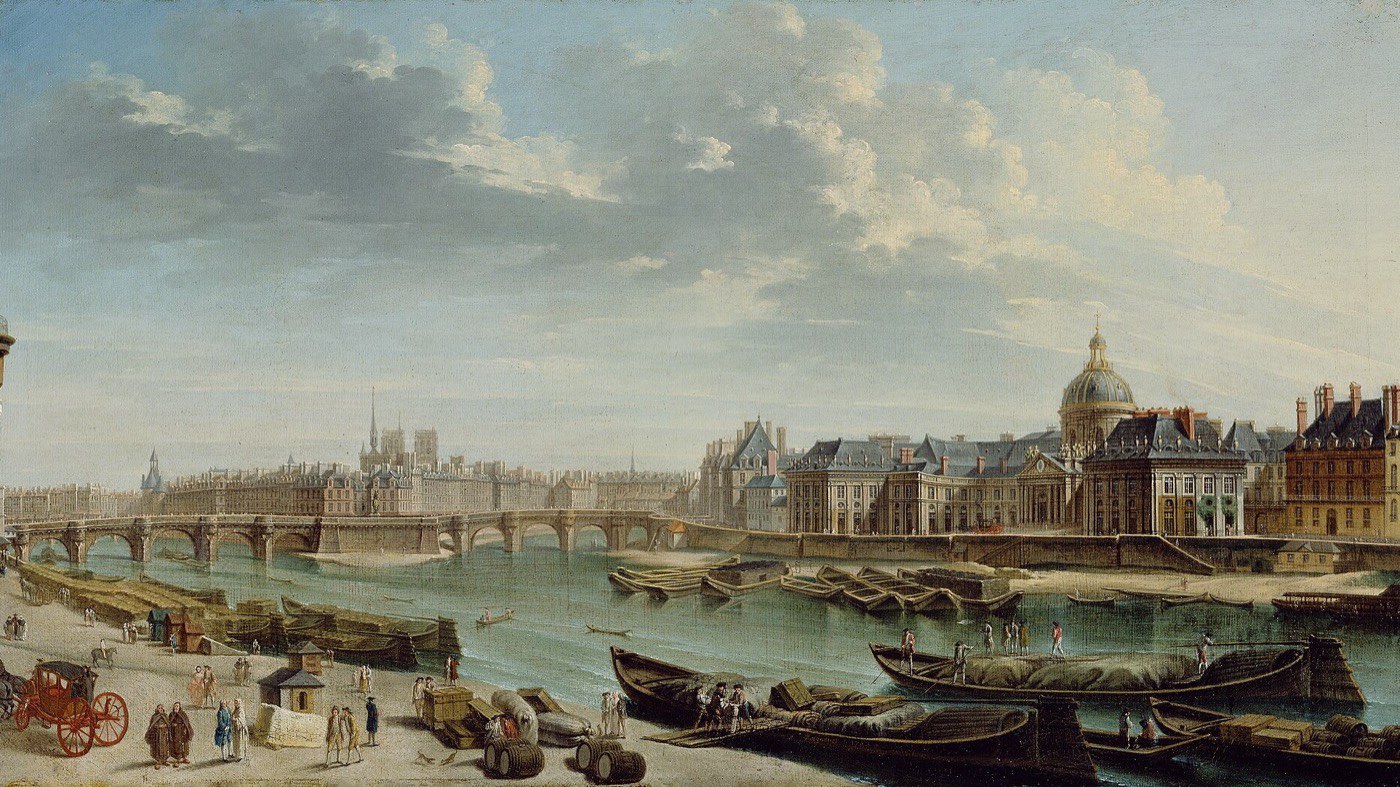
The trade clustered on and around the Île de la Cité. Lépine kept shop on the Quai de l'Horloge in 1778-79, and Breguet set up at what is now no. 39 of the same quay in 1775.3, 4, 10
Part 2
Science under royal patronage
The English Wikipedia records that Lépine’s new repeating mechanism, worked by pressing the pendant, was approved by the Académie in 1763 and reported in its Mémoires.3
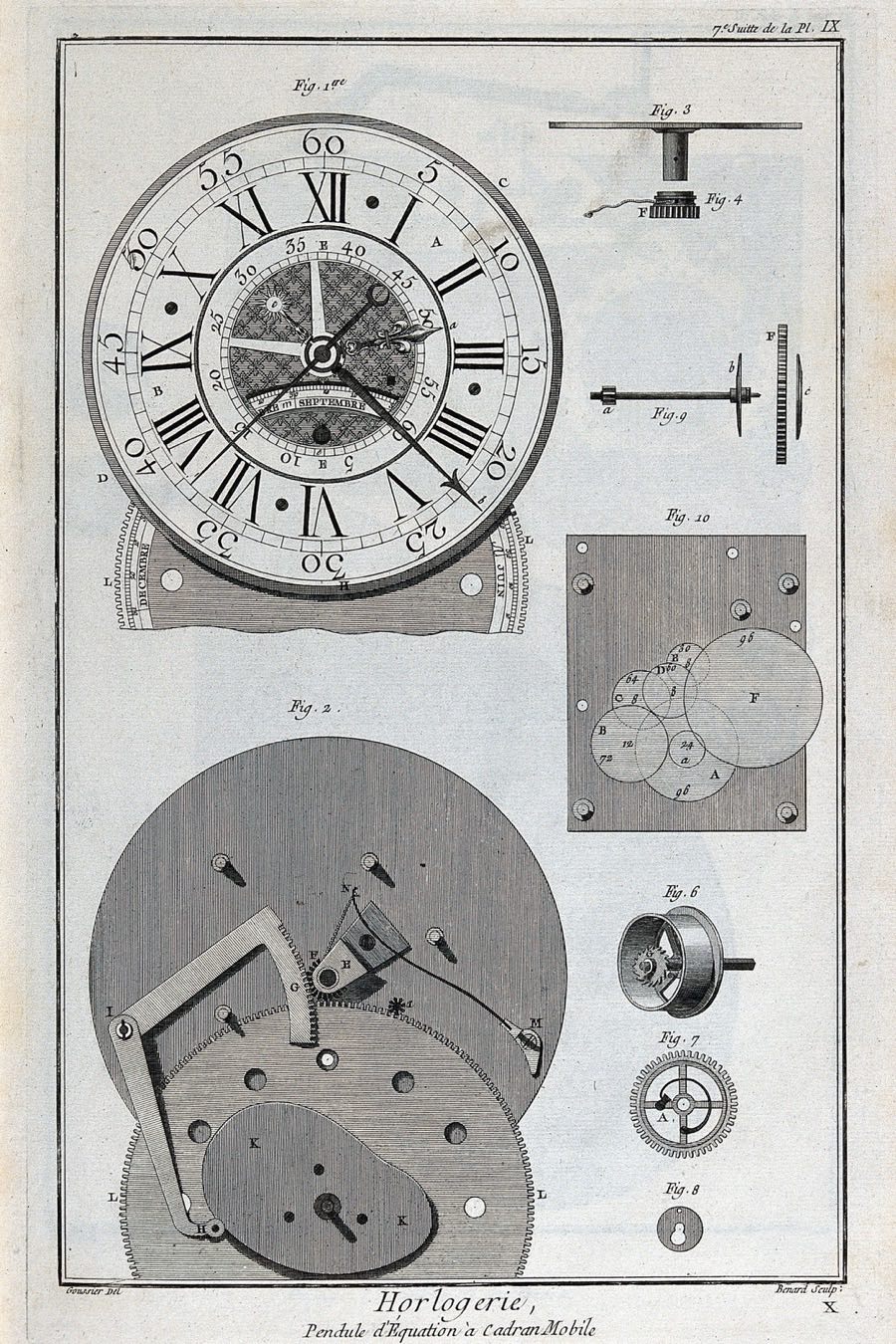
Berthoud wrote the article 'Horlogerie' for Diderot and d'Alembert's Encyclopédie and published his Essai sur l'horlogerie in 1763, followed by the Traité des horloges marines in 1773 and De la mesure du temps in 1787. The Encyclopédie's plates on horology include one lettered as an equation clock 'par le sieur Berthoud'.1, 11, 28
Science was also an affair of state rivalry with Britain. In 1763 the King sent Berthoud, with the academicians Camus and Lalande, to London to see Harrison's H4; Harrison showed his earlier clocks for a fee but not H4, and on a second visit in 1765 Thomas Mudge explained its principle to him.11, 25
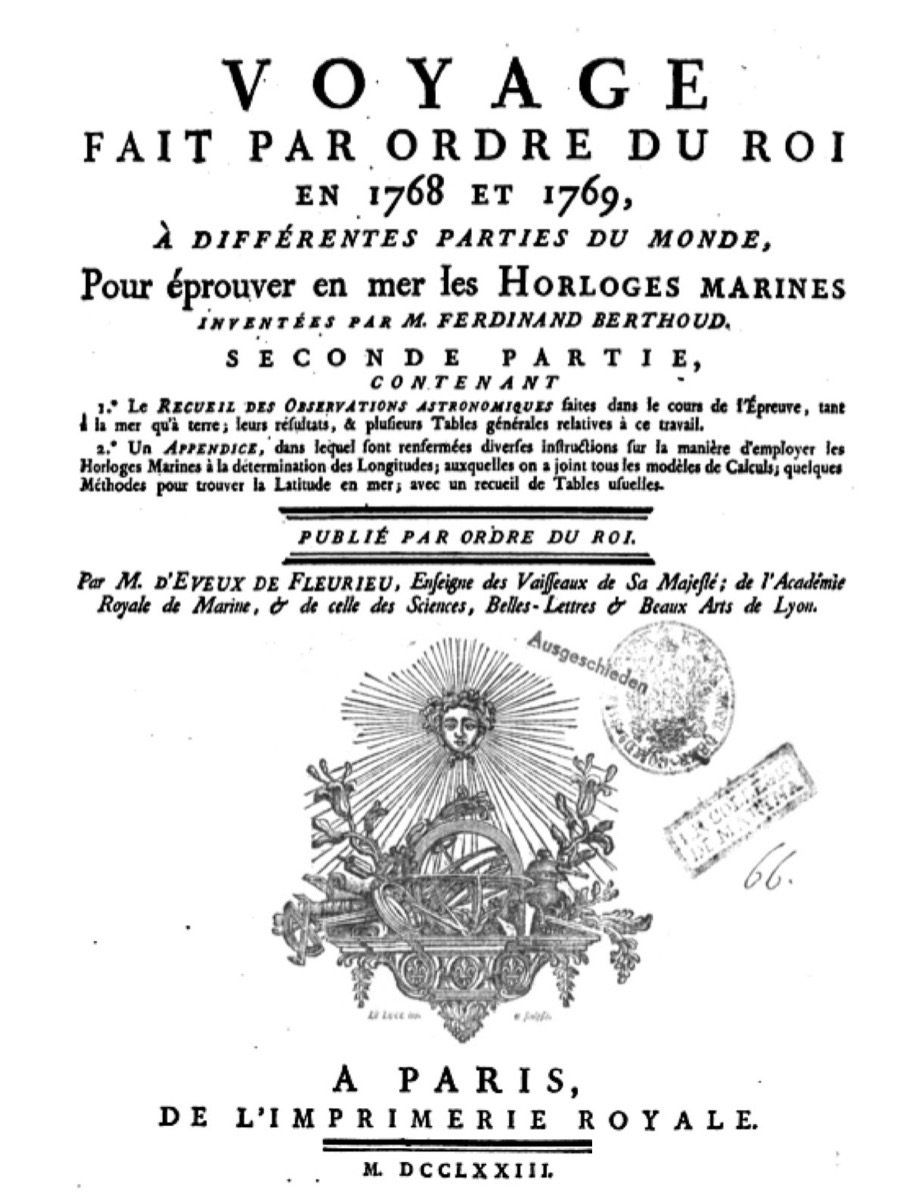
Pierre Le Roy’s marine clock of 1766, with a detached escapement and a compensated balance, won the Académie’s prize in 1769 after trials at sea; Berthoud’s sea clocks nos. 6 and 8 were tried on the corvette Isis in 1768-69 and earned him the title of clockmaker-mechanic to the King and the Navy in 1770. They were France’s answer in the race for longitude at sea.2, 11, 30
Part 3
Lépine’s thin watch
Watches of the time held their wheels between two plates joined by pillars, with the balance above the top plate and a fusee and chain to even out the spring's force. Lépine removed the top plate and replaced it with separate bridges, and dropped the fusee for a going barrel, so the watch could be much thinner.3, 12, 22
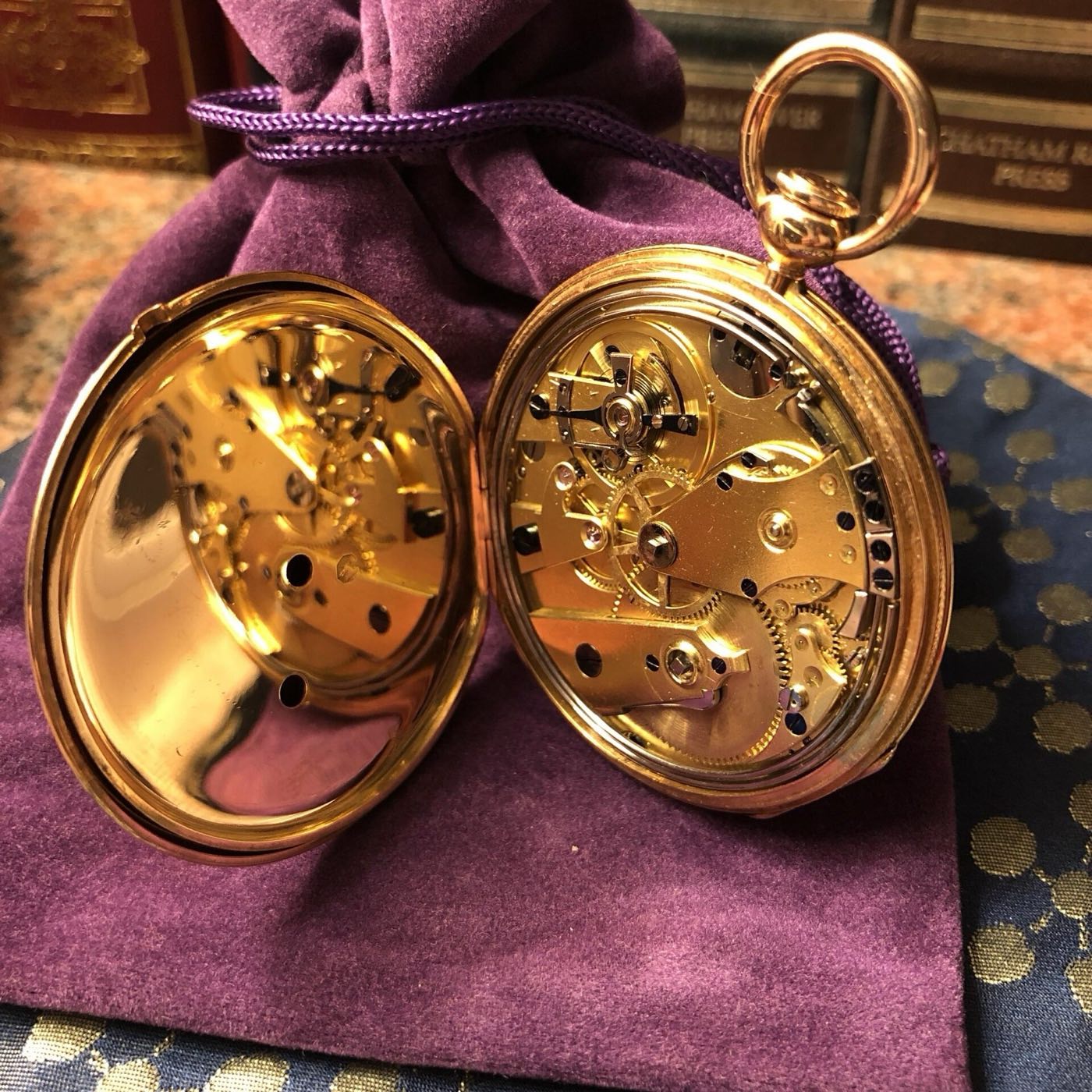
The date is uncertain. Wikipedia's account puts the calibre around 1764-65; the regional heritage inventory places Lépine's change to the ébauche at the end of the eighteenth century or the start of the nineteenth; other accounts give about 1770.3, 22
Many of his movements were not made in Paris: Wikipedia's account says most of Lépine's ébauches came from Voltaire's watch manufacture at Ferney, near Geneva, at least between 1778 and 1782.3, 12
Breguet, who probably frequented Lépine's workshop as a young man, built most of his watches on modified Lépine calibres, and many watches in his archive are recorded as supplied by Lépine.3, 33
The bridge layout suited machine production. The regional heritage inventory records that in the Pays de Montbéliard Louis Japy converted a factory at Seloncourt in 1845 to the mechanical manufacture of Lépine movements, employing 200 people.22
Part 4
Revolution: free trades and ten-hour days
The history site Hérodote dates to 2 March 1791 the decree, proposed by Pierre d’Allarde, that abolished the guilds: from 1 April anyone could practise any trade. The Le Chapelier law of 14 June 1791 forbade them to re-form.34
The Convention's decree of 5 October 1793, amended on 24 November, divided the day from midnight to midnight into ten hours of a hundred minutes of a hundred seconds.5, 35
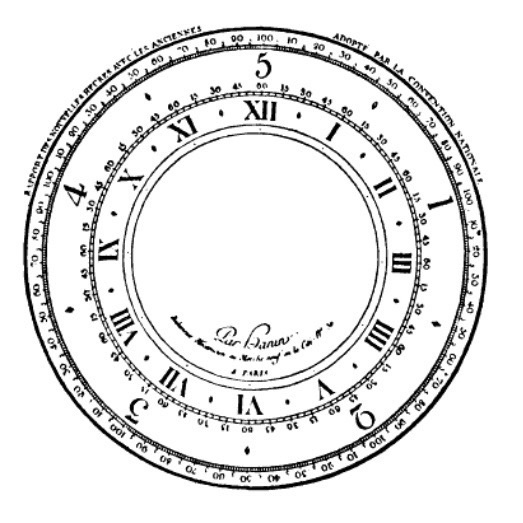
Decimal time was not compulsory for public records until 22 September 1794, and it was suspended on 7 April 1795. Prieur warned the Convention that changing every clock would be ruinously expensive and that watchmakers would be left with unsaleable stock.5, 35
When it ended is disputed: the Fondation Napoléon dates the suspension to 1795, the French Wikipedia says decimal time was used until 1800, and the Basel Historical Museum's label says the regulation was abolished in 1806, the year the whole Republican calendar was dropped.35, 37, 38
Watches and clocks were made with ten-hour dials, often beside the old twelve-hour one. Surviving examples include a watch movement by Féron of Paris in the Musée des arts et métiers and a gold and enamel watch in Basel whose left dial counts from 1 to 10.5, 38
The court's watchmakers were exposed. Breguet left Paris in 1793 and worked in Switzerland until 1795. The HLS dates his exile from June 1793 to June 1795, in Geneva, Neuchâtel and Le Locle; the Louvre exhibition says he left in August 1793, set up a workshop at Le Locle in 1794 and returned in May 1795; Wikipedia, after Salomons, adds two years in England.4, 13, 33, 39, 40
Part 5
Breguet’s Paris
Breguet's self-winding watch, the perpétuelle, was first sold in 1780 to the Duc d'Orléans, according to the house; the Louvre exhibition also dates the first perpétuelles to 1780.41, 42
Who invented self-winding is disputed. The house calls Breguet the first to make it reliable without naming rivals; Abraham-Louis Perrelet of Le Locle is widely credited; Richard Watkins argues that the Perrelet attribution is a myth and that Hubert Sarton of Liège presented such a watch to the Paris Académie, reported in 1778.40, 41, 43
He protected the fragile balance pivots with the pare-chute, tried about 1790 and fitted to perpétuelles from 1792, and in 1795 raised the last coil of the balance spring (the Breguet overcoil) so that it breathed concentrically.42, 44, 45
Back in Paris after the Terror he launched in 1796 the souscription watch: a plain single-hand watch, sold by leaflet, for which the buyer paid a quarter of the price in advance.4, 39, 42
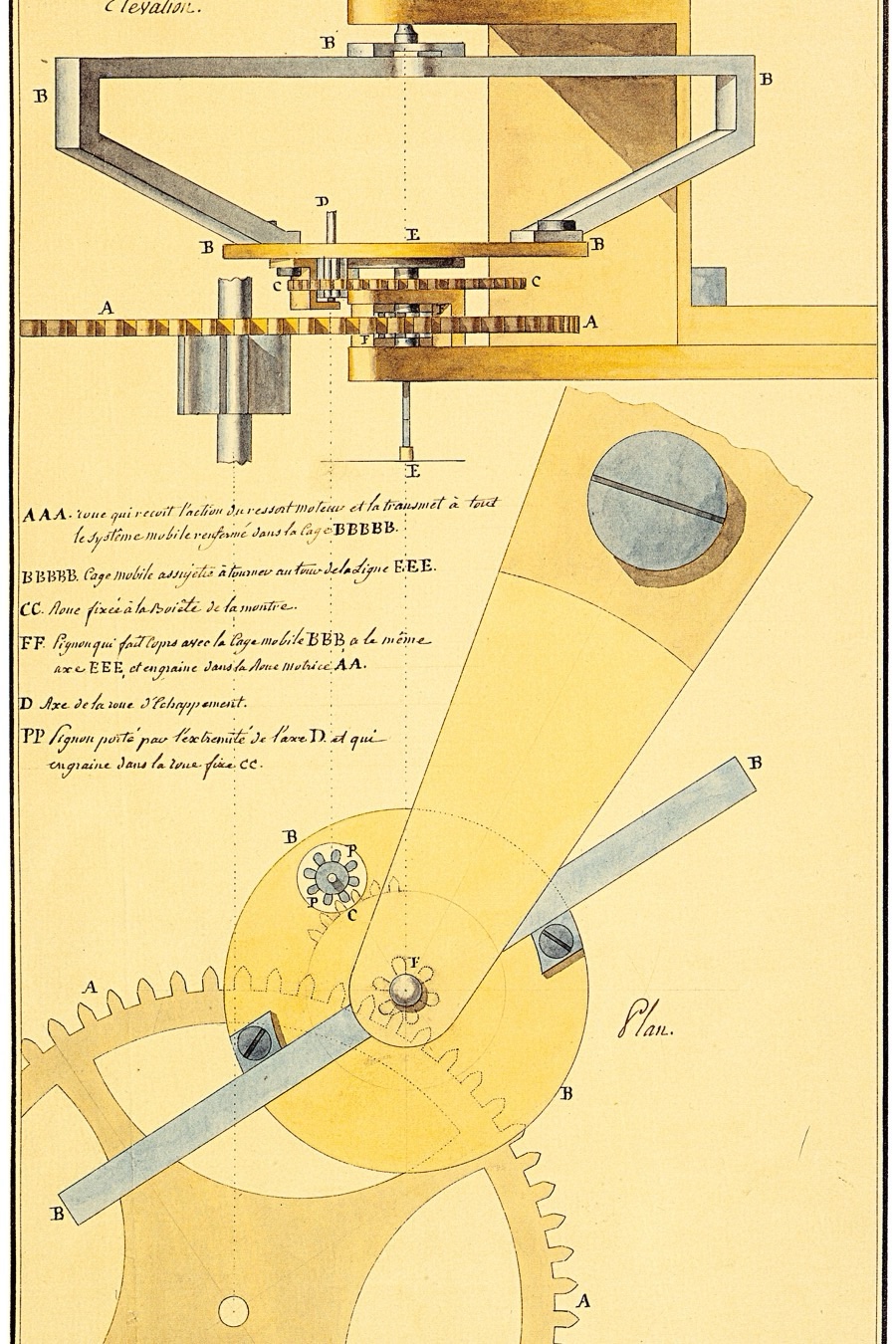
His The tourbillon was patented on 7 Messidor Year IX (26 June 1801).14, 15
The house and the Louvre exhibition record that his clients spanned Europe: Napoleon bought three pieces before the Egyptian campaign in 1798, an Ottoman minister ordered a watch for Selim III in 1804, Caroline Murat bought 34 pieces between 1808 and 1814, and Alexander I bought a sympathique clock in 1809. A Saint Petersburg branch opened in 1808 and closed in 1811 when Russia banned French imports.4, 33
The most ambitious commission, ordered in 1783 for or in the name of Marie-Antoinette, became the watch No. 160.16, 17
Part 6
The Bureau des Longitudes and the navy
The Convention created the Bureau des Longitudes by decree on 7 Messidor Year III (25 June 1795), after Henri Grégoire's report on France's weakness at sea, and gave it the Paris Observatory and the task of improving longitude methods and publishing the Connaissance des temps.6, 47
Louis Berthoud, Ferdinand's nephew, was named clockmaker to the Observatory and the Bureau des Longitudes in Year XIII, and from 1806 the government had him train pupils from the Compiègne school of arts and crafts as marine clockmakers, among them Henri Motel.48, 49
Breguet joined the Bureau in 1814 according to the house and Wikipedia; the HLS gives 1815 and calls him an 'artiste adjoint'. All agree he was named clockmaker to the Navy in 1815 and entered the Académie des sciences in 1816.4, 13, 33, 40
Part 7
The industry moves east: Besançon and the Jura border
Before the Revolution Besançon traded watches between the French market and the Swiss makers of Le Locle and La Chaux-de-Fonds more than it made them.7, 21
In 1793 the Genevan Laurent Mégevand, who had settled at Le Locle, proposed a national watch manufacture at Besançon that would save France the cost of buying Swiss watches. The decree of 21 Brumaire Year II (11 November 1793) offered the Swiss very favourable terms.7, 8
How many came is uncertain: Mégevand is said to have crossed with about 80 watchmakers; the heritage inventory counts nearly 400 people, 930 in March 1794 and 1,855 in 1795; the Musée du Temps and other accounts speak of 700.7, 8, 21
Mégevand soon gave up the idea of one workshop and opened a mechanical ébauche works at Thise outside the city; nearly 15,000 gold and silver watches were made in 1797, but the state removed him in 1798 for poor management, and he died ruined in 1814.7, 8
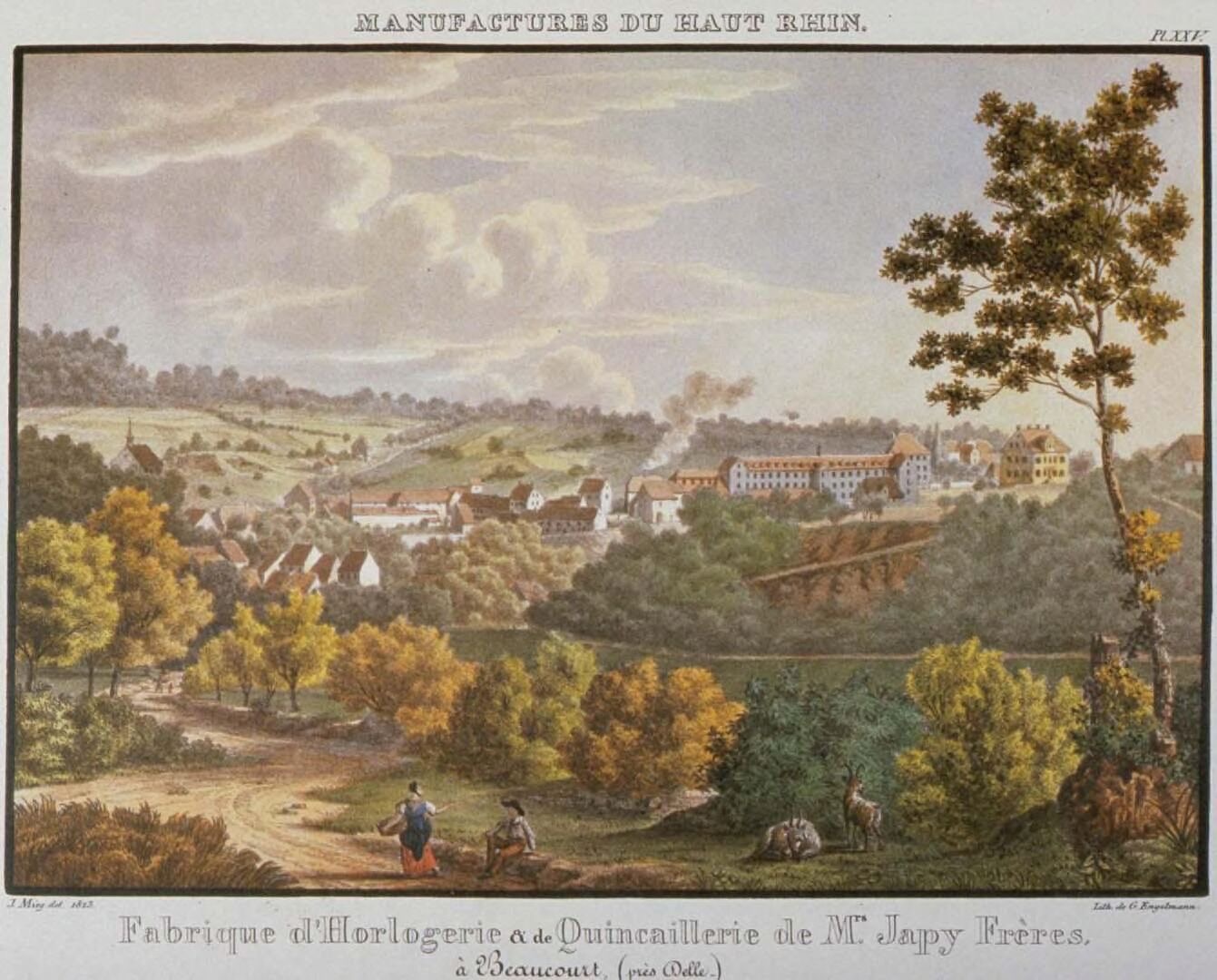
Nearby, Frédéric Japy of Beaucourt, apprenticed to Perrelet at Le Locle and then employed by the machine maker Jeanneret-Gris, bought Jeanneret-Gris's machines in 1776, built his 'Pendulerie' in 1777 and patented his machines in 1799. Horse-driven machines cut the price of an ébauche by two thirds; nine tenths went to Switzerland.22, 50, 51
In 1848 Besançon's 3,500 watchmakers were 1,120 Swiss, 1,670 naturalised Swiss and only 35 native French, according to the historian Jean-Luc Mayaud as cited by the inventory.7
The city became France's watch capital: recognised as such at its 1860 exhibition, by 1866 it made 305,435 of the 310,849 gold and silver watches produced in France (98%), and around 1880 some 90% of French output.7, 21, 53
To compete on quality the city got a watchmaking school (1861) and an observatory decreed in 1878, in service from 1885, modelled on those of Geneva and Neuchâtel, which issued chronometer certificates and from 1897 stamped passing watches with a viper’s head.7, 53, 54
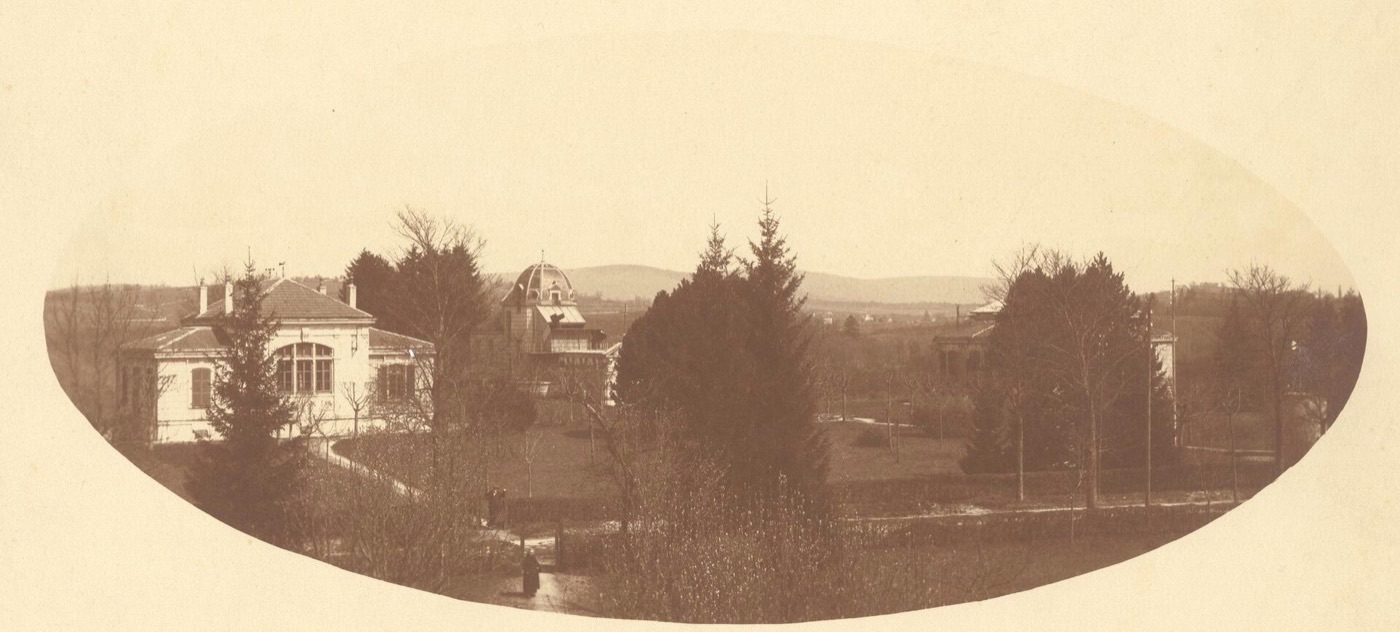
Paris kept the science and the luxury trade, while the industry settled on the Jura border, linked to the Swiss Jura Arc by people, parts and smuggling. Besançon’s firms, Lip among them, carried that industry into the twentieth century, to the electric watch and to the crisis of the 1970s.7, 22, 56
Through this history
The companies, people, technologies, objects and events this chapter is made of, in the order the story meets them.
Person
Ferdinand BerthoudThe Neuchâtel-born maker who wrote the trade’s treatises and built the French Navy’s sea clocks.1, 11
Technology
The marine chronometerThe sea clocks Berthoud and Le Roy built and tried at sea for the French Navy.2, 11
Person
Jean-Antoine LépineThe royal watchmaker whose bridge calibre made the thin watch possible.3, 12
Person
Abraham-Louis BreguetThe watchmaker of the Quai de l’Horloge who made the Paris watch a precision instrument.4, 13
Object
Breguet No. 160The watch with every complication then known, ordered in 1783 and finished after Breguet’s death.16, 17
Key dates
- 1753
Berthoud is made a master by royal favour against the guild rules.11, 25
- 1763
Berthoud publishes the Essai sur l'horlogerie and goes to London to see Harrison's H4.1, 11
- 1775
Breguet opens his workshop on the Quai de l'Horloge.4, 13
- 1777
Frédéric Japy builds his machine-equipped ébauche works at Beaucourt.22, 50
- 1793
Decimal time decreed; Mégevand's Swiss watchmakers settle in Besançon; Breguet leaves Paris.5, 7, 13
- 1795
Decimal time suspended; Bureau des Longitudes founded; Breguet returns.5, 6, 39
- 1801
Breguet's tourbillon patent.14, 15
- 1815
Breguet named clockmaker to the Navy.4, 13
Where this leads
- Before, Era IILongitude and the marine chronometer
1714 to 1900
- After, Era IIISwitzerland’s network of specialists
1600 to 1930
Where France and the science of horology lead
- See also, HistoryLongitude and the marine chronometer
The French marine-clock makers (Le Roy, Berthoud) and the Bureau des Longitudes belong to both stories.2, 6
- See also, HistoryThe balance spring and the age of precision
The next chapter: Le Roy, Berthoud and Breguet in Paris built on the spring, the compensation balance and the lever.2, 57
- See also, TechnologyAutomatic winding
Perrelet, Sarton and Breguet's perpétuelle belong to the 1770s and 1780s.41, 43
- See also, TraditionChronometry and certification
Besançon's observatory certified chronometers within the European observatory-trial system.54, 58
Facts and sources
- Period
- About 1750 to 1850, with the Besançon industry followed to the 1880s7, 11
- Where
- Paris (Île de la Cité, the Louvre, Versailles), Besançon and the Pays de Montbéliard, with constant ties to Neuchâtel, Le Locle and Geneva7, 13, 22
Sources
- 1
- 2
- 3
- 4
- 5
- 6
Décret du 7 messidor an III créant le Bureau des longitudes (opens in a new tab)
- 7
L'horlogerie à Besançon (dossier IA25001993) (opens in a new tab)
- 8
- 9
- 10
- 11
- 12
- 13
- 14
Patent granted for a completely new type of regulator called the "Tourbillon" (opens in a new tab)
- 15
- 16
Order for watch N°160, known as the "Marie-Antoinette" watch (opens in a new tab)
- 17
Watches collection: In Search of Lost Time (opens in a new tab)
- 18
Presentation of the "Marie-Antoinette" watch in a re-edition version (opens in a new tab)
- 19
- 20
- 21
- 22
L'horlogerie du Pays de Montbéliard (dossier IA25001992) (opens in a new tab)
- 23
- 24
- 25
- 26
- 27
- 28
- 29
- 30
Chronomètre de marine / Horloge marine no 12 (IV-84) (opens in a new tab)
- 31
- 32
- 33
Breguet: history (exhibition 'Breguet, un apogée de l'horlogerie européenne') (opens in a new tab)
- 34
2 mars 1791: le décret d'Allarde abolit les corporations (opens in a new tab)
- 35
- 36
- 37
- 38
Pocket watch with revolutionary period (inv. 1982.1011) (opens in a new tab)
- 39
- 40
- 41
Appearance of the first automatic watches (opens in a new tab)
- 42
- 43
The Origins of Self-Winding Watches 1773-1779 (opens in a new tab)
- 44
Invention of the pare-chute shock absorber (opens in a new tab)
- 45
Invention of the "Breguet balance-spring" (opens in a new tab)
- 46
Breguet's drawing for his 1801 tourbillon patent. (opens in a new tab)
- 47
- 48
- 49
- 50
Ensemble industriel Japy, Beaucourt (dossier IA90000075) (opens in a new tab)
- 51
- 52
- 53
- 54
2 machines à estampiller Hérique (dossier IM25001913) (opens in a new tab)
- 55
General view of the Besançon observatory at the end of the nineteenth century. (opens in a new tab)
- 56
- 57
- 58
Sources read November 11, 2026.