Ferdinand Berthoud
The watchmaker from the Principality of Neuchâtel who became clockmaker-mechanic to the King and the Navy in Paris: author of the Encyclopédie’s article on horology and of over 4,000 pages of treatises, and builder of the sea clocks France sent on its great voyages.
Born 18 March 1727, Plancemont (Couvet), Principality of Neuchâtel, Died 20 June 1807, Groslay (Val-d'Oise)
In the history France and the science of horology
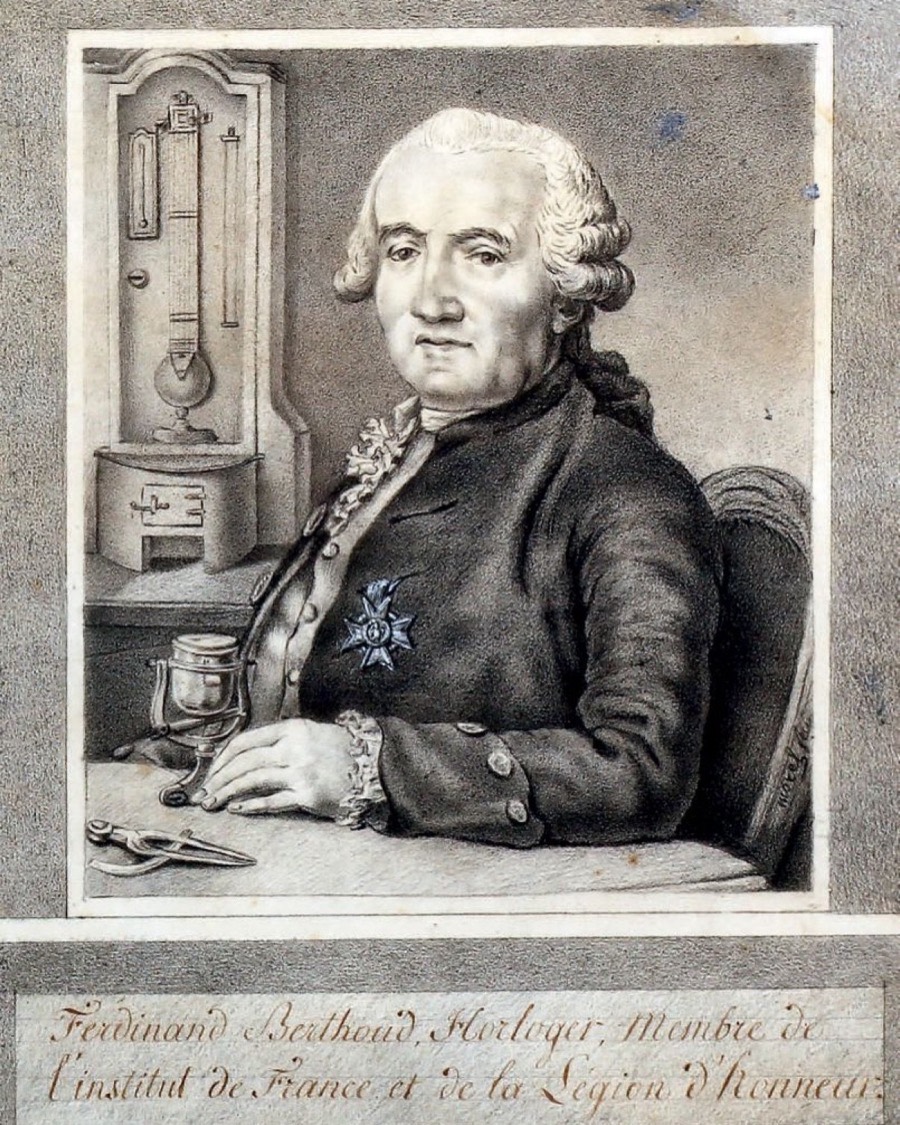

From the Val-de-Travers to Paris
He came from a Protestant family of the Val-de-Travers in which, from his father's generation, the sons became clockmakers; he learned the trade from his brother Jean-Henry at Couvet from 1741 to 1745.2, 5
He went to Paris in 1745 to perfect his skills; the HLS names Julien Le Roy as his master there, the French Wikipedia Pierre Le Roy.1, 3
A royal council decision of 4 December 1753 made him a master watchmaker, as an exception to the guild's rules.2, 3
The Encyclopédie and the treatises
He wrote the Encyclopédie's article 'Horlogerie' and, from 1755, other articles on watchmaking for it.1, 3
His books ran to over 4,000 pages: L'Art de conduire et de régler les pendules et les montres (1759), the Essai sur l'horlogerie (1763), the Traité des horloges marines (1773), Les longitudes par la mesure du temps (1775), De la mesure du temps (1787), the Traité des montres à longitudes (1792) and the Histoire de la mesure du temps par les horloges (1802).1, 2
Sea clocks for the Navy
In 1763 the King sent him to London with Camus and Lalande to examine Harrison's H4; Harrison refused to show it. He was elected a foreign member of the Royal Society in 1764, and on a second visit in 1765 Thomas Mudge described H4's principle to him.1, 2, 3
His sea clocks nos. 6 and 8, proposed to the Navy minister in 1766, were tested on the corvette Isis between Rochefort and Saint-Domingue in 1768-69; no. 8 was tried again in 1771-72 under Verdun, Borda and Pingré.2, 6
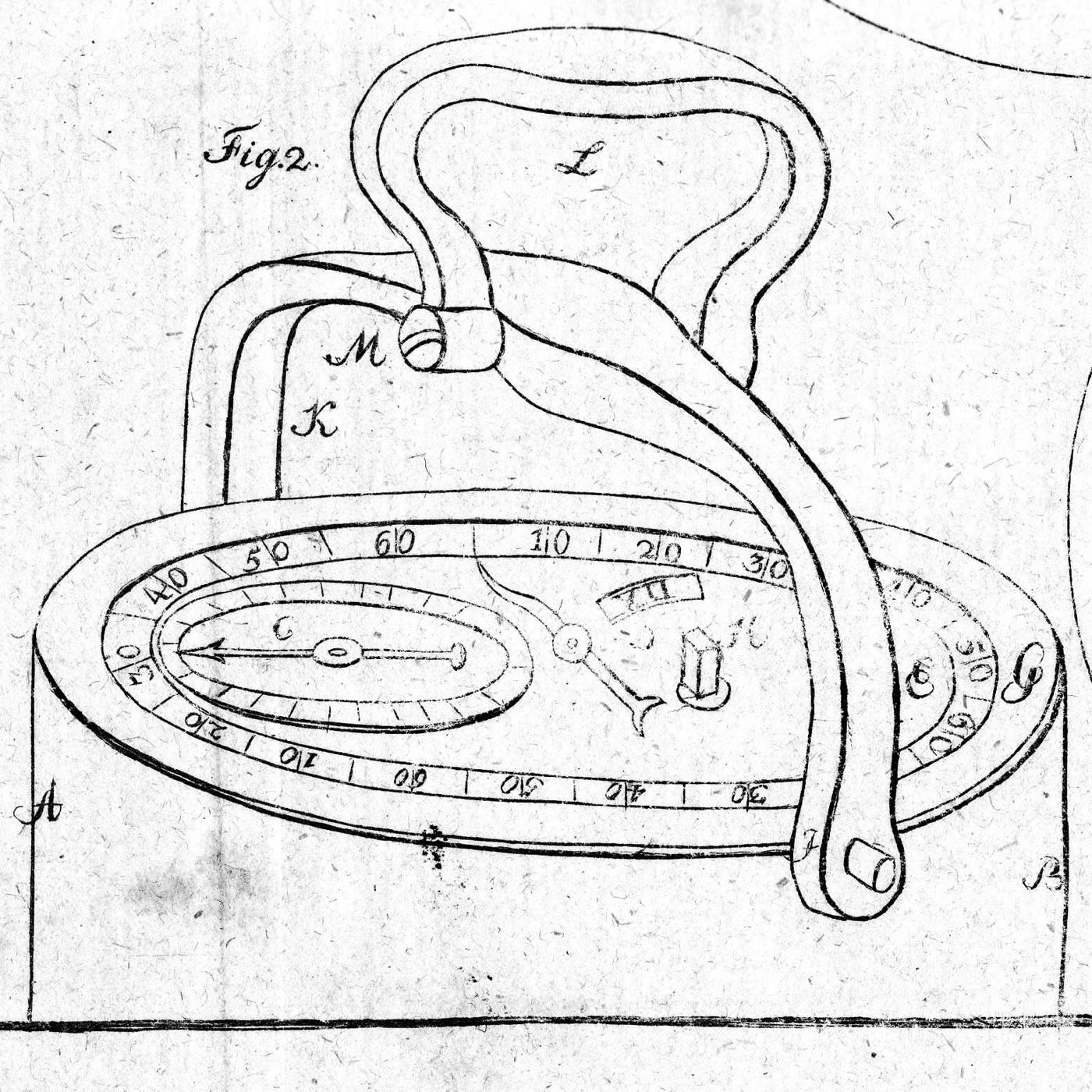
On 1 April 1770 he became clockmaker-mechanic to the King and the Navy, with a pension of 3,000 livres, the inspection of marine clock construction and an order for 20 sea clocks.1, 2, 3
Wikipedia records that his clocks went with the great expeditions: five sailed with Lapérouse in 1785 and were lost in the wreck at Vanikoro; four went with d’Entrecasteaux in 1791.2
His workshop was a family enterprise: his nephews Jean-Henry, who ran it, and Pierre-Louis (Louis), who came from Couvet in 1769, both joined him in Paris.5, 8
Later years and legacy
After the Revolution he lived at the Louvre on a state pension, was elected to the Institut national in 1795 and made a knight of the Légion d'honneur in 1804.1, 2
His marine clocks survive in public collections, among them no. 11 in the Musée des arts et métiers in Paris and no. 12 of 1774 in the Musée international d'horlogerie at La Chaux-de-Fonds.6
The French Wikipedia records that he died childless and that Louis Berthoud’s sons continued as ‘Berthoud Frères’. The name was revived as a watch brand owned by Chopard from 2007.3
Key dates
- 1753
Made a master by royal favour.2, 3
- 1763
Publishes the Essai sur l’horlogerie; goes to London to see Harrison’s H4.1, 2
- 1768
Sea clocks nos. 6 and 8 tried on the Isis (to 1769).2, 6
- 1770
Clockmaker-mechanic to the King and the Navy.1, 2
- 1773
Traité des horloges marines.1, 2
- 1795
Elected to the Institut national.2, 3
Where Ferdinand Berthoud leads
- Developed, TechnologyThe marine chronometer
His sea clocks were tried at sea in 1768-69 and supplied to the French Navy.2, 6
- Based in, PlaceParis
Worked in Paris from 1745, and after the Revolution lived at the Louvre.1, 2
- Part of, HistoryFrance and the science of horology
The Neuchâtel-born maker who wrote the trade’s treatises and built the French Navy’s sea clocks.1, 2
- See also, PersonJohn Harrison
Sent by the King to London in 1763 to examine Harrison’s H4, which Harrison would not show him.2, 3
- See also, PlaceLa Chaux-de-Fonds and Le Locle
The Musée international d'horlogerie says it has held Berthoud's marine chronometer No. 12 of 1774 since 1902.9
- See also, PlaceThe Jura Arc
Born and trained in the Val-de-Travers, Principality of Neuchâtel.1, 5
Facts and sources
- Born
- 18 March 1727, Plancemont (Couvet), Principality of Neuchâtel1, 2
- Died
- 20 June 1807, Groslay (Val-d'Oise)1, 2
- Worked in
- Paris, from 17451
Sources
Sources read November 11, 2026.