Paris
The capital of French watchmaking in the eighteenth century: a guild trade clustered on the Île de la Cité around the Quai de l’Horloge, under royal patronage and beside the Académie des sciences, the Observatory and the Bureau des Longitudes.
In the history France and the science of horology
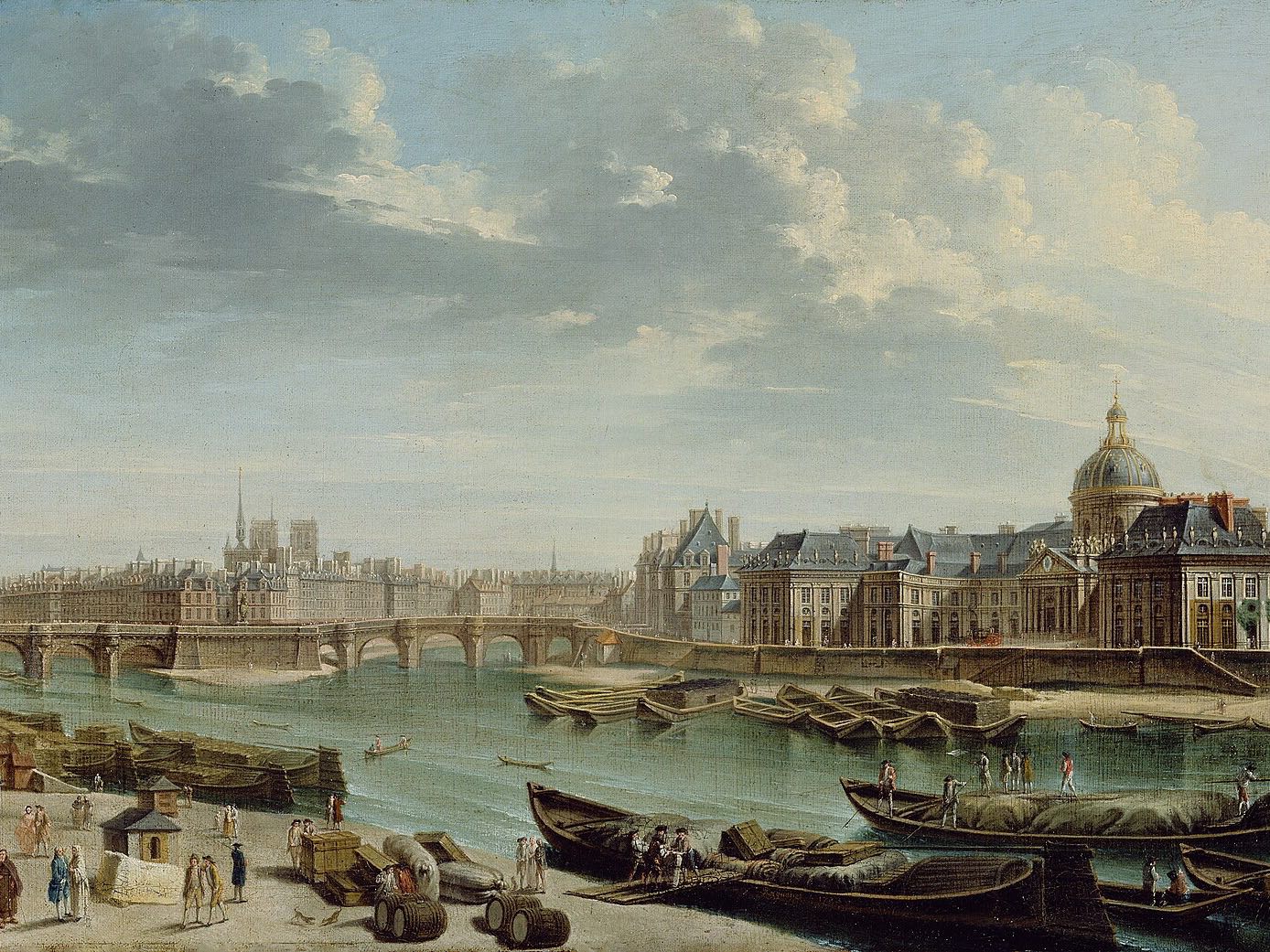
The Quai de l’Horloge
The French Wikipedia says the Quai de l’Horloge, built from 1580 with the Pont-Neuf, takes its name from the clock of the Palais de la Cité’s tower.1
Watchmakers, opticians and instrument makers clustered there: Lépine in 1778-79, Breguet at no. 39 from 1775, the opticians Chevalier at no. 31; Julien Le Roy worked nearby in the Rue de Harlay.1, 2, 5
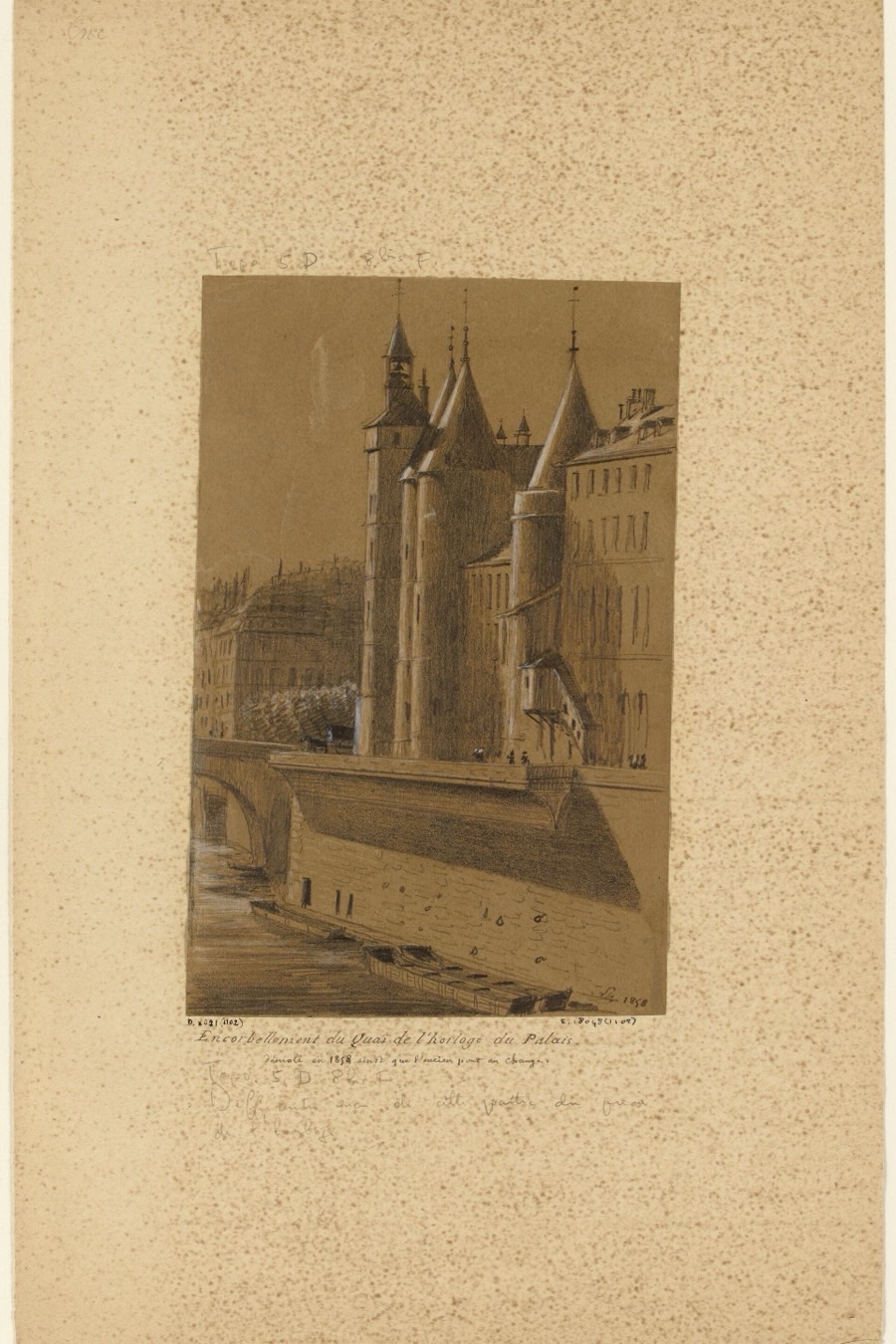
Wikipedia records that Breguet’s firm moved from the quai to the Place de la Bourse and later the Rue de la Paix.7
The French Wikipedia records that under the Second Empire the small houses and shops along the quay gave way to the Cour de cassation, begun in 1861 on a new line of the quay.1
Guild, Crown and Académie
The guild controlled who could become a master; Julien Le Roy was one of its jurés, and Berthoud needed a royal council decision in 1753 to be made master outside its rules.5, 8
Royal patronage gave titles, lodgings and pensions: clockmaker to the King, clockmaker to the Navy, lodgings at the Louvre (Berthoud, and Janvier from 1793).8, 9, 10
The Académie royale des sciences examined and approved inventions and judged disputes over priority, as between Caron and Lepaute.2, 8, 11
The history site Hérodote dates to 2 March 1791 the decree that abolished the guilds; from 1 April anyone could practise a trade.12
Paris was the seat of the scientific institutions that used precision timekeepers: the Observatory, the Bureau des Longitudes (1795) and the Institut.3, 13
Makers and movements from the borders
Many of the leading makers came from outside France or from its borders: Berthoud and Breguet from the Principality of Neuchâtel, Lépine from the Pays de Gex, Janvier from the Jura.10, 14, 15, 16
Parisian makers relied on movements made elsewhere: Lépine's ébauches came largely from Ferney near Geneva, and in 1819 three quarters of Japy's clock ébauches from Badevel were sent to Paris.2, 17
Where Paris leads
- Based here, PersonAbraham-Louis Breguet
Workshop on the Quai de l'Horloge from 1775.1, 18
- Based here, PersonFerdinand Berthoud
Worked in Paris from 1745, and after the Revolution lived at the Louvre.8, 10
- Based here, PersonJean-Antoine Lépine
Worked in Paris from 1744 to 1814.2, 15
- Part of, HistoryFrance and the science of horology
The guild city on the Île de la Cité where the trade, the Académie and the Observatory met.1, 3
- See also, PlaceBlois
The V&A credits Blois makers with work that rivalled Paris under royal patronage.19
- See also, EventThe International Meridian Conference
France abstained and kept Paris mean time as its legal time until 1911; the time conference of 1912 met at the Paris Observatory.20, 21, 22
Facts and sources
- Watch quarter
- Île de la Cité (Quai de l'Horloge, Place Dauphine), the Louvre, later Place des Victoires and Place de la Bourse1, 2, 7
Sources
- 1
- 2
- 3
Décret du 7 messidor an III créant le Bureau des longitudes (opens in a new tab)
- 4
A View of Paris with the Île de la Cité, Raguenet, 1763 (Getty Museum). (opens in a new tab)
- 5
- 6
- 7
- 8
- 9
- 10
- 11
- 12
2 mars 1791: le décret d'Allarde abolit les corporations (opens in a new tab)
- 13
- 14
- 15
- 16
- 17
L'horlogerie du Pays de Montbéliard (dossier IA25001992) (opens in a new tab)
- 18
- 19
Carriage watch, Nicolas Lemaindre, Blois, 1630 (2366-1855) (opens in a new tab)
- 20
- 21
Standardisation of time and accurate determination of exact time (opens in a new tab)
- 22
History of the Bureau International de l'Heure (opens in a new tab)
Sources read November 12, 2026.