La Chaux-de-Fonds and Le Locle
Two neighbouring watch towns in the Neuchâtel mountains, rebuilt after fires on plans of long parallel strips where homes and workshops stood side by side, inscribed together by UNESCO in 2009 as watchmaking town planning.
Switzerland, Canton of Neuchâtel, in the high valleys of the Jura near the French border
Within The Jura Arc
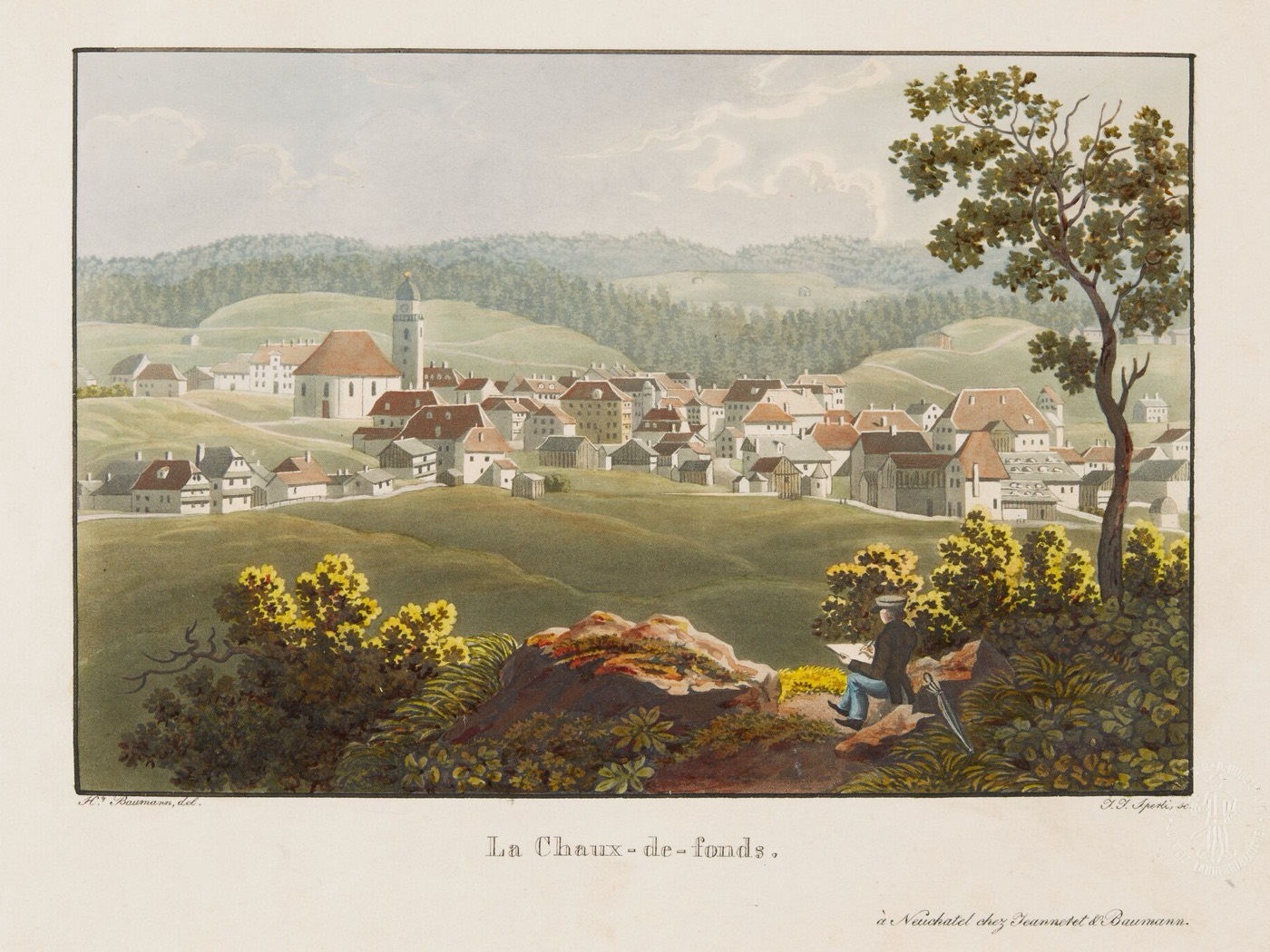
Why here? A trade for mountain winters
Both towns lie in long, high valleys of the Jura near the French border, La Chaux-de-Fonds at nearly 1,000 metres and Le Locle at 946. Farmers cleared the land late, from the 14th to the 16th century, and lived by raising livestock; UNESCO describes the ground as ill-suited to farming.1, 3, 4
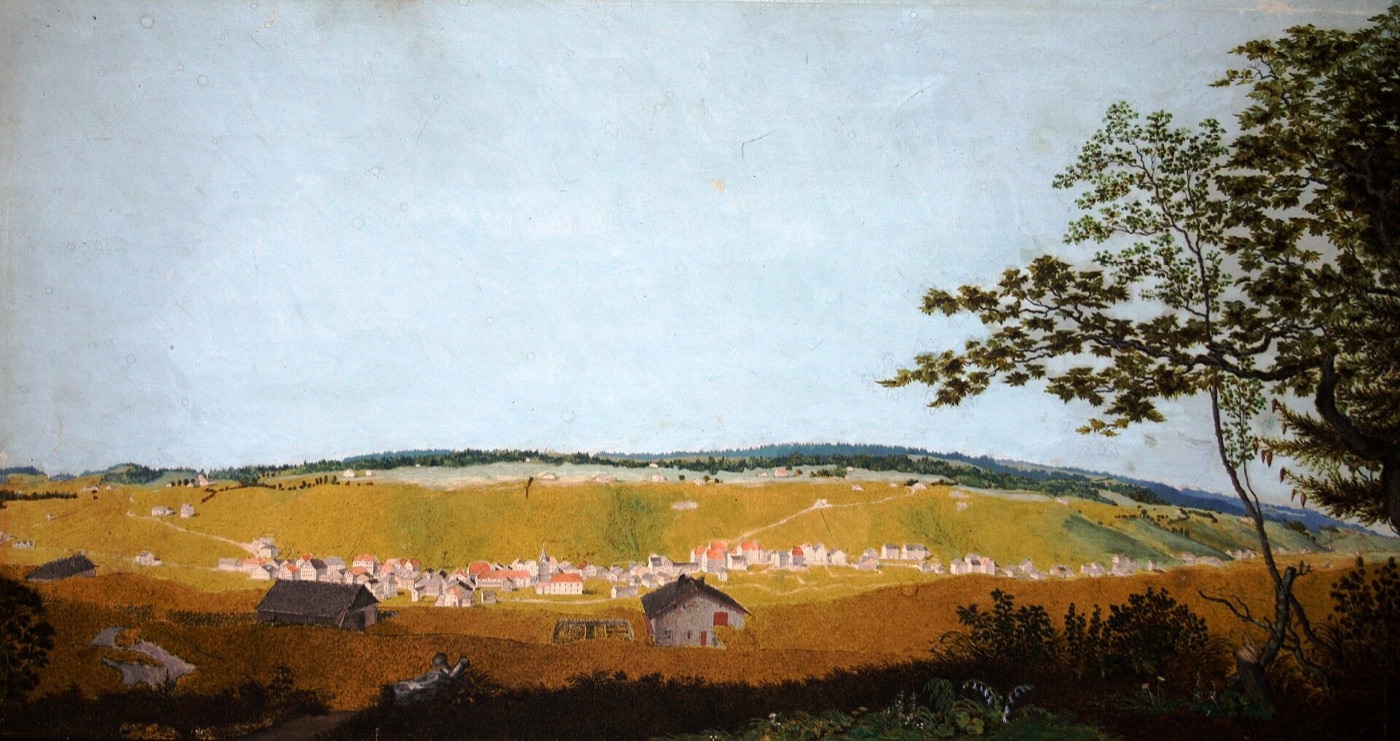
The Historical Dictionary of Switzerland says watchmaking spread along the Jura from Geneva in the 18th century to supplement farm work. The mountains had no mines, but their smiths, locksmiths and gunsmiths already worked metal, and a liberal setting drew workers from Geneva and the Franche-Comté.3
The farmhouse suited the work, ICOMOS notes: it needed a room, good light and the time the long winters left free. Country workers each made one part; an établisseur collected the parts, assembled the movement and finished it, or sold it to watchmakers in Geneva or Paris. The Historical Dictionary dates this établissage system in La Chaux-de-Fonds to the early 18th century.2, 3
How it began is contested. A late-18th-century account, quoted by French Wikipedia, has the young Daniel JeanRichard mend an English watch brought home by a horse dealer in 1679 and then teach himself to make one, and the Federation of the Swiss Watch Industry still names him the pioneer of the trade at Le Locle. The Historical Dictionary says the legend that made him the founder of Neuchâtel, even Swiss, watchmaking arose in the 1830s and 1840s, and that his real achievement was a family workshop at Les Petits-Monts near Le Locle, equipped with Geneva's tools and know-how; ICOMOS calls him semi-legendary.2, 7, 8, 9
The trade grew fast. Around 1750 La Chaux-de-Fonds counted 68 clockmakers and Le Locle about eighty watchmakers by an official census; the district had some 800 by 1800. Watchmaking pushed aside lace-making, which in La Chaux-de-Fonds fell from about 500 lacemakers in the mid-18th century to 300 around 1800.3, 4, 9
What grew here: towns built for one trade
Fire gave the chance to plan. After the fire of 1794 La Chaux-de-Fonds was rebuilt quickly, at the urging of the engraver Moïse Perret-Gentil and with the State Council's help, to a plan that is still the core of the town.2, 3
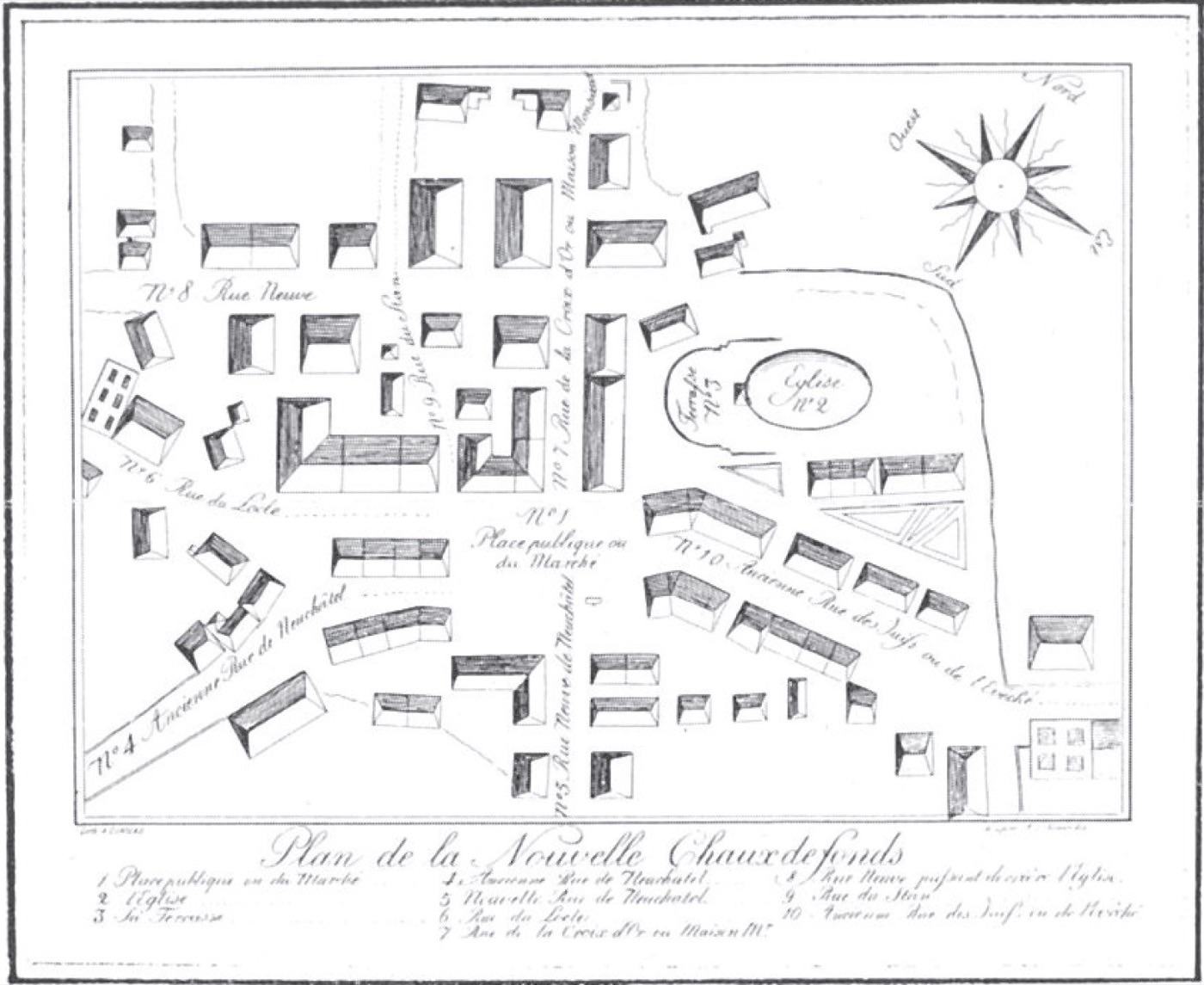
In 1835 Charles-Henri Junod, engineer of the cantonal roads and bridges, laid out the extension of La Chaux-de-Fonds along the valley and the main road in a chequerboard of straight alignments. Le Locle, burnt in 1683, 1765 and 1833 by the Historical Dictionary's list (ICOMOS also names a fire in 1844), took its present shape in the second quarter of the 19th century, and ICOMOS associates Junod with the replanning of both towns.2, 3, 4
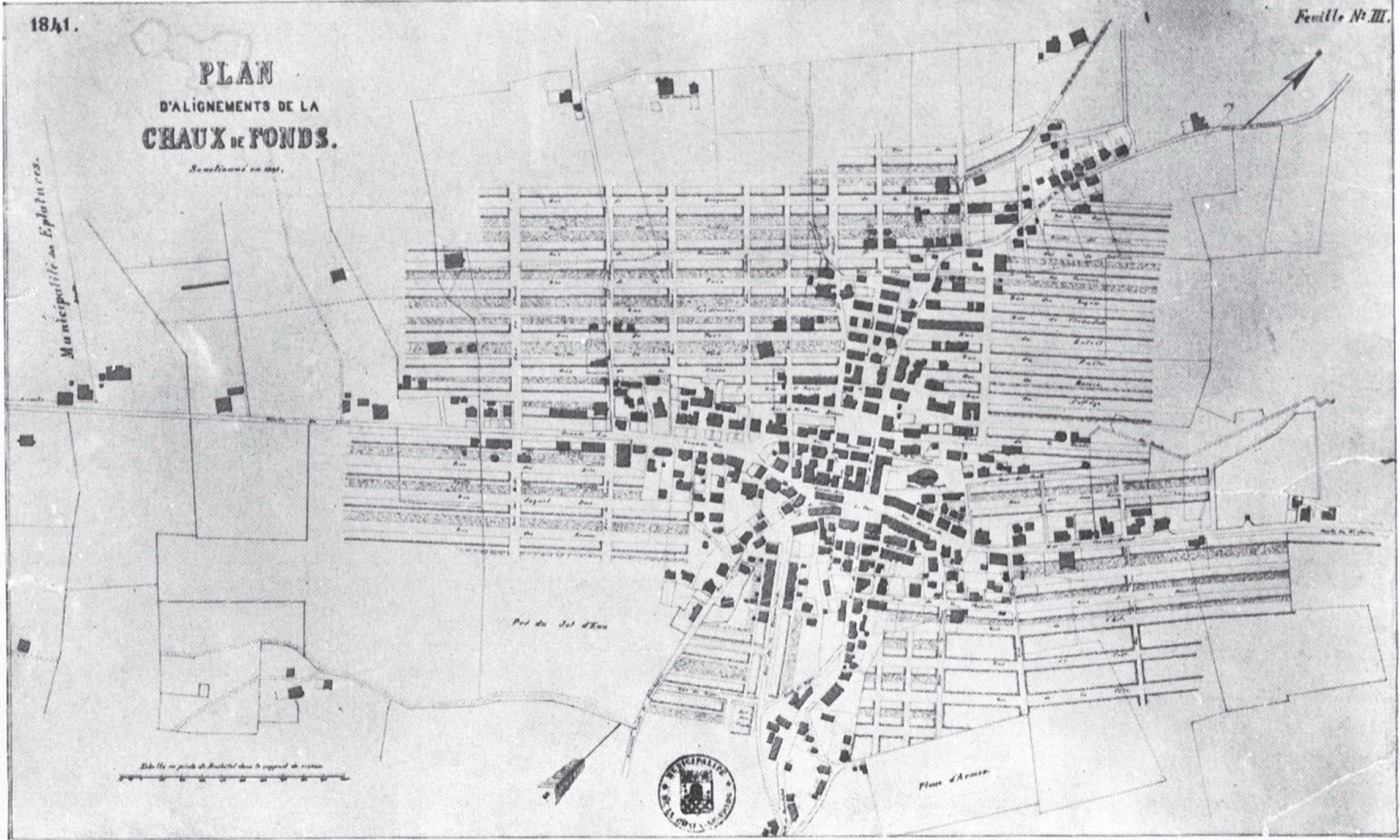
The plans set long parallel strips, open at their ends, with homes and workshops side by side. ICOMOS describes the typical house as sober, two or three storeys high and built for light, holding several families of worker-craftsmen and their workshop rooms; in 1870, it says, some 90 per cent of the Swiss watch workforce still worked at home.1, 2
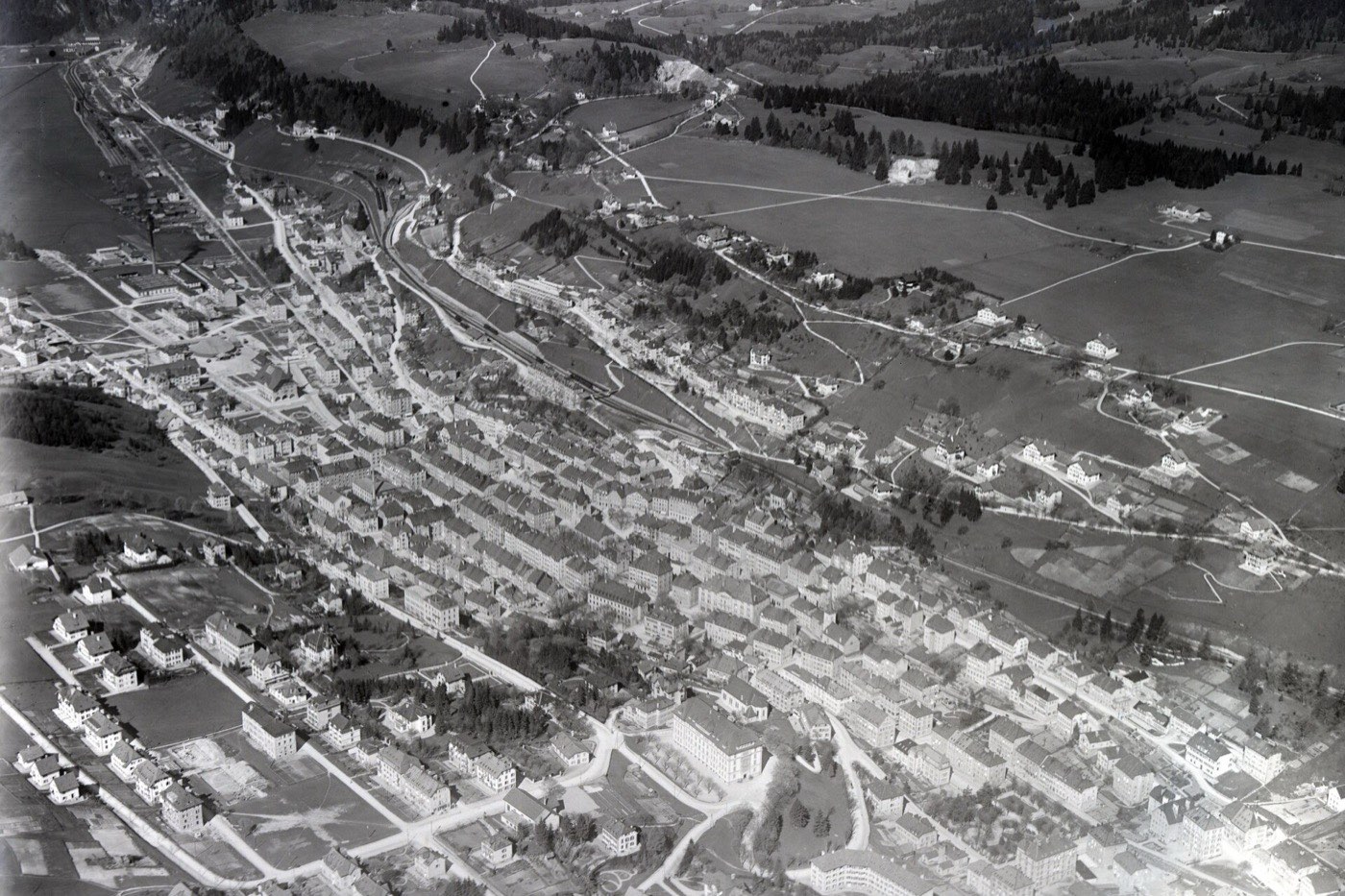
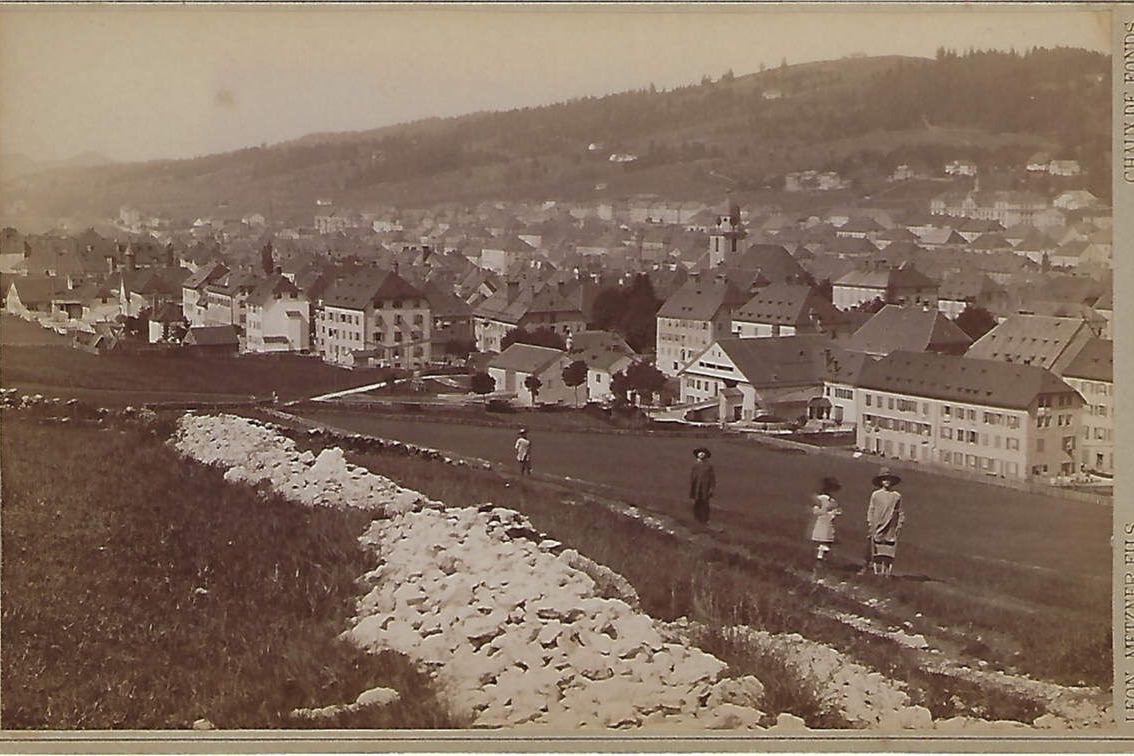
La Chaux-de-Fonds tripled its population between 1850 and 1910, to 37,751, mostly with Swiss migrants from the canton of Bern; in 1880 30 per cent declared German their language. In 1870 watchmaking employed 4,505 of its 8,954 working people, and Karl Marx, analysing the division of labour in Das Kapital, described the town as one great watch manufactory.1, 2, 3
The trades kept dividing: the industrial census of 1867 counted fifty-four watchmaking professions in La Chaux-de-Fonds. The towns built the institutions to match: an assay office for precious metals in 1819, watch schools at La Chaux-de-Fonds (1865) and Le Locle (1868, the base of its technicum of 1901-02), and in 1900 the Swiss Chamber of Watchmaking, which opened at La Chaux-de-Fonds.3, 4, 14, 15
Factories came in the last quarter of the 19th century. Georges Favre-Jacot founded his watch factory at Le Locle in 1865; named Zenith after a movement of 1905, it employed 291 people in 1882 and 1,200 in 1914. Machine production brought makers of machine tools and parts such as Dixi, and both Zenith and Dixi made armaments in the two world wars.4, 16
Who and what moved through
The French Revolution carried the trade across the border. After the repression of spring 1793 several hundred people left Le Locle for Besançon, drawn by the national watch factory created by the Convention, and more than 1,800 Swiss watchmakers arrived there between September 1793 and September 1795.3, 4
Le Locle's makers became known for precision. The Historical Dictionary names Abraham-Louis Perrelet, Jacques-Frédéric Houriet, Frédéric-Louis Favre-Bulle and David-Henri Grandjean, and says the town was known in the 19th century for pocket and marine chronometers; Ulysse Nardin says its founder set up in his family's attic there in 1846 and competed in the chronometry trials of the Neuchâtel observatory.4, 17
American factories forced the next change. ICOMOS points to the Philadelphia exhibition of 1876, which showed standardised interchangeable parts made on machine tools, and says the Neuchâtel mountains answered with integrated factories and larger workshops built inside the existing street grid.2
Firms and capital moved too. Louis Brandt opened an établissage counting-house in La Chaux-de-Fonds in 1848, and in 1880 his sons moved the business to Biel/Bienne, where it became Omega. Tissot of Le Locle joined Omega in 1930 to found the SSIH, which merged with ASUAG in 1983 into today's Swatch Group; Zenith passed to an American buyer in 1972, to Dixi in 1978 and to LVMH in 1999.16, 18, 19, 20, 21
The watch trade's art school, set up to train engravers and jewellers, had Charles L'Eplattenier and Charles-Édouard Jeanneret, later Le Corbusier, among its teachers. From 1909 L'Eplattenier's former students decorated the hall of the Hirsch pavilion at the Neuchâtel observatory in the regional Art Nouveau they called the style sapin.3, 22
What changed because of it
Dependence on one trade cut both ways. The Historical Dictionary records that early in 1933 more than 14,000 people in the canton were out of work, that in 1934 La Chaux-de-Fonds and Le Locle set up an office to bring in new industries such as radio sets, and that in 1941 watchmaking still employed 56 per cent of the working population of La Chaux-de-Fonds.3
The quartz years cut deep: in 1975 La Chaux-de-Fonds lost more than 1,000 inhabitants and over 2,000 jobs, mostly in watchmaking. ICOMOS notes that because rooms had always passed back and forth between home and workshop, the buildings were converted after the crisis of the 1970s without the derelict sites common in industrial towns.2, 3
The watch school's teaching collection, begun in 1865, became the town's watch museum in 1902. Renamed the Musée international d'horlogerie in 1968, it moved in 1974 into a largely underground building by Pierre Zoelly and Georges-Jacques Haefeli, with a restoration centre and a study centre; its collection includes Ferdinand Berthoud's marine chronometer No. 12 of 1774, acquired in 1902.3, 23
Le Locle's watch museum, founded in 1849, opened on 23 May 1959 in the Château des Monts, a house built between 1780 and 1790 for the case-maker Samuel DuBois and bought in 1912 by Georges Ducommun, the founder of Doxa; the town had bought it in 1954.24
In 2009 UNESCO inscribed the two towns together as "La Chaux-de-Fonds / Le Locle, Watchmaking Town Planning": towns built around a single industry, well preserved and still at work. ICOMOS set them against watch towns that never had an overall plan, among them Besançon in France and Waltham and Elgin in the United States, and the Historical Dictionary records that Rolex also has a factory at Le Locle.1, 2, 25
Key dates
- 1750
Le Locle counts about eighty watchmakers by an official census.4, 9
- 1793
Several hundred people leave Le Locle for the national watch factory at Besançon.3, 4
- 1794
Fire destroys much of La Chaux-de-Fonds; it is rebuilt to a plan.2, 3
- 1835
Charles-Henri Junod plans the grid extension of La Chaux-de-Fonds.2, 3
- 1848
Louis Brandt opens his établissage business in La Chaux-de-Fonds, the beginning of Omega.18, 26
- 1865
La Chaux-de-Fonds opens its watch school; Georges Favre-Jacot founds his factory at Le Locle.3, 16, 23
- 1870
Watchmaking employs 4,505 of La Chaux-de-Fonds's 8,954 working people.2, 3
- 1900
The Swiss Chamber of Watchmaking opens at La Chaux-de-Fonds.3, 15
- 1959
Le Locle's watch museum opens in the Château des Monts.24
- 1974
The Musée international d'horlogerie opens its new building in La Chaux-de-Fonds.3, 23
- 2009
UNESCO inscribes the two towns as World Heritage for their watchmaking town planning.1, 2
Where La Chaux-de-Fonds and Le Locle lead
- Based here, CompanyZenith
Zenith has worked at Le Locle since Georges Favre-Jacot founded his watch factory there in 1865.4, 16
- Part of, HistoryCrisis, consolidation and the groups
The Historical Dictionary records that La Chaux-de-Fonds lost more than 2,000 jobs in 1975, mostly in watchmaking.3
- Part of, HistoryMaking watches today
ICOMOS describes the towns' watchmaking as a living tradition, still practised at an internationally recognised level.2
- Part of, HistorySwitzerland’s network of specialists
The Jura's specialist system in stone: établissage, fifty-four watch trades and grid plans mixing homes and workshops.1, 2, 14
- See also, CompanyOmega
Louis Brandt opened an établissage counting-house in La Chaux-de-Fonds in 1848, the business that became Omega.18, 26
- See also, PersonFerdinand Berthoud
The Musée international d'horlogerie says it has held Berthoud's marine chronometer No. 12 of 1774 since 1902.23
- See also, PersonGeorges Favre-Jacot
He founded his watch factory at Le Locle in 1865, the start of Zenith.4, 16
- See also, PlaceBesançon
Several hundred people left Le Locle for Besançon's national watch factory after the repression of 1793.3, 4
- See also, PlaceBiel/Bienne
Louis Brandt's business began in La Chaux-de-Fonds in 1848 and moved to Biel in 1880, where it became Omega.18, 19
- See also, PlaceClerkenwell
The Historical Dictionary of Switzerland says Ingold, defeated in London, worked at La Chaux-de-Fonds from 1858 and died there.27
- See also, PlaceNeuchâtel
French Wikipedia says the Neuchâtel observatory sent the time by telegraph to La Chaux-de-Fonds and Le Locle from 1860.22
- See also, TechnologyÉtablissage
ICOMOS describes rural specialists making single parts for an établisseur, the system the towns were built around.2, 3
- See also, EventThe Philadelphia Centennial Exhibition
Favre-Perret, the Swiss juror, was from Le Locle; ICOMOS ties the factories built in the two towns to the lesson of Philadelphia.2, 28
Facts and sources
- Country
- Switzerland1, 3
- Region
- Canton of Neuchâtel, in the high valleys of the Jura near the French border1, 3, 4
- Watchmaking
- From the late 17th century; replanned after the fires of 1794 (La Chaux-de-Fonds) and 1833 (Le Locle)2, 3, 4
- World Heritage
- Inscribed in 2009 as watchmaking town planning1, 2
Sources
- 1
La Chaux-de-Fonds / Le Locle, Watchmaking Town Planning (opens in a new tab)
- 2
La Chaux-de-Fonds / Le Locle (Switzerland), No 1302: ICOMOS evaluation (opens in a new tab)
- 3
- 4
- 5
- 6
Le Locle seen from the south, about 1800, by Henri Courvoisier-Voisin. (opens in a new tab)
- 7
- 8
Watchmakers' and Inventors' Hall of Fame: Daniel Jeanrichard (opens in a new tab)
- 9
- 10
- 11
Charles-Henri Junod's alignment plan of La Chaux-de-Fonds, 1841. (opens in a new tab)
- 12
- 13
La Chaux-de-Fonds, about 1880, photographed by Léon Metzner. (opens in a new tab)
- 14
- 15
- 16
- 17
- 18
- 19
- 20
- 21
- 22
- 23
- 24
- 25
- 26
- 27
- 28
Sources read November 12, 2026.