Interchangeable parts
The method behind the American watch: parts made on special machines to a model and master gauges, so that any part fits any watch of the kind. Borrowed from arms making at the Springfield Armory, proved at Waltham in the 1850s, and studied by the Swiss after 1876.
Introduced 1850s, at Roxbury and Waltham, Arms making at the Springfield Armory
Developed by Waltham
In the history America industrializes the watch
From the armory
Wikipedia’s account describes the American system of watch manufacture as a set of methods taken from armory practice: interchangeable parts, a machine shop and quality control by gauge.2
Aaron Dennison took the idea from the Springfield Armory, where firearms were made from identical parts. From arms making the watch firm took a tight organisation, a central machine shop and a system based on models.1, 2
How it worked
Waltham made a model watch and a master set of gauges, and every part made afterwards was measured against the matching part of the model.1
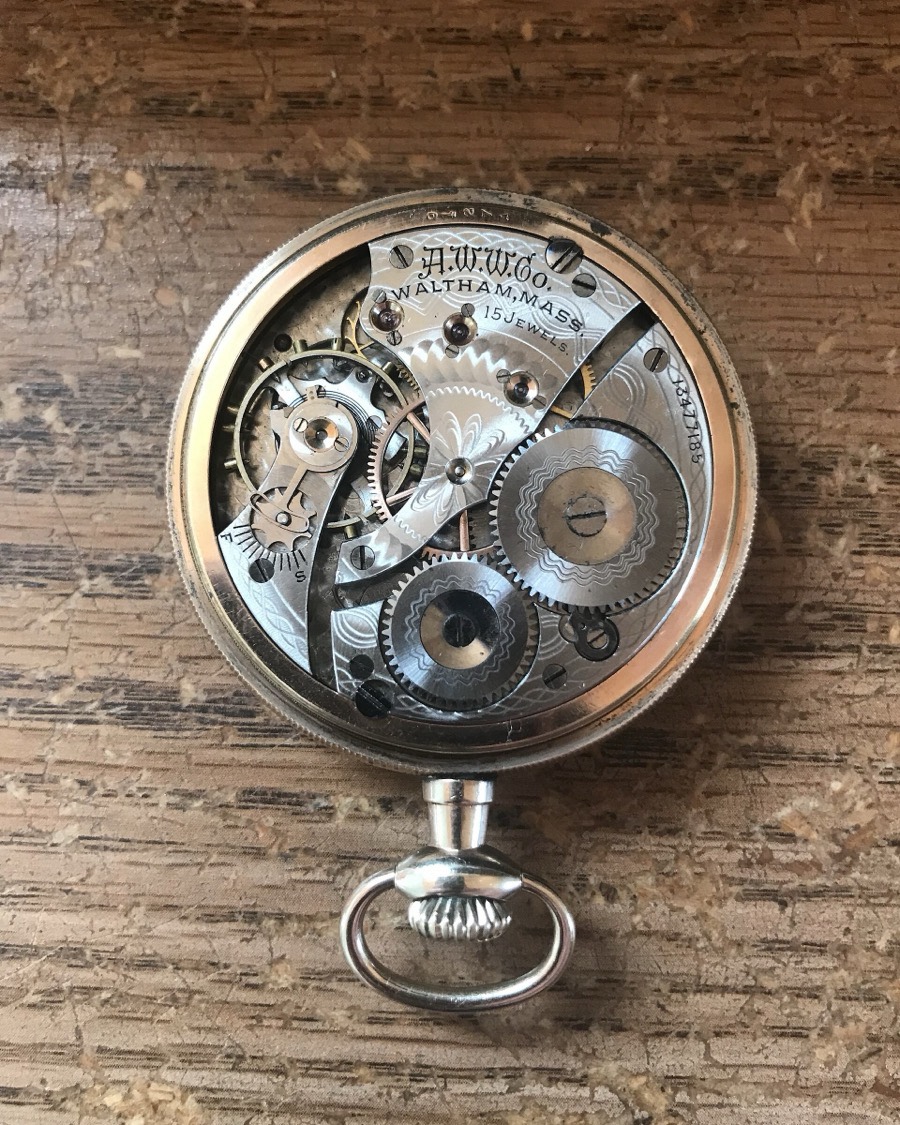
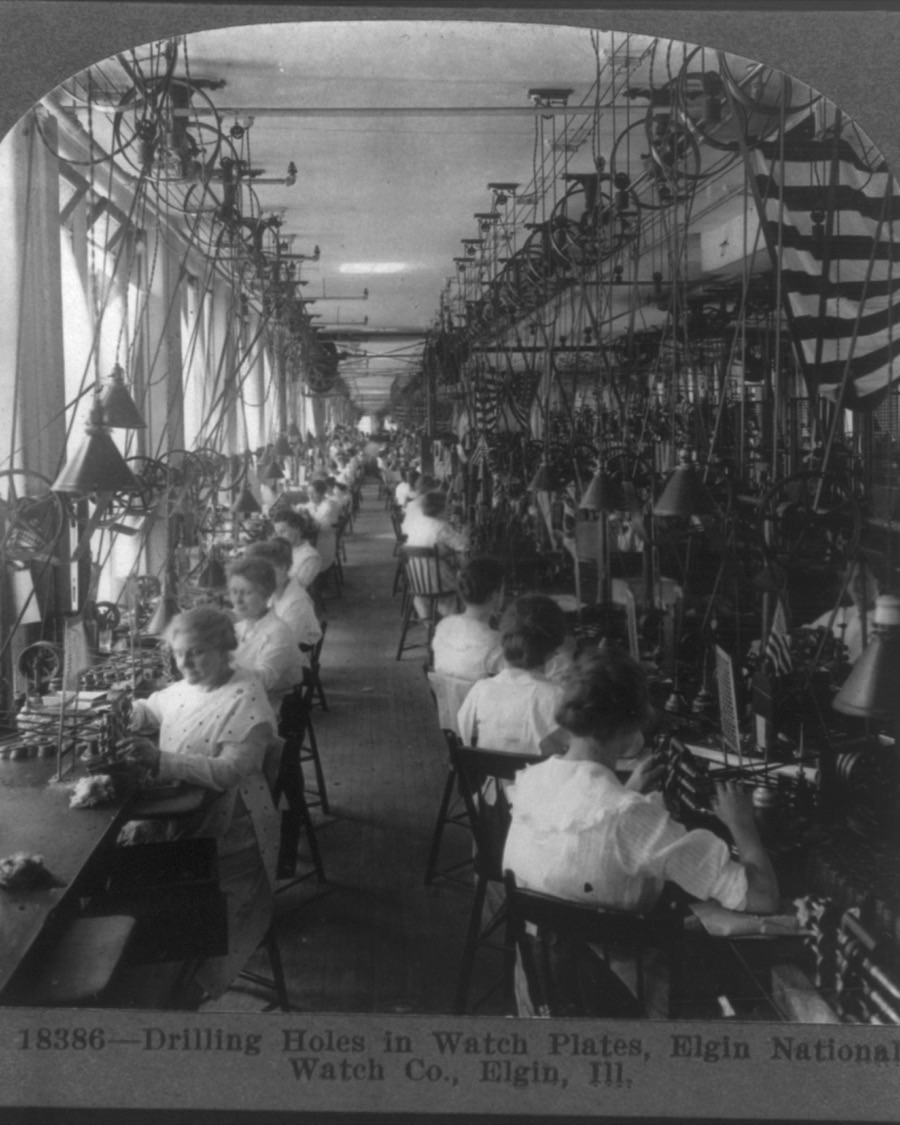
Its makers built specialised machines for each part and organised the work in a factory to speed production and cut costs. A simpler design helped: one mainspring in a going barrel, without fusee and chain, meant fewer parts.1
The Pitkin brothers in Hartford had made watches with interchangeable parts between 1838 and 1845, before Waltham.2, 5
According to Wikipedia’s account, parts were sorted by size, the closest-fitting going into the highest grades, and the tooling was enormous: Elgin used almost two drill bits for every watch it made.2
Its limits
In practice parts were not always interchangeable: early machining left errors that had to be fitted by hand, and the machining improved over time.2, 6
Watkins records that Jacques David, who studied the factories in 1876, used a strict definition, found jewels and pivots treated as unique, and saw that factories kept a record of every movement so a repairer could order an exact part by its number.6
Wikipedia’s account says labour remained the main cost, about 80 per cent of the cost of a watch in 1910 by one estimate, and that the know-how spread from Waltham to Elgin and on to dozens of other makers.2
To Switzerland
David told the Swiss to adopt American methods. Watkins says that the warning was heeded and the Swiss industry moved from the bench to the factory.6
Key dates
- 1838
The Pitkin brothers’ movement at Hartford.2, 5
- 1849
Dennison and Howard begin designing machines and watches at Roxbury.1
- 1852
The opening seventeen watches are finished.1
- 1854
Production moves to Waltham.7
- 1876
Waltham shows automatic screw machines at Philadelphia; David studies the factories.6, 8
Where Interchangeable parts leads
- Developed by, CompanyWaltham
Waltham’s makers built watches from parts made on special machines and checked against master gauges.1
- Part of, HistoryAmerica industrializes the watch
Machine-made interchangeable parts are the method at the centre of the American industry.1, 2
- See also, HistoryBritain’s watch industry
Davies argues the Lancashire Watch Company and Rotherham’s took up only part of the American system of machine-made parts.9
- See also, CompanyJunghans
A worker’s memoir quoted by the Deutsches Uhrenmuseum says Junghans assembly in the 1890s depended on standardised parts put together in jigs.10
- See also, PlaceSchaffhausen
Jones's plan, by IWC's account, was to make Swiss watches with American machinery.11
- See also, PlaceWaltham, Massachusetts
The Library of Congress survey says the Waltham factory introduced interchangeable parts to a civilian industry and spurred other watch and tool firms around the town.7
- See also, ObjectThe American Watch Company prototype
Made while the firm built its model watch and master gauges, against which every later part was measured.1
- See also, EventThe Philadelphia Centennial Exhibition
Favre-Perret reports that tests in Switzerland found Waltham’s parts interchangeable only up to a point.12
Facts and sources
- Introduced in watches
- 1850s, at Roxbury and Waltham1, 2
- From
- Arms making at the Springfield Armory1, 2
Sources
- 1
American Watch Company Prototype (NMAH 1204764) (opens in a new tab)
- 2
- 3
- 4
Movement of a Waltham Model 1898 pocket watch. (opens in a new tab)
- 5
- 6
- 7
- 8
- 9
- 10
Junghans in den 1890er Jahren. Ein Arbeiter berichtet (opens in a new tab)
- 11
- 12
Sources read November 12, 2026.