Histories, Era III, The industrial watch
America industrializes the watch
1850 to 1930
How the United States turned watchmaking into machine production: Aaron Dennison and Edward Howard’s venture near Boston, the Waltham factory and its gauges, Elgin and the railroad watch, the dollar watch, the Swiss shock at Philadelphia in 1876, and the long decline that ended with Hamilton’s electric watch and the move abroad.

In short
In the 1850s a small company near Boston began making watches by machine, from parts so alike that any one would fit any watch of its kind. American factories went on to supply the railroads, which needed exact time, and buyers who wanted a watch for a dollar. The Swiss came to study them in 1876 and changed their own industry; by the middle of the twentieth century the great American makers had faded.1, 2, 3, 4, 5, 8, 9, 10, 13, 14, 15, 19, 22, 23, 25, 31, 32
Part 1
A country that bought its watches
In the decades before 1850 the United States imported most of its watches, chiefly from England and Switzerland; the Smithsonian puts imports between 1825 and 1858 at about $46 million.1
Before the 1850s probably no more than about two thousand watches had been made in the country. There had been attempts: the Pitkin brothers of Hartford, Connecticut, finished a movement in 1838 and made some 800 to 900 watches by 1845.1, 4, 7
Part 2
Roxbury and Waltham
The venture that became the Waltham company began in 1849–50 in a corner of the Howard & Davis clock factory in Roxbury, near Boston, where Edward Howard and Aaron Lufkin Dennison worked on new watch designs and the machines to make them. The money came from Howard’s father-in-law, the Boston mirror maker Samuel Curtis.1, 2, 3
Dennison had seen firearms made with interchangeable parts at the Springfield Armory, and the watch firm borrowed the armory’s tight organisation, its machine shop and its reliance on models and gauges. That is the method this site calls interchangeable parts.1, 4
The Smithsonian describes the Waltham makers as developing the world’s first machine-made watches in the 1850s; Abbott’s history of 1888 gives that title, for America, to the Pitkins’ watch of 1838.1, 7
The opening batch of seventeen watches, finished late in 1852, was still largely made by hand. The design was then simplified, to one mainspring in a going barrel without the fusee and chain of English watches, and a later batch of nine hundred sold for $40 each, cased, about half the price of an imported movement of the same quality.1
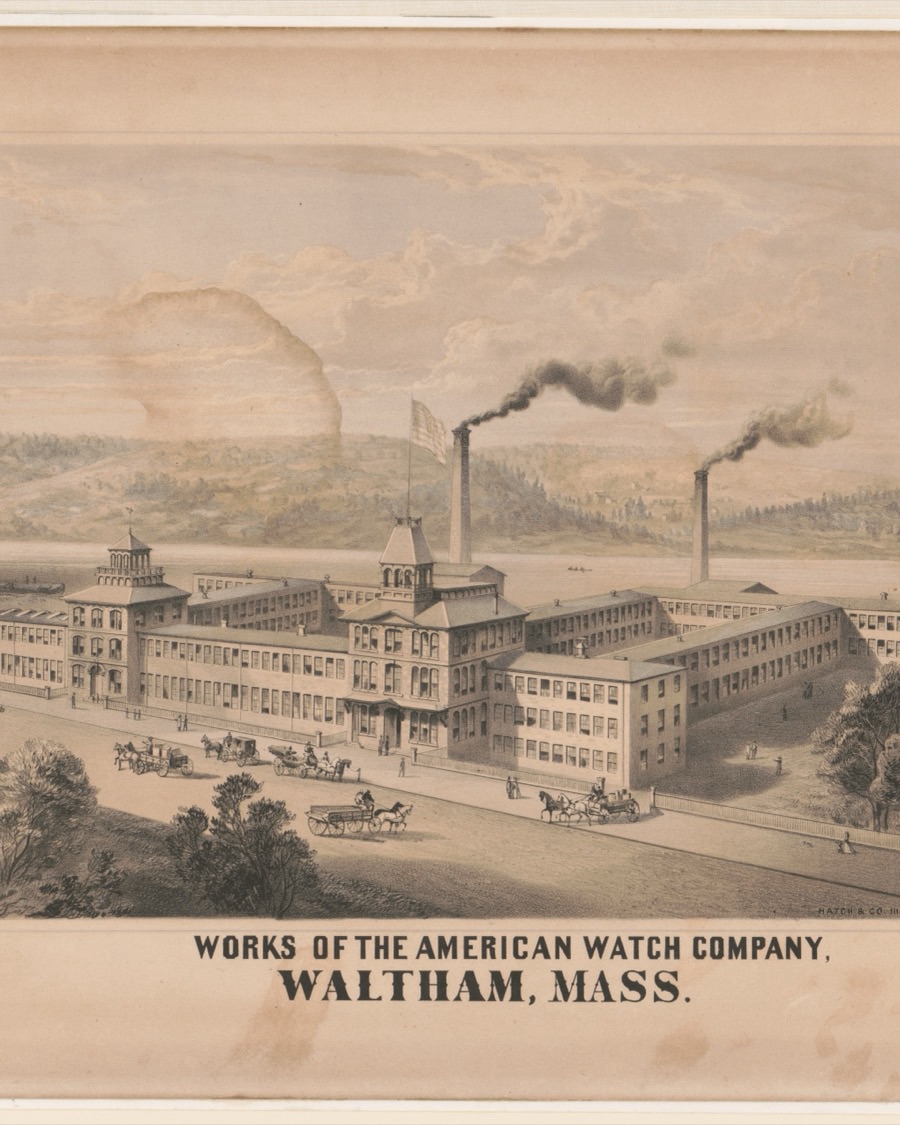
In 1854 the company moved to a new factory at Waltham, Massachusetts; the Library of Congress survey says it went there to escape the dust and vibration that harmed precision work. In 1857 it failed, and Royal E. Robbins bought the Waltham works, under whom it carried on as the American Watch Company and later the American Waltham Watch Company.3, 5, 7, 33, 34
Part 3
The method, and its limits
Interchangeability was never complete. Jacques David, who studied the American factories in 1876, found that they still treated jewels and pivots as unique and kept a record of each movement so they could supply an exact replacement part, according to Richard Watkins’s account of his report.8
The NAWCC says the cost of an American jewelled watch fell from about $40 in 1850 to about $10 by 1880.10
According to Wikipedia’s account of the American system, the know-how spread from Waltham to Elgin and on to dozens of other makers, and labour was still about 80 per cent of the cost of a watch in 1910.4
Elgin, Illinois, became Waltham’s great western rival. The company was incorporated in Chicago in 1864 as the National Watch Company, built its factory at Elgin, and delivered its opening movement, the B. W. Raymond, in 1867.7, 32
Part 4
Philadelphia, 1876
At the Centennial Exhibition in Philadelphia, from May to November 1876, Waltham showed automatic screw-making machinery and the official list of awards names the American Watch Company for its watches, its watch-making machinery and “a system of watch-making”.5, 6, 7, 35
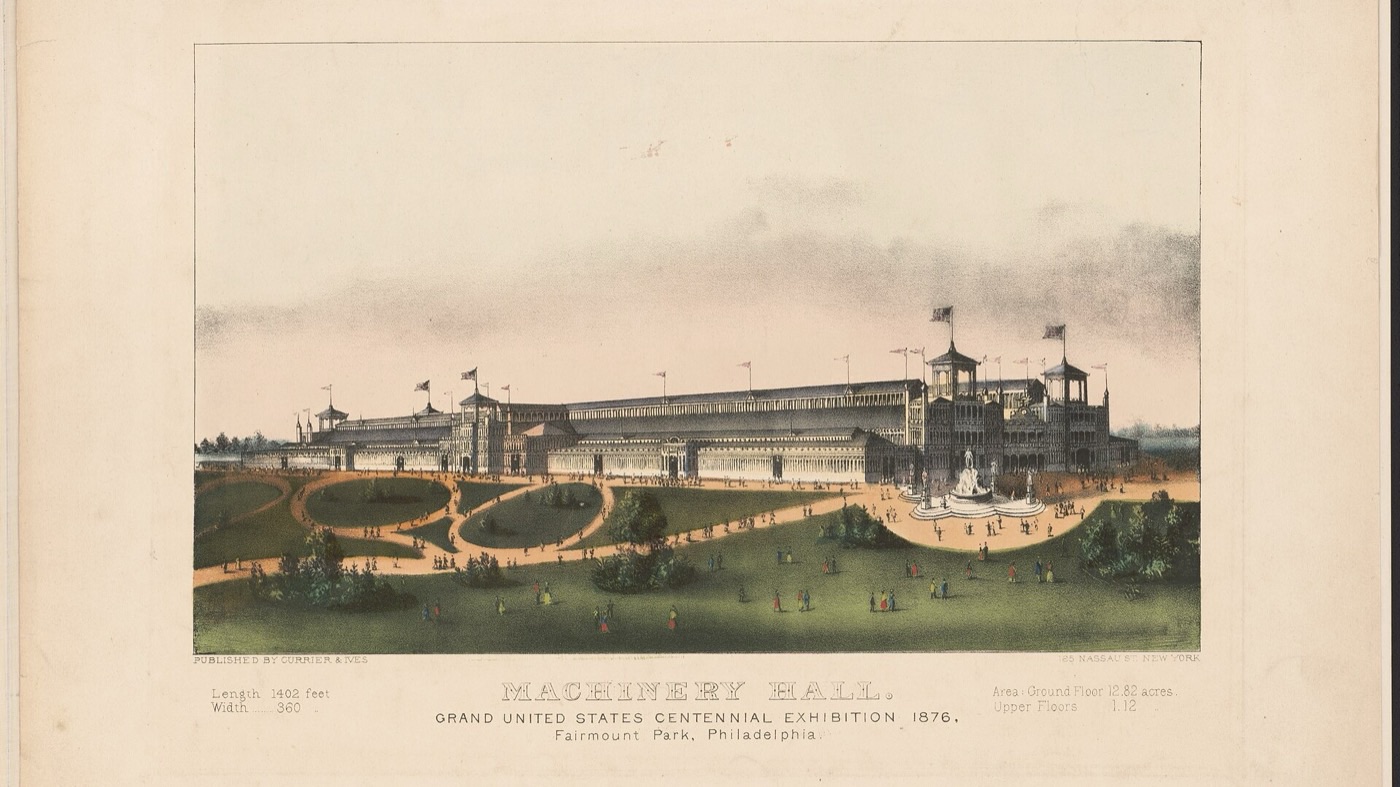
The Swiss were shaken. Watkins records that their delegate Theodore Gribi wrote that they had been left behind by their New World competitors, and that the Intercantonal Society of Jura Industries sent the Longines engineer Jacques David to study the American factories, which he toured with Gribi from mid-August to November 1876.8
David’s long confidential report, presented on 22 January 1877, warned that Swiss watchmaking would be destroyed by American exports unless it adopted American methods, and set out ten recommendations. It was kept from the press and circulated in a few manuscript copies; Longines published a facsimile in 1992.8, 9
Edouard Favre-Perret, a member of the Philadelphia jury for pocket watches, wrote his own report on the exhibition for the Swiss Federal Council, published in 1877. The Swiss response is part of the story of the Jura arc.8, 37
Part 5
Railroad time
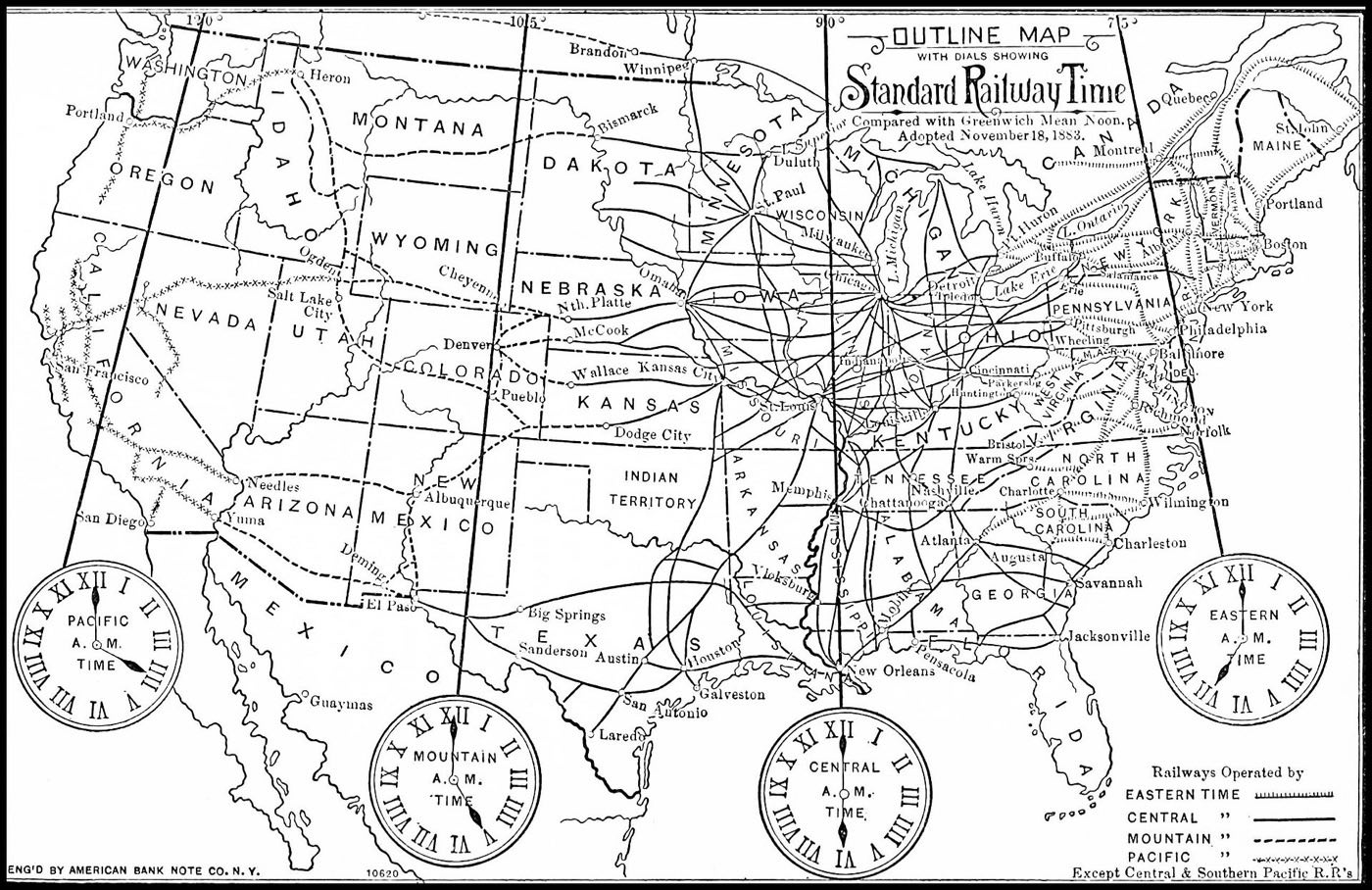
Railroads made precise time a matter of safety. On 18 November 1883 the railroads of the United States and Canada changed to standard time zones, the change told under railroad time.13, 14, 15
Railroads also set rules for the watches their crews carried. After a collision at Kipton, Ohio, in April 1891, the Cleveland jeweller Webb C. Ball became the railroad’s chief time inspector.16, 17, 18, 39
Railroad grade became a selling point. A 1921 advertisement calls Hamilton the railroad timekeeper of America, and a jeweller’s card names Waltham’s Vanguard, Crescent Street and Riverside as standards for railroad service.19, 40, 41
Part 6
The dollar watch
At the other end of the market, the Waterbury Watch Company could sell its long-wind watch for $3.50 by 1880.7, 10, 23
In 1896 the Ingersoll brothers’ Yankee, made for them by the Waterbury Clock Company, sold for one dollar; Wikipedia calls it the first watch priced at a dollar, and an Ingersoll advertisement of 1903 sells it as the Ingersoll Dollar Watch.10, 22, 23, 31
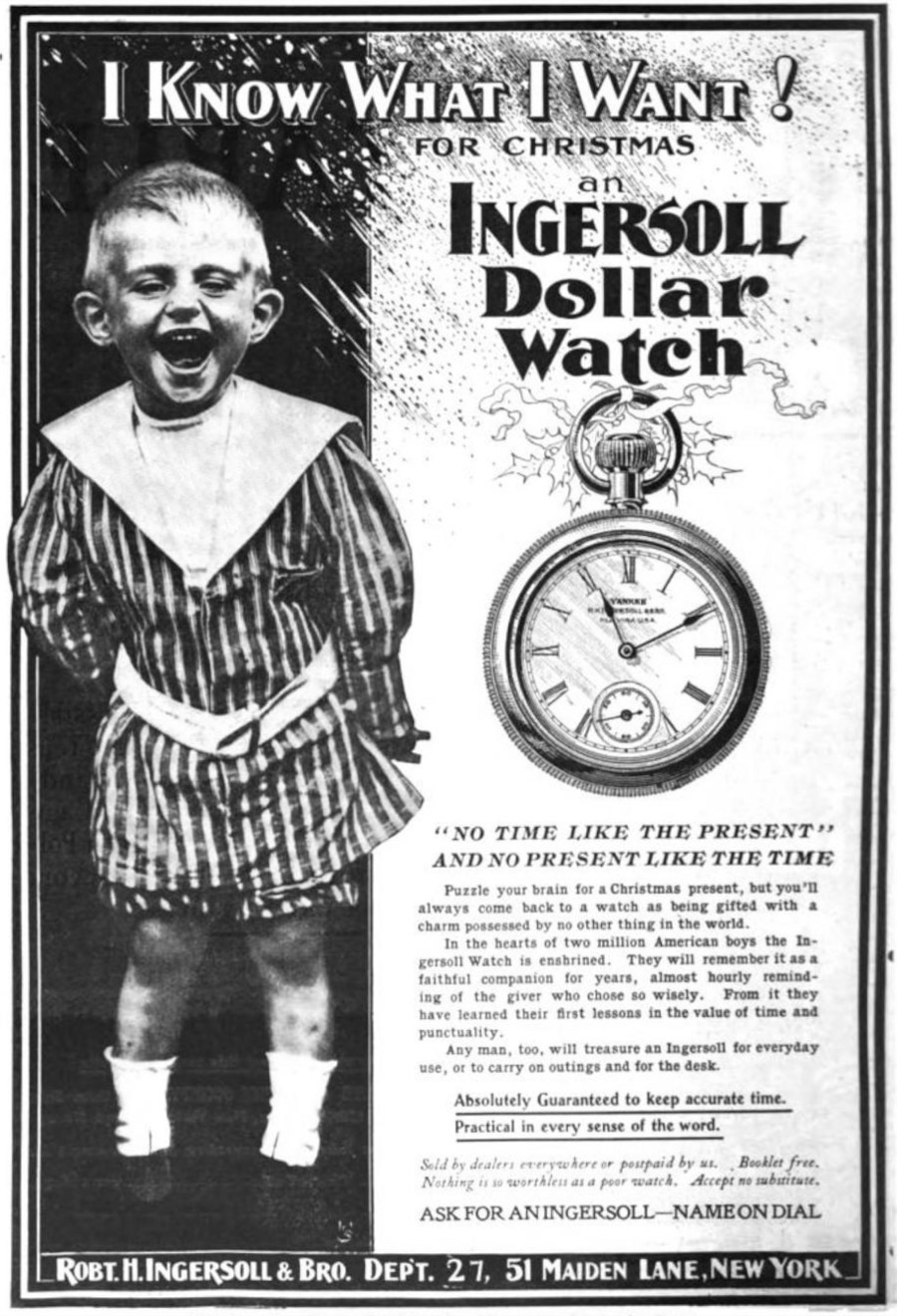
Wikipedia’s account of Ingersoll says Waterbury was making 8,000 of them a day by 1899.22
Part 7
Decline, and a bridge to what came next
The NAWCC dates the American industry’s decline to after 1910, following the recessions of the 1890s, overproduction and a saturated market, and says the Swiss came back into the American market in the 1920s with machine manufacture, modern marketing and the wristwatch, which American makers had neglected.10
The big names faded after the Second World War. Waltham’s factory closed in 1950 and the company left watchmaking in 1957, Elgin ended manufacturing in the United States in 1968, and Hamilton moved movement production to Switzerland in 1969.5, 19, 25, 32
Wikipedia’s accounts say machinery from one failed American maker, Dueber-Hampden of Canton, Ohio, was bought by the Soviet trading company Amtorg in 1930 and shipped to Moscow, with 21 of its workers, to equip a state watch factory.43, 44
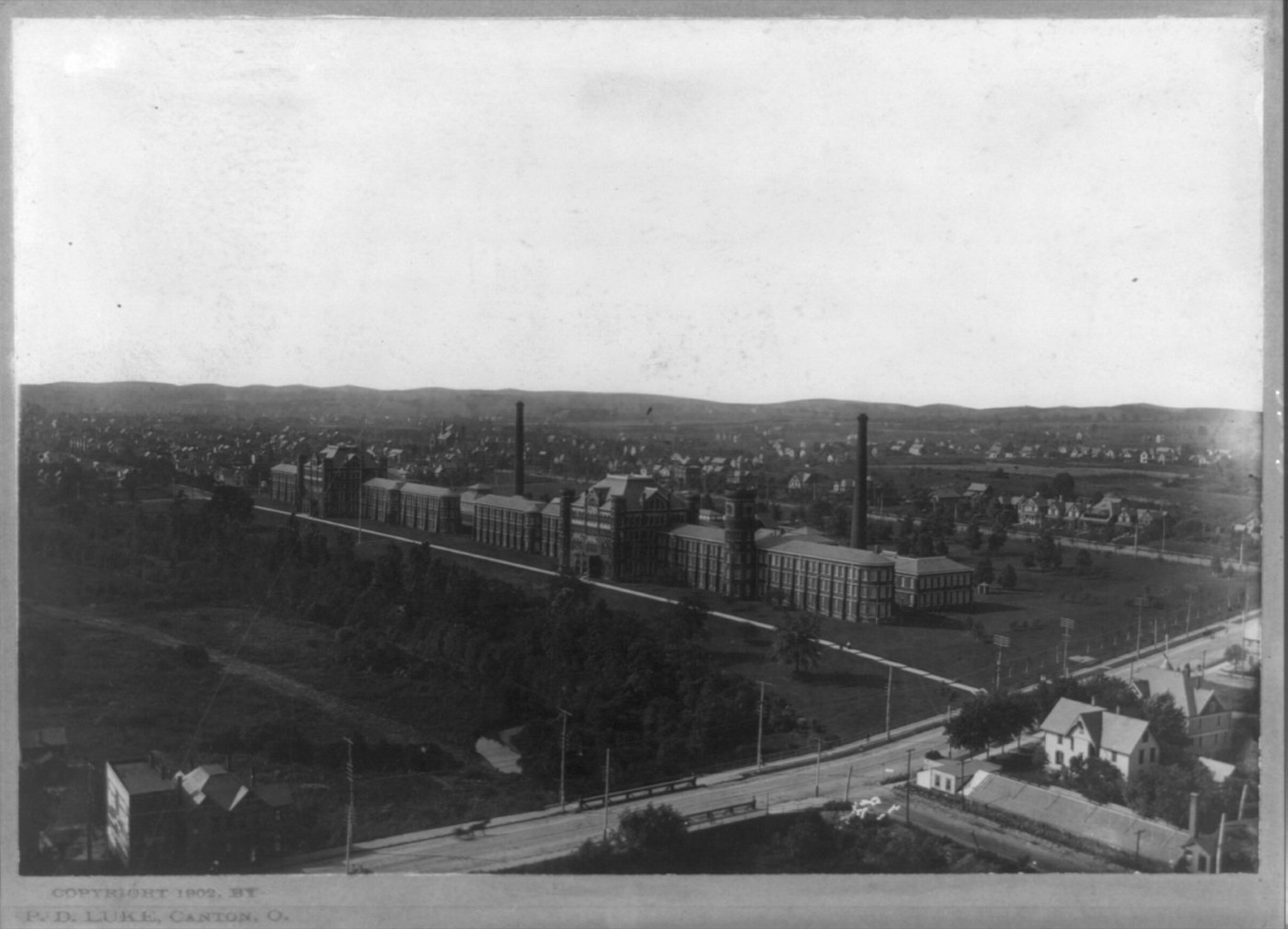
Hamilton’s electric watch of 1957, made in Lancaster, Pennsylvania, links this story to the electric and quartz revolution that followed.19, 25, 27, 30
Through this history
The companies, people, technologies, objects and events this chapter is made of, in the order the story meets them.
Object
The American Watch Company prototypeA surviving prototype of 1849–52, made by hand by Oliver B. Marsh for the venture that began machine-made watches.1
Technology
Interchangeable partsParts made on machines and checked against gauges: the method at the centre of the American industry.1, 4
Company
WalthamThe factory where the method was proved, and the one the Swiss came to study in 1876.1, 5, 6, 7
Event
The Philadelphia Centennial ExhibitionThe moment the American factory system was shown to the world and studied by its main rival.6, 8, 12
Event
Railroad standard timeStandard time and the inspected railroad watch, the market that set the industry’s standards.13, 14, 15, 16, 17, 18
Object
The Hamilton 992The 16-size, 21-jewel watch Hamilton built to the railroads’ rules, which the NAWCC Bulletin records as its best-selling 16-size movement.19, 20, 21
Object
The Ingersoll YankeeThe dollar watch of 1896, made at Waterbury for the Ingersoll brothers; Wikipedia’s accounts say it set the price at one dollar.22, 23, 24
Company
HamiltonThe Lancaster maker of railroad watches whose 1957 electric watch leads into the next chapter.19, 25, 26, 27
Object
The Hamilton Electric 500The Lancaster factory’s electric watch of 1957, kept by the Science Museum, made twelve years before Hamilton moved its movement making to Switzerland.25, 28, 29
Place
The Jura ArcWatkins records that the industry society of this Swiss watch region sent David to America.8
Key dates
- 1838
The Pitkin brothers of Hartford finish a watch movement.4, 7
- 1849
Dennison and Howard begin their watch venture at Roxbury.1, 3
- 1852
The opening batch of seventeen watches is finished, largely by hand.1
- 1854
The company moves to its new factory at Waltham.3, 5, 33
- 1864
The National Watch Company, later Elgin, is incorporated in Chicago.7, 32
- 1876
The Centennial Exhibition in Philadelphia; Jacques David and Theodore Gribi tour the American factories.6, 8
- 1883
Railroads in the United States and Canada adopt standard time, 18 November.13, 15
- 1891
After the Kipton collision, Webb C. Ball becomes a railroad’s chief time inspector.16, 17
- 1892
The Hamilton Watch Company is established at Lancaster, Pennsylvania.25, 26
- 1896
The Ingersoll Yankee goes on sale for a dollar.22, 23, 31
- 1918
Standard time becomes federal law.13, 15
- 1957
Hamilton introduces its electric watch.25, 27, 30
Where this leads
- Before, Era IIISwitzerland’s network of specialists
1600 to 1930
- After, Era IIIBritain’s watch industry
1750 to 1980
Where America industrializes the watch leads
- In this story, PlaceElgin, Illinois
The western rival founded with Chicago money and Waltham men, which became the largest maker of American jewelled watches.7, 32, 46
- In this story, PlaceSchaffhausen
Where a Boston watchmaker, Florentine Ariosto Jones, set up a factory in 1868 to make movements for the American market.47, 48, 49
- In this story, PlaceWaltham, Massachusetts
The mill town where America’s watch factory was built and its workers housed, the source of skilled men for Elgin.7, 50, 51
- In this story, PlaceWaterbury, Connecticut
The brass town that made the cheap Waterbury watch and the Ingersoll dollar watch.7, 22, 24
- Part of, HistoryBritain’s watch industry
The machine-made American watches that undercut the English trade, built without the fusee.1, 52
- See also, HistoryGerman watchmaking
Black Forest factories built their alarm clocks on American methods from the 1870s.53, 54
- See also, HistoryJapan builds a watch industry
Hattori bought machines from Brown & Sharpe and Waltham, by Donzé’s account.55
- See also, HistorySwitzerland’s network of specialists
The Swiss move to factories, under way before 1876, was pressed by the American competition shown at Philadelphia.8, 56
- See also, HistoryThe electric and quartz revolution
Hamilton’s electric watch of 1957 leads from the American industry into the electric and quartz era.19, 25, 27, 30
- See also, HistoryThe Soviet watch industry
The machinery of Dueber-Hampden of Canton, Ohio, equipped the First State Watch Factory in Moscow in 1930.43, 57, 58
- See also, CompanyJunghans
Arthur Junghans worked in American factories from 1872 and brought their methods to Schramberg.53, 59
- See also, CompanyLancashire Watch Company
Davies writes that Hewitt modelled the company on the Elgin National Watch Company of Illinois.52
- See also, PlaceClerkenwell
Davies writes that Clerkenwell’s craftsmen dismissed the first Waltham watches, then were overwhelmed by American machine production.52
- See also, GroupTochmekh (State Trust of Precision Mechanics)
The trust’s commission toured American plants in 1928 and 1929 and chose American machinery, Garratt writes.58
Facts and sources
Sources
- 1
American Watch Company Prototype (NMAH 1204764) (opens in a new tab)
- 2
- 3
- 4
- 5
- 6
- 7
- 8
- 9
Jacques David: American and Swiss Watchmaking in 1876 (translation page) (opens in a new tab)
- 10
- 11
- 12
- 13
- 14
- 15
- 16
- 17
- 18
The Billings Gazette, 7 November 1902, page 7 (Chronicling America) (opens in a new tab)
- 19
The Hamilton Watch Co.: Mass-Producing Excellence (opens in a new tab)
- 20
Baltimore and Ohio Employes Magazine, vol. 3 (1914-15) (opens in a new tab)
- 21
Baltimore and Ohio Magazine, vol. 9 (1921-22) (opens in a new tab)
- 22
- 23
- 24
Waterbury Clock Company (Movement Shop), National Register nomination (opens in a new tab)
- 25
- 26
- 27
Hamilton Electric Wrist-Watch, 1957 (object 1958-248) (opens in a new tab)
- 28
Hamilton Electric Wrist-Watch, 1957 (object 1958-248) (opens in a new tab)
- 29
- 30
- 31
Ingersoll Dollar Watch advertisement, Everybody's Magazine, December 1903 (opens in a new tab)
- 32
- 33
- 34
Works of the American Watch Company, Waltham, Mass. (opens in a new tab)
- 35
- 36
- 37
Ed. Favre-Perret: report on the Philadelphia Exhibition of 1876 (opens in a new tab)
- 38
- 39
Pittsburg Dispatch, 19 April 1891, page 1 (Chronicling America) (opens in a new tab)
- 40
Hamilton Watch Company advertisement, Baltimore and Ohio Magazine, October 1921 (opens in a new tab)
- 41
Waltham Railroad Watches (advertising card, ca. 1870s-1910s) (opens in a new tab)
- 42
Ingersoll Dollar Watch advertisement, Everybody's Magazine, December 1903. (opens in a new tab)
- 43
- 44
- 45
Dueber-Hampden Watch Works, Canton, Ohio, 1902. (opens in a new tab)
- 46
- 47
- 48
- 49
- 50
Waltham Multiple Resource Area, National Register nomination (opens in a new tab)
- 51
- 52
- 53
- 54
- 55
- 56
- 57
First State Watch Factory (CIA-RDP83-00423R000400630001-7) (opens in a new tab)
- 58
The Birth of Soviet Watchmaking: continuing the Hampden story (updated edition) (opens in a new tab)
- 59
Sources read November 12, 2026.