The Jura Arc
The arc of the Jura mountains along Switzerland’s border with France, from the Vallée de Joux through the Neuchâtel mountains and Saint-Imier to Biel/Bienne and Grenchen, where most of the Swiss watch industry has worked since the nineteenth century.
Switzerland, with the French Jura across the border
Places within La Chaux-de-Fonds and Le Locle, Neuchâtel, Biel/Bienne, Grenchen
Companies here Blancpain, Breguet, Jaeger-LeCoultre, Longines, Omega, Rolex, Swatch, Tudor, Zenith
In the histories Switzerland’s network of specialists, America industrializes the watch
How watchmaking reached the mountains
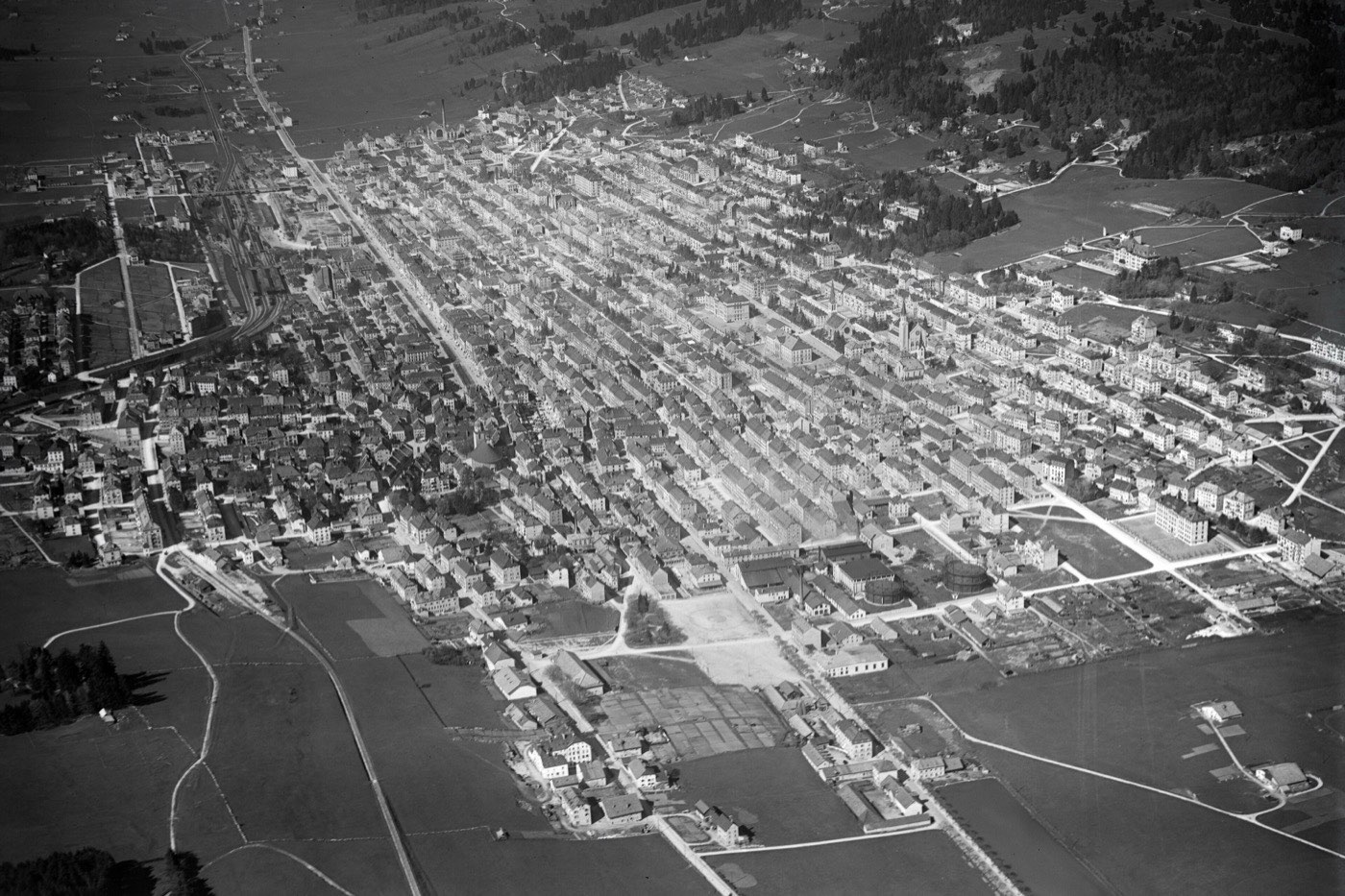
The trade came up from Geneva. By the end of the seventeenth century, the Historical Dictionary of Switzerland says, Geneva’s watchmakers did only the finishing and bought their movement blanks from the Jura valleys, while the craftsmen of the Vallée de Joux specialised in complicated mechanisms; by the twentieth century more than 90 per cent of the Swiss watch workforce was in the Jura Arc.1
From the eighteenth century the Swiss Jura turned from farming to watchmaking. The trade spread through the Neuchâtel mountains, where La Chaux-de-Fonds and Le Locle grew into watch towns, into the Saint-Imier valley, whose watch-parts workshops date from the 1720s, and in the nineteenth century to Biel/Bienne and Grenchen at the foot of the mountains.1, 2, 3, 5, 6, 7

Homes, workshops and factories
For a long time the work was done at home. Outworkers made the parts, and an établisseur collected, assembled and sold the watches; Longines began this way in Saint-Imier in 1832. La Chaux-de-Fonds and Le Locle, replanned after fires in the early nineteenth century, were laid out in parallel strips where housing and workshops sat side by side, and UNESCO inscribed them together as a World Heritage Site in 2009.1, 3, 12
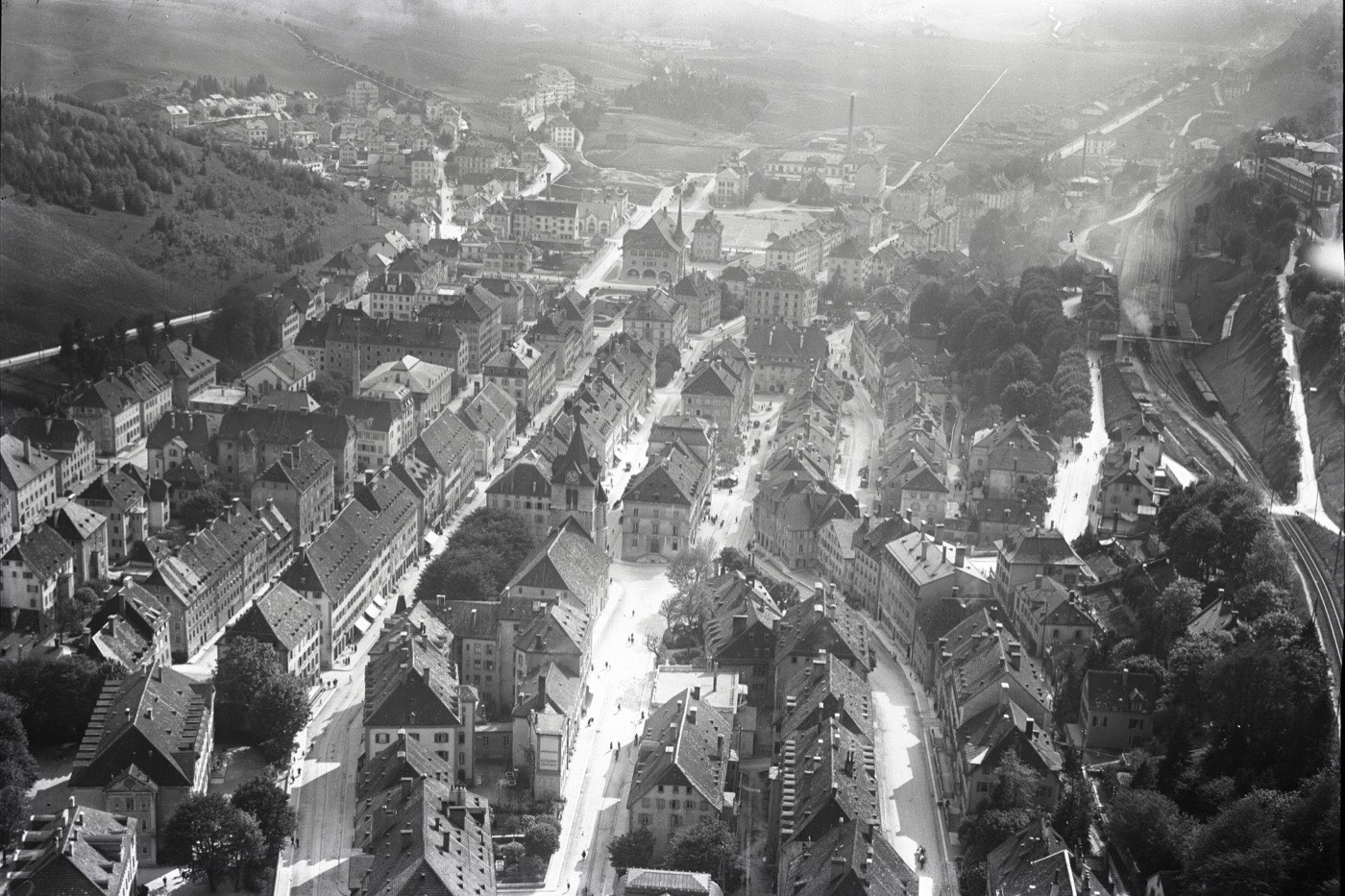
Factories came late in the century. Longines opened its factory at Saint-Imier in 1867 and the workshops of the town gave way to factory work. The Historical Dictionary describes this as the answer to cheap American factory watches, which nearly ruined Swiss exports in the 1870s; by 1883 almost half the watch factories under federal factory law were in the canton of Bern.1, 5, 12
The region’s makers now
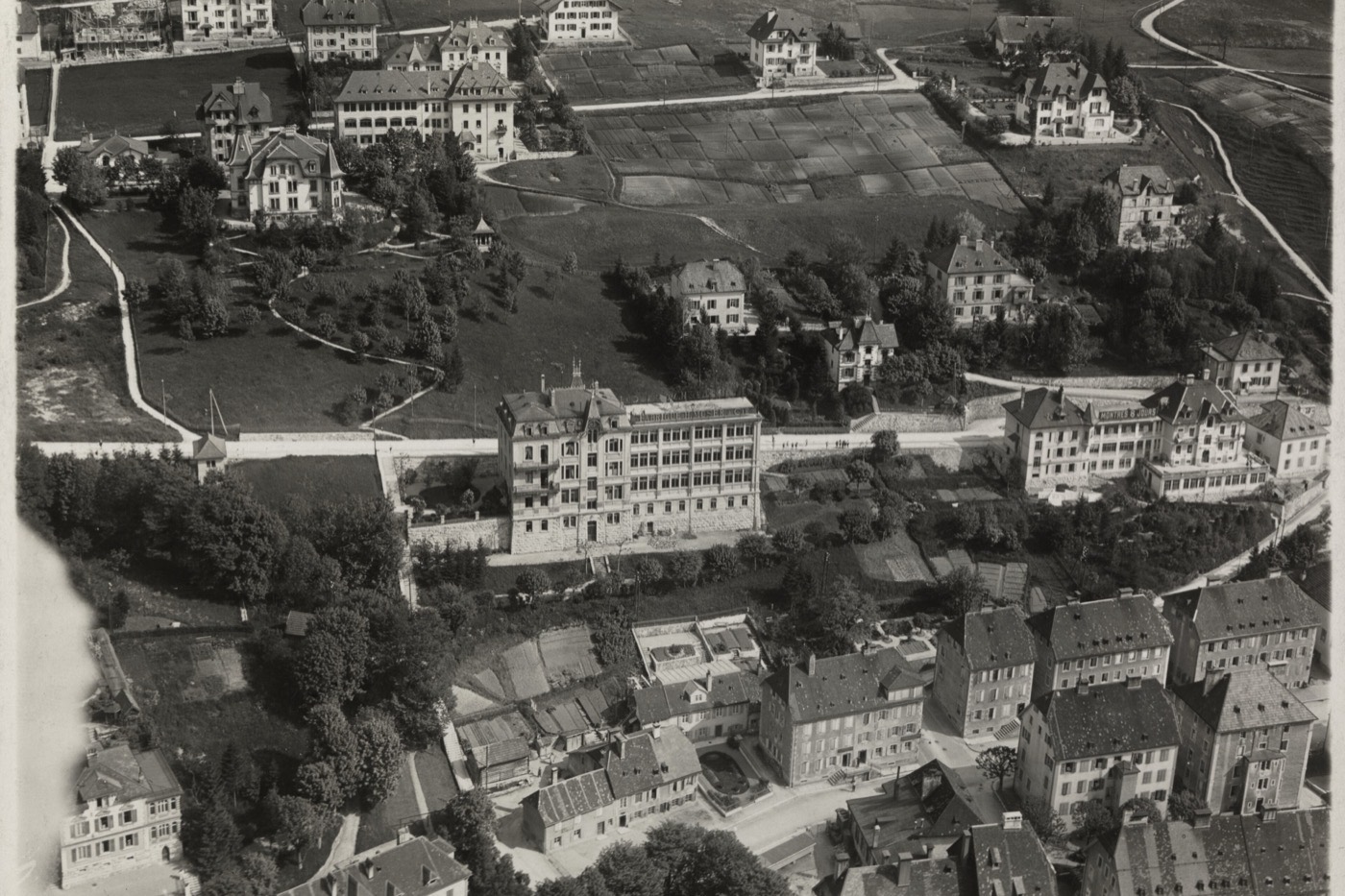
The Vallée de Joux, a high valley in the canton of Vaud, holds the workshops of Blancpain at Le Brassus and Le Sentier, Breguet at L’Abbaye and L’Orient, and Jaeger-LeCoultre. Saint-Imier is still the home of Longines.5, 15, 16, 17
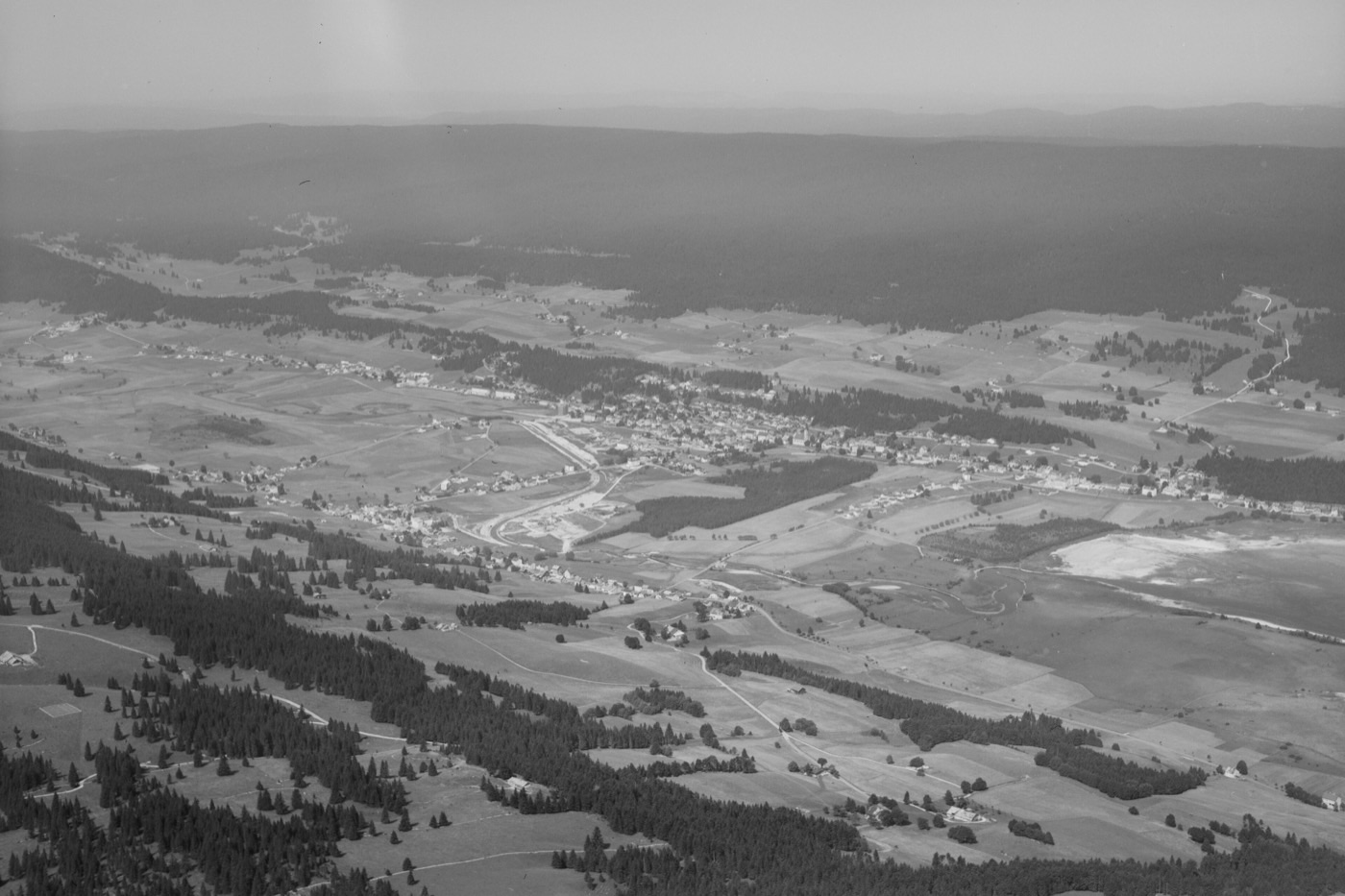
Biel/Bienne, at the eastern end of the arc, holds the head office of the Swatch Group, in the former ASUAG building, and is the home of Omega, which came from La Chaux-de-Fonds in 1880, and of Swatch. The group’s movement maker ETA works at Grenchen nearby, with production sites in the foothills of the Jura and in Valais and Ticino.6, 19, 20, 21, 22
The region paid heavily for the electronic watch, and Saint-Imier, dependent on one industry, was hit hard in the 1930s and again in the 1970s. Counts of the jobs lost differ: from about 70,000 in the mid-1960s to 30,000–35,000 in the 1980s by one count, from 90,000 in 1970 to 28,000 in 1988 by another.1, 5, 23
Key dates
- 1735
Blancpain Jehan-Jacques Blancpain registers as a watchmaker in Villeret.16, 24
- 1832
Longines Auguste Agassiz and partners set up a watchmaking workshop in Saint-Imier.12, 25
- 1833
Jaeger-LeCoultre Antoine LeCoultre opens a workshop in the family forge at Le Sentier.26, 27
- 1848
Omega Louis Brandt opens a workshop in La Chaux-de-Fonds.28, 29
- 1866
Jaeger-LeCoultre The crafts of watchmaking are brought under one roof.26, 30
- 1867
Longines The Longines factory opens in Saint-Imier.12, 25, 31
- 1880
- 1976
Breguet Breguet opens a workshop in the Vallée de Joux.17, 32
- 1982
Blancpain Jacques Piguet buys Blancpain; production moves to the Vallée de Joux.16, 24
- 1985
Swatch SMH establishes Swatch Ltd in Biel/Bienne; ETA in Grenchen makes the watches.21
- 2009
La Chaux-de-Fonds and Le Locle are inscribed on the World Heritage List for their watchmaking town planning.3
- 2015
Breguet The expansion of the manufacture at L’Orient is completed.17
- 2023
Tudor The Le Locle manufacture opens; assembly leaves Geneva.33, 34
Where the Jura Arc leads
- Based here, CompanyBlancpain
Blancpain began in Villeret in the Bernese Jura and has worked in the Vallée de Joux since the 1980s.16, 24
- Based here, CompanyBreguet
Breguet has made its watches in the Vallée de Joux since 1976 and has its head office at L’Abbaye.17, 32
- Based here, CompanyJaeger-LeCoultre
Jaeger-LeCoultre grew out of a family forge in Le Sentier and still makes its components in the Vallée de Joux.26, 27, 30
- Based here, CompanyLongines
Longines has worked in Saint-Imier since 1832, and in its factory there since 1867.5, 12
- Based here, CompanyOmega
Omega began in La Chaux-de-Fonds in 1848 and has been in Biel/Bienne since 1880.20, 28
- Based here, CompanySwatch
Swatch is run from Biel/Bienne and its watches are made by ETA in Grenchen.21
- Based here, CompanyZenith
The Historical Dictionary of Switzerland records Zenith at Le Locle, in the Neuchâtel mountains.35
- In this story, PlaceGrenchen
A watch town at the south foot of the Jura, at the eastern end of the arc.1, 36
- In this story, PlaceVallée de Joux
The Historical Dictionary of Switzerland describes the valley as lying in the Vaud Jura.37
- Part of, HistorySwitzerland’s network of specialists
The mountains that took up watchmaking from the 17th century, free of Geneva’s guilds.1, 38
- See also, HistoryAmerica industrializes the watch
Watkins records that the Intercantonal Society of Jura Industries sent Jacques David to study the American factories in 1876.39
- See also, CompanyRolex
Where Rolex’s movements came from: Biel, and later a site in Le Locle.33, 40, 41
- See also, CompanyTudor
The watchmaking region where Tudor now assembles every watch, in Le Locle.33
- See also, PersonAbraham-Louis Breguet
Exile in Geneva, Neuchâtel and Le Locle, 1793-95.42, 43
- See also, PersonFerdinand Berthoud
Born and trained in the Val-de-Travers, Principality of Neuchâtel.44, 45
- See also, PlaceBesançon
The industry was founded by Swiss watchmakers from Le Locle and Neuchâtel and depended on Swiss parts and competition across the border.46, 47
- See also, PlaceGeneva
The valleys that made the movements Geneva’s workshops finished, and the Biel works that supplied Rolex.1, 41
- See also, PlaceSchaffhausen
Heinrich Moser trained in Le Locle and made his watches there from 1829 before building the Rhine dam at home.48, 49
- See also, PlaceThe Black Forest
The Deutsches Uhrenmuseum notes that the Furtwangen school tried and failed to build up pocket-watch making on the Swiss Jura model.50
- See also, TechnologyÉtablissage
In La Chaux-de-Fonds the industry took this form from the early 18th century.38, 51
- See also, GroupThe Swatch Group
The group’s head office is in Biel/Bienne and its movement maker ETA is at Grenchen, both at the foot of the Jura.19, 21, 22
- See also, EventThe Philadelphia Centennial Exhibition
The Société that sent David was founded by firms of the Jura watch region, according to the Federation of the Swiss Watch Industry.39, 52
- See also, EventThe quartz crisis
The Swiss watchmaking region the Historical Dictionary of Switzerland describes as stricken by the quartz years.1
- See also, EventThe Swiss watch cartel and statute
The Federal Council described the watch measures as a defence of regional interests, because the industry was concentrated in the cantons of the west and north-west.53
Facts and sources
- Country
- Switzerland, with the French Jura across the border1, 2
- Watchmaking places
- Vallée de Joux, La Chaux-de-Fonds, Le Locle, Saint-Imier, Biel/Bienne, Grenchen1, 3, 5, 6, 7, 15
Sources
- 1
- 2
- 3
La Chaux-de-Fonds / Le Locle, Watchmaking Town Planning (opens in a new tab)
- 4
- 5
- 6
- 7
- 8
- 9
- 10
- 11
- 12
- 13
- 14
- 15
- 16
- 17
- 18
- 19
- 20
- 21
- 22
- 23
- 24
- 25
- 26
- 27
- 28
- 29
- 30
- 31
- 32
- 33
- 34
- 35
- 36
- 37
- 38
- 39
- 40
- 41
- 42
- 43
Breguet: history (exhibition 'Breguet, un apogée de l'horlogerie européenne') (opens in a new tab)
- 44
- 45
- 46
L'horlogerie à Besançon (dossier IA25001993) (opens in a new tab)
- 47
- 48
- 49
- 50
Zeit der Experimente – Gewerbeförderung in Furtwangen (opens in a new tab)
- 51
- 52
- 53
Sources read November 11, 2026.