Junghans
A clock and watch maker founded at Schramberg in the Black Forest in 1861, which grew on American factory methods into one of the largest clock factories in the world, made wristwatches and chronometers in the twentieth century, and brought out radio-controlled clocks and watches from 1985.
Founded 1861
In the history German watchmaking
From parts to clocks
On 14 April 1861 Erhard Junghans and his brother-in-law Jakob Zeller-Tobler founded Zeller & Junghans at Schramberg, in a former oil mill in the Lauterbach valley, to make parts for Black Forest clockmakers: cases, dials, hands, hinges and the like. Its own clocks followed in 1866.1, 2
By the German Wikipedia’s account, Erhard Junghans died in 1870, his widow Luise ran the business and sold it in 1875 to their sons Erhard and Arthur, and Arthur ran it alone from 1897 until his death in 1920.2, 7

The American model
In 1872 the twenty-year-old Arthur Junghans went to work in American factories; back in Schramberg he introduced stamped parts and simplified cases. The German Wikipedia says he worked under a false name, pushed American methods through against his workforce’s resistance, and that his notebook from America is now in the Schramberg city archive.2, 3, 7
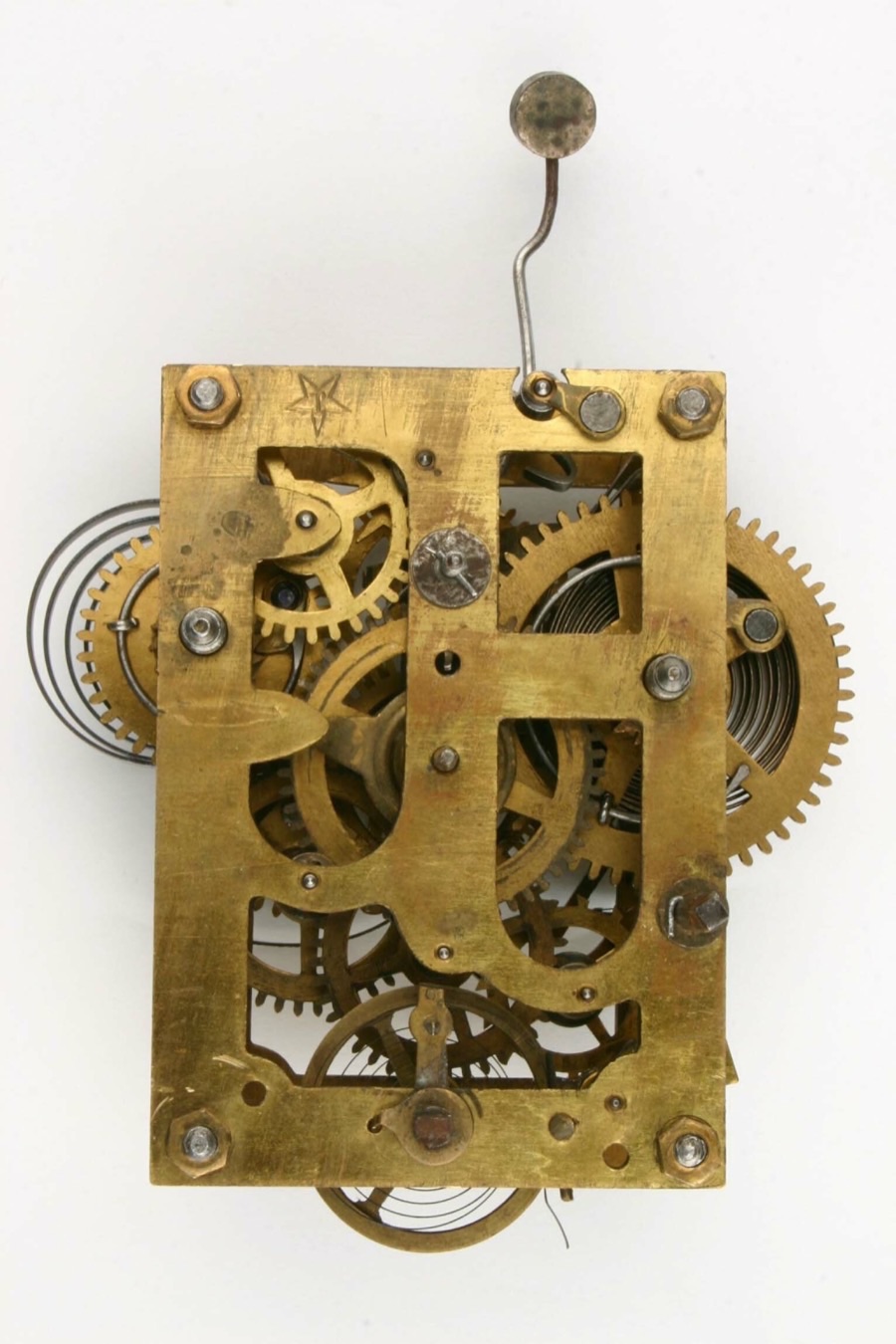
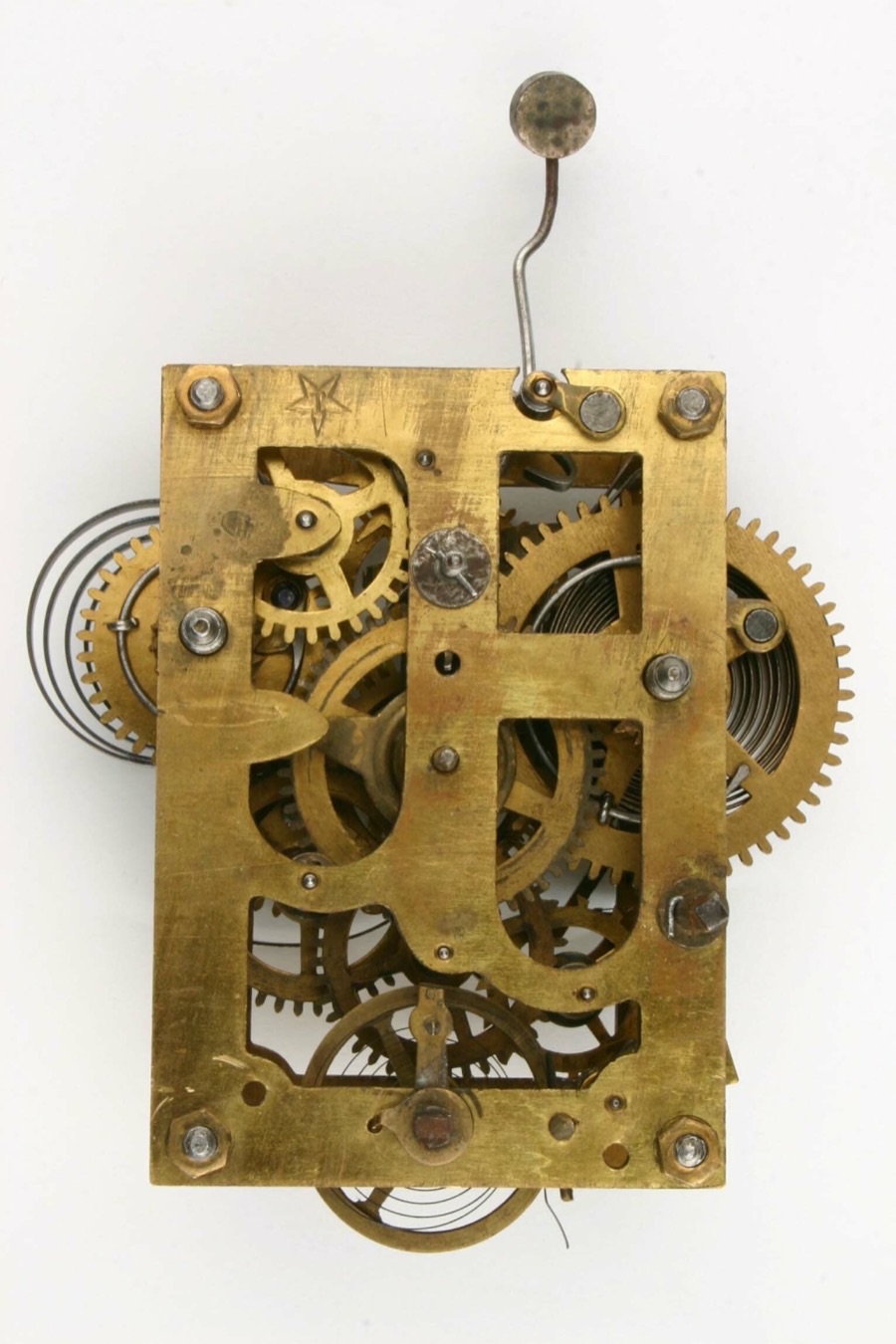
The result was the “American” alarm clock, made on special machines from parts designed for fast assembly. Its movement W10, found in a museum example of about 1888 to 1890, was built in huge numbers into the 1930s and copied by other Black Forest firms.3, 7, 9, 10
A worker who assembled movements there from 1891 to 1898, Berthold Schneider, describes women putting parts together in jigs at speed, piecework, and toolmaking that he says put Junghans years ahead of other firms; the museum notes that the works employed 2,000 people in 1898.12
Junghans says it followed American movements and borrowed American brand symbols in its early years; its star trademark appeared in 1888 and gained eight points in 1890.1, 2
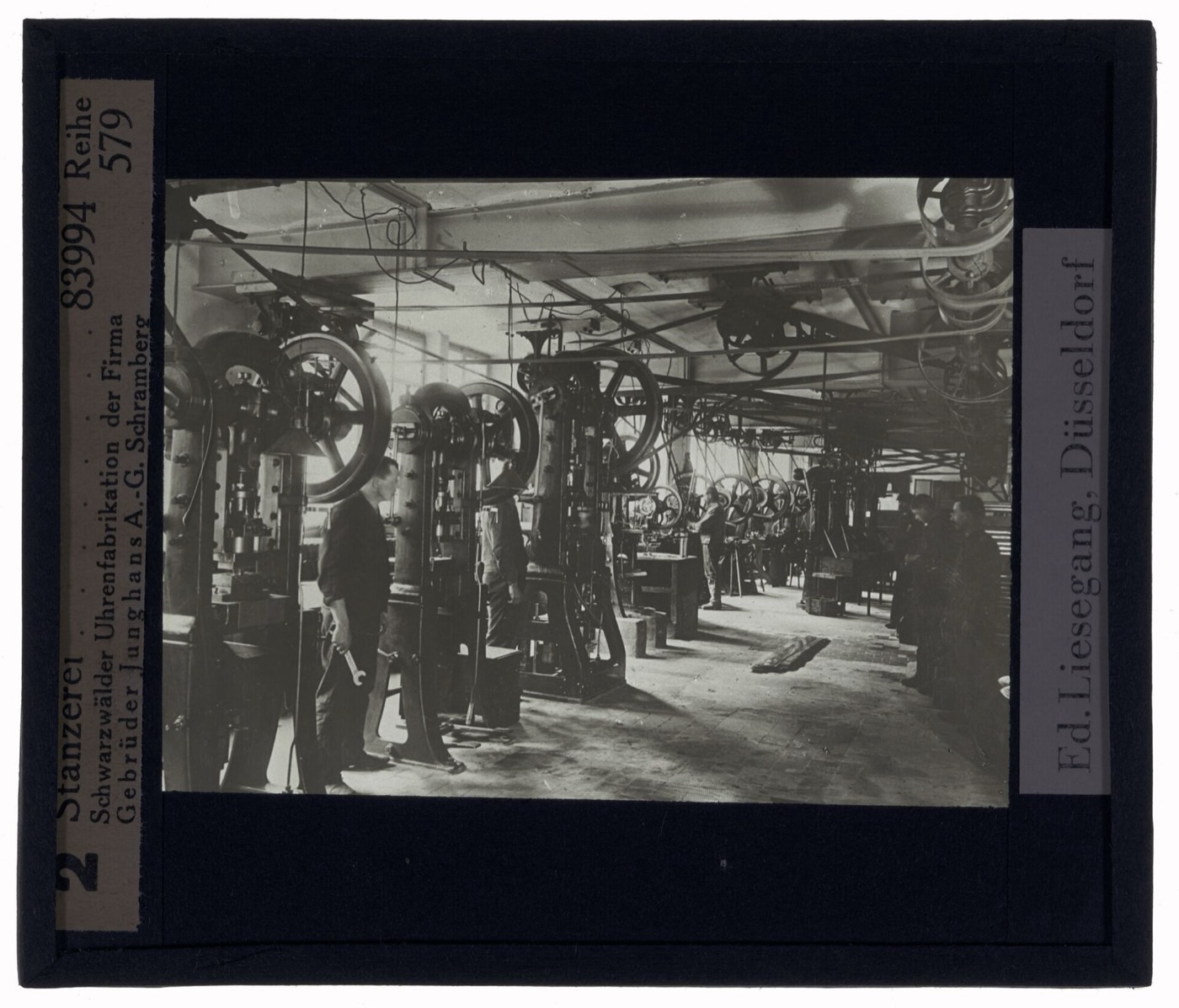
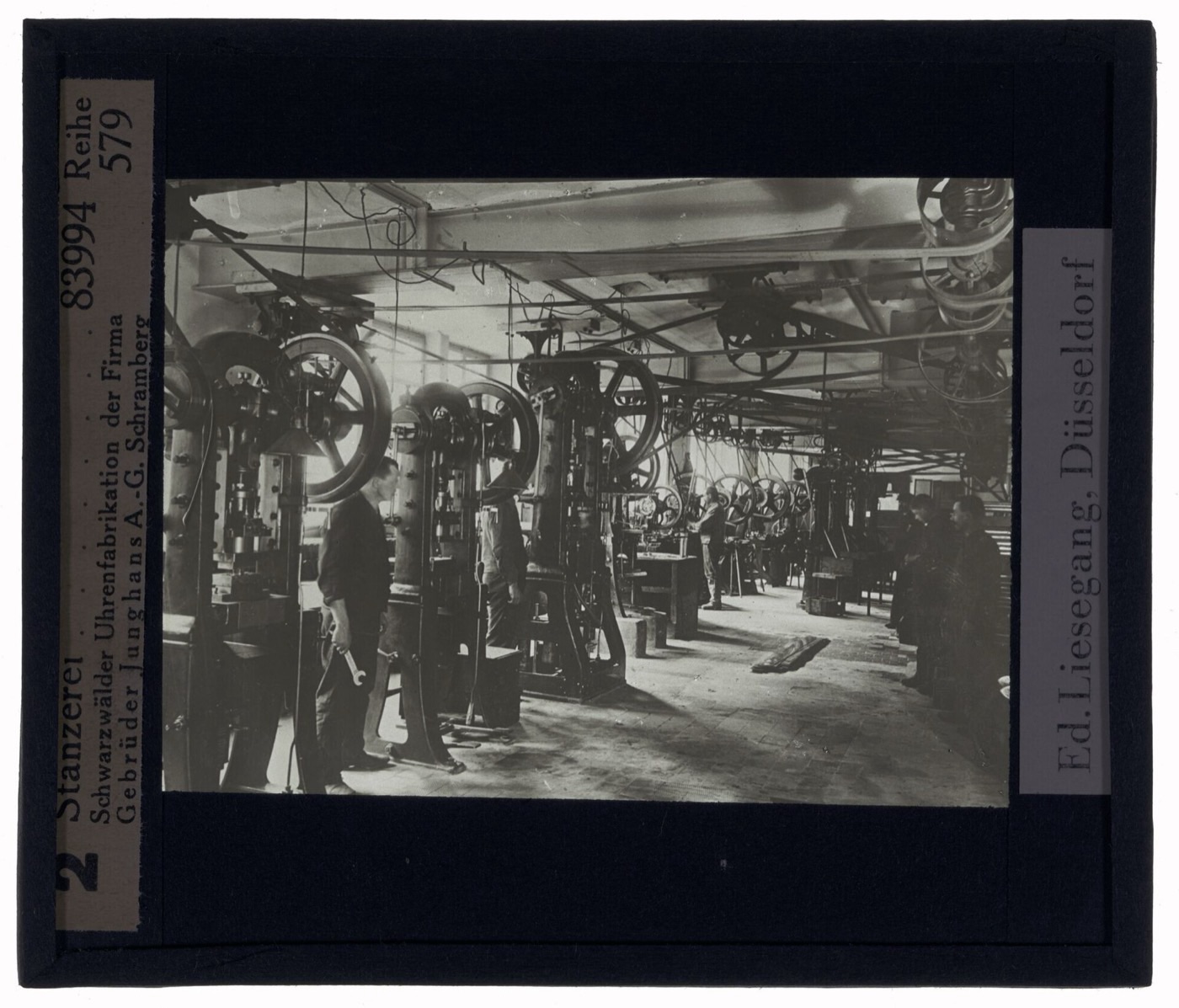
Junghans says that by 1903 it was the largest clock factory in the world, with 3,000 workers making over three million timepieces a year and works or branches at Schramberg, Schwenningen, Ebensee, Venice and Paris. A Belgian school lantern-slide series of about 1930 told pupils that sometimes 5,500 workers made 15,000 clocks a day there.1, 13
Pocket watches were harder. The German Wikipedia says attempts in 1883 and 1894 failed, and that Junghans gained a pocket-watch line in 1900 by merging with the Thomas Haller company of Schwenningen.2, 7
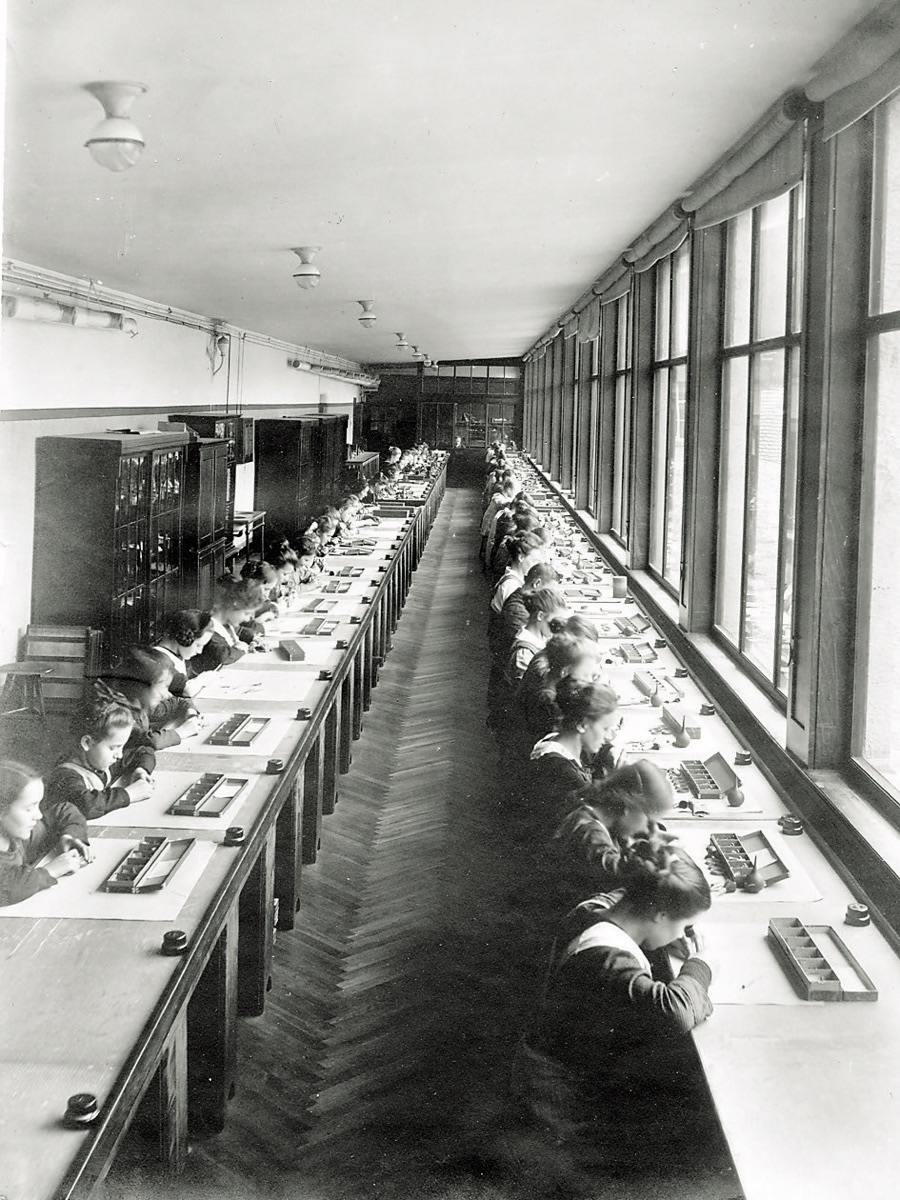
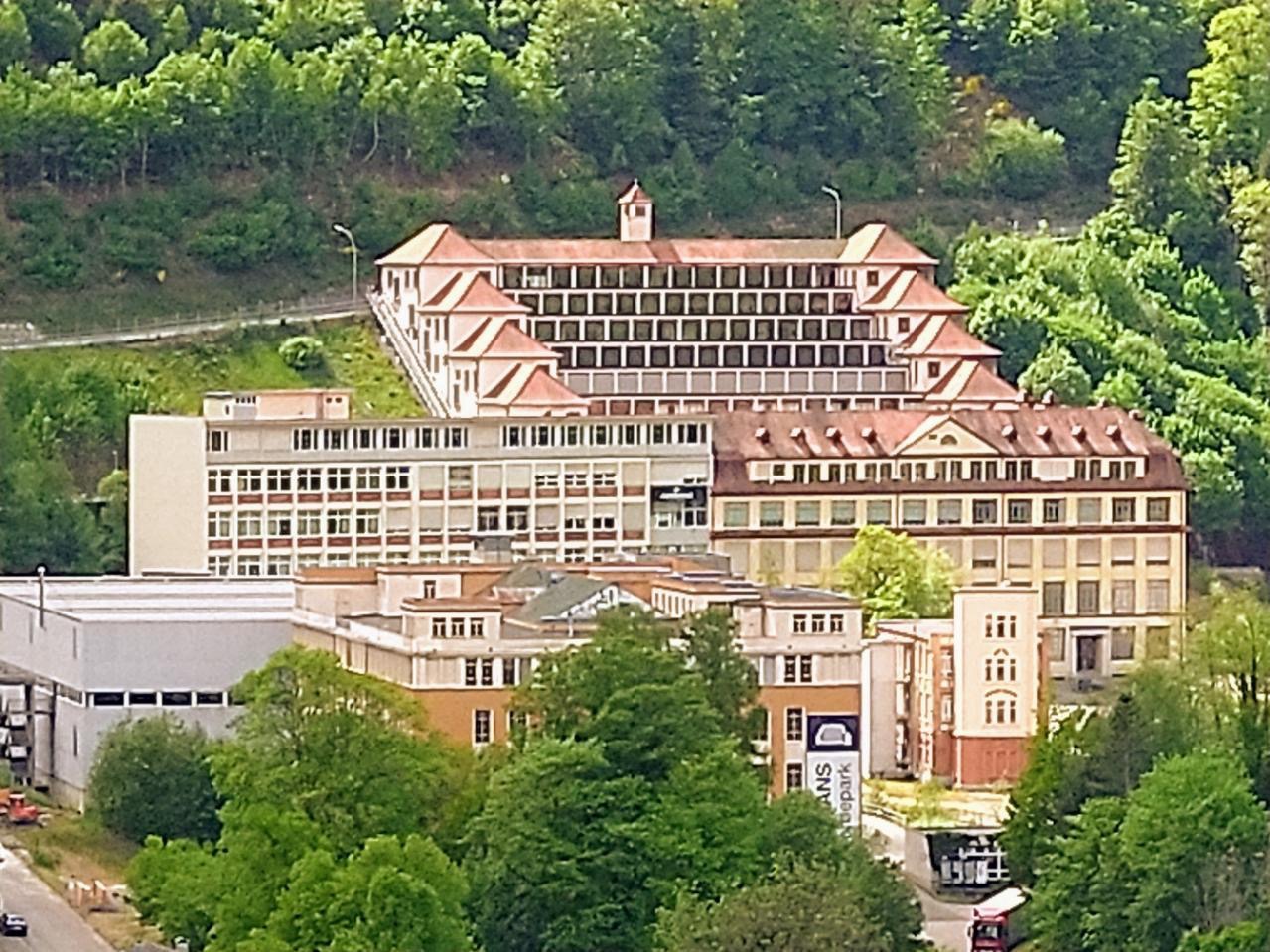
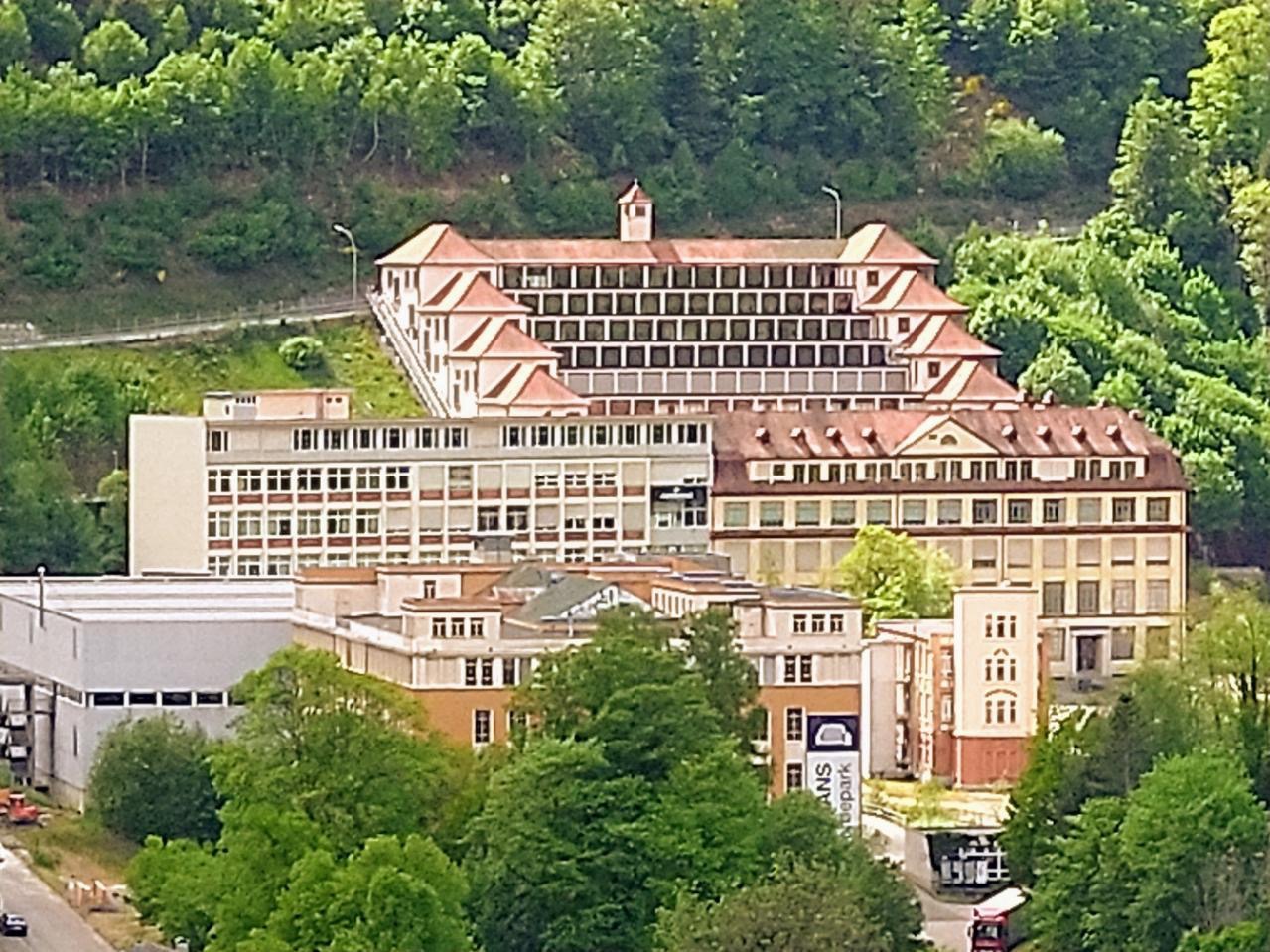
Its Terrassenbau, built from 1916 to 1918 to plans by the Stuttgart industrial architect Philipp Jakob Manz, climbs the hillside in nine storeys of long, narrow rooms, so that almost every workplace had daylight.1, 2, 16
Wristwatches and chronometers
When Junghans began to make wristwatches is told differently. The German Wikipedia says it started in 1927 with movements bought from Gebrüder Thiel in Ruhla and made its own from 1930; Junghans dates its first wristwatch with a movement of its own, calibre J80, to 1936.1, 2
Junghans says its J88 chronograph, planned in 1946 and built from 1950 to 1964, was chosen as a service watch for pilots of the new Bundeswehr, that it was Germany’s largest maker of chronometers in 1951 and the third largest in the world in 1956, and that it commissioned the Swiss artist Max Bill to design a kitchen clock in the early 1950s and wristwatches from 1961.1
Fuses and war
By the German Wikipedia’s account, Junghans began making fuses in 1906 and made them in great numbers in the First World War; in the Second more than 9,000 people at Schramberg worked mainly on fuses, among them, in 1942, 440 eastern workers, 332 French prisoners of war and forced labourers and 90 Polish forced labourers.2
The same account says the French military government dismantled important machines after the war and that civilian production resumed in 1946.2
Quartz and radio control
Junghans says it worked on a quartz wristwatch from 1967, showed a pre-series of the Astro-Quartz in 1970 and put its calibre into series production in 1972; the German Wikipedia and the Junghans museum date the watch to 1971.1, 2, 16
Junghans and the German Wikipedia both record that its electronic timing was used at the Munich Olympic Games of 1972.1, 2
Schramberg’s town collection records that in 1985 Junghans was the first maker to bring out a series-made radio-controlled table clock, priced at 980 marks, once the patent of the inventor Wolfgang Hilberg had lapsed.4
In 1990 came the MEGA 1, a digital radio-controlled wristwatch designed with frog design, which Junghans and its box call the world’s first; Junghans says a solar-powered radio wristwatch followed in 1993.1, 2, 5
Owners
The Junghans family lost the firm in 1956, when the Nuremberg group Diehl took control.1, 2
Diehl sold the watch business to the holding company Egana Goldpfeil in 2000. After Egana ran into difficulties, Junghans filed for insolvency in August 2008, and in 2009 the Schramberg entrepreneur Hans-Jochem Steim and his son Hannes Steim bought it.1, 2
The Steim family restored the Terrassenbau, empty since the 1970s, and opened it as the Junghans Terrassenbau Museum in 2018, with a collection of Black Forest clocks and of Junghans watches.2, 16
Key dates
- 1861
Zeller & Junghans is founded at Schramberg on 14 April.1, 2
- 1866
Junghans makes its own clocks.1, 2
- 1872
Arthur Junghans goes to work in American factories.3, 7
- 1888
The Junghans star trademark appears.1, 2
- 1918
The Terrassenbau is completed.1, 2, 16
- 1956
Diehl takes control of Junghans.1, 2
- 1985
Series-made radio-controlled table clock.1, 4
- 1990
MEGA 1 radio-controlled wristwatch.1, 5
- 2000
Diehl sells the watch business to Egana Goldpfeil.1, 2
- 2009
Hans-Jochem and Hannes Steim take over the firm.1, 2
- 2018
The Junghans Terrassenbau Museum opens.2, 16
Where Junghans leads
- Made, ObjectThe Junghans MEGA 1
Junghans made the MEGA 1 at Schramberg in 1990.5, 19
- Based in, PlaceThe Black Forest
Founded at Schramberg, in the Black Forest, in 1861.1, 2
- Part of, HistoryGerman watchmaking
The Schramberg firm that brought American factory methods to the Black Forest.1, 3, 7
- See also, HistoryAmerica industrializes the watch
Arthur Junghans worked in American factories from 1872 and brought their methods to Schramberg.3, 7
- See also, PlaceRuhla
The German Wikipedia says Junghans began making wristwatches in 1927 with movements bought from Gebrüder Thiel in Ruhla.2
- See also, TechnologyInterchangeable parts
A worker’s memoir quoted by the Deutsches Uhrenmuseum says Junghans assembly in the 1890s depended on standardised parts put together in jigs.12
Elsewhere in Watch Vault
- Current coverage
Stories that name Junghans, newest first (opens in a new tab), in Watch Vault Media.
Facts and sources
- Founded
- 18611, 2
- Based in
- Schramberg, in the Black Forest1, 2
- Founded by
- Erhard Junghans, with his brother-in-law Jakob Zeller-Tobler1, 2
Sources
- 1
- 2
- 3
- 4
Junghans Tischfunkuhr, 1985 (Inv. 7107) (opens in a new tab)
- 5
Armbanduhr, Junghans, Schramberg, 1990 (Inv. 1995-604) (opens in a new tab)
- 6
- 7
- 8
- 9
- 10
Babywecker, Junghans, Schramberg, ca. 1888-1890 (Inv. 2006-124) (opens in a new tab)
- 11
- 12
Junghans in den 1890er Jahren. Ein Arbeiter berichtet (opens in a new tab)
- 13
- 14
- 15
- 16
- 17
- 18
- 19
Junghans ‘Mega 1’ radio-controlled wristwatch, 1990 (opens in a new tab)
Sources read November 12, 2026.