The Junghans MEGA 1
The Junghans MEGA 1 of 1990, a digital quartz wristwatch that set itself from the German time signal DCF77 through an antenna in its strap: the watch that Junghans, PTB and three museums describe as the first radio-controlled wristwatch, and the point at which a national legal time reached the wrist.
Made 1990, By Junghans, Schramberg, Now at Deutsches Uhrenmuseum, Furtwangen (Inv. 1995-604 and 1995-245); Science Museum, London (1991-8); National Maritime Museum, Greenwich (ZAA0741)
Companies Junghans
In the history German watchmaking
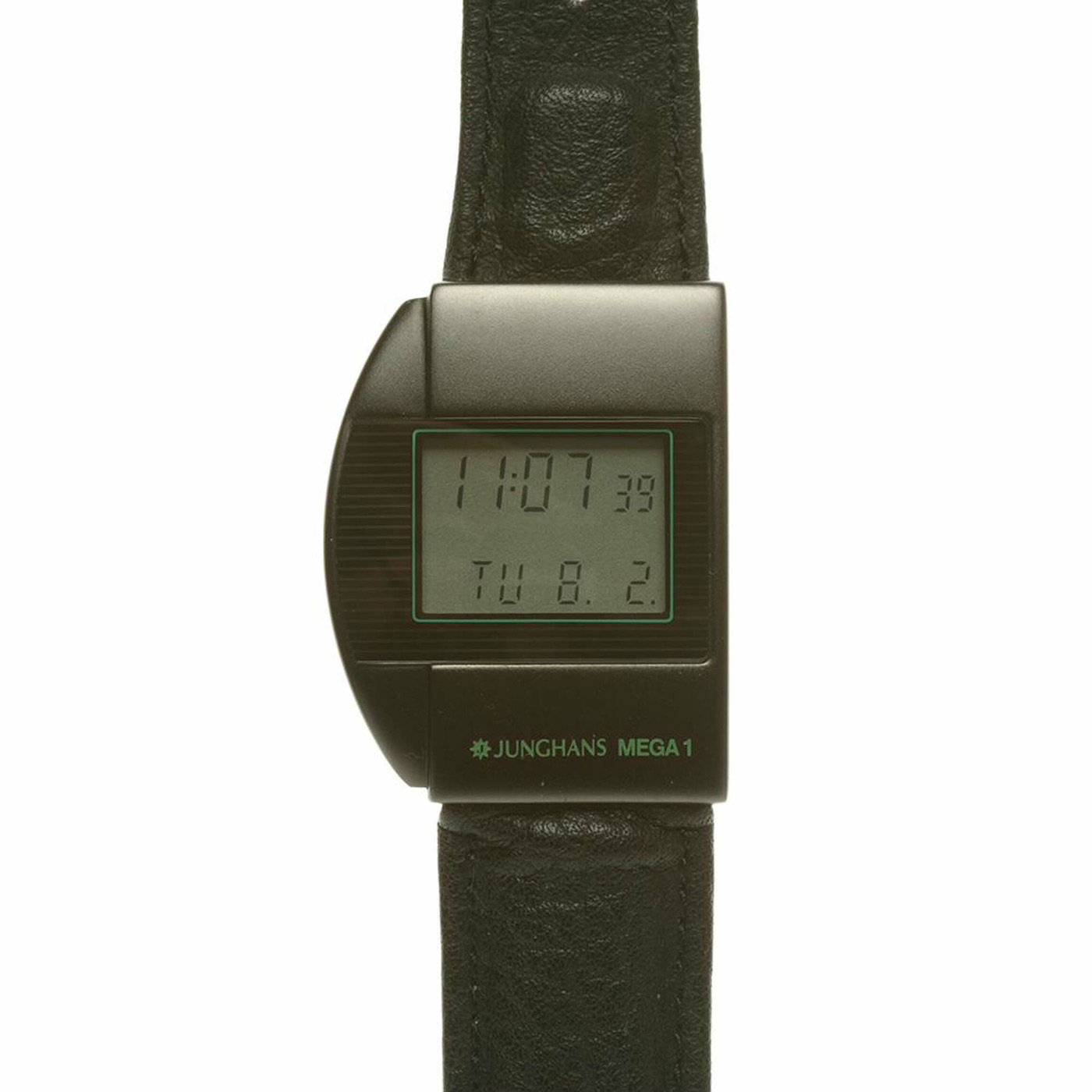
The watch
The MEGA 1 is a digital quartz wristwatch with a liquid-crystal display, made by Junghans at Schramberg in the Black Forest in 1990, that sets itself by radio.1, 2, 7
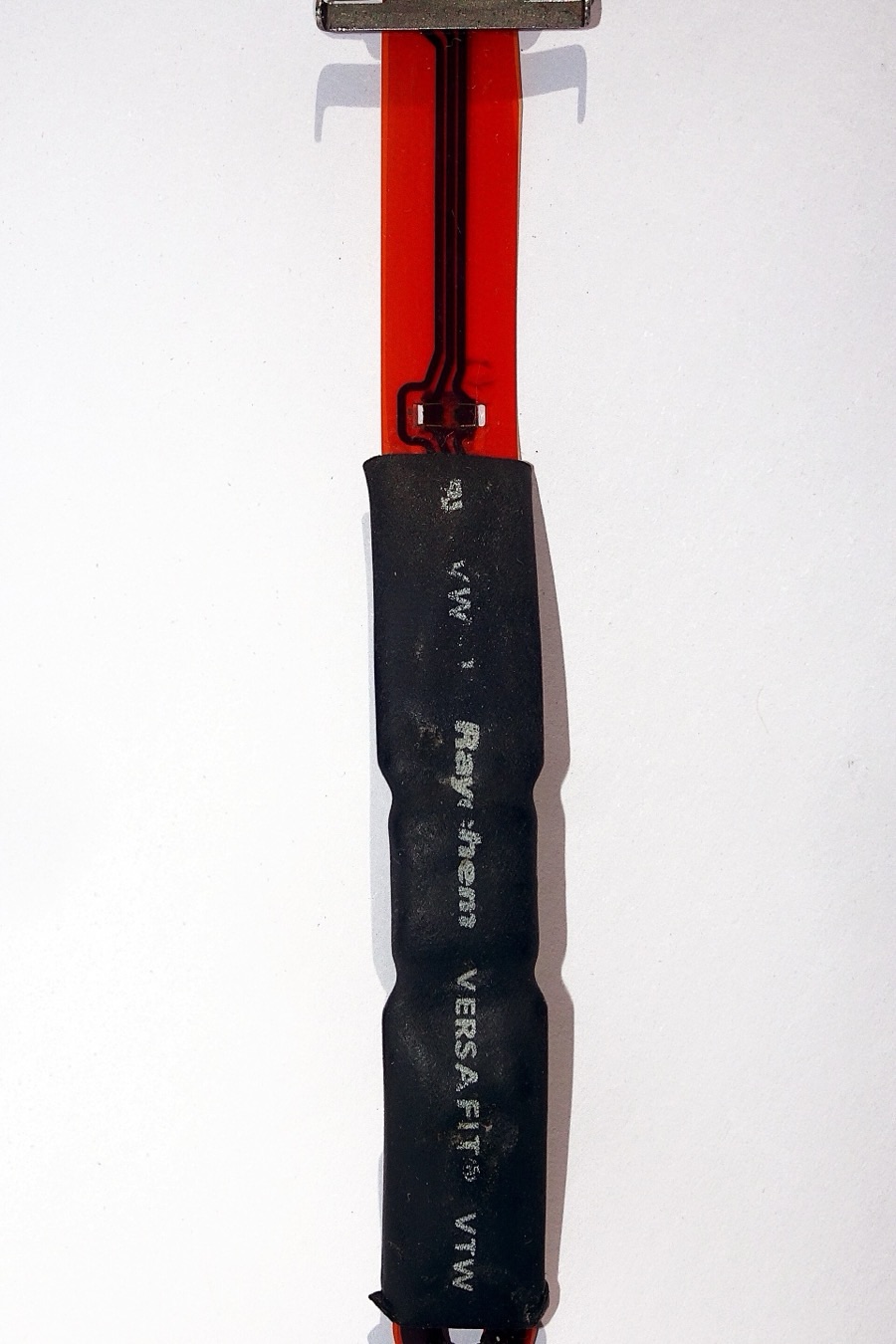
Its receiver picks up the long-wave time signal DCF77, sent from Mainflingen near Frankfurt on 77.5 kHz and derived from the atomic clocks of the Physikalisch-Technische Bundesanstalt (PTB) in Braunschweig. The antenna is in the strap, and without a signal the watch runs as an ordinary quartz watch.2, 3, 8
Its asymmetric case was designed by frog design, the Science Museum Group records; Junghans says the watch was developed with the firm.2, 5
Time set by a national signal
The signal came before the watch. PTB began sending time marks and standard frequency over DCF77 on 1 January 1959, all day from 1 September 1970, and coded time and date from 5 June 1973, the step PTB calls the precondition for the radio-controlled clock.4

Clocks came next. PTB records that a Darmstadt team showed German industry a radio-clock receiver with a small internal antenna early in 1980, that Kundo and Junghans put radio-controlled clocks on the market in the mid-1980s, and that the Technical University of Darmstadt showed a prototype radio-controlled wristwatch with a built-in antenna in 1987.4, 11
The difficulty was room for the antenna. Junghans’s European patent for an antenna for a small radio clock, filed in 1989 with German priority of 27 May 1988 and naming Wolfgang Ganter and Arthur Kopf of Schramberg as inventors, says specialists had thought a radio wristwatch impossible for lack of space, and puts a flexible antenna core into the watch strap.12
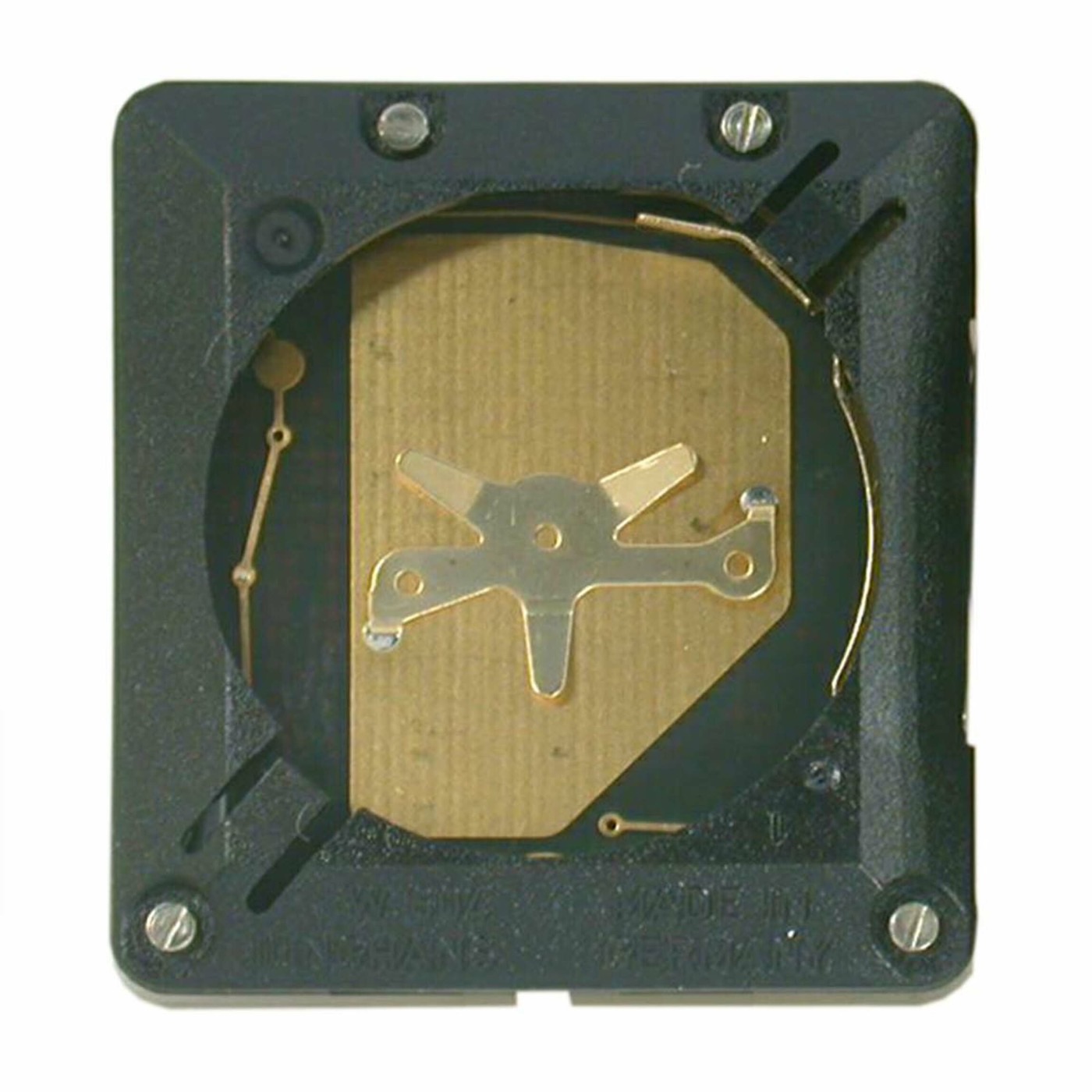
Junghans’s box calls the MEGA 1 the world’s first radio-controlled wristwatch, and the Science Museum Group and Royal Museums Greenwich repeat the claim in their records; PTB describes it as the first commercial radio-controlled wristwatch, brought to market in 1990.1, 2, 3, 4
What changed was who set the watch. Its owner no longer had to: the time on the wrist came from PTB’s legal time for Germany, and a 1991 Junghans advertisement says the watch even changed to summer and winter time by itself.2, 4, 14, 15
After the MEGA 1
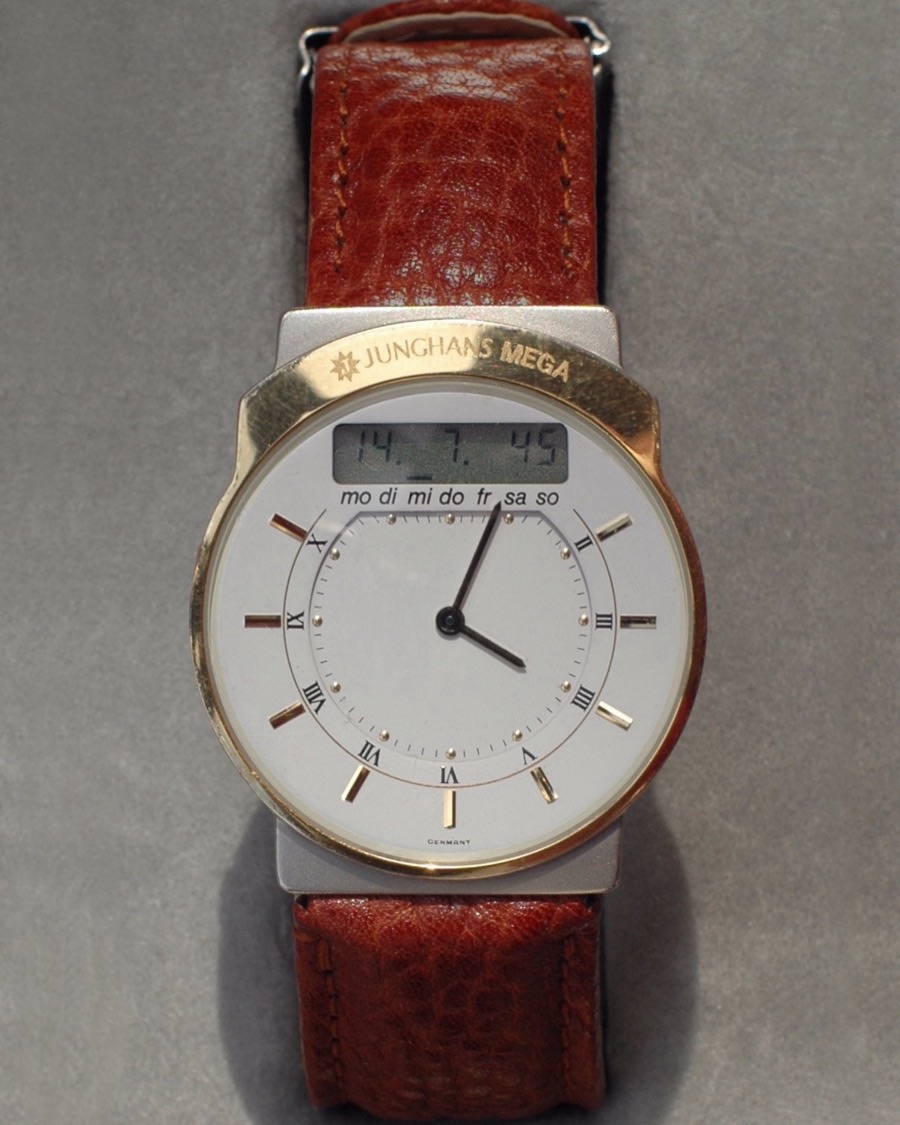
A year later Junghans advertised a MEGA with ordinary hands; the advertisement calls it the first radio wristwatch with hands in the world, and says Junghans made radio technology affordable.15
Junghans dates the steps that followed: a solar-powered MEGA in 1993, the antenna inside a non-metallic case in 1994, a radio movement with its antenna inside a metal case in 1999, and in 2004 a movement that could also receive the Japanese and American time transmitters.5, 17
Radio control became ordinary. PTB estimated in 2009 that about 100 million DCF77 receivers were made from 2000 to 2008, most of them in consumer clocks, and says private owners are now its most frequent users, wearing radio-controlled wristwatches among other clocks.4, 14
PTB gives the reason long waves suit a watch: they reach inside buildings and can be picked up by a small ferrite antenna in the case, while satellite signals need an antenna outside with a clear view of the sky; reliable reception reaches about 2,000 kilometres from Mainflingen.14, 18
Since
Three public collections hold it. The Deutsches Uhrenmuseum in Furtwangen holds two, one in its original pyramid-shaped box; the Science Museum in London holds one with its packaging, given by Junghans’s British sales company; and the National Maritime Museum, Greenwich, holds one with its box and instructions.1, 2, 3, 7
PTB wrote in 2009 that the MEGA 1 was already an exhibit in clock museums and technical museums.4
DCF77 still broadcasts: PTB says its contract with Media Broadcast guarantees 99.7 per cent availability a year until the end of 2031.19
Key dates
- 1959
PTB begins sending time marks and standard frequency over DCF77 on 1 January.4
- 1973
DCF77 sends coded time and date from 5 June.4
- 1985
Junghans brings out a series-made radio-controlled table clock.11, 17
- 1987
The Technical University of Darmstadt shows a prototype radio-controlled wristwatch.4
- 1988
Junghans files its strap antenna for a radio wristwatch in Germany on 27 May.12
- 1990
The MEGA 1 goes on sale.1, 2, 4
- 1991
Junghans advertises a MEGA with hands.15
- 1993
The European patent for the strap antenna is granted on 1 September.12
Where the Junghans MEGA 1 leads
- Made by, CompanyJunghans
Junghans made the MEGA 1 at Schramberg in 1990.1, 2
- Part of, HistoryGerman watchmaking
The radio-controlled wristwatch Junghans put on sale in 1990, set by PTB’s DCF77 time signal; the Deutsches Uhrenmuseum holds two.1, 4, 7
- See also, TechnologyThe quartz watch
A quartz watch corrected by radio: without the DCF77 signal the MEGA 1 runs as an ordinary quartz watch.2, 3
Facts and sources
- Made
- 19901, 2
- Held by
- Deutsches Uhrenmuseum, Furtwangen (Inv. 1995-604 and 1995-245); Science Museum, London (1991-8); National Maritime Museum, Greenwich (ZAA0741)1, 2, 3, 7
Sources
- 1
Armbanduhr, Junghans, Schramberg, 1990 (Inv. 1995-604) (opens in a new tab)
- 2
Junghans ‘Mega 1’ radio-controlled wristwatch, 1990 (opens in a new tab)
- 3
- 4
- 5
150 Jahre Junghans 1861-2011 (anniversary catalogue) (opens in a new tab)
- 6
- 7
Armbanduhr, Junghans, Schramberg, um 1990 (Inv. 1995-245) (opens in a new tab)
- 8
- 9
- 10
- 11
Junghans Tischfunkuhr, 1985 (Inv. 7107) (opens in a new tab)
- 12
EP 0 348 636 B1: Antenne für eine kleine Funkuhr (opens in a new tab)
- 13
- 14
- 15
“Es hat 5.000 Jahre gedauert bis zu dieser Uhr” (advertisement, 1991) (opens in a new tab)
- 16
- 17
- 18
- 19
DCF77 receiver authorization and availability (opens in a new tab)
Sources read November 12, 2026.