Tool-watch engineering
How watchmakers protect a watch against the conditions it is used in (magnetism, water and pressure, scratching and shock) and the standards that test it.
Companies Casio, Citizen, Damasko, IWC Schaffhausen, Omega, Sinn

Magnetism
ISO 764 sets the minimum requirements and the tests for a watch sold as magnetic resistant. Its 1984 edition tested a watch’s exposure to a field of 4,800 A/m, the figure national adoptions of the standard still give.1, 6, 7
Sinn and Damasko both describe the German standard the same way: a mechanical watch counts as antimagnetic if, after a field of 4,800 A/m, it has not stopped and its rate has changed by no more than 30 seconds a day. That standard, DIN 8309, was withdrawn in 2026 and replaced by DIN ISO 764, the German adoption of ISO 764.4, 8, 9
Makers go well past the baseline by shielding the movement. IWC Schaffhausen’s Ingenieur of 1955 had an inner case of soft iron that protected it to 80,000 A/m.10, 11
Magnetic resistance, in amperes per metre
Damasko says its soft-iron cages reach the same figure. Omega says its Master Chronometer tests, set by METAS, expose each movement and cased watch to 15,000 gauss.8, 12
Water and pressure
DIN 8310 defines water resistance and sets its requirements and tests. ISO 6425 does the same for divers’ watches, which must withstand diving to at least 100 metres, carry a way to measure diving time and stay readable in the dark.2, 3
Two German makers turned to submarine steel for diving cases: Sinn for its U-series, for the steel’s resistance to seawater and its lack of magnetism, and Damasko for its diving line, in the steel of the German Navy’s Class 212 submarines.4, 13
Hardness
Sinn notes that hardness is usually measured on the Vickers scale, because the familiar Mohs scale is not linear; on Vickers, sapphire crystal is around 2,000.4
The two German makers took different routes to a hard case: Sinn’s Tegiment process hardens the surface of a steel case, while Damasko’s founder patented a case of hardenable steel that Damasko says is hardened all the way through.4, 13, 14, 15
Shock
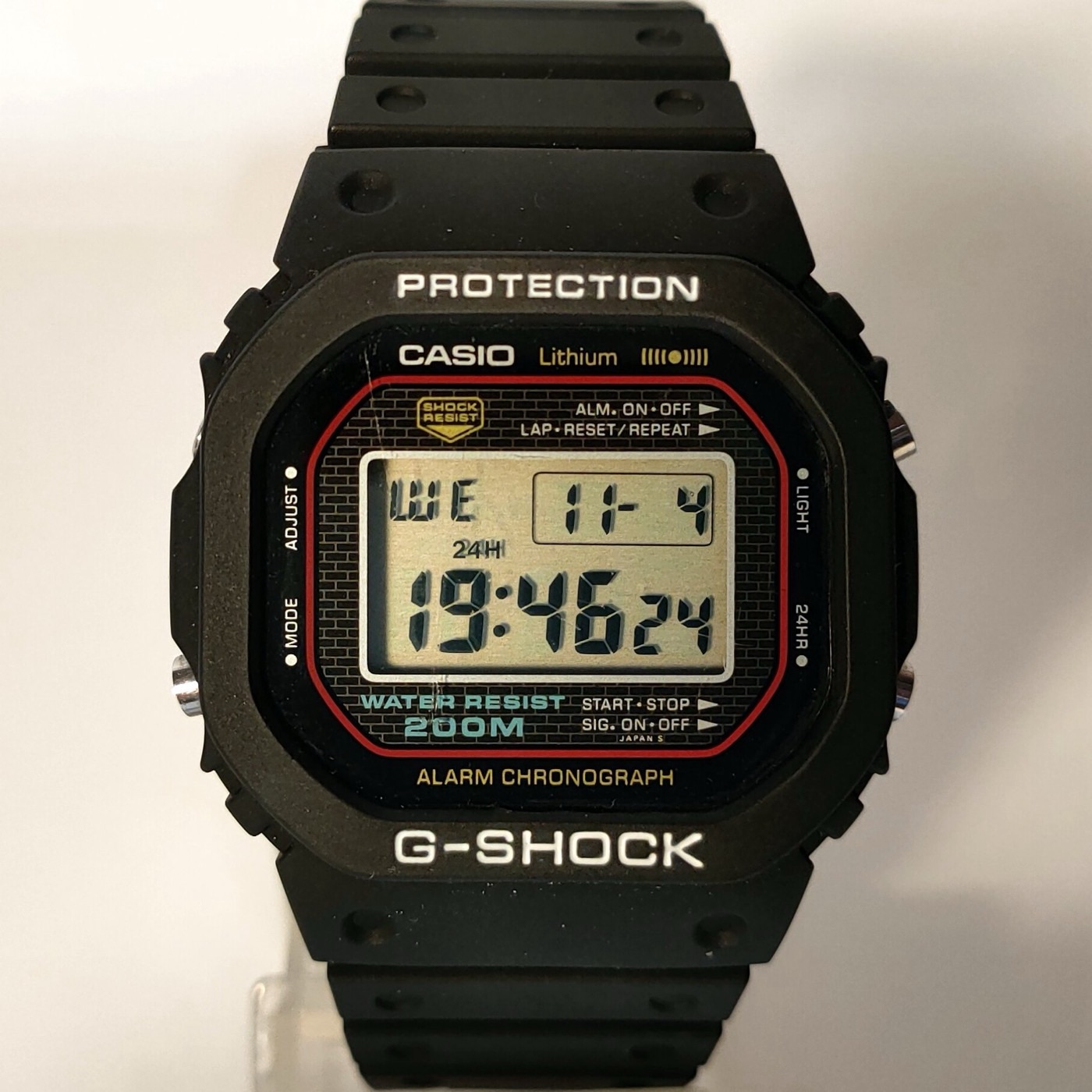
Nippon.com describes how Casio’s G-Shock began in 1981 with an engineer’s proposal for a watch that would survive being dropped, and went on sale in 1983 after more than 200 prototypes.16
Key dates
- 1955
IWC Schaffhausen The Ingenieur, with a soft-iron inner case against magnetic fields.10, 11
- 1983
Casio The first G-Shock goes on sale, as Nippon.com describes it.16
- 1994
- 1995
Sinn Ar-Dehumidifying Technology, a drying capsule, special seals and a protective gas filling, arrives in the 203 Ti Ar.4, 14
- 1996
Damasko Konrad Damasko applies for a US patent on a case of hardenable, nickel-free stainless steel.15
- 1998
Sinn Temperature Resistance Technology, which Sinn says keeps its watches working from −45 °C to +80 °C.14
- 2000
- 2003
Sinn Tegiment, a hardening of the steel case’s surface against scratches, arrives in the 756.4, 14
- 2005
Sinn Sinn makes a diving-watch case from German submarine steel and, it says, becomes the first watch company to have diving watches certified by Germanischer Lloyd.4, 14
- 2026
DIN 8309, the German standard for antimagnetic watches, is withdrawn and replaced by DIN ISO 764.9
Where Tool-watch engineering leads
- In this story, CompanyCasio
Nippon.com describes the G-Shock, on sale from 1983, as designed from the start to survive being dropped.16
- In this story, CompanyCitizen
Citizen’s surface-hardened titanium, beside other makers’ answers to scratches and wear.17
- In this story, CompanyDamasko
Damasko builds its cases on the hardened steel its founder patented and, it says, shields its movements with soft iron.8, 15
- In this story, CompanyIWC Schaffhausen
IWC’s Ingenieur of 1955 had a soft-iron inner case that protected it against magnetic fields to 80,000 A/m.10, 11
- In this story, CompanyOmega
Omega says its Master Chronometer tests expose each movement and cased watch to a field of 15,000 gauss.12
- In this story, CompanySinn
Much of Sinn’s range is built on case technologies of its own, against magnetism, moisture, temperature, scratching and seawater.14
- See also, HistoryWatches go to war
Wartime requirements (hacking, luminous dials, sealed and anti-magnetic cases) became tool-watch features.18, 19
- See also, TraditionPilot’s watches
DIN 8330 tests a pilot’s watch against vibration, magnetism and aviation fluids, the same kind of conditions tool-watch engineering addresses.20
Facts and sources
- Standards
- ISO 764 (magnetic resistance), DIN 8310 (water resistance), ISO 6425 (divers’ watches)1, 2, 3
Sources
- 1
ISO 764:2020 Horology: Magnetic resistant watches (opens in a new tab)
- 2
- 3
ISO 6425:2018 Horology: Divers' watches (opens in a new tab)
- 4
- 5
A Casio G-Shock DW-5000C with module 240 of 1983. (opens in a new tab)
- 6
ISO 764:1984 Horology: Antimagnetic watches (withdrawn) (opens in a new tab)
- 7
- 8
Durchdachter Magnetfeldschutz (magnetic field protection) (opens in a new tab)
- 9
- 10
- 11
- 12
- 13
- 14
- 15
- 16
Tough and timeless: the development of the G-Shock (opens in a new tab)
- 17
- 18
War Time: How America's Wristwatch Industry Became a War Casualty (opens in a new tab)
- 19
Military Watches of the World: A-11, the Watch That Won the War (opens in a new tab)
- 20
Sources read November 11, 2026.