Seiko
A Tokyo watch company that grew from a clock shop opened in 1881 and came to make all its watches in its own factories. In 1969 it put a quartz wristwatch on sale, and the industry turned to electronics after it.
Founded 1881, Tokyo (Kyobashi, then Ginza), Japan, Owned by Seiko Group Corporation, through Seiko Watch Corporation
In the history The electric and quartz revolution
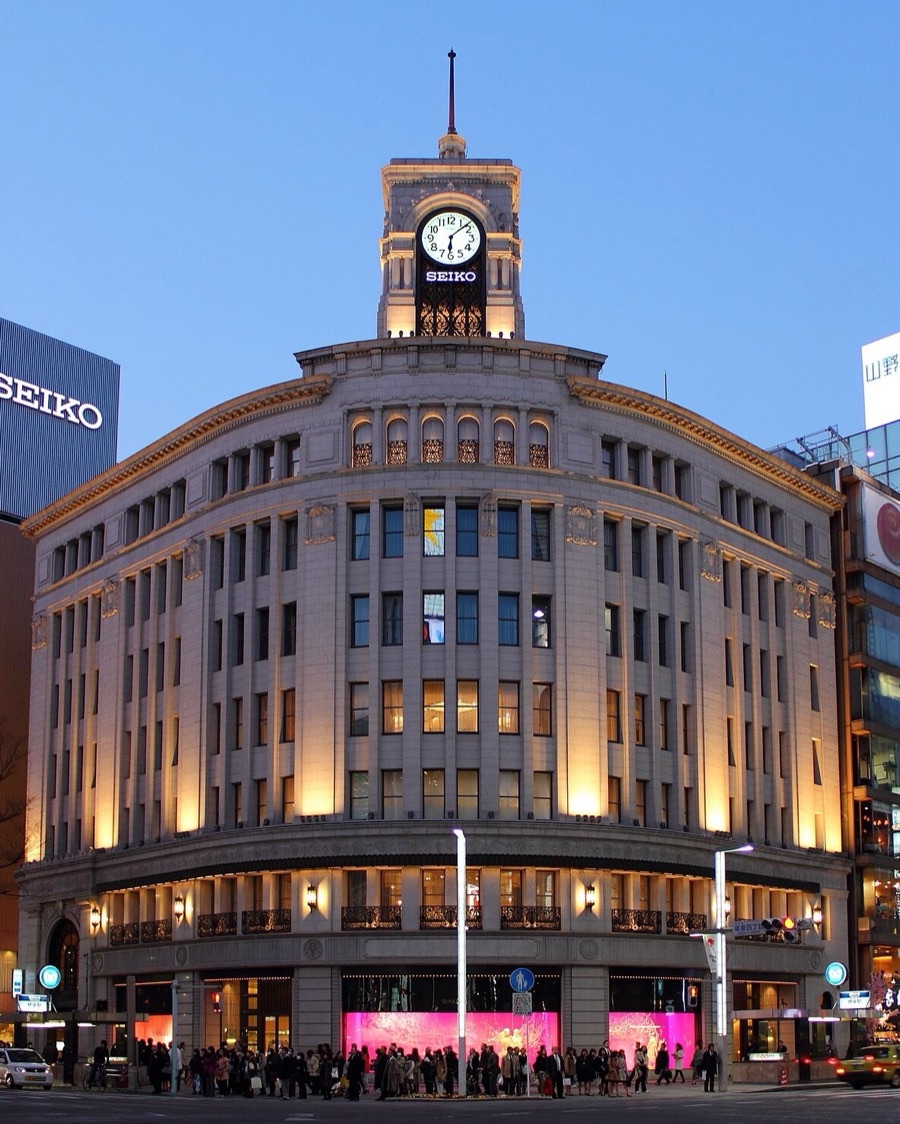
A dealer becomes a maker
The shop sold and repaired clocks and grew by wholesaling timepieces bought from foreign trading houses in Yokohama. By 1894 it had a corner building with a clock tower in Ginza, on the site of today’s SEIKO HOUSE.1, 2, 6
In 1892 Hattori turned to making clocks himself. His Seikosha factory, set up with the engineer Tsuruhiko Yoshikawa and named after the Japanese word for precise, made wall clocks, then pocket watches from 1895 and the Laurel wristwatch in 1913. The Great Kanto Earthquake of 1923 burned down the factory and the shop; the company rebuilt, and in 1924 launched the SEIKO brand.1, 2, 7
Watchmaking was later split between two group companies: Daini Seikosha, spun off in 1937 and now Seiko Instruments, and Suwa Seikosha, formed in 1959 from the Suwa factory and now Seiko Epson. Both made Grand Seiko models and both entered the Swiss observatory competitions under their own names. The Ginza shop became Wako in 1947.1, 8, 9, 10

From Swiss competitions to quartz
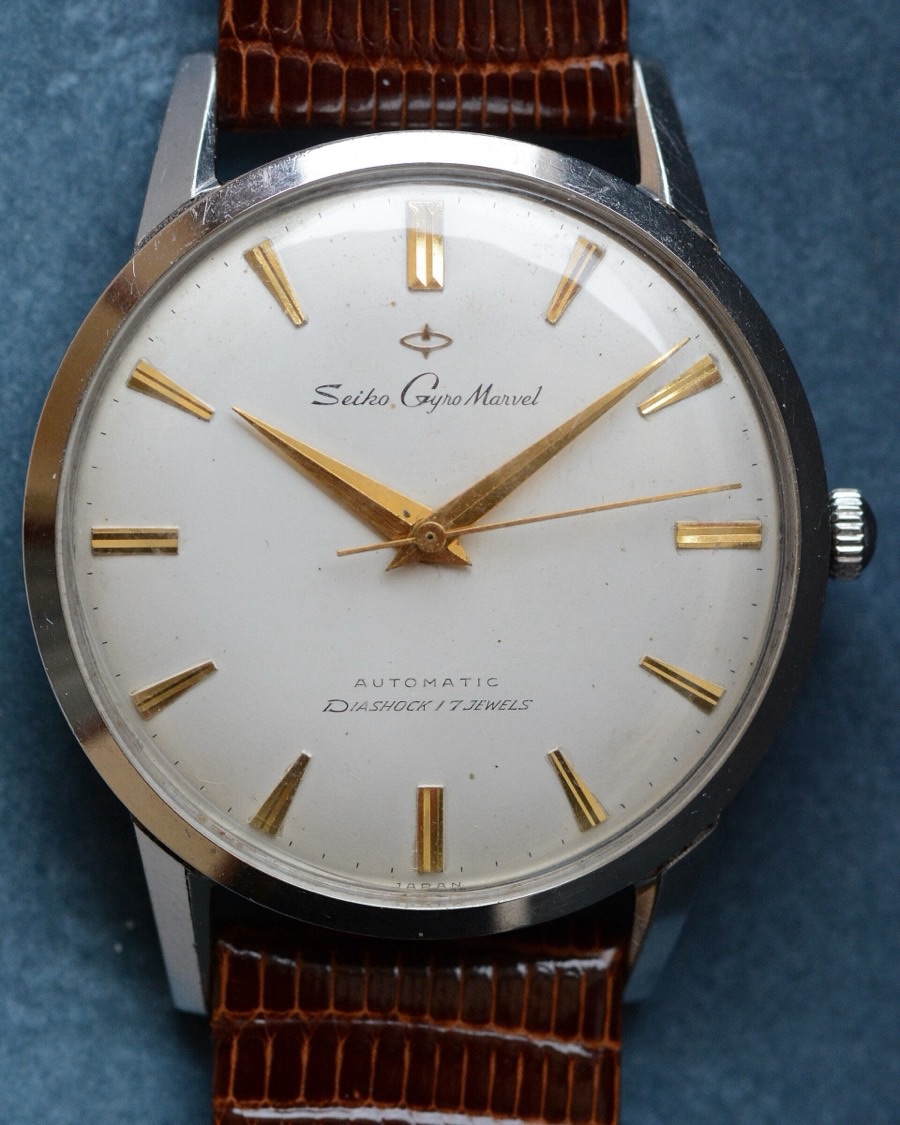
From the late 1950s Seiko stopped copying foreign watches and designed its own: the Marvel of 1956, the Crown and, in 1960, the watch that became Grand Seiko. It timed the 1964 Tokyo Olympics, and its movements placed second and third at the Neuchâtel observatory competition in 1967 and led the mechanical wristwatch results at Geneva in 1968.8, 10, 14
Quartz grew out of the same work: a quartz clock for a broadcaster in 1958, quartz timers for the 1964 Games, a wristwatch prototype in 1967. On December 25, 1969, Seiko began selling the Quartz Astron, which it and the IEEE describe as the first quartz wristwatch sold to the public. It then opened much of its quartz patent portfolio to other makers, and quartz spread through the industry in the quartz crisis.3, 4, 15
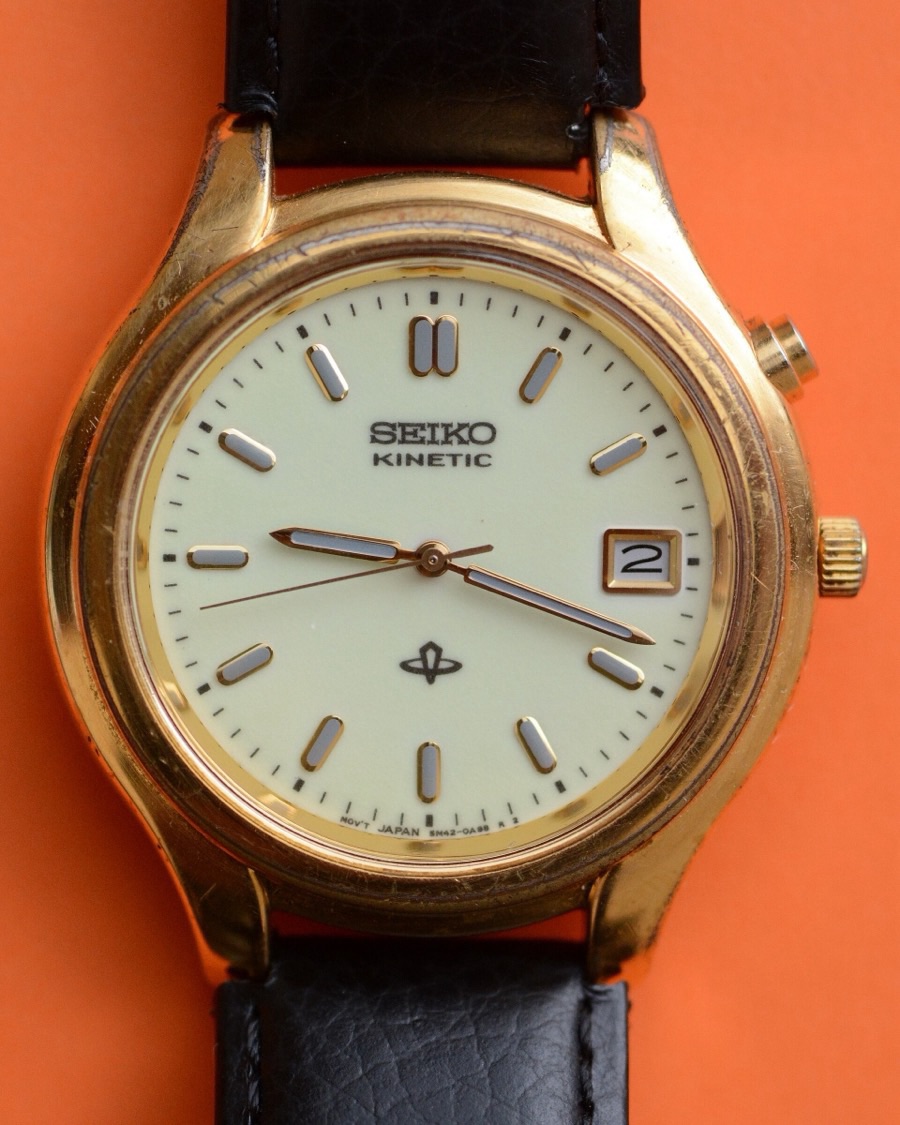
Electronic watches of many kinds followed: a six-digit LCD watch in 1973, a solar watch in 1977, the Kinetic, which makes its electricity from the wearer’s movement, in 1988, and Spring Drive, a mainspring movement regulated by a quartz oscillator, in 1999. In 2012 the Astron name returned on a solar watch that sets itself from GPS satellites.1, 3, 16
Key dates
- 1881
Kintaro Hattori opens K. Hattori & Co. in Tokyo.1, 2
- 1892
The Seikosha factory begins making wall clocks.1, 7
- 1913
The Laurel wristwatch.1, 2
- 1924
The SEIKO brand is launched.1, 2
- 1964
Official timer of the Tokyo Olympic Games.1, 14
- 1968
Seiko movements lead the mechanical wristwatch results at the Geneva observatory competition.1, 10
- 1969
The Quartz Astron goes on sale in Tokyo on December 25.3, 4
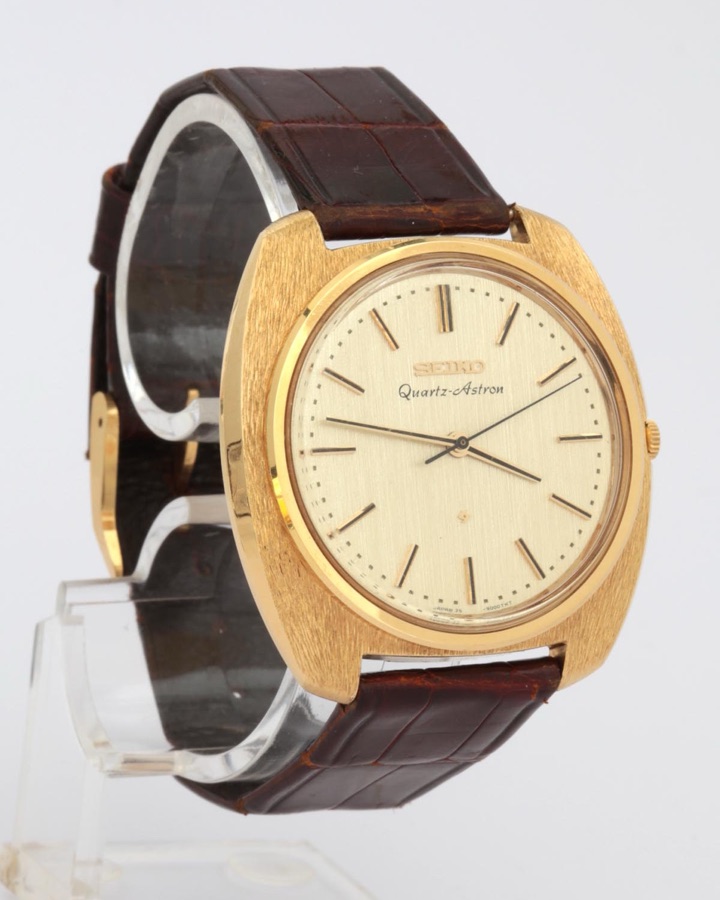
A Seiko Quartz Astron of 1969, in the collection of the Deutsches Uhrenmuseum.18 Photograph: Deutsches Uhrenmuseum. Cropped here. View full original at Wikimedia Commons (opens in a new tab) · 1,200 × 1,563 px; CC BY-SA 4.0 (opens in a new tab). Adapted; shared alike. - 1973
A digital quartz watch with a six-digit LCD.1, 3
- 1988
The Kinetic, powered by the wearer’s movement.16
- 2012
The Astron name returns on a GPS solar watch.1, 16
Where Seiko leads
- Founded by, PersonKintarō Hattori
The Tokyo dealer whose 1881 shop and 1892 factory became Seiko.1, 2
- Developed, TechnologyThe quartz watch
Seiko’s Suwa Seikosha worked on quartz timekeeping from 1959.3, 4
- Made, ObjectThe Seiko Astron
Suwa Seikosha, a Seiko company, developed and made the Astron.4, 19
- Made, ObjectThe Seiko Laurel
Made by Seikosha, Hattori’s factory, from 1913.20, 21
- Owned by, GroupSeiko Group
The holding company behind Seiko, Grand Seiko and the factories that made them.22, 23
- Based in, PlaceTokyo
Seiko has been based in Ginza since Hattori’s shop moved there in 1887.1, 6
- Part of, HistoryJapan builds a watch industry
The brand of the Hattori factories, from 1924.21, 24
- Part of, HistoryThe electric and quartz revolution
Seiko’s Suwa Seikosha developed quartz timekeeping from 1959 and sold the Astron in 1969.3, 4
- Part of, TraditionChronometry and certification
The Swiss observatory contests where Seiko’s two factories competed in 1967 and 1968.10, 14
- Part of, TraditionDive watches
Seiko’s diver’s watches of 1965 onward, set against the Swiss originals.25
- Part of, TraditionJapanese watchmaking
Seiko’s factories in Tokyo, Suwa and Shizukuishi are the backbone of Japan’s watch industry.1, 8, 9
- Part of, EventThe quartz crisis
What the Quartz Astron of 1969 set off, in Switzerland and beyond.3, 4
- See also, CompanyGrand Seiko
Grand Seiko began as Seiko’s high-accuracy line in 1960 and left it in 2017.1, 10, 26
- See also, PlaceSuwa
One of the two factories that made Seiko watches, with Daini Seikosha in Tokyo.8, 10
- See also, TechnologyWadokei: Japanese clocks
Seiko’s museum keeps a collection of wadokei.27
- See also, EventThe ETA supply dispute
Monochrome counts Seiko’s movements among the cheaper alternatives smaller brands used as ETA’s supply shrank.28
Elsewhere in Watch Vault
- Current coverage
Stories that name Seiko, newest first (opens in a new tab), in Watch Vault Media.
- References
Seiko references from the maker’s own pages (opens in a new tab), in the Watch Vault Archive Reference Directory.
Facts and sources
- Founded
- 18811, 11, 12
- Founder
- Kintaro Hattori1, 2
- Founded in
- Tokyo (Kyobashi, then Ginza), Japan6
- Owner
- Seiko Group Corporation, through Seiko Watch Corporation22, 23
- Based in
- Ginza, Tokyo11, 22
- Official site
- seikowatches.com (opens in a new tab)23
Sources
- 1
- 2
- 3
History of Seiko and its products, stage 3 (1960s to 1980s) (opens in a new tab)
- 4
Milestones: Electronic Quartz Wristwatch, 1969 (opens in a new tab)
- 5
Ginza Wako, Chuo, Tokyo, photographed on 27 March 2012. (opens in a new tab)
- 6
Episode 2: Establish K. Hattori & Co. (1881 to 1891) (opens in a new tab)
- 7
Episode 3: Establish Seikosha Factory (1892 onward) (opens in a new tab)
- 8
- 9
- 10
- 11
- 12
- 13
- 14
History of Seiko and its products, stage 2 (1950s to 1960s) (opens in a new tab)
- 15
- 16
History of Seiko and its products, stage 4 (1990s onward) (opens in a new tab)
- 17
- 18
Quartz wristwatch Astron, Seiko, Japan, 1969 (Deutsches Uhrenmuseum) (opens in a new tab)
- 19
- 20
- 21
History of Seiko and Its Products, Stage 1 (1881-1920s) (opens in a new tab)
- 22
- 23
- 24
- 25
- 26
- 27
Information on Traditional Japanese Clocks (Wadokei) (opens in a new tab)
- 28
Sources read November 12, 2026.