The Seiko Laurel
Seikosha’s wristwatch of 1913, which the Japan Society of Mechanical Engineers and the Seiko Museum describe as Japan’s first, designated Mechanical Engineering Heritage No. 66 in 2014 with the original Grand Seiko and the Quartz Astron.
Made 1913, By Seikosha, K. Hattori & Co., Tokyo, Now at The Seiko Museum Ginza
Companies Grand Seiko, Seiko
In the history Japan builds a watch industry
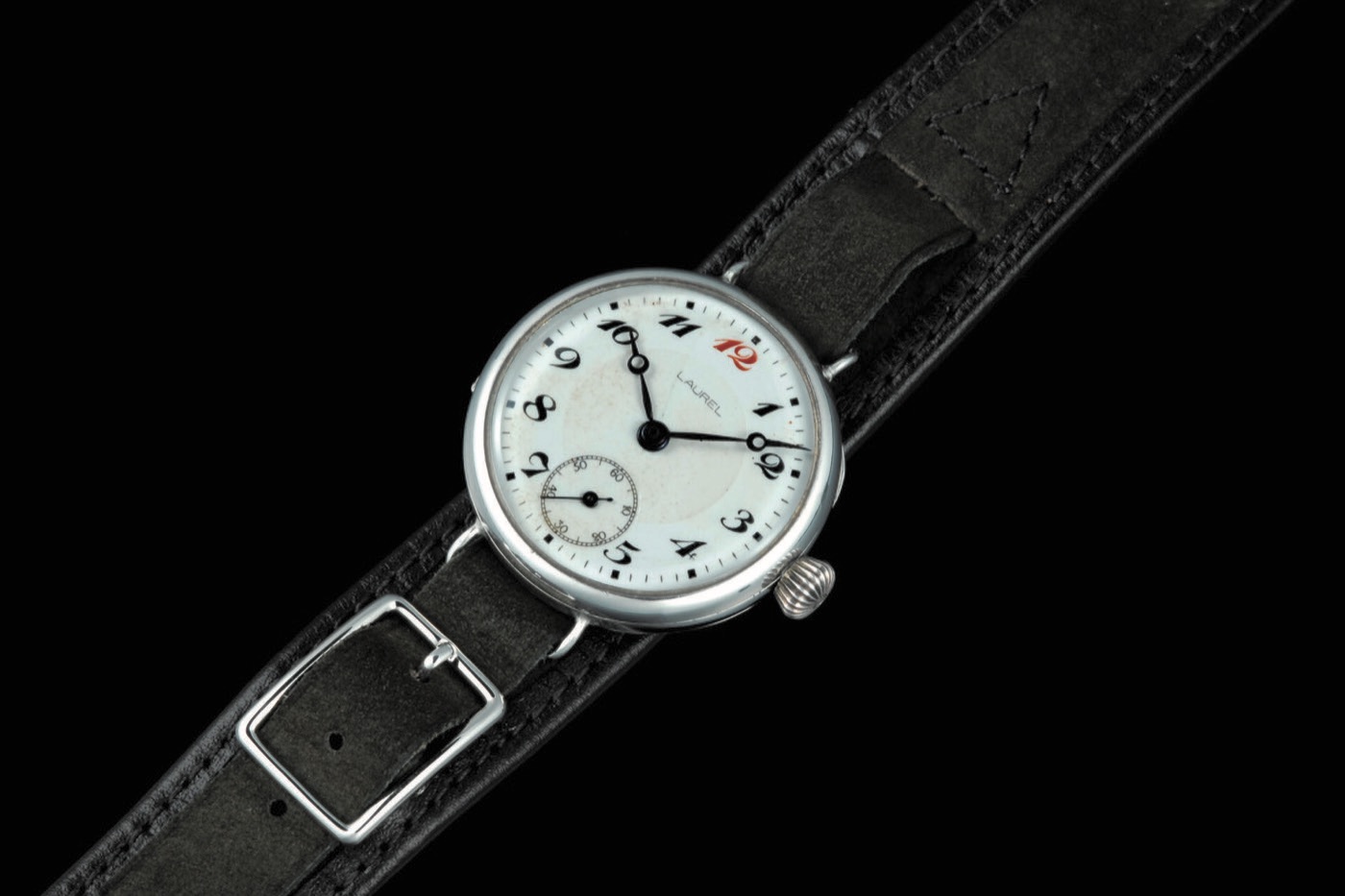
The watch
The Laurel is a wristwatch made by Hattori’s Seikosha factory in Tokyo from 1913. The Japan Society of Mechanical Engineers, which calls it the Laurel Type 12, and the Seiko Museum describe it as Japan’s first wristwatch.1, 2, 5
It has a 12-ligne movement, 26.65 mm across, by the Seiko Museum’s figures; Seiko’s brand history says the watch was about a fifth of the size of a standard pocket watch.3, 5, 6
A WatchTime feature describes a silver case 29.6 mm across and an enamelled ceramic dial, and says Seikosha made its own balance springs by 1910 and its own enamel dials by 1913.7
It was named Laurel, not Seiko: the Seiko Museum says Seikosha sold its watches under many names until the SEIKO brand was launched after the earthquake of 1923.5, 8
Making it
The Seiko Museum says that shrinking a movement to 12 ligne was very hard with the machines of the day, and that the work pushed Seikosha forward in design, fine machining and machine tools; it thinks the movement was based on a Swiss design.2, 3, 5
Accounts of how many were made differ. Seiko says about 50 could be made in a day; the WatchTime feature gives 30 to 50, and says the parts still depended on imports.6, 7
The Seiko Museum notes that wristwatches were still new: it dates their production around the world from about 1910, and says the First World War, which began a year after the Laurel appeared, created a new demand for them. That turn is told in From the pocket to the wrist and the First World War.3, 5
As heritage
On 7 August 2014 the Japan Society of Mechanical Engineers designated the Laurel, with the original Grand Seiko of 1960 and the Quartz Astron of 1969, as Mechanical Engineering Heritage No. 66, Japan-made wristwatches which showed remarkable technological innovations.1, 3
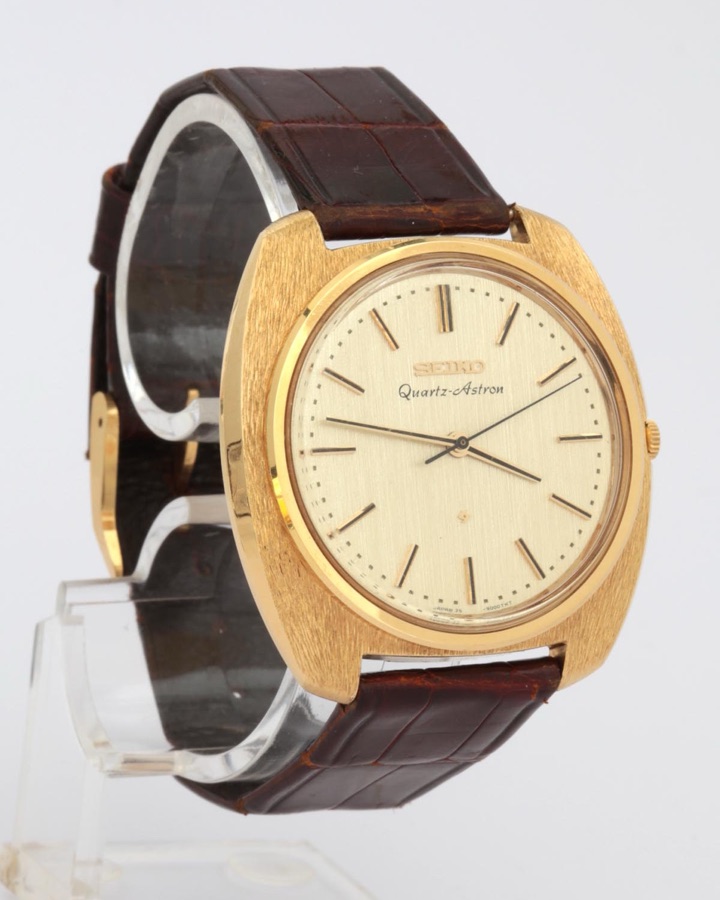
The designated watches are shown at the Seiko Museum Ginza, which asks visitors to book.1
Seiko describes the three as a sequence: learning from the world with the Laurel, catching up with Grand Seiko, and leading with the Astron.3
Its place in the larger story is in Japan builds a watch industry.1, 5
Where the Seiko Laurel leads
- Made by, CompanySeiko
Made by Seikosha, Hattori’s factory, from 1913.1, 5
- Part of, HistoryJapan builds a watch industry
The wristwatch of 1913 that the Japan Society of Mechanical Engineers calls Japan’s first.1, 2
- See also, HistoryFrom the pocket to the wrist
The Seiko Museum dates wristwatch production around the world from about 1910.5
- See also, CompanyGrand Seiko
Designated together as Mechanical Engineering Heritage No. 66 in 2014.1, 3
- See also, ObjectThe Seiko Astron
Designated together as Mechanical Engineering Heritage No. 66 in 2014.1, 3
Facts and sources
Sources
- 1
- 2
- 3
- 4
A Laurel wristwatch (Commons description: Montre Laurel). (opens in a new tab)
- 5
History of Seiko and Its Products, Stage 1 (1881-1920s) (opens in a new tab)
- 6
- 7
A look at Seiko’s history through 12 milestones (opens in a new tab)
- 8
- 9
Quartz wristwatch Astron, Seiko, Japan, 1969 (Deutsches Uhrenmuseum) (opens in a new tab)
Sources read November 12, 2026.