Wadokei: Japanese clocks
The mechanical clocks of Edo-period Japan, built to keep temporal hours that changed length with the seasons by moving weights on a foliot, switching between two foliots or adjusting the dial, and made obsolete when Japan adopted equal hours in 1873.
Introduced From about 1600 to the 1870s, The Edo period, until Japan adopted equal hours in 1873
Companies Seiko
In the history Japan builds a watch industry
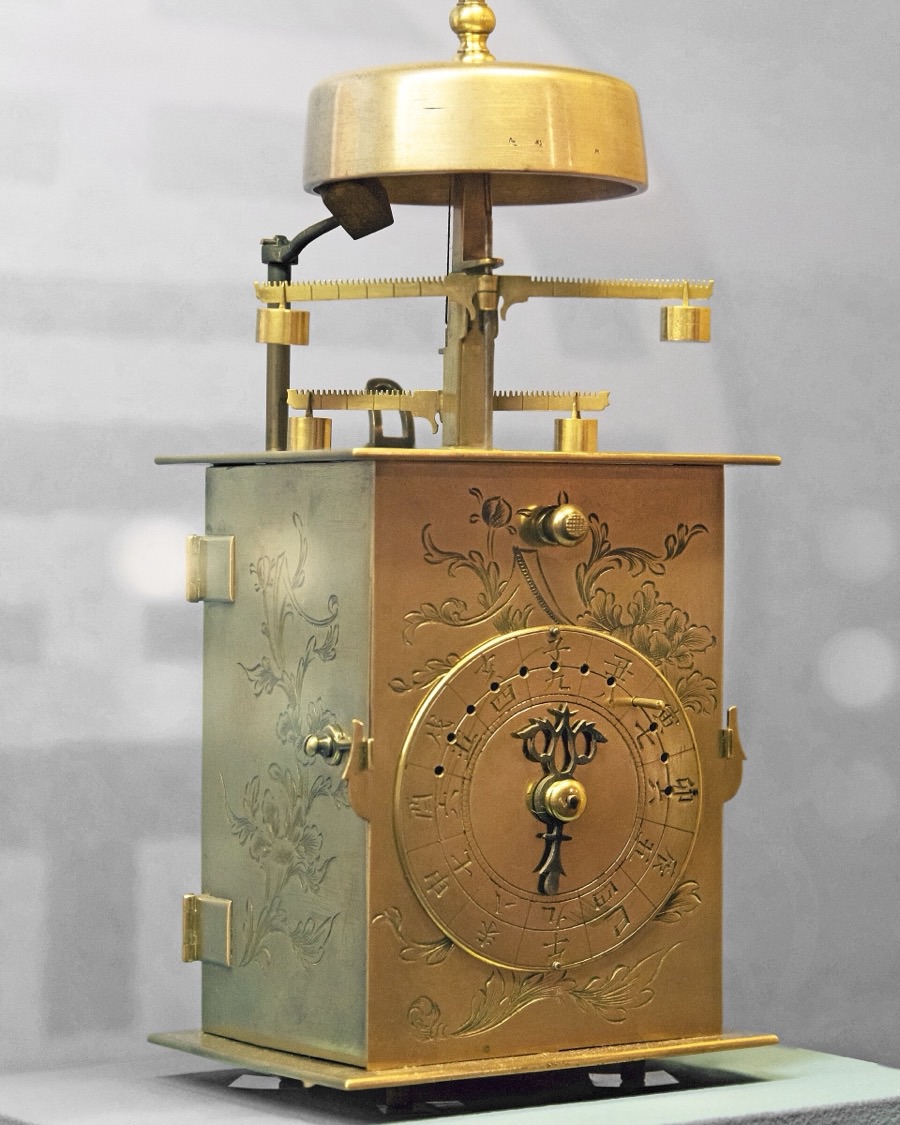
Clocks for temporal hours
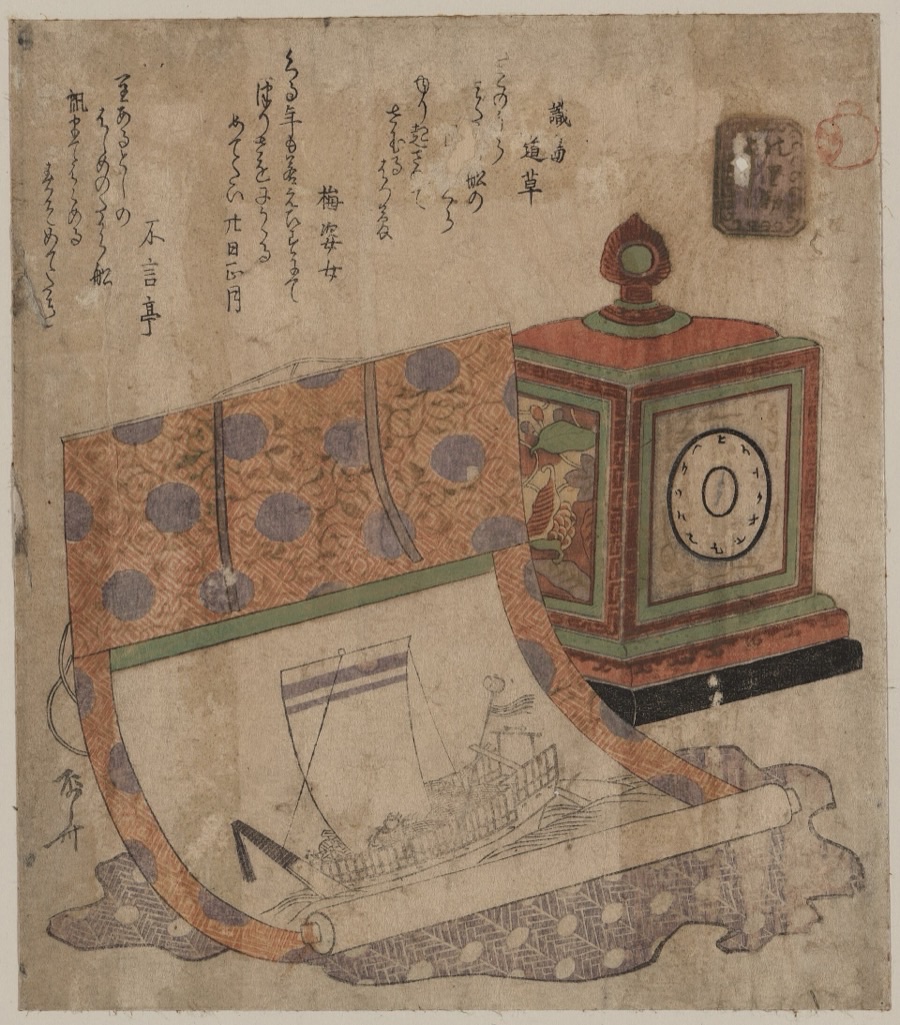
Wadokei, literally Japanese clocks, are the mechanical clocks made in Japan from the seventeenth century to the early Meiji era to tell temporal hours, in which day and night were each divided into six parts whose length changed with the seasons.1, 2, 7
The Seiko Museum describes a year divided into 24 seasons of about half a month, with the length of the hours reset for each.2, 3
Hours were named after the twelve signs of the zodiac and numbered from nine down to four, so that each number came twice a day; Wikipedia’s account gives the countdown’s origin as the burning of incense, and says the numbers one to three were left out because they were the strokes rung to call Buddhists to prayer.1, 8
The sources disagree on where the hours began. The Japan Clock & Watch Association and the Seiko Museum put the six o’clock of morning and evening at sunrise and sunset; the Japan Society of Mechanical Engineers and Japanese Wikipedia put it at dawn and dusk.1, 2, 7, 9
From Europe’s clocks
The models were European. The Japan Clock & Watch Association says missionaries brought clocks from 1551 and taught clockmaking in their schools in Kyushu and Kyoto, where Japanese smiths made their own; Wikipedia’s account names lantern clocks with the verge escapement and foliot as the type Japan inherited.1, 8
After Christianity was banned and the country closed, the flow of new European technique stopped, and Japanese clockmakers did not take up the pendulum or the balance spring until late in the Edo period. Wikipedia dates the closure from 1641.1, 8
The Japan Clock & Watch Association names Nagasaki first among the centres, with Matsue, Kyoto, Osaka, Sakai, Ise, Nagoya, Wakasa, Edo, Sendai, Morioka and Hirosaki, and says many clockmakers worked for the shogun’s household and the great lords.1
Clocks were luxuries. Japanese Wikipedia says they were owned mostly by lords and rich merchants, made of iron or brass and often finely engraved, which is why wadokei are also called daimyo clocks.7
How they kept the changing hours
There were two ways to follow the hours, the Japan Clock & Watch Association says: change the speed of the clock, or run it at a steady speed and change the dial.1
Speed was changed on the foliot, the swinging bar of the verge escapement. Moving its small weights outward slowed it and inward quickened it, so a single-foliot clock had its weights reset at sunrise and sunset every day.1, 3, 8
The double-foliot clock carried one foliot for the day and one for the night and switched between them by itself at sunrise and sunset, so its weights needed moving only 24 times a year. The Japan Clock & Watch Association dates a double-foliot lantern clock at the Seiko Museum to 1688 and calls it the oldest confirmed; Japanese Wikipedia dates the type from the mid-1600s.1, 3, 7
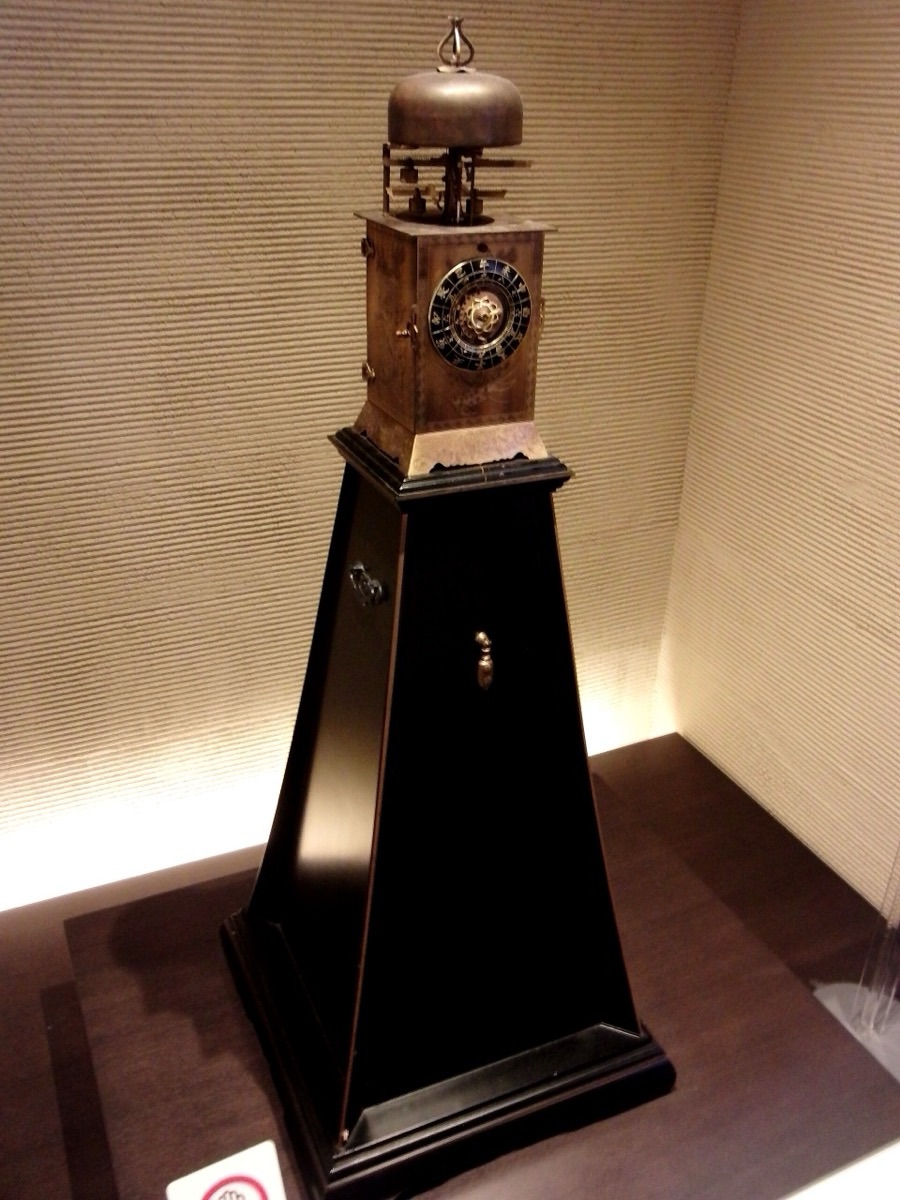
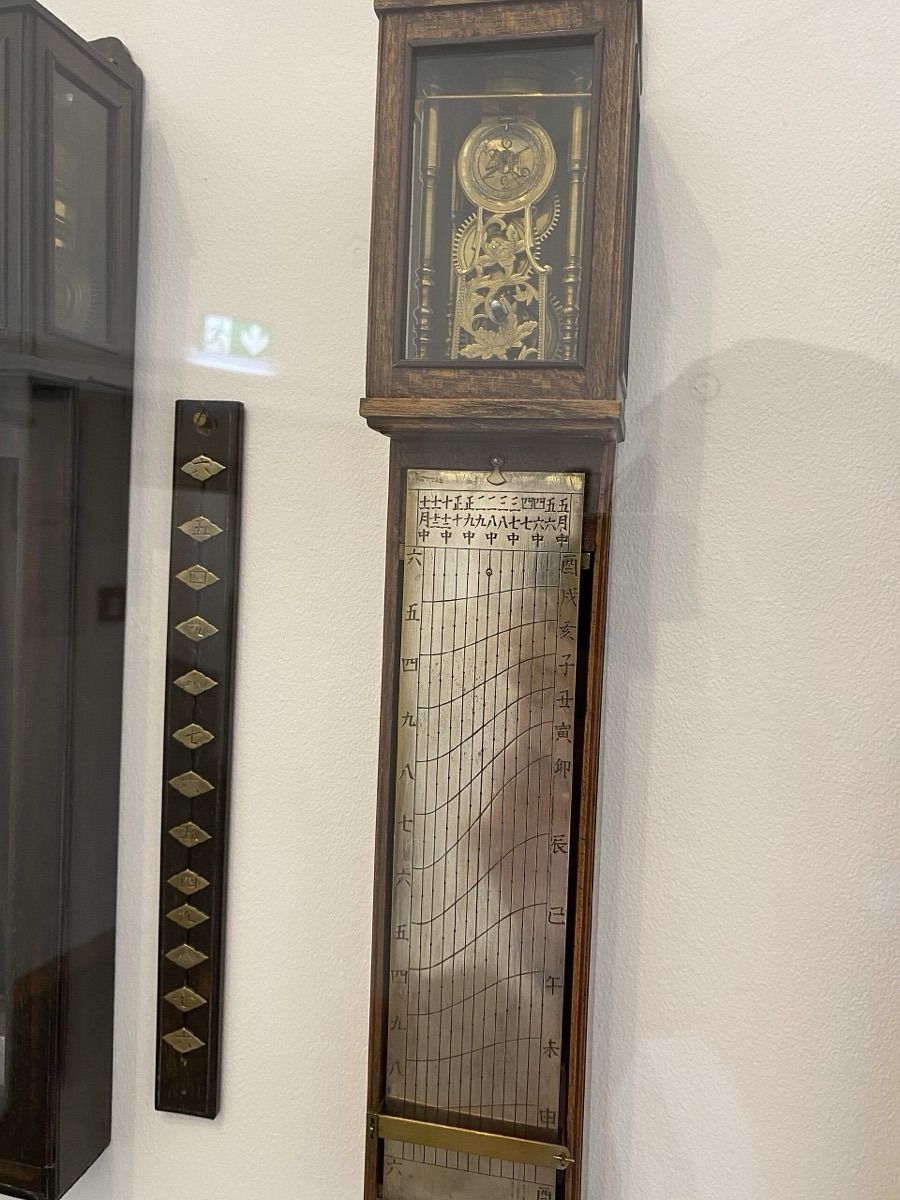
Other clocks changed the dial. Pillar clocks (shaku-dokei) showed the hour by a pointer on the falling weight against a vertical scale whose hour markers could be moved for the season; dial clocks had hour plates that could be spaced to the season, a method the association says spread at the end of the Edo period, when pendulums and balance springs came into use.1, 7, 8
Hosokawa Hanzo’s Karakuri-zui of 1796, a book of mechanical dolls, opens with a volume on how to make a weight-driven striking clock; Wikipedia’s account says it was widely read.7, 8
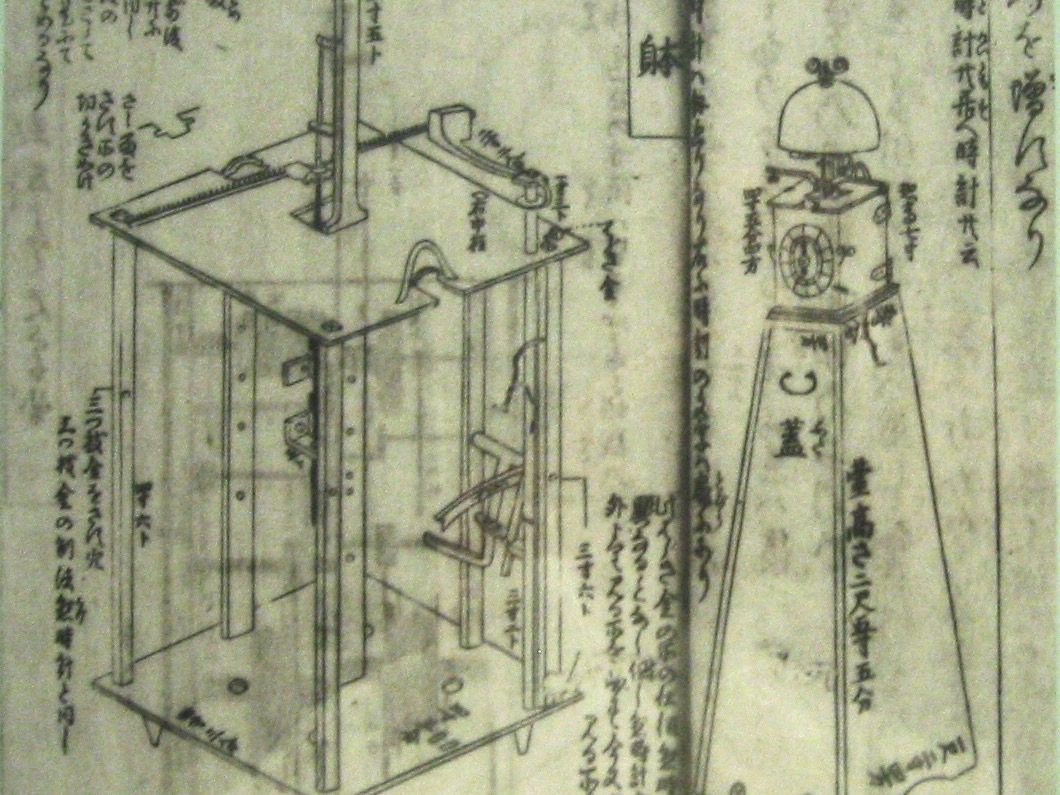
Lantern, pillar and pillow clocks
The forms were many: weight-driven lantern clocks set on tall stands (yagura-dokei), hanging pillar clocks, spring-driven table and pillow clocks, and small portable clocks carried in a seal case (inro-dokei).1, 7
Among the Seiko Museum’s examples, the Japan Clock & Watch Association describes a pocket clock in a lacquered tortoiseshell case with a sundial and compass in its lid, said by its box to have belonged to Tokugawa Nariaki of Mito, and a late-Edo pendulum clock whose pointer lengthened and shortened through the year to show the hours by itself.1
The finest is the Man-nen Jimeisho of 1851 by Tanaka Hisashige, with six faces including temporal hours, the 24 seasons, the moon’s age and a Western clock; the Japan Society of Mechanical Engineers lists it as Mechanical Engineering Heritage No. 22.8, 9
After 1873
When Japan adopted the Gregorian calendar and equal hours on 1 January 1873, wadokei lost their purpose; the Seiko Museum says clocks made for nearly three hundred years became useless.2, 4, 13, 14
Japanese Wikipedia says the domain clockmakers lost their stipends and, finding Western clocks simpler, turned to making them; some late clocks could show both kinds of time.7
Wadokei are now museum pieces. The Japan Clock & Watch Association says the Seiko Museum Ginza exhibits one of Japan’s richest collections, and Tanaka’s clock is at the National Museum of Nature and Science in Tokyo; the story of the industry that replaced them is told in Japan builds a watch industry.1, 2, 9
Key dates
- 1598
Tsuda Sukezaemon of Nagoya copies Tokugawa Ieyasu’s clock, by a chronicle of 1832.1
- 1688
A double-foliot lantern clock now at the Seiko Museum, dated by the Japan Clock & Watch Association.1
- 1851
Tanaka Hisashige’s Man-nen Jimeisho.9
- 1873
Japan adopts equal hours, ending the use of wadokei.2, 4, 13
Where Wadokei: Japanese clocks leads
- Part of, HistoryJapan builds a watch industry
The clocks Japan made for its temporal hours until 1873.1, 2
- See also, CompanySeiko
Seiko’s museum keeps a collection of wadokei.2
- See also, PlaceTokyo
The Japan Clock & Watch Association says the Seiko Museum Ginza exhibits one of Japan’s richest wadokei collections.1, 2
- See also, TechnologyThe verge escapement
Wadokei kept the verge and foliot, regulated by moving weights on the foliot.1, 8
- See also, EventJapan adopts equal hours
The clocks built for the temporal hours that the proclamation abolished.1, 2, 15
Facts and sources
- Made
- From about 1600 to the 1870s1, 7, 14
- In use
- The Edo period, until Japan adopted equal hours in 18732, 4, 13
Sources
- 1
The World of Japanese Traditional Clock (opens in a new tab)
- 2
Information on Traditional Japanese Clocks (Wadokei) (opens in a new tab)
- 3
Lantern Clock with Double Foliot Balance (opens in a new tab)
- 4
The Japanese Calendar: history of the calendar (opens in a new tab)
- 5
- 6
- 7
- 8
- 9
Mechanical Engineering Heritage No. 22: Man-nen Jimeisho (perpetual clock) (opens in a new tab)
- 10
- 11
- 12
- 13
- 14
History of Seiko and Its Products, Stage 1 (1881-1920s) (opens in a new tab)
- 15
Sources read November 12, 2026.