Japan adopts equal hours
The proclamation of 9 November 1872 by which Japan’s Grand Council of State replaced the lunisolar calendar with the solar, Gregorian one and the seasonal hours with twenty-four equal hours from 1 January 1873, leaving the wadokei without a purpose and opening the country to Western clocks and watches.
9 November 1872 (the proclamation) to 1 January 1873 (in force)
In the history Japan builds a watch industry
Before 1873: two kinds of hours
Everyday Japan kept temporal hours. The day, from the six o’clock of dawn to the six o’clock of dusk, and the night, from dusk to dawn, were each divided into six, so the length of an hour changed with the season; where exactly day and night began is disputed, as the wadokei page sets out.3, 7, 8
Japanese clockmakers had followed these hours since the seventeenth century, changing the rate of the foliot by moving its weights, switching between a day and a night foliot, or spacing the hour markers on the dial to the season.3, 7, 9
The official calendar had moved the other way only recently. The calendar office of the National Astronomical Observatory of Japan notes that printed calendars had used fixed time units, and that the Tenpō calendar, in use from the calendar for 1844, changed to the temporal hours to match everyday practice.3, 10
Equal hours were familiar to a few. The historian Yulia Frumer argues that a narrow circle of Tokugawa astronomers came to measure by Western equal hours in their work, and that by the mid-nineteenth century intellectuals treated this astronomical time as the true time; Sara Schechner, reviewing her book in Physics Today, adds that Western practice had become tied to progress and enlightenment.11, 12
Western clocks were already counted in their own way: the proclamation of 1872 records that the hours of the Western clock had until then been written with the character 字 (ji) and were to be written 時 (ji) from then on.1
There was a practical reason as well. The observatory’s calendar office says the Tenpō calendar would have put a leap month into 1873, a year of thirteen months, and that a government which had adopted monthly salaries would have had to pay a month more.13
The proclamation of November 1872
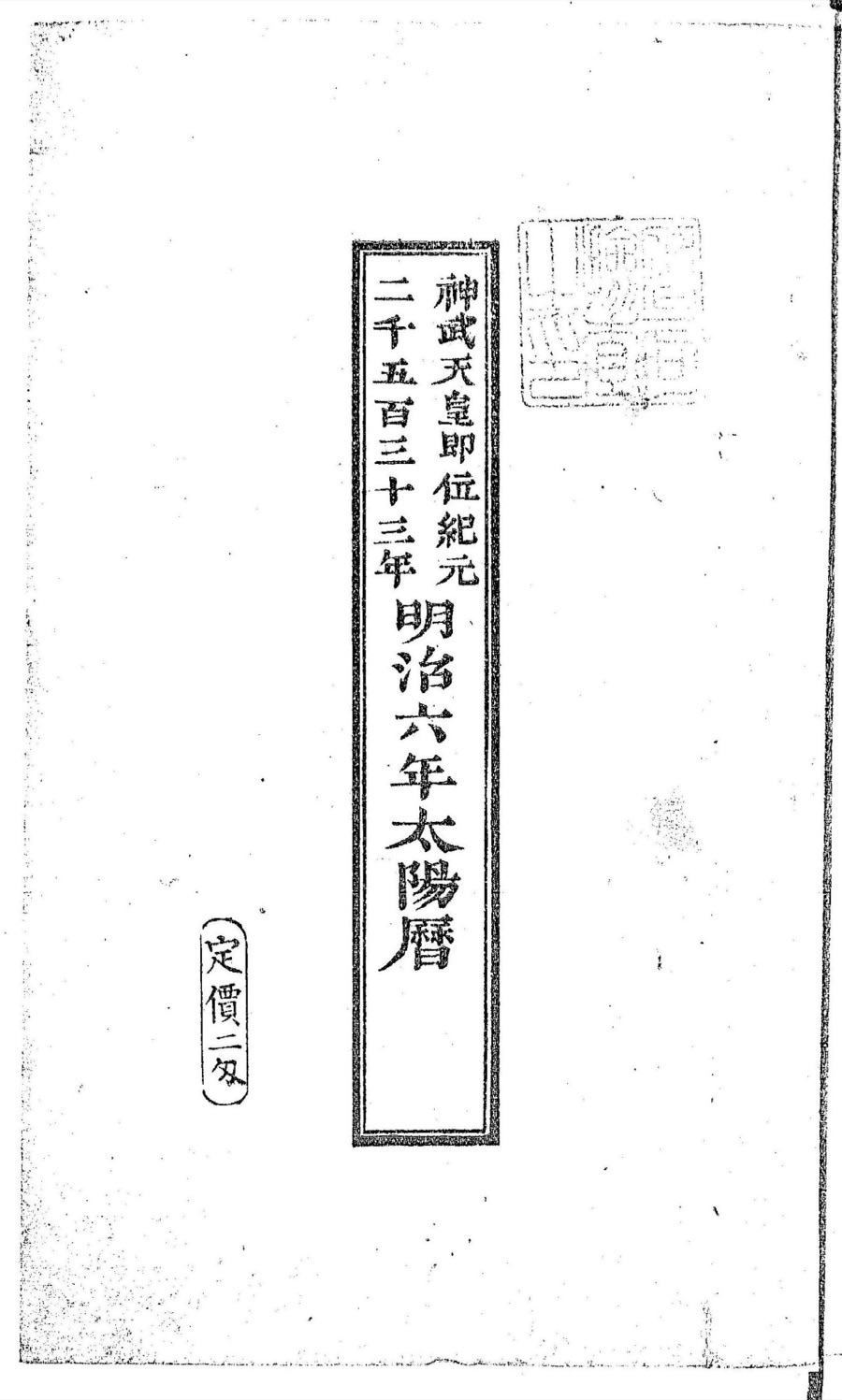
On the 9th day of the 11th month of Meiji 5, 1872, the Grand Council of State, the Dajōkan, issued Proclamation No. 337 with an imperial rescript: the old calendar was abolished, and the 3rd day of the 12th month became 1 January of Meiji 6, 1873.1, 2, 14
The rescript gave its reasons: the lunar calendar needed a leap month every two or three years, so the seasons drifted, and its almanac notes were baseless and held back knowledge, while the solar calendar would be out by a day in 7,000 years. The National Diet Library places the reform within the government’s drive to modernise on Western lines.1, 2
The same proclamation ended the temporal hours. Where day and night had been divided into twelve hours by their length, the day was now to be divided equally into twenty-four hours by the clock: twelve from midnight to noon, called gozen, before noon, and twelve from noon to midnight, called gogo, after noon.1, 3
The time bells were to strike the new hours from 1 January, and a table set each new hour against the old zodiac hours, with noon at the hour of the horse.1
Notice was short. The reform took effect about three weeks after it was announced, when calendars for the coming year by the old reckoning were already circulating; the National Diet Library records great confusion.2, 10, 13, 14
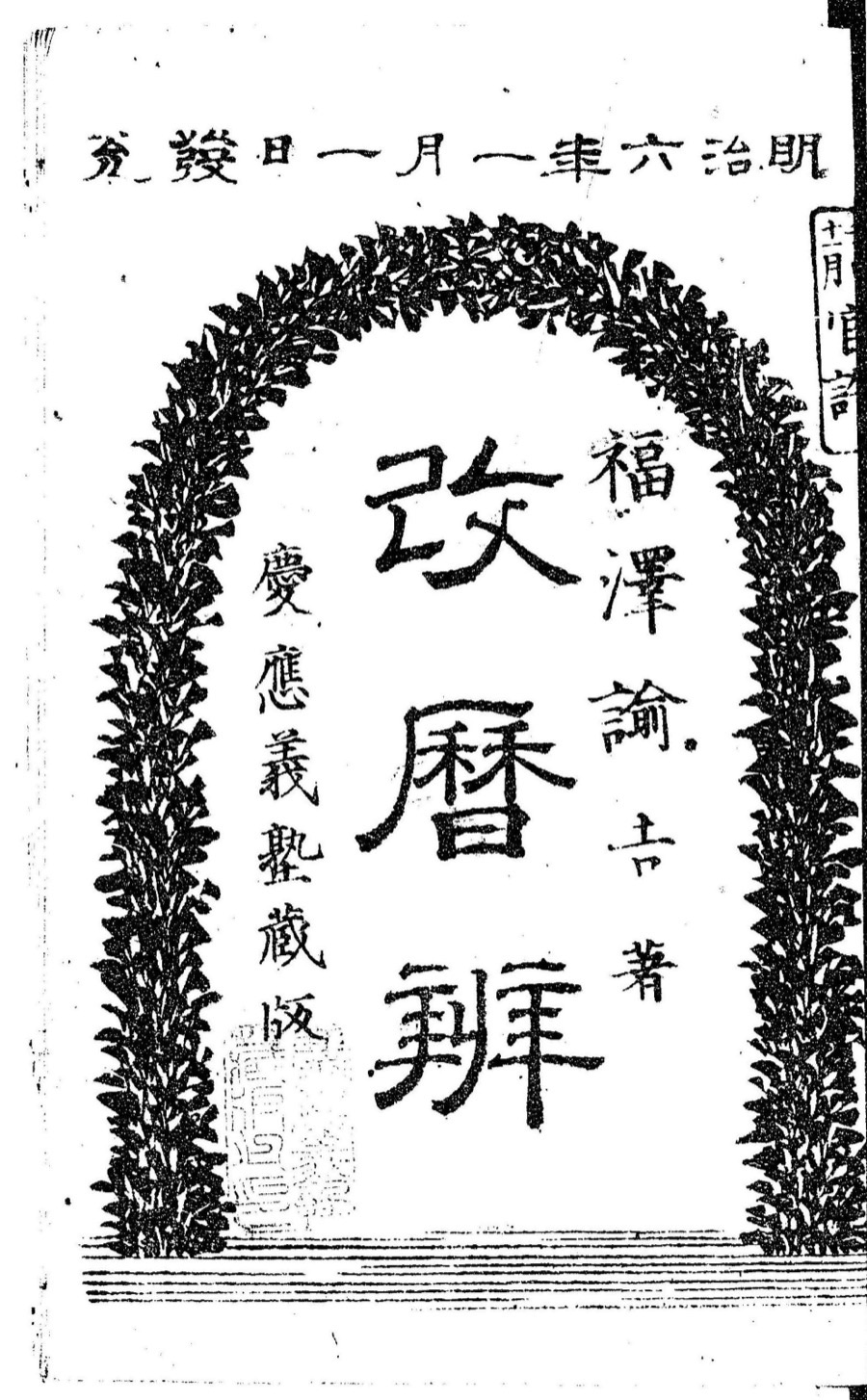
Scholars explained the change to the public. The National Diet Library says Fukuzawa Yukichi published books to spread the new calendar; the Seiko Museum keeps his handbook of 1873, the Kaireki-ben.2, 5
What it did to clocks and watches
The Seiko Museum says the clocks made for the old hours over nearly three hundred years became useless, and that the change brought a huge demand for Western timepieces made for the fixed hours, which Japan at first had to import.4, 5
The Japan Clock & Watch Association records that spring-driven pendulum wall clocks, the octagon and four-circle models, were imported from 1873; Japanese Wikipedia adds that clockmakers who had lost their domain stipends found the Western clocks simpler than their own and turned to making them.16, 17
In Tokyo the dealers in imported clocks built towers over their shops; the Seiko Museum counts more than thirty in the Meiji city, and says the tower of the Kobayashi Clock Shop, finished in 1876, made the young Kintaro Hattori want to be a clock merchant.18, 19
How sudden the change was is told two ways. The Seiko Museum describes the old clocks, made for nearly three hundred years, simply becoming useless; Frumer argues that the switch succeeded because equal hours already matched a conception of time that had spread over a few decades, and the observatory’s calendar office notes that the government calendar went on printing the old lunar dates beside the new ones until its calendar for 1909.4, 11, 14
From equal hours to a standard time
Imperial Ordinance No. 51 of 13 July 1886 took the meridian through the transit instrument of the Greenwich observatory as the prime meridian for longitude, and made the time of the meridian 135 degrees east the standard time of Japan from 1 January 1888.20
Japanese manufacture of Western clocks followed the reform. The Japan Clock & Watch Association dates wall clocks from Kingen-sha in Tokyo to 1875 and says wall-clock making then gathered in Nagoya.21
Hattori opened his shop in 1881 and set up the Seikosha factory in 1892, beginning with wall clocks, by the Seiko Museum’s account; how the dealers became an industry is told in Japan builds a watch industry.4, 22, 23
The proclamation of 1872 is still listed as law in force in Japan’s official database of statutes.1
Key dates
- 1844
The Tenpō calendar changes the printed calendar from fixed to temporal hours.3, 10
- 1872
Proclamation No. 337 abolishes the lunisolar calendar and the temporal hours (9 November, Meiji 5).1, 14
- 1873
The solar calendar and twenty-four equal hours take effect on 1 January.1, 2, 3
- 1875
Kingen-sha in Tokyo makes wall clocks, by the Japan Clock & Watch Association’s account.21
- 1881
Kintaro Hattori opens his shop in Tokyo.4, 22
- 1886
Imperial Ordinance No. 51 adopts the Greenwich meridian and a standard time of 135 degrees east.20
- 1888
Japan Standard Time takes effect on 1 January.20
- 1910
The government calendar stops printing the old lunar dates.14
Where Japan adopts equal hours leads
- Part of, HistoryJapan builds a watch industry
The reform that ended the seasonal hours and made Japan a market for Western clocks, where the chapter begins.1, 4, 5
- See also, PersonKintarō Hattori
The Seiko Museum says a Tokyo clock tower of 1876 made Hattori want to be a clock merchant; he opened his shop in 1881.19, 22
- See also, PlaceGreenwich
Japan took the Greenwich meridian as its prime meridian in 1886, when it set its standard time.20
- See also, PlaceTokyo
The Seiko Museum counts more than thirty clock towers built by Tokyo’s dealers in Western clocks in the Meiji era.18
- See also, TechnologyWadokei: Japanese clocks
The clocks built for the temporal hours that the proclamation abolished.1, 7, 8
- See also, GroupSeiko Group
The Seiko Museum says Seikosha, founded in 1892, began by making wall clocks.4, 23
- See also, TraditionJapanese watchmaking
The Japan Clock & Watch Association dates Japanese wall-clock making from 1875, two years after the reform brought Western clocks in.4, 21
Facts and sources
- Period
- 9 November 1872 (the proclamation) to 1 January 1873 (in force)1, 2, 14
- Where
- Japan1, 2
- Turning point
- Before it, Japan divided day and night into six hours each that stretched and shrank with the seasons, kept by its own wadokei; from 1 January 1873 it counted twenty-four equal hours, before and after noon, kept by Western clocks.1, 3, 4, 7
Sources
- 1
- 2
The Japanese Calendar: history of the calendar (opens in a new tab)
- 3
- 4
History of Seiko and Its Products, Stage 1 (1881-1920s) (opens in a new tab)
- 5
Kaireki-ben (handbook on the revised calendar), Fukuzawa Yukichi (opens in a new tab)
- 6
- 7
The World of Japanese Traditional Clock (opens in a new tab)
- 8
Information on Traditional Japanese Clocks (Wadokei) (opens in a new tab)
- 9
Lantern Clock with Double Foliot Balance (opens in a new tab)
- 10
- 11
WEAI Author Q&A: Yulia Frumer's Making Time (opens in a new tab)
- 12
Telling time in Tokugawa Japan (review of Yulia Frumer, Making Time) (opens in a new tab)
- 13
- 14
- 15
- 16
- 17
- 18
- 19
Episode 2: Establish K. Hattori & Co. (1881 to 1891) (opens in a new tab)
- 20
- 21
History of the Japanese Horological Industry (opens in a new tab)
- 22
- 23
Episode 3: Establish Seikosha Factory (1892 onward) (opens in a new tab)
Sources read November 12, 2026.