Smiths
The London watch retailer of 1851 that grew into the instrument maker Smiths and, from the 1930s, Britain’s main maker of clocks and watches, at Cheltenham and, with Ingersoll, at Ystradgynlais in Wales, until the last factory closed in 1980. This page covers just its watchmaking.
Founded 1851, Newington Causeway, south London
In the history Britain’s watch industry
From a London shop
Smiths began in 1851 as Samuel Smith’s watch and jewellery shop at Newington Causeway in south London.1, 2
The move to the Strand is dated two ways: Wikipedia says the business moved its centre there in 1872, Grace’s Guide that Samuel Smith junior opened larger premises there in 1873.1, 2
It sold precision watches: Grace’s Guide quotes an 1898 description of the firm as watchmakers to the Admiralty with certificates from Kew, and Wikipedia says its Admiralty watches were mostly made by Nicole Nielsen of Soho Square.1, 2
Grace’s Guide records Smiths wristwatches advertised in 1914, the year the motor accessories business was moved into a separate company, the start of the instrument maker that later became Smiths Industries.2

Back to clocks and watches
The instrument company returned to timekeeping in 1931 with Smiths English Clocks, which Grace’s Guide says was making 4,000 clocks a week by 1932.3, 9
In 1932 it bought English Clock and Watch Manufacturers of Coventry, formerly H. Williamson.3, 10
Grace’s Guide records that in 1939 Smiths bought Kayte Farm at Bishop’s Cleeve, near Cheltenham, against the bombing expected in London, and that in the war it made shell fuses and set up British Precision Springs for hairsprings once the German supply stopped.9
The war showed the gap: in 1943 the Board of Trade told the Commons that cheap watches and watch parts were not made in Britain.11
Anglo-Celtic in Wales
The Anglo-Celtic Watch Company, owned in equal shares by Smiths English Clocks, Ingersoll Ltd and initially Vickers-Armstrongs, was built at Ystradgynlais with government support and opened on 15 March 1947.1, 4, 5
The Brecknock Society’s history names the Australian-born Denis W. Barrett as its driving force and records the Chancellor, Hugh Dalton, opening it with a promise of “a new Switzerland” among the Welsh mountains.5
Vickers-Armstrongs sold its share to the other two in 1948, and Grace’s Guide records the company as part of S. Smith and Sons (England) from 1951.4, 5
The Brecknock Society says that at its height in the mid-1960s the factory made 30,000 watches a week, pin-lever and jewelled-lever, for more than sixty countries, buying in only the hairspring and the glass; next door the Enfield Clock Company, moved from London in 1949, made 800 clocks a day.5
Cheltenham
Smiths made its better watches at Cheltenham. The Science Museum Group’s record of the Smiths De Luxe that Edmund Hillary wore to the summit of Everest on 29 May 1953 names its maker as Smiths English Clocks, Cheltenham.1, 6, 7
Wikipedia notes that Rolex also supplied watches to the expedition, but that the watch worn to the summit was the Smiths.1
Smiths English Clocks was renamed Smiths Clocks and Watches in about 1955.3, 12
The end of Smiths watches
James Nye of the Antiquarian Horological Society writes that Smiths lost money on every watch made at Cheltenham and that production there ended by March 1971, after an announcement in September 1970.7
Nye says a small team carried on with a quartz watch, the Quasar, shown at the Basle Fair in 1973, and that Smiths dropped it after its chairman and managing director saw Seiko’s factories.7
Grace’s Guide records the clock and watch business split into separate companies in 1977 and the end of clocks for the home market in 1979.12
The Anglo-Celtic factory closed in 1980; the Brecknock Society says the site went to Smiths’ vehicle-instrument business, which was sold to Lucas in 1983.1, 5
Key dates
- 1851
Samuel Smith opens his watch and jewellery shop in Newington Causeway.1, 2
- 1931
Smiths English Clocks is formed.3, 9
- 1932
Smiths buys English Clock and Watch Manufacturers of Coventry.3, 10
- 1947
The Anglo-Celtic Watch Company opens at Ystradgynlais (15 March).4, 5
- 1953
Edmund Hillary wears a Cheltenham-made Smiths De Luxe on Everest.1, 6
- 1955
Smiths English Clocks becomes Smiths Clocks and Watches.3, 12
- 1980
The Anglo-Celtic watch factory closes.1, 5
Where Smiths leads
- Based in, PlaceLondon
Founded as a shop at Newington Causeway in south London in 1851, later on the Strand.1, 2
- Part of, HistoryBritain’s watch industry
The instrument maker that made Britain’s watches at Cheltenham and in Wales until 1980.1, 5, 6
- See also, PlaceCoventry
In 1932 Smiths bought English Clock and Watch Manufacturers of Coventry.3, 10
- See also, EventThe quartz crisis
Nye says Smiths dropped its Quasar quartz watch in 1973 after its directors saw Seiko’s factories.7
- See also, EventThe Second World War
Grace’s Guide records that Smiths made shell fuses in the war and set up British Precision Springs to make hairsprings once German supply stopped.9
Facts and sources
Sources
- 1
- 2
- 3
- 4
- 5
The Ystradgynlais Tic Toc Factory (Occasional Paper 16) (opens in a new tab)
- 6
- 7
High-frequency quartz watch fails to resonate (opens in a new tab)
- 8
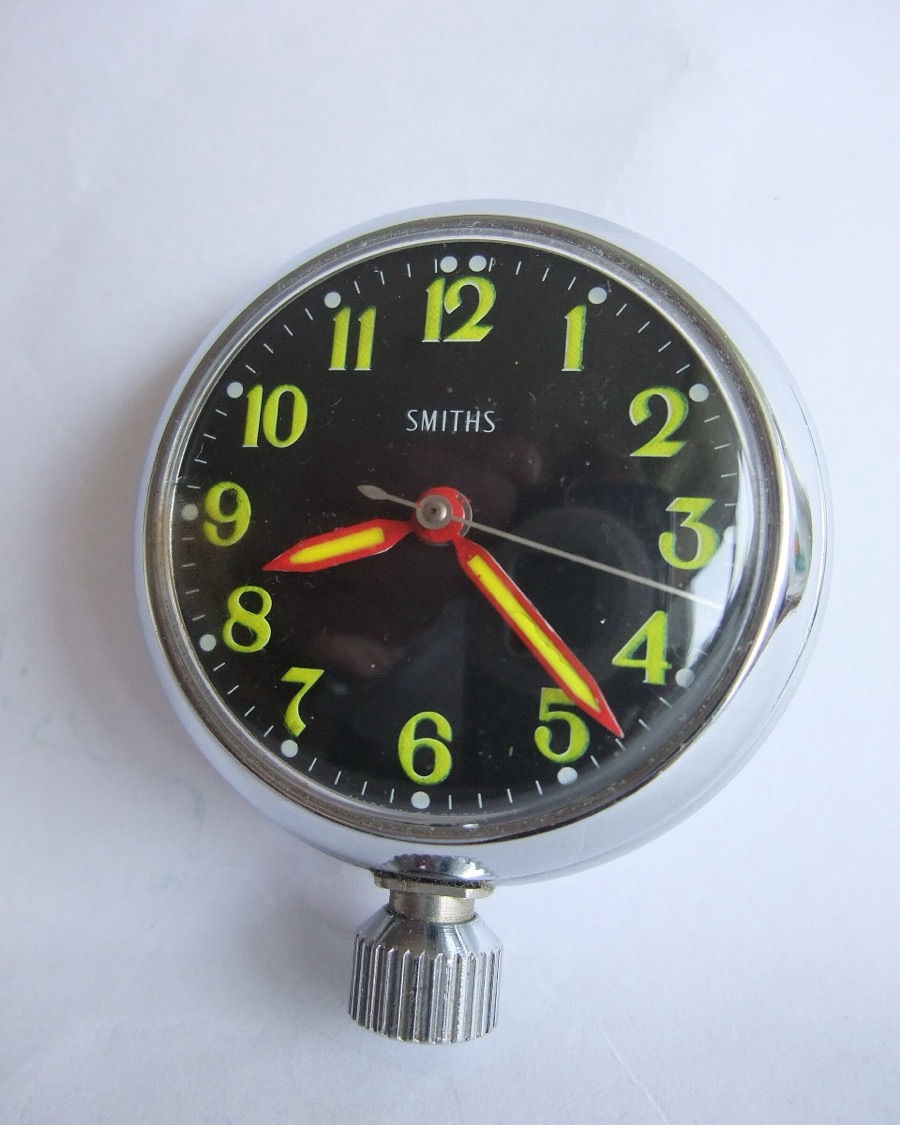
A Smiths pocket watch with luminous hands and numerals. (opens in a new tab)
- 9
- 10
- 11
Watches (HC Deb 01 July 1943 vol 390 c1804W) (opens in a new tab)
- 12
Sources read November 12, 2026.