Coventry
The Midlands city that became England’s third watch centre, finishing Lancashire movements in the workshops of Spon Street, Chapelfields and Earlsdon; its trade peaked between 1830 and 1850, its largest firm was Rotherham & Sons, and its skills passed to cycles, cars and instruments.
England, Warwickshire, now the West Midlands; the trade centred on Spon Street and Spon End, then Chapelfields and Earlsdon
Companies here Smiths
In the history Britain’s watch industry
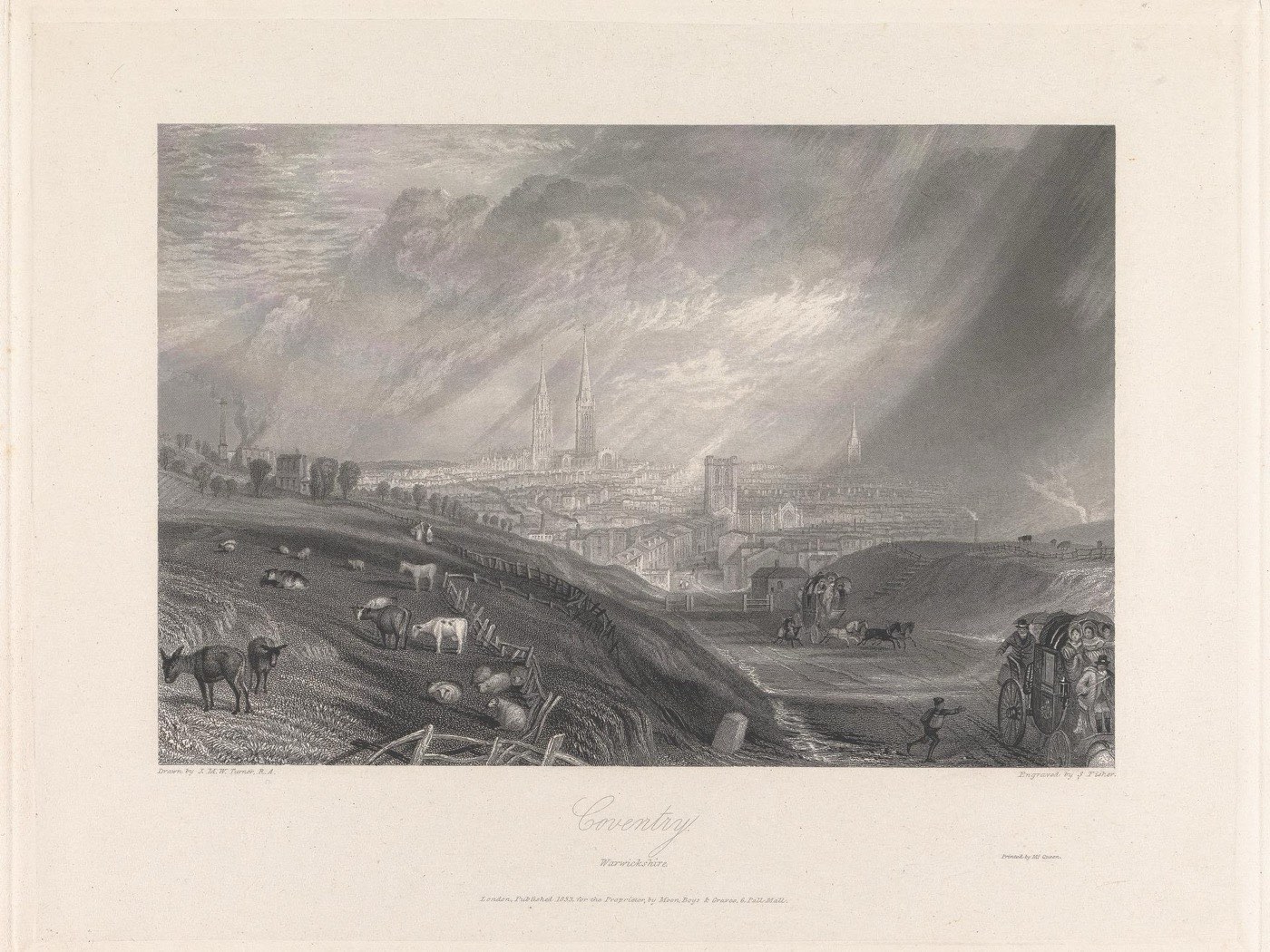
Why Coventry?
Coventry had clockmakers before it had a watch trade: the Victoria County History records public clocks kept by order of the council in the fifteenth and sixteenth centuries, a clockmaker made sheriff in 1686 and a Coventry watchmaker working in London in 1695.1
Watchmaking is recorded in Coventry from the late seventeenth century; it became a centre of the trade in the mid-eighteenth century and of national importance in the nineteenth.1, 2
The firm that became Rotherham & Sons is dated two ways: Grace’s Guide and the Warwickshire Industrial Archaeology Society trace Samuel Vale’s firm to 1747, while the Victoria County History says Rotherham’s kept its bicentenary in 1950.1, 2, 5
Parts came from the north: the Warwickshire society says many of the components finished in Coventry came from Lancashire, Prescot above all.2
What grew here: a watch quarter
The Victoria County History counts at least 53 watchmakers in 1830 and 142 in 1850, and calls those twenty years the period of greatest development.1, 2
In 1851, by the Victoria County History’s count, 776 heads of household worked in the watch trade and over 2,000 people in all; 21 manufacturers employed 631 men between them, most masters about four. In the 1850s more than half the city’s apprentices went into watchmaking, a fifth into weaving.1
The trade was thickest in Spon Street, with 137 heads of household in 1851, and spread from the Spon Street and Butts area into the new suburbs of Chapelfields and Earlsdon.1, 2
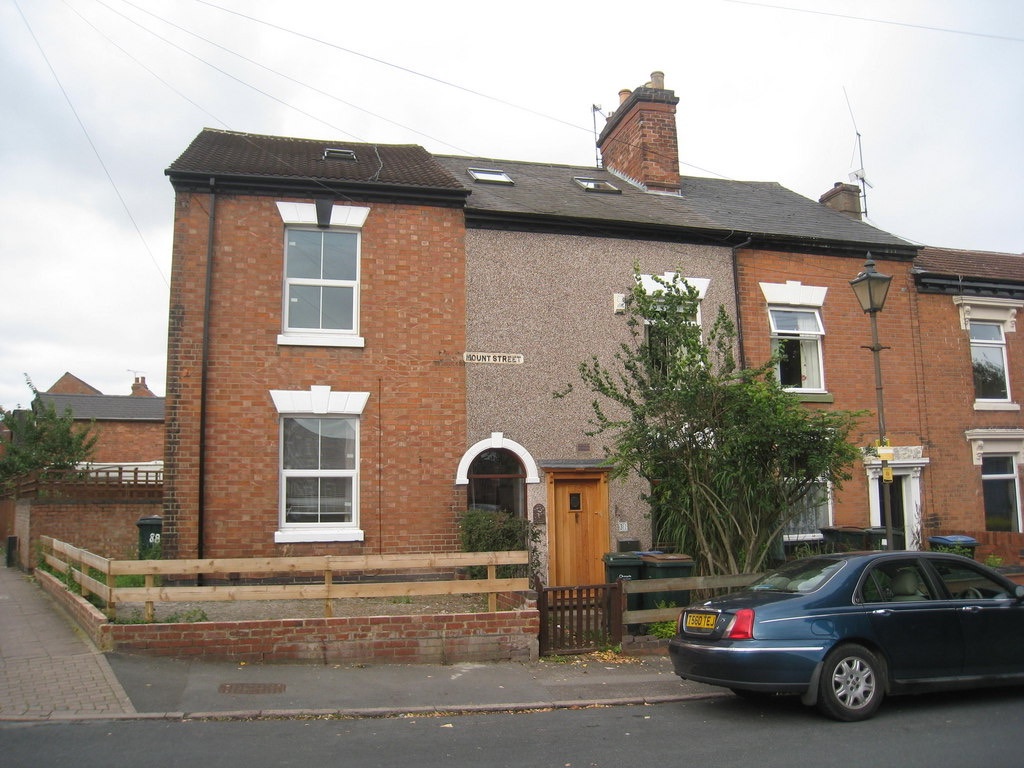
Chapelfields was built for the trade as an extension of the watchmaking areas of Earlsdon and Spon End, its houses with workshops built into the back of the upper floor or in rear “tails”, sized for a journeyman or an employer; well-lit top shops were part of the outwork system.2, 3
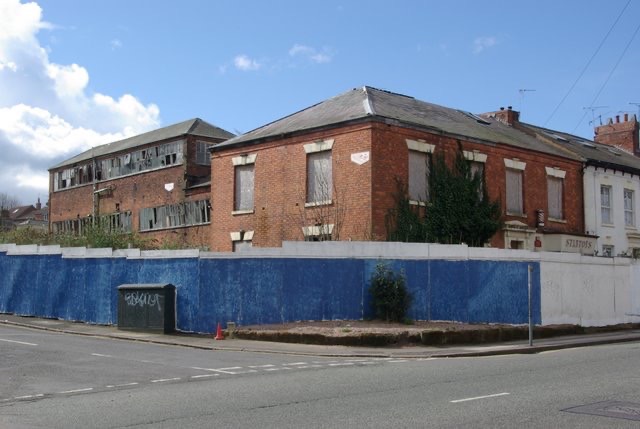
Its date is given three ways: the Victoria County History says the houses were built in 1846 for and by masters and journeymen, Wikipedia dates the area to 1847, and Coventry City Council to the late 1840s.1, 3, 9
The work was split into many operations, 102 by one estimate of 1817, the Warwickshire society says; the Victoria County History adds that the trade, needing skill, was carried on mainly in watchmakers’ shops rather than factories.1, 2
Who and what moved through
Coventry watches went abroad: Davies writes that about half of Rotherham’s output was exported until about 1850, the United States its largest market, and that John Rotherham, visiting America in 1856, found Coventry watches there unreliable and warned English makers in vain.4
Rotherham’s grew into a factory: Davies writes that it installed new machinery in 1880, and Grace’s Guide gives it 400 to 500 people and about 200 outworkers in 1899.4, 5
How much it made is told three ways: 500 watches a week in the 1880s by the Warwickshire society, about 100 a day by 1890 by Davies, and 100 a day in 1899 by the Victoria County History.1, 2, 4
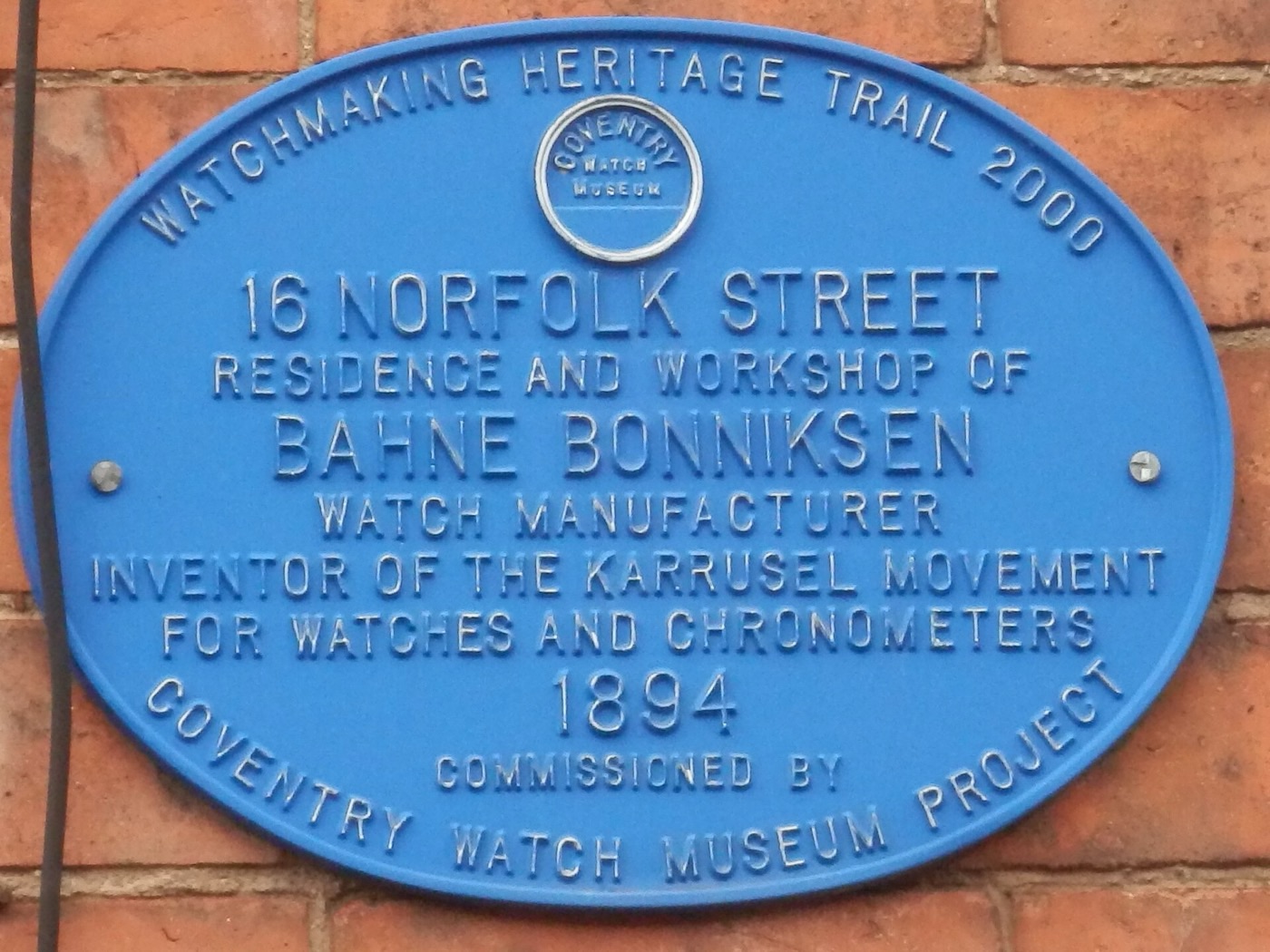
Bahne Bonniksen, born in Schleswig in 1859, came to Coventry to teach horology at the Coventry Technical Institute and devised the karrusel watch movement in the 1890s (in 1893, by the University of Warwick’s account); he worked from 16 Norfolk Street.2, 10
The Victoria County History records the Coventry Movement Company, founded in 1889, and F. Lee & Company, which began in 1900 making watch jewels and later made jewel bearings for instruments.1
In 1932 Smiths bought English Clock and Watch Manufacturers of Coventry, formerly H. Williamson, for its new clock business.12, 13
What changed because of it
Machine-made watches from Switzerland and the United States undercut Coventry’s dearer, better watches; Davies describes a trade of many small, fiercely competing firms that kept to old methods.2, 4
The skills moved on: as the ribbon and watch trades gave way to cycle making, the Victoria County History says, Coventry needed complex machine tools, and Grace’s Guide lists Rotherham’s making cycle and motor accessories by 1914 and aircraft parts and gauges later.1, 5
After the Second World War only Rotherham & Sons and S. Alexander & Son remained, the Victoria County History says.1
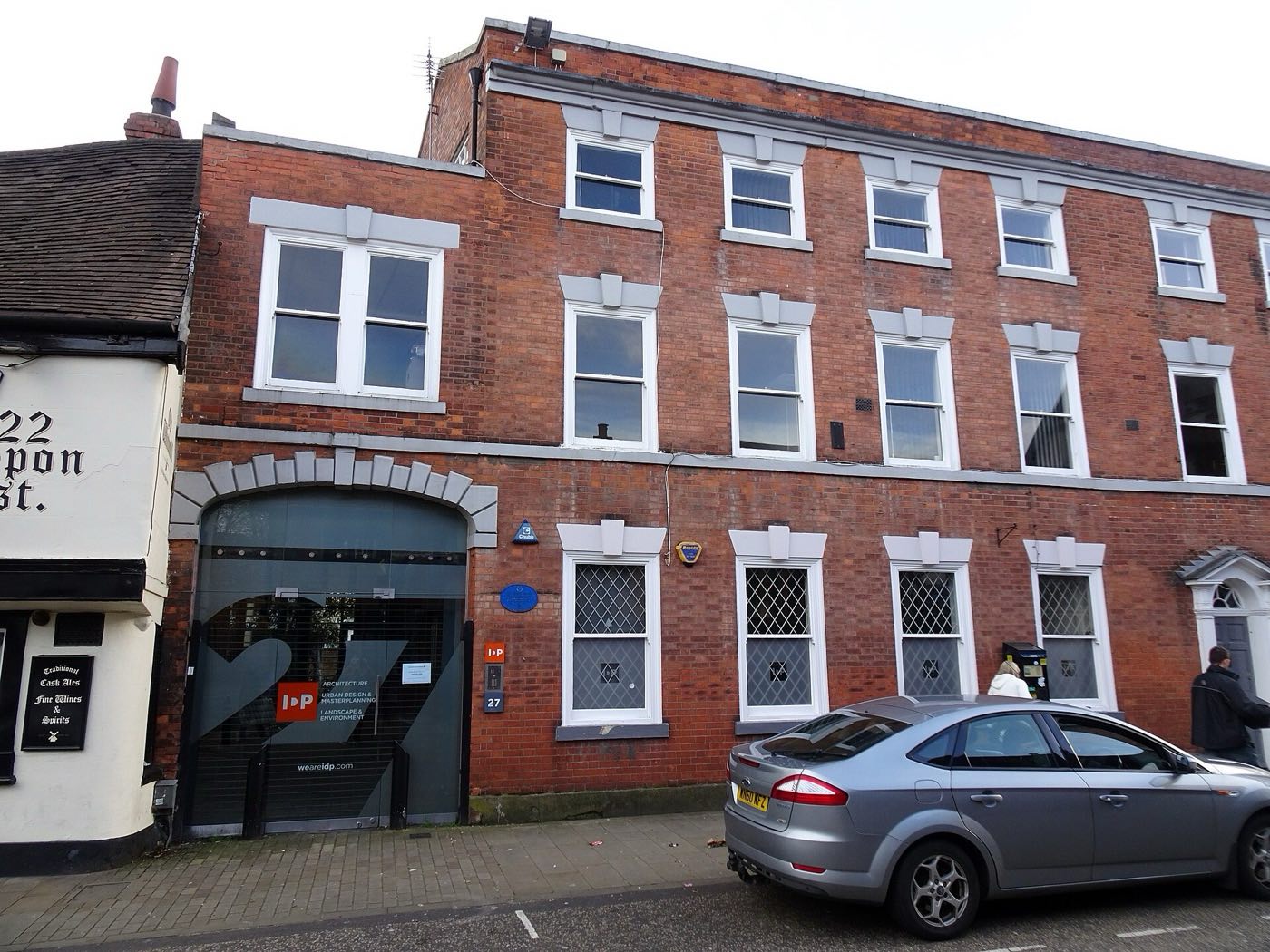
Chapelfields became a conservation area in 1976 for its links with the watch trade; Rotherham’s former offices at 27 Spon Street are the most important surviving premises, and a watchmakers’ heritage trail marks the sites with blue plaques.2, 3, 9
The Coventry Watch Museum, run by the Coventry Watch Museum Project, keeps the city’s watchmaking history from premises off Spon Street.15
Key dates
- 1747
Samuel Vale’s firm, later Rotherham & Sons, is established (by Grace’s Guide and the Warwickshire society).2, 5
- 1846
Watchmakers’ houses are built at Chapelfields (1847, or the late 1840s, by other accounts).1, 3, 9
- 1893
Bahne Bonniksen devises the karrusel (dated 1893 by the University of Warwick).2, 10
- 1932
Smiths buys English Clock and Watch Manufacturers of Coventry.12, 13
- 1976
Chapelfields is designated a conservation area.3
Where Coventry leads
- Part of, HistoryBritain’s watch industry
England’s third watch centre, with its watchmakers’ quarter at Chapelfields.1, 2, 3
- See also, CompanySmiths
In 1932 Smiths bought English Clock and Watch Manufacturers of Coventry.12, 13
- See also, PlaceLondon
Davies counts Coventry with London and Prescot as Britain’s three main watch centres.4
- See also, PlacePrescot
The Warwickshire Industrial Archaeology Society says many components finished in Coventry came from Prescot.2
Facts and sources
- Country
- England1, 2
- Where
- Warwickshire, now the West Midlands; the trade centred on Spon Street and Spon End, then Chapelfields and Earlsdon1, 2, 3
- Watch trade
- From the late 17th century; greatest growth 1830 to 1850; two firms left after 19451, 2
Sources
- 1
The City of Coventry: Crafts and industries, Modern industry and trade (opens in a new tab)
- 2
- 3
Conservation Area Control Plan: Chapelfields (opens in a new tab)
- 4
- 5
- 6
- 7
Cottages on Mount Street, Chapel Fields, Coventry, in 2010. (opens in a new tab)
- 8
- 9
- 10
- 11
- 12
- 13
- 14
Rotherham’s former offices at 27 Spon Street, Coventry, in 2024. (opens in a new tab)
- 15
Sources read November 12, 2026.