The Longitude Act
The British law of 1714 that offered up to £20,000 for a way to find longitude at sea, and the Board of Longitude that judged the claims until 1828: the prize behind John Harrison’s timekeepers and the marine chronometer.
1714 to 1828
In the history Longitude and the marine chronometer
The law
The History of Parliament gives its title as An Act for Providing a Publick Reward for such Person or Persons as shall Discover the Longitude at Sea.5
It followed a campaign begun in 1713 by the mathematicians William Whiston and Humphry Ditton and a petition to Parliament in May 1714; Isaac Newton gave evidence.2, 5
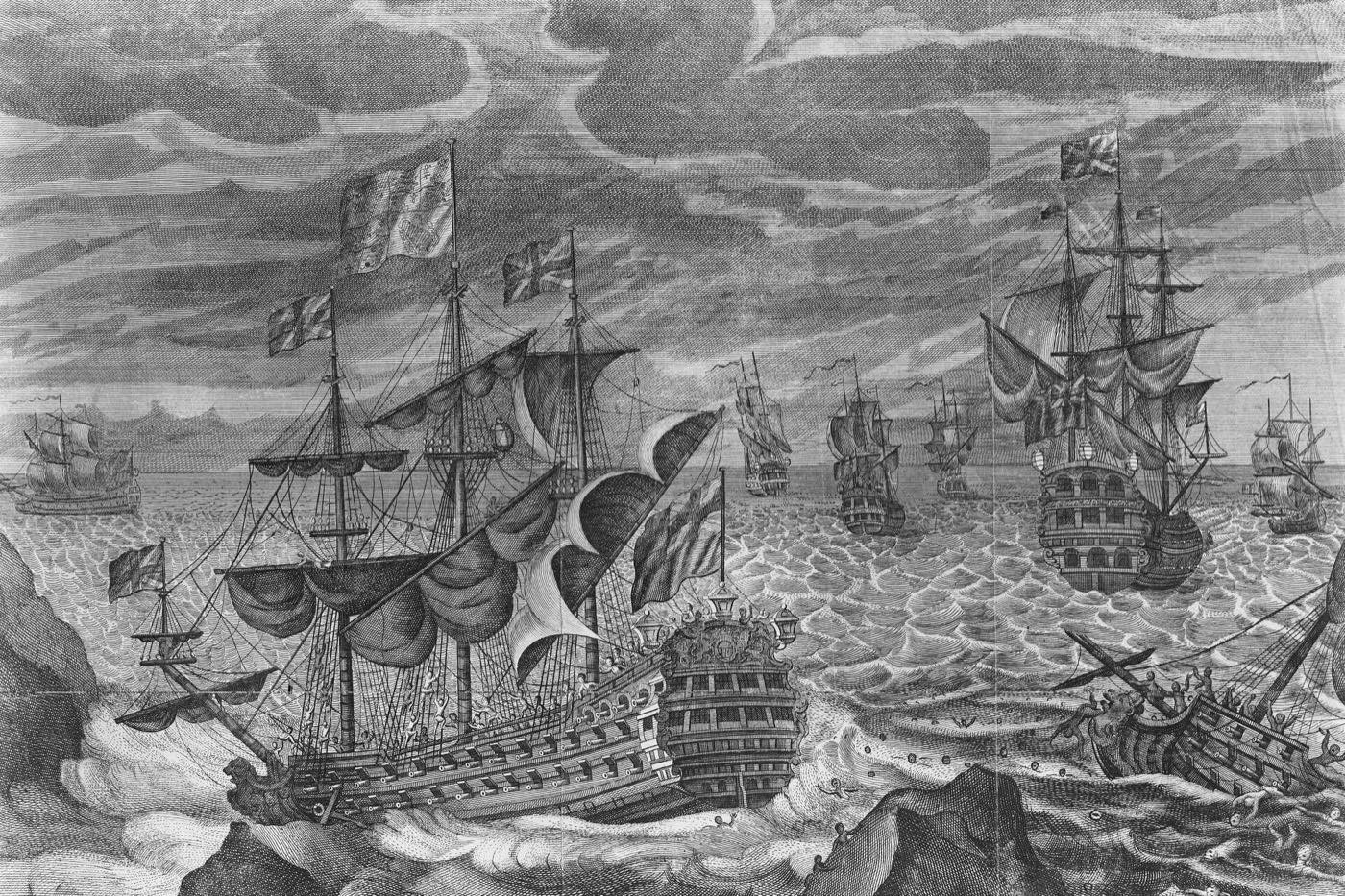
Royal Museums Greenwich ties the background to the loss of Shovell’s fleet on the Isles of Scilly in 1707, but says there was no public outcry and credits the mathematicians’ lobbying instead.1
Royal assent came on 9 July 1714, under Queen Anne. The Act is dated 1713 because the session began in February 1714 in the old-style year.1, 2
The prizes
£10,000 for a method accurate to one degree of longitude, £15,000 to forty minutes and £20,000 to half a degree. Royal Museums Greenwich says the top prize would be worth at least £1.5 million today.1, 2, 5
Half a reward was payable once a method was judged able to bring ships within eighty miles of the coast, the other half after a successful voyage to the West Indies. Up to £2,000 could be spent on trials, and smaller rewards given for useful methods, according to the History of Parliament.5
The Board of Longitude
The Act named twenty-four Commissioners, by name or by office, from Parliament, the Navy, astronomy and mathematics. They became known as the Board of Longitude.3, 5
They did not meet together until 1737, when John Harrison’s sea clock H1 brought them together; on 30 June that year they agreed £500 towards an improved clock.3, 5, 6
The Board paid many smaller awards: £3,000 to the widow of Tobias Mayer for his lunar tables, £300 to Leonhard Euler, and sums to chronometer makers, among them Thomas Earnshaw and John Roger Arnold in 1805.3, 7, 8
A new Act of 10 May 1765 set the Board’s terms for Harrison: £10,000 at once, the rest when other makers could reproduce his timekeeper. He never received the full prize; Parliament paid him £8,750 in 1773 outside the Board’s scheme.2, 6, 9
After the prize
According to Wikipedia’s account of the Act, an Act of 1774 halved the rewards, to £5,000, £7,500 and £10,000, and an Act of 1818 turned the Board towards navigation in general, with prizes for the Northwest Passage, and repealed the Act of 1714.2
Parliament abolished the Board in 1828, replacing it with three advisers to the Admiralty: Thomas Young, Michael Faraday and Edward Sabine. Its papers, 1737 to 1828, are at Cambridge University Library and have been digitised.2, 3, 10, 11
Where the Longitude Act leads
- Part of, HistoryLongitude and the marine chronometer
The Act set the prizes that drove the search for a method.1, 5
- See also, PersonJohn Harrison
From 1737 to 1773 Harrison sought the Act’s reward, and was paid under it and by Parliament.6, 9
- See also, ObjectHarrison’s H4
H4 was tried under the Act and in 1765 judged within its strictest limit.6, 13
Facts and sources
- Period
- 1714 to 18282, 3
- Scope
- The Act of 1714 and the Board of Longitude it created. By Wikipedia’s account the Act was repealed in 1818 and the Board abolished in 1828; the trials of Harrison’s H4 are told under the watch itself.2, 3
- Royal assent
- 9 July 17141, 2
- Citation
- 13 Ann. c. 14 (Statutes of the Realm)2
Sources
- 1
What made the search for longitude so important? (opens in a new tab)
- 2
- 3
- 4
- 5
- 6
Longitude found: the story of Harrison's timekeepers (opens in a new tab)
- 7
- 8
- 9
- 10
- 11
History of the Royal Observatory and the Astronomers Royal (opens in a new tab)
- 12
- 13
Sources read November 11, 2026.