Mudge’s lever watch for Queen Charlotte
The gold watch Thomas Mudge made in 1770, which the Royal Collection, where it remains, calls the earliest known example of the lever escapement: the escapement that went on to regulate almost every mechanical watch.
Made 1770; gold case hallmarked London 1769–70, By Thomas Mudge, London, Now at Royal Collection (RCIN 63759)
In the history The balance spring and the age of precision
The watch
A gold watch with a white enamel dial, black Roman numerals and blued steel hands; the backplate is signed Tho Mudge / London.1
The gold case, lined in red, carries London hallmarks for 1769–70 and the maker’s mark PM, which the Royal Collection says is probably that of Philip Mounier.1
It stands in a square pedestal of tortoiseshell and gilt bronze, 10 centimetres high, with gold globes on its sides and the monogram GR. The Royal Collection notes signs of alteration and says the pedestal may not have been made for the watch.1
What it changed
The Royal Collection calls it the earliest known example of the lever escapement, and the forerunner of nearly all modern pocket and wrist watches.1
The watch is dated; the escapement is not. The Royal Collection says Mudge devised the lever in 1754 and that this watch appears to be the earliest to use it; the Science Museum Group’s record of his portrait gives about 1753; Wikipedia gives 1754, first used in 1769.1, 3, 4
The Royal Collection also says it was the earliest pocket watch with an automatic device to compensate for changes of temperature.1
Mudge made few lever watches before turning to marine timekeepers, and the escapement spread slowly; how other makers took it up is told under the lever escapement.2, 5
The Queen’s watch
In letters to his patron Count von Brühl, the Saxon envoy in London, Mudge called it the ‘Queen’s watch’; the Royal Collection says George III probably acquired it for Queen Charlotte in 1770.1
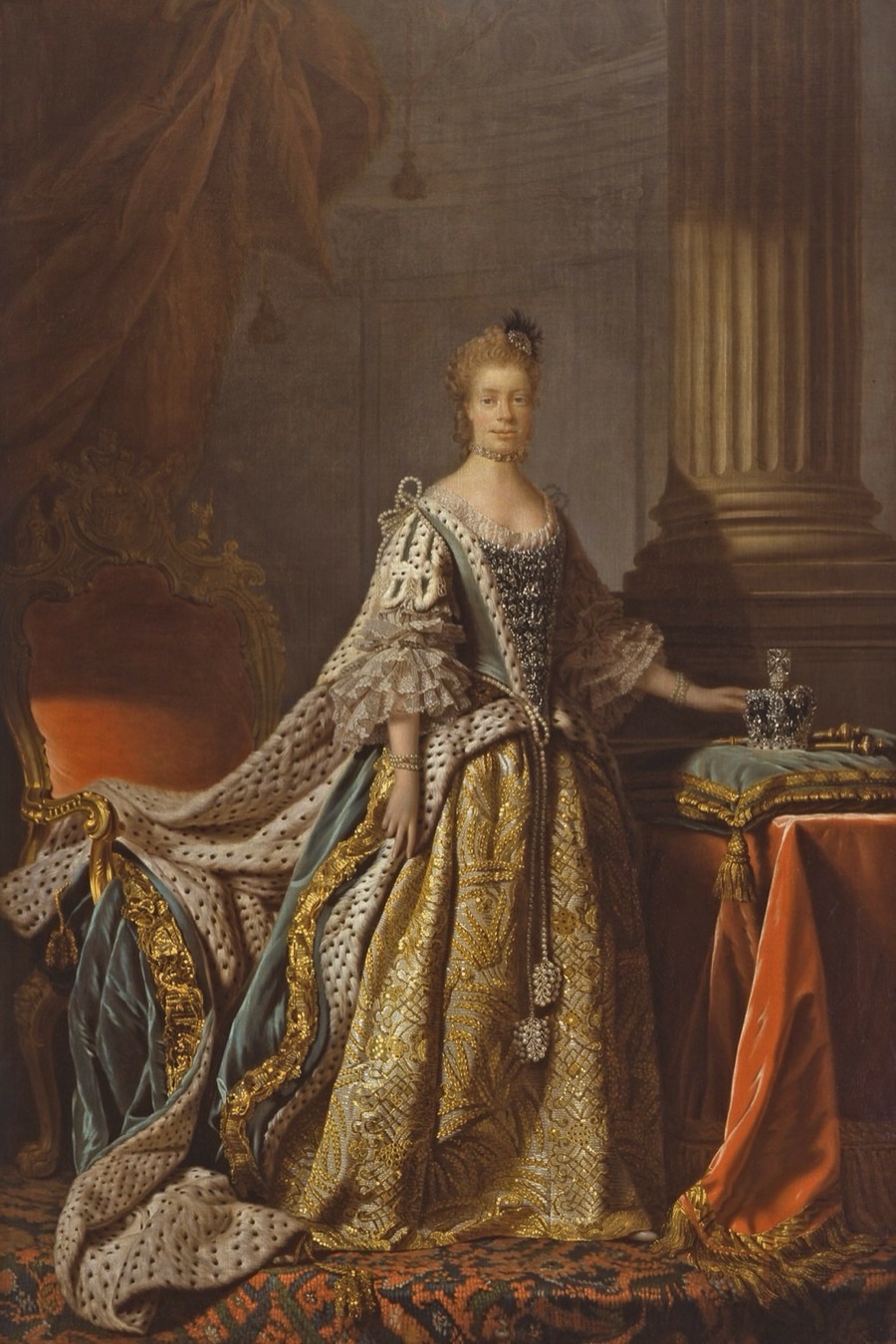
It went back to Mudge’s workshop in Plymouth for adjustment in the early 1770s, and he wrote to von Brühl about it while it was there.1
The Dictionary of National Biography of 1894 also dates the first use of Mudge’s lever to this watch.2
Key dates
- 1754
The Royal Collection dates Mudge’s lever escapement to this year.1
- 1769
The gold case is hallmarked in London (1769–70).1
- 1770
The watch is made, probably for George III to give Queen Charlotte, by the Royal Collection’s account.1
- 1825
B. L. Vulliamy repairs it and overhauls the pedestal for George IV.1
Where Mudge’s lever watch for Queen Charlotte leads
- Made by, PersonThomas Mudge
The backplate of Queen Charlotte’s watch is signed Tho Mudge / London.1
- Part of, HistoryThe balance spring and the age of precision
Queen Charlotte’s watch of 1770, which the Royal Collection calls the earliest known example of the lever escapement.1
- See also, TechnologyThe lever escapement
The Royal Collection calls Queen Charlotte’s watch the earliest known example of the lever escapement.1
Facts and sources
- Made
- 1770; gold case hallmarked London 1769–701
- Maker
- Thomas Mudge, London1, 2
- Held by
- Royal Collection (RCIN 63759)1
Sources
- 1
Queen Charlotte's lever watch and pedestal (Royal Collection Trust, RCIN 63759) (opens in a new tab)
- 2
Mudge, Thomas (Dictionary of National Biography, 1885-1900, vol. 39) (opens in a new tab)
- 3
- 4
Portrait of Thomas Mudge (c.1715-1794) after Nathaniel Dance (L2015-4480) (opens in a new tab)
- 5
- 6
Sources read November 12, 2026.