Thomas Mudge
George Graham’s apprentice, who devised the detached lever escapement, put it in Queen Charlotte’s watch, and spent his later years on marine timekeepers for the Board of Longitude.
Born 1715 or 1717, Exeter, Died 14 November 1794, Newington, London
In the history The balance spring and the age of precision
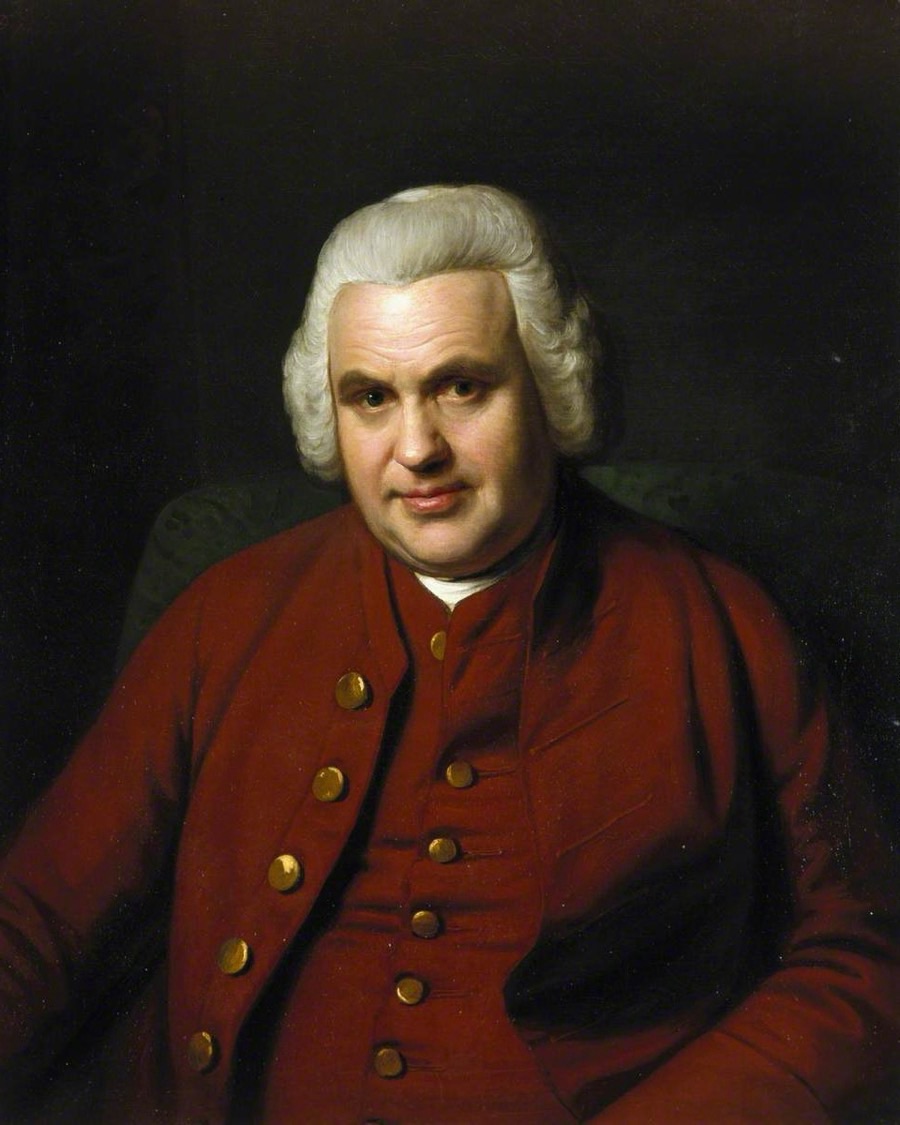

Graham’s apprentice
Thomas Mudge was born in Exeter, son of the schoolmaster and clergyman Zachariah Mudge, and grew up in Bideford.1, 2
At fourteen he was apprenticed to George Graham in Fleet Street, and he was admitted a free clockmaker on 15 January 1738.1, 2
He worked for the retailer John Ellicott, and when it emerged that Mudge had made an equation watch sold to Ferdinand VI of Spain, the king commissioned him directly.1, 2
One of his watches for Ferdinand, No. 260, sold on 22 August 1755, has a remontoir, a jumping minute hand and a second hairspring as a temperature-compensation curb.5
He went into partnership with his fellow apprentice William Dutton; RMG holds a Mudge and Dutton cylinder movement of about 1765.1, 6
The lever
He devised the detached lever escapement; Wikipedia says he applied it to a clock before a watch, and the dates given range from 1750 to 1755.2, 3, 7
Queen Charlotte's gold watch of 1770 is the earliest known lever watch, by the Royal Collection's account.1, 3
Count von Brühl, the Saxon envoy in London, was his patron from 1760, and Mudge's letters to him were published by his son in 1799.1, 3
Timekeepers for the sea
In 1765 he published Thoughts on the Means of Improving Watches, and more particularly those for the Use of the Sea.1, 2
He retired to Plymouth about 1770-71 to work on marine timekeepers and was appointed watchmaker to the king in 1776.1, 2
The Board of Longitude paid him 500 guineas for one timekeeper, but Maskelyne judged his next two, the ‘green’ and ‘blue’, unsatisfactory, and a bitter controversy followed.1, 2
A House of Commons committee voted him £2,500 against the Board's view; the DNB and Wikipedia date the award 1792 or 1793.1, 2
He died on 14 November 1794 at his son's house in south London.1, 2
Key dates
- 1738
Free of the Clockmakers' Company.1, 2
- 1754
Lever escapement, by the Royal Collection's date.3
- 1755
Watch No. 260 sold to Ferdinand VI of Spain.5
- 1765
Publishes Thoughts on the Means of Improving Watches.1, 2
- 1770
Queen Charlotte's lever watch.1, 3
- 1776
Appointed watchmaker to the king.1, 2
- 1793
£2,500 voted by the House of Commons (1792 in Wikipedia).1, 2
- 1794
Dies in London.1, 2
Where Thomas Mudge leads
- Developed, TechnologyThe lever escapement
Mudge devised the detached lever about 1754; Queen Charlotte’s watch of 1770 has one.1, 3
- Made, ObjectMudge’s lever watch for Queen Charlotte
The backplate of Queen Charlotte’s watch is signed Tho Mudge / London.3
- Based in, PlaceLondon
Mudge worked in Fleet Street until he moved to Plymouth about 1770-71.1, 2
- Trained under, PersonGeorge Graham
Mudge was apprenticed to Graham from about 1730-31.1, 8
- Part of, HistoryThe balance spring and the age of precision
Devised the detached lever, found in Queen Charlotte’s watch of 1770.1, 3
- See also, HistoryLongitude and the marine chronometer
Mudge's timekeepers were tested by Maskelyne and rewarded by the House of Commons in 1792-93.1, 2
- See also, TechnologyThe marine chronometer
Mudge spent his later years on marine timekeepers tried by the Board of Longitude.1, 2
Facts and sources
- Born
- 1715 or 1717, Exeter1, 2
- Died
- 14 November 1794, Newington, London1, 2
- Worked in
- Fleet Street, London; later Plymouth1, 2
Sources
- 1
Mudge, Thomas (Dictionary of National Biography, 1885-1900, vol. 39) (opens in a new tab)
- 2
- 3
Queen Charlotte's lever watch and pedestal (Royal Collection Trust, RCIN 63759) (opens in a new tab)
- 4
Thomas Mudge, by Nathaniel Dance-Holland, 1770-75. Science Museum. (opens in a new tab)
- 5
- 6
Watch movement by Mudge, Thomas, & Dutton, c.1765 (ZAA0456) (opens in a new tab)
- 7
- 8
Sources read November 11, 2026.