George Graham
Tompion’s partner and heir in Fleet Street, who worked on the cylinder escapement for watches and the deadbeat for clocks, built instruments for Greenwich, trained Thomas Mudge and helped John Harrison.
Born 1673 (or 1675), near Carlisle, Cumberland, Died 16 November 1751, Fleet Street, London
In the history The balance spring and the age of precision
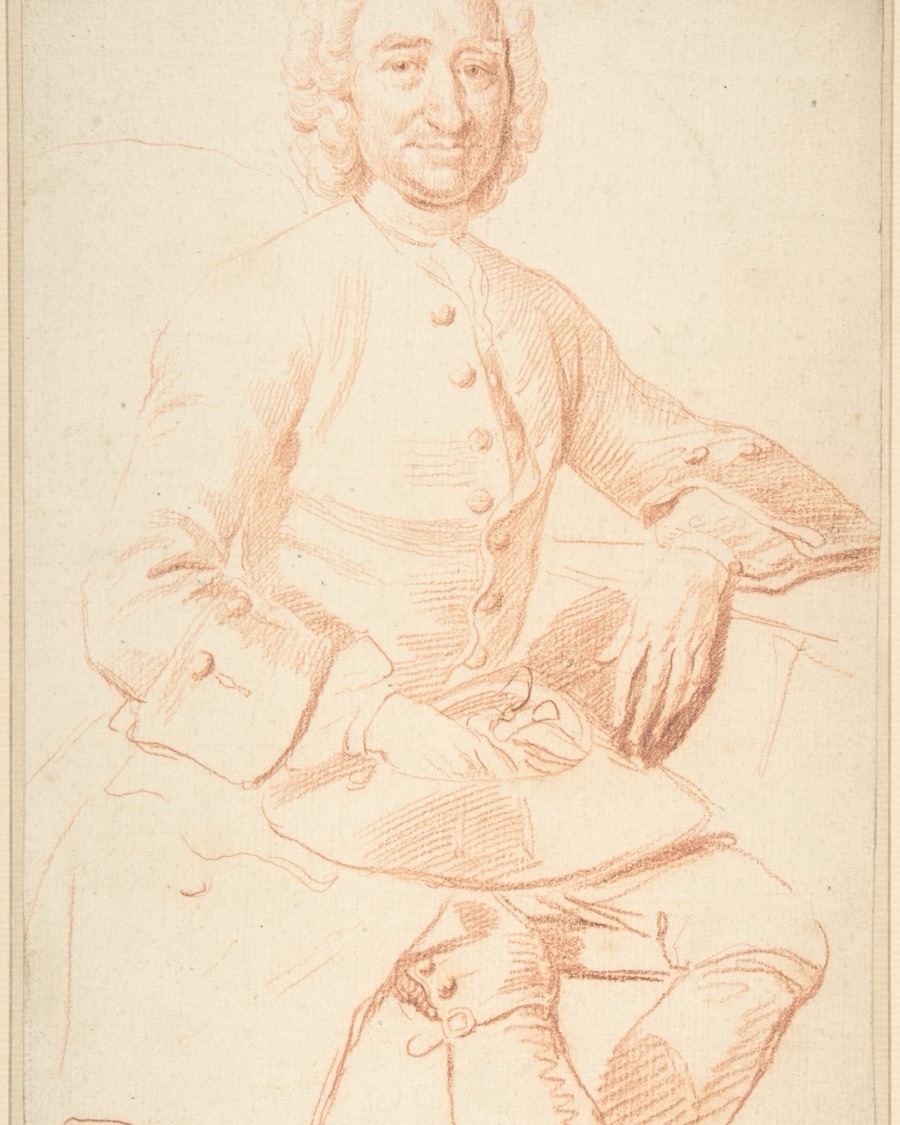

Apprentice and heir
George Graham was born in Cumberland, probably in 1673; Wikipedia gives Kirklinton and says the year may be 1675.1, 2
A Quaker, he walked to London in 1688 to be apprenticed as a clockmaker, and then joined Thomas Tompion's workshop.1, 2
He married Tompion's niece Elizabeth in September 1704, became his partner, and inherited the business in 1713.1, 6
Wikipedia says he continued Tompion’s numbering of clocks and watches.6
Escapements and pendulums
Wikipedia credits him with perfecting the cylinder escapement in 1726, which let watches be made thinner than verge watches; the 1911 Britannica calls him its author.3, 7
He used the deadbeat escapement in precision clocks from about 1715; Wikipedia says it was designed by Richard Towneley and used earlier by Tompion.2, 3
Wikipedia credits him with the mercury pendulum, which offsets the effect of heat on a pendulum’s length.2
A quarter-repeating pair-case watch he made in 1719-20 is in the Metropolitan Museum.8
Instruments for astronomers
He made Halley's mural quadrant at Greenwich and the zenith sector Bradley used, and supplied the French Academy's instruments for measuring a degree of the meridian.1, 2
He was a Fellow of the Royal Society and Master of the Clockmakers' Company in 1722; he found the daily variation of the Earth's magnetic field.1, 2
Pupils and later years
Thomas Mudge was his apprentice in the 1730s.2, 4
Wikipedia says that when John Harrison came to London, Halley sent him to Graham, who advised him and lent him money to build his first sea clock.2
Known in the trade as 'Honest George Graham', he died in Fleet Street on 16 November 1751 and was buried in Tompion's grave in Westminster Abbey.1, 2
Where George Graham leads
- Based in, PlaceLondon
Graham worked and died in Fleet Street.1, 2
- Trained under, PersonThomas Tompion
Graham joined Tompion's workshop, married his niece and inherited the business in 1713.1, 2
- Trained, PersonThomas Mudge
Mudge was apprenticed to Graham from about 1730-31.2, 4
- Worked with, PersonJohn Harrison
Graham advised John Harrison and lent him money when Harrison came to London.1, 2
- Part of, HistoryThe balance spring and the age of precision
Tompion’s heir, who worked on the cylinder escapement and trained Thomas Mudge.1, 2, 4
- See also, PlaceGreenwich
Graham built Halley’s mural quadrant at Greenwich and the zenith sector Bradley used.1, 2
Facts and sources
- Born
- 1673 (or 1675), near Carlisle, Cumberland1, 2
- Died
- 16 November 1751, Fleet Street, London1, 2
- Worked in
- Fleet Street, London2, 6
Sources
- 1
- 2
- 3
- 4
Mudge, Thomas (Dictionary of National Biography, 1885-1900, vol. 39) (opens in a new tab)
- 5
- 6
- 7
Watch (Encyclopaedia Britannica, 11th edition, 1911) (opens in a new tab)
- 8
Pair-case watch with quarter repeating mechanism by George Graham, 1719-20 (opens in a new tab)
Sources read November 11, 2026.