Moscow
The capital where the Soviet watch industry began in 1930, with the First State Watch Factory on American machinery and the Second State Watch Factory beside it, and where the industry’s research institute stood; its factories were evacuated in 1941, made Pobeda and Poljot watches after the war, and stopped making watches after 1991.
Russia (the Soviet Union from 1922 to 1991), The capital; the factories stood on Vorontsovskaya Street, at Tverskaya Zastava and on Malaya Tulskaya Street
Companies here Poljot (First Moscow Watch Factory), Vostok
In the history The Soviet watch industry
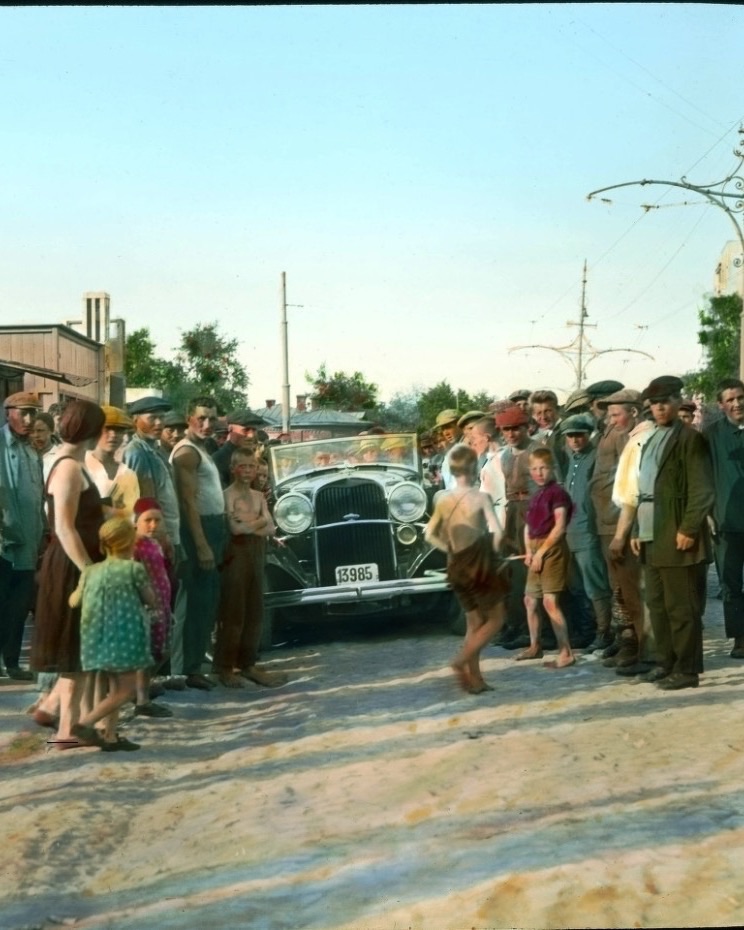
Why Moscow?
Moscow became the capital again in 1918, Garratt notes, and the planned economy was run from it: the state trust Tochmekh, which oversaw clocks and watches in the 1920s, took over Paul Buhre’s old shop as its own store.4
There was a small base to build on. The Great Soviet Encyclopedia records that in the early 1920s the Aviapribor works in Moscow made pendulum wall clocks and assembled alarm clocks partly from imported parts.2
The decision was political and central. Garratt records that the Council of Labour and Defence ordered watch and clock factories built from nothing on 30 December 1927, and that the trust’s commission, refused in Europe, bought its machines in America through Amtorg.4
Moscow got both of the new plants: the industry’s foundations date from 1929–30, when Moscow’s two state watch factories began work.2, 3, 4
What grew here
The First State Watch Factory opened in 1930 with machinery from the Dueber-Hampden Watch Company of Canton, Ohio, set up with the help of 21 of its former employees; it was named after Sergei Kirov in 1935.1, 3, 4
Garratt places the factory on the site of the Krasnaya Zvezda tobacco factory in Vorontsovskaya Street; Russian Wikipedia gives its later address as 34 Marksistskaya Street.4, 5
The Second State Watch Factory grew, Garratt writes, out of the Moscow Electro-Mechanical Plant at Tverskaya Zastava, which had made telegraph equipment and repaired the timers of Moscow’s trams; it took its new name in November 1930 and later sold its watches as Slava.4
Smaller works made clocks for the home. A US intelligence report describes Mechanical (Clock) Plant No. 2 on Malaya Tulskaya Street as it was in June 1951: about 155 workers, some 70 per cent of them women, making toys and assembling table and wall clocks from mechanisms made elsewhere.8
The industry’s brain was here too. Garratt says the research institute that became NIIChasprom was founded in September 1940; a British report of 1956, as summarised in the Hamilton Watch Company’s magazine, says the Horological Research Institute in Moscow was set up in 1946 to direct the design of watches, clocks and machines for the whole industry.4
A 1957 US intelligence report notes that the Moscow No. 1 factory was making an automatic watch, and that the Horological Institute in Moscow had shown a visitor a prototype due to go into production at Chelyabinsk.6
The First Moscow Watch Factory made the Pobeda from 1946 and was awarded the Order of Lenin in 1966; in 1973 it made more than three million Poljot watches in 114 designs.3, 5
Who and what moved through
Machines from America: Dueber-Hampden’s from Canton, Ohio, in 27 rail cars, and, by Garratt’s account, Ansonia’s clock machinery from Brooklyn for the second factory. The American side is told under America industrializes the watch.1, 4, 9
People from abroad: 21 to 23 Canton watchmakers for a year, and, Garratt writes citing a German report, twelve workers from Glashütte who arrived in August 1930 on five-year contracts.1, 4
Out to the east in 1941: the First State Watch Factory to Zlatoust in the Urals, and a Moscow factory to Chistopol, which became Vostok; which of the two Moscow plants went to Chistopol is disputed, Russian Wikipedia, Garratt and Vechernyaya Kazan naming the Second and English Wikipedia the First.3, 4, 10, 11, 12
Back from Germany after 1945: Garratt quotes Walter Lange on packing Glashütte machines for Russia, and WatchTime says the German navy’s standard chronometer was later made by the First Moscow Watch Factory.4, 13
Out to the world: the Museum of Cosmonautics says the Second Moscow factory sometimes exported up to half its alarm clocks, and Wikipedia that the First Moscow factory’s watches went abroad from the late 1960s under the Sekonda name.5, 14, 15
What changed because of it
The Moscow factories made the Kirovskie, Pobeda, Shturmanskie, Strela, Poljot and Slava watches; Wikipedia and the Museum of Cosmonautics name the Shturmanskie and the Strela in the stories of Gagarin and Leonov. See Poljot.3, 14, 15, 16
The First Moscow Watch Factory became a joint-stock company in 1992; Russian Wikipedia says its equipment and its calibre 3133 chronograph were sold in 2005, watchmaking stopped and the buildings were let.5
According to Vechernyaya Kazan, in 2003 Poljot wristwatches and Slava alarm clocks were to move to Chistopol, the town to which Moscow’s watchmakers had been evacuated in 1941.11
The Second Moscow factory’s site was sold in January 2006 and its buildings demolished by 2010, Wikipedia says.15
Key dates
- 1930
The First State Watch Factory opens with Dueber-Hampden machinery; the Moscow Electro-Mechanical Plant becomes the Second State Watch Factory.1, 3, 4
- 1935
The First State Watch Factory is named after Sergei Kirov.3, 4
- 1941
The First State Watch Factory is evacuated to Zlatoust.3, 4
- 1946
The First Moscow Watch Factory begins making the Pobeda.3, 5
- 1951
Mechanical (Clock) Plant No. 2 on Malaya Tulskaya Street employs about 155 people.8
- 1957
A US intelligence report notes an automatic watch at the Moscow No. 1 factory.6
- 1966
The First Moscow Watch Factory is awarded the Order of Lenin.3, 5
- 1973
The First Moscow Watch Factory makes more than three million Poljot watches.3, 5
Where Moscow leads
- Based here, CompanyPoljot (First Moscow Watch Factory)
The First State Watch Factory, later the First Moscow Watch Factory, was founded in Moscow in 1930.1, 3, 4
- Based here, GroupTochmekh (State Trust of Precision Mechanics)
The trust worked from Moscow, Garratt writes, from the electro-mechanical plant at Tverskaya Zastava, and kept Paul Buhre’s old shop as its store.4
- Part of, HistoryThe Soviet watch industry
Moscow held the country’s two original state watch factories from 1930, and its research institute.2, 3, 4
- See also, CompanyVostok
Russian Wikipedia, Garratt and Vechernyaya Kazan say the factory began with the Second Moscow Watch Factory, evacuated to Chistopol in 1941.4, 10, 11
- See also, PlaceGlashütte
Garratt cites a German report that twelve Glashütte workers went to Moscow in August 1930 to train workers at the new watch factory.4
Facts and sources
- Country
- Russia (the Soviet Union from 1922 to 1991)2, 4
- Where
- The capital; the factories stood on Vorontsovskaya Street, at Tverskaya Zastava and on Malaya Tulskaya Street4, 8
- Watch factories
- From 1930; the First Moscow Watch Factory stopped making watches in 20051, 3, 5
Sources
- 1
First State Watch Factory (CIA-RDP83-00423R000400630001-7) (opens in a new tab)
- 2
Часовая промышленность (Watch industry) (opens in a new tab)
- 3
Московский 1-й часовой завод им. С. М. Кирова (opens in a new tab)
- 4
The Birth of Soviet Watchmaking: continuing the Hampden story (updated edition) (opens in a new tab)
- 5
- 6
- 7
“Old Moscow”: a street in 1931, photographed by Branson DeCou. (opens in a new tab)
- 8
Mechanical (Clock) Plant No. 2 in Moscow (CIA-RDP82-00046R000400170001-8) (opens in a new tab)
- 9
- 10
- 11
- 12
- 13
175 Jahre Uhrmacherei in Glashütte: Chronometergenaue Uhren (opens in a new tab)
- 14
- 15
- 16
Sources read November 12, 2026.