The Melanchthon watch
A small ball watch of gilt brass engraved with Philip Melanchthon’s name and the year 1530, which the Walters Art Museum in Baltimore, where it is held, calls the earliest dated watch known: the collection’s firm anchor for the first watches.
Made 1530 (the engraved date), By Unknown: no maker’s mark; the Walters gives Augsburg with a question mark, and some accounts name Peter Henlein, Now at Walters Art Museum, Baltimore (58.17)
In the history Time in the pocket
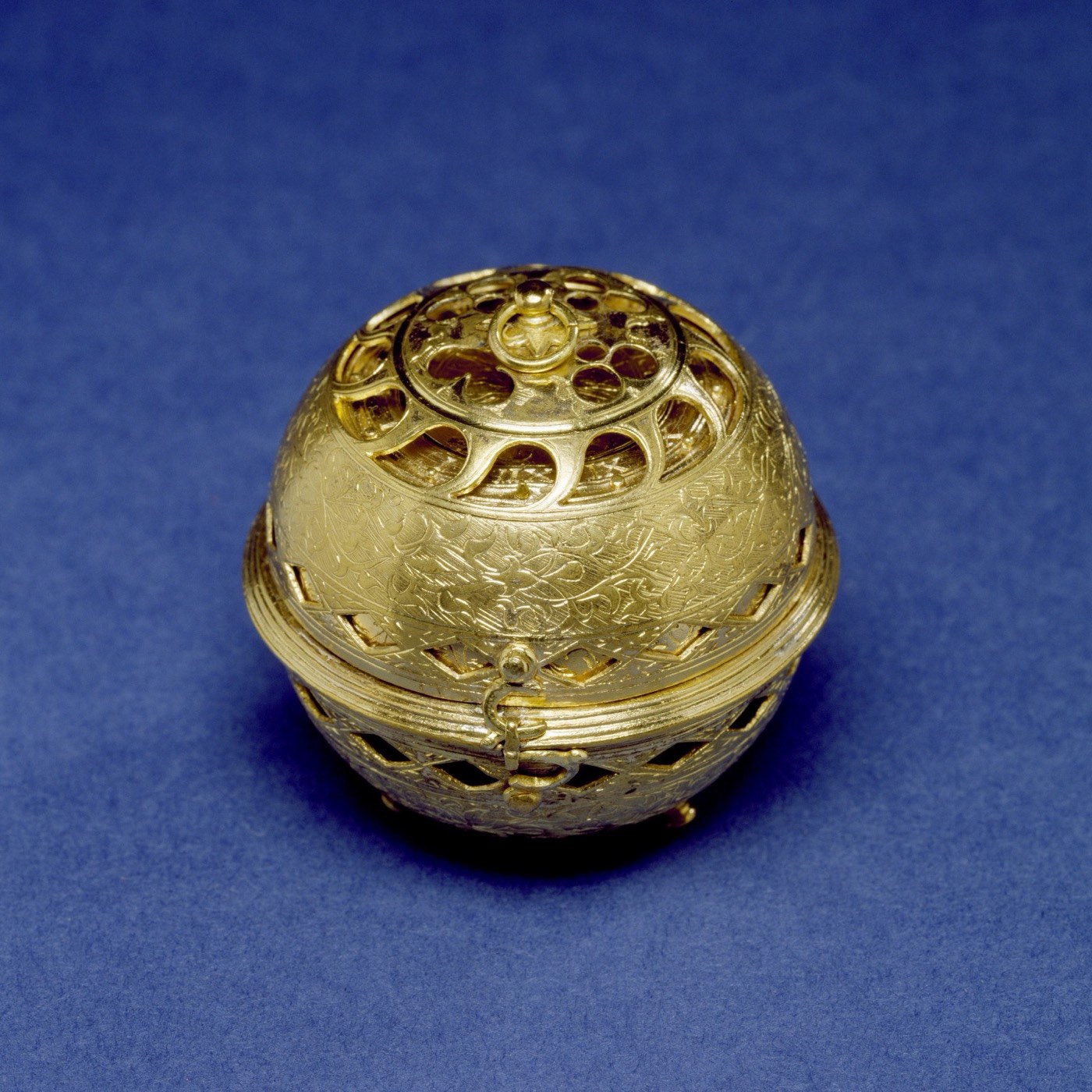
The watch
It is a sphere of gilt brass 4.8 centimetres across, with a gilt brass dial and an iron movement inside.1
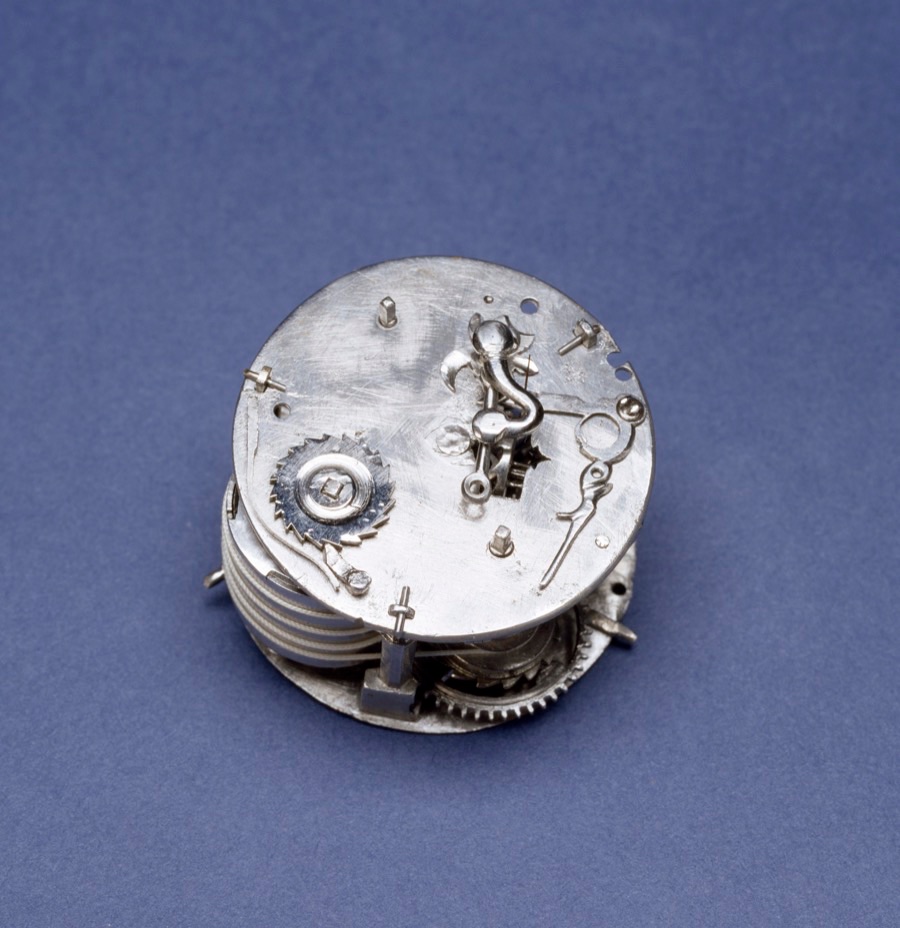
Its lid is pierced so that the hour could be read without opening the case. It showed the time to the nearest half hour and ran 12 to 16 hours on one winding.1
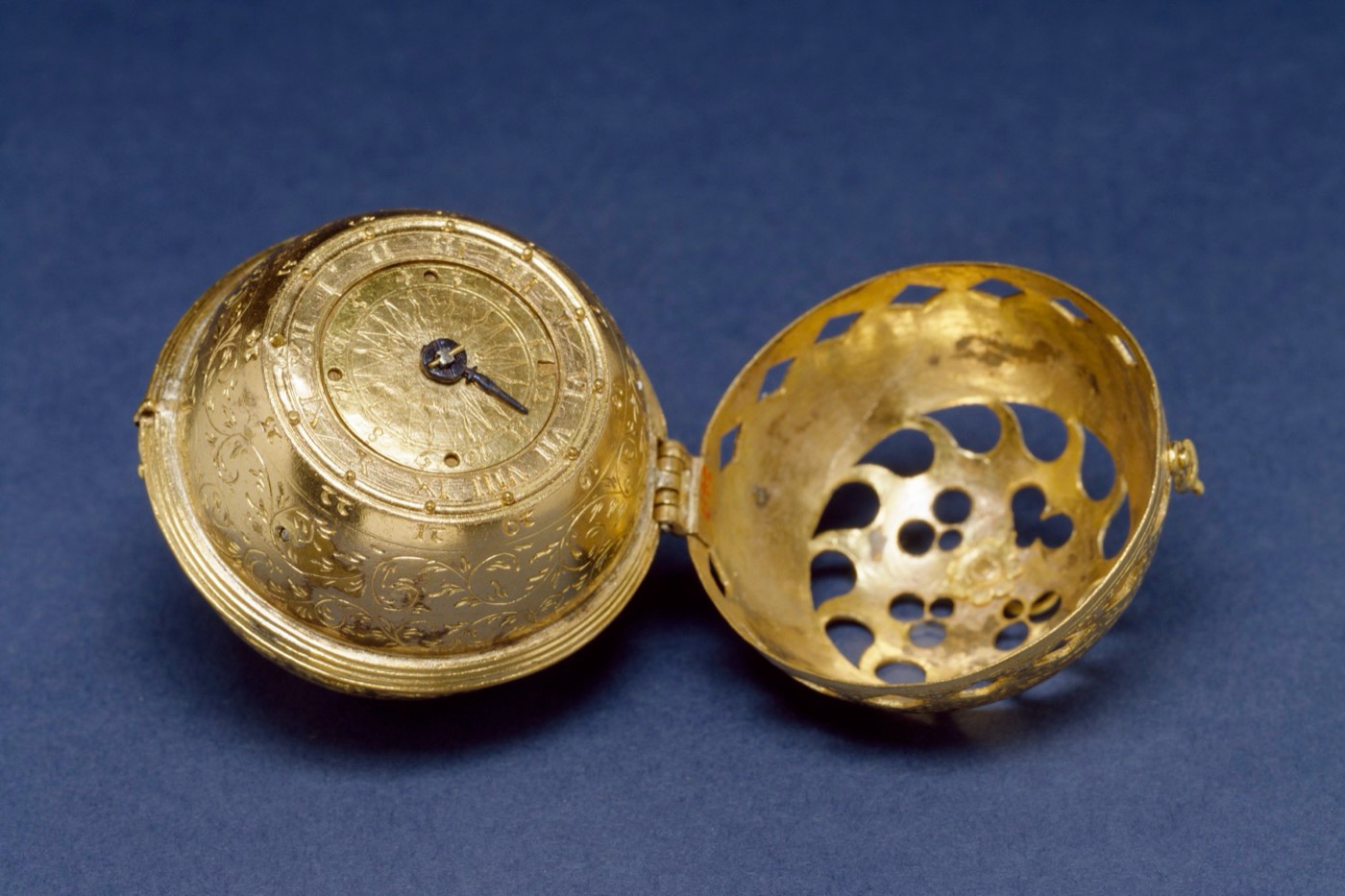
The base is engraved PHIL. MELA. GOTT. ALEIN. DIE. EHR. 1530: Philip Melanchthon, to God alone the glory, 1530.1
It bears no maker’s mark. The Walters lists an anonymous German maker and gives the place as Augsburg with a question mark, while noting that Nuremberg is considered the home of spherical watches; Wikipedia’s article on the 1505 pomander watch says Peter Henlein was probably commissioned to make it.1, 6
Why it matters
The Walters calls it the earliest dated watch known, and says only two dated watches survive from before 1550: this one and one of 1548.1
The German Wikipedia counts it the oldest watch to survive complete.2
Its engraved date carries weight because the other candidates are weaker: the date of 1505 read in the pomander watch rests on its owner’s experts and has not been generally accepted, and in 2014 the Germanisches Nationalmuseum showed its own drum-shaped ‘Henlein watch’ signed 1510 to be largely a nineteenth-century assembly.6, 7, 8
It belongs to the small spring-driven watches of southern Germany: Wikipedia lists three Nuremberg forms, the tall drum, the flat drum and the pomander, and says the oval ‘eggs’ came later, from about 1580.9
Melanchthon’s watch
How Melanchthon came by it is told two ways. The Walters says he commissioned it; the collector Richard Alms, writing to The Lutheran Witness in 2010, says it is believed to be the watch he was given for his defence at Augsburg in 1530.1, 10
Alms adds that Melanchthon was known as a collector of timepieces, and was often given a clock or a watch after a presentation, a negotiation or a theological defence.10
Since
It passed through the Paris dealer Jacques Seligmann to Henry Walters, who bought it in 1910, and came to the Baltimore museum with his bequest in 1931.1
The museum gave it an exhibition of its own, Philip Melanchthon’s Watch, in 2000–2001.1
The German Wikipedia records that it was lent to the Germanisches Nationalmuseum in Nuremberg for the exhibition of 2014–2015 in which the museum examined its own ‘Henlein watch’.2, 7
Key dates
- 1530
Engraved with Melanchthon’s name and the year.1
- 1910
Henry Walters buys it from Jacques Seligmann, Paris.1
- 1931
Comes to the Walters by Henry Walters’s bequest.1
- 2000
The Walters shows it in Philip Melanchthon’s Watch (2000–2001).1
- 2014
Lent to the Germanisches Nationalmuseum, the German Wikipedia records.2
Where the Melanchthon watch leads
- Part of, HistoryTime in the pocket
The ball watch engraved 1530, which the Walters Art Museum calls the earliest dated watch known.1
- See also, PersonPeter Henlein
The Walters names no maker for the Melanchthon watch; Wikipedia says Henlein was probably commissioned to make it.1, 6
- See also, PlaceAugsburg
The Walters gives Augsburg, with a question mark, as the place the Melanchthon watch was made.1
- See also, PlaceNuremberg
The Walters notes that Nuremberg is considered the home of spherical watches.1
- See also, ObjectThe pomander watch of 1505
The German Wikipedia counts the Melanchthon watch among the few pomander watches that survive.2
Facts and sources
- Made
- 1530 (the engraved date)1
- Maker
- Unknown: no maker’s mark; the Walters gives Augsburg with a question mark, and some accounts name Peter Henlein1, 6
- Held by
- Walters Art Museum, Baltimore (58.17)1
Sources
- 1
Spherical Table Watch (Melanchthon's Watch), 1530 (Walters 58.17) (opens in a new tab)
- 2
- 3
- 4
- 5
- 6
- 7
- 8
Is This The World's Oldest Known Watch? A Peter Henlein Mystery From 1505 (opens in a new tab)
- 9
- 10
Melanchthon - A Horologist? (letter to the editor, May 2010) (opens in a new tab)
Sources read November 12, 2026.