Water resistance
Keeping water and dust out of a watch case at its back, glass and winding stem: screwed cases from the 1870s, sealed wristwatch cases and screw-down crowns in the 1920s, and international standards from the late twentieth century.
Introduced Screwed cases from the nineteenth century; sealed wristwatch cases in the 1920s
Companies Omega
Developed by Omega
In the history From the pocket to the wrist

Where water gets in
A watch keeps out water and dust where its case opens: at the back, the glass and above all the winding stem; the 1925 Perregaux-Perret patent names the joints around crown and stem as the easy path for dust and damp, especially in small watches.2, 3
Screwed cases are older than the Oyster. Watkins lists Aaron Dennison's English patent no. 356 of 1872 for a case with screwed bezel and back, and a screw-down crown patented by his grandson in 1915.1
Wikipedia says a waterproof case by Charles Depollier was patented eight years before the Oyster, and that Tavannes made a 'Submarine' watch sealed by other means.7
Another route was to have no crown at all: John Harwood's self-winding watch of 1923 had a case with no openings, its hands set by the bezel, so that it was 'practically dust and waterproof'.8, 9
The screw-down crown
Paul Perregaux and Georges Perret applied on 30 October 1925 for a Swiss patent on a screw-down crown; its British version was granted to Hans Wilsdorf as their assignee.2, 7, 10
Wilsdorf added his own patents in 1926: a crown that slides on the stem and screws onto the case, and a case whose back and bezel screw onto an inner ring, 'practically watertight' even in a shaped case. Together they made the Rolex Oyster.3, 11, 12
Rolex calls the Oyster of 1926 'the first waterproof and dustproof wristwatch'; Watkins and Wikipedia point to the earlier screwed cases of Dennison and Depollier.1, 4, 7
Testing followed sealing: a Swiss patent filed by Wilsdorf in November 1934 covers an apparatus for testing the tightness of watch cases.13
Proof in the water
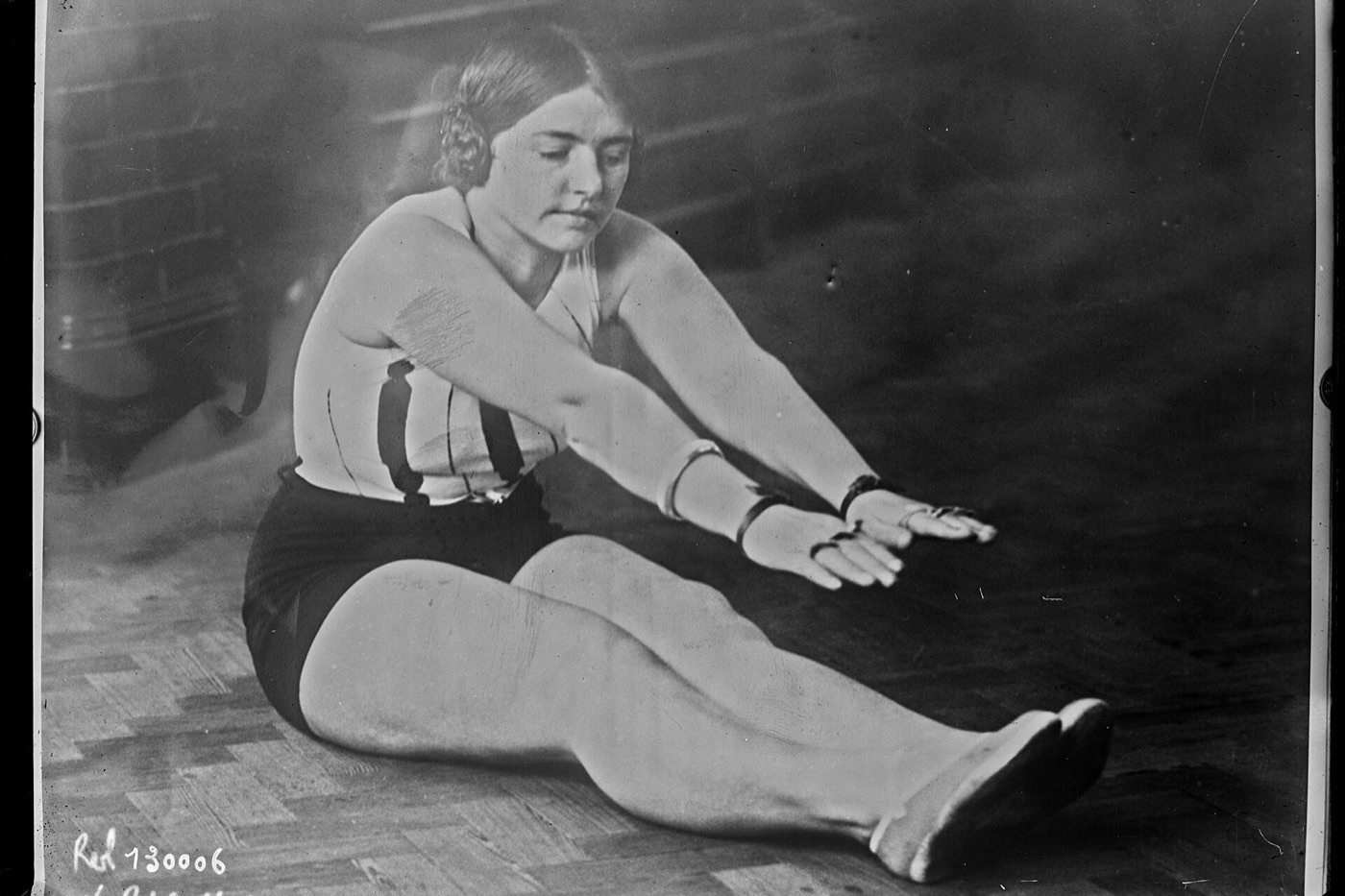
The swimmer Mercedes Gleitze became Rolex's proof. Rolex says she wore an Oyster across the Channel in 1927 on a swim of over ten hours; Wikipedia says she wore it on the failed 'vindication swim' of 21 October 1927, after doubts about her successful crossing of 7 October.4, 7, 14
On 24 November 1927 Rolex launched the Oyster in Britain with the front page of the Daily Mail, and on 7 December Wilsdorf warned imitators in the Swiss trade journal that he owned the patents for the screw-down crown and hermetic cases and the trademarks Oyster, Aqua and Submarine.7, 16
Omega's Marine of 1932 used a double case sealed with cork; Omega says it was tested in Lake Geneva at 73 metres and later found waterproof to 135 metres, and calls it the first commercially available divers' watch.17, 18
Standards
Standards came much later. ISO 2281, in its 1990 edition, covered watches for 'ordinary daily use' including short spells under water and excluded divers' watches; ISO 22810:2010 replaced it. Divers' watches have their own standard, ISO 6425.5, 19, 20
A 'water resistant' mark records a static pressure test on samples, not a promise for long use at that depth; the ISO standard discourages the word 'waterproof', and Wikipedia says the US Federal Trade Commission has barred it in advertising since 1968.21, 22
Key dates
- 1923
Harwood's crownless self-winding case.8, 23
- 1925
Perregaux and Perret's screw-down crown patent applied for.2, 10
- 1926
Wilsdorf's crown and case patents; the Oyster.3, 4, 11
- 1927
Gleitze's swims and the Daily Mail advertisement.7, 14, 16
- 1932
Omega Marine.17, 18
- 1990
ISO 2281:1990 published.19, 21
- 2010
ISO 22810 replaces ISO 2281.5, 21
Where Water resistance leads
- Developed by, CompanyOmega
Omega dates its Marine, a double case sealed with cork, to 1932.17, 18
- Part of, HistoryFrom the pocket to the wrist
How watch cases were sealed against water and dust, from screwed cases of the 1870s to today’s standards.1, 2, 5
- See also, PersonJohn Harwood
His crownless self-winding case was meant to be dust- and waterproof.8
- See also, ObjectThe Harwood self-winding watch
Harwood’s American patent says that without a winding stem the case becomes practically dust and waterproof.8
- See also, ObjectThe Rolex Oyster
The Oyster’s screw-down crown and screwed case sealed a wristwatch against water and dust.3, 4
- See also, TraditionDive watches
Sealed cases preceded and enabled the divers' watch.17, 19
Facts and sources
- Introduced
- Screwed cases from the nineteenth century; sealed wristwatch cases in the 1920s1, 2, 4
Sources
- 1
The Origins of Self-Winding Watches 1773-1779 (opens in a new tab)
- 2
CH 114948: Montre à remontoir (Paul Perregaux; Georges Perret) (opens in a new tab)
- 3
CH 120848: Montre à remontoir (Wilsdorf Hans) (opens in a new tab)
- 4
Rolex history, 1926 to 1945: milestones in watchmaking (opens in a new tab)
- 5
ISO 22810:2010 Horology: Water-resistant watches (opens in a new tab)
- 6
- 7
- 8
US 1,576,120: Wrist watch and other watch (John Harwood, Baldrine, Isle of Man) (opens in a new tab)
- 9
CH 106583: Montre à remontage automatique (Harwood John; Cutts Harry) (opens in a new tab)
- 10
- 11
CH 120851: Boîte de montre de forme (Wilsdorf Hans) (opens in a new tab)
- 12
US 1,727,531: Watchcase (Hans Wilsdorf, London) (opens in a new tab)
- 13
Google Patents search: assignee Wilsdorf, priority before 1935 (opens in a new tab)
- 14
- 15
"Entraînement de Miss Gleitze", Agence Rol press photograph, June 1928. (opens in a new tab)
- 16
Watchmaking in 1927: major structural changes (opens in a new tab)
- 17
- 18
- 19
ISO 2281:1990 Horology: Water-resistant watches (opens in a new tab)
- 20
ISO 6425:2018 Horology: Divers' watches (opens in a new tab)
- 21
- 22
- 23
GB 218,487: Improvements relating to wrist watches (Harwood, J., and Cutts, H.) (opens in a new tab)
Sources read November 11, 2026.